Samsung Heavy commits to Geoje yard automation under 2029 pact
The memorandum with South Gyeongsang Province advances a 10 trillion won smart shipyard blueprint as drydocks run past full capacity to clear backlogs.
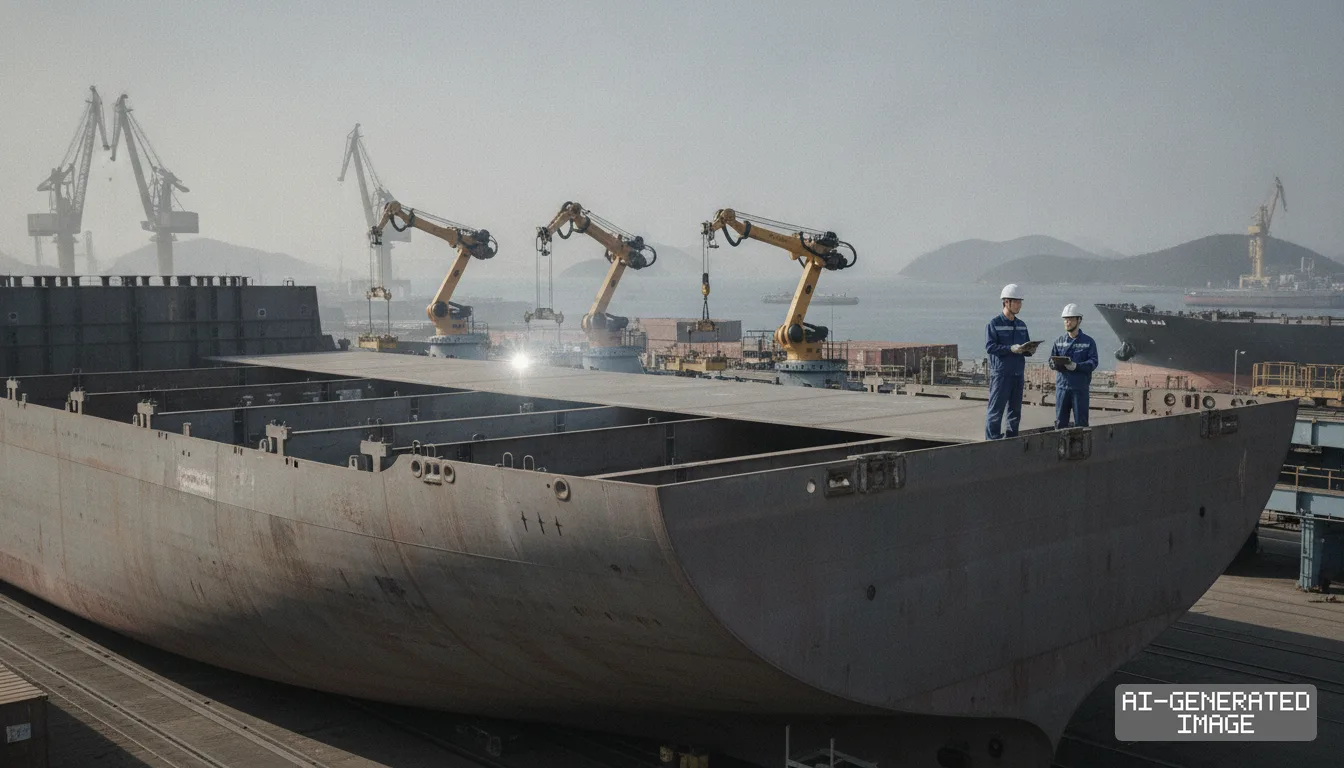
Samsung Heavy Industries signed an investment agreement on Oct. 20 with South Gyeongsang Province and Geoje to upgrade its main shipyard with automated manufacturing lines by 2029.
The pact anchors a 10 trillion won ($7.2 billion) smart shipyard blueprint announced in July, which aims to convert the shipbuilder's Geoje yard into an automated production center.
Samsung Heavy Industries operated its Geoje yard at 100.2% facility utilization during the first half of 2026. The shipbuilder relies on overtime shifts and weekend work to process a vessel backlog that extends past 2028.
South Gyeongsang Governor Park Wan-su and Geoje Mayor Byun Gwang-yong signed the memorandum alongside shipyard executives in Seoul. The signing took place at the 2026 Gyeongsangnam-do Investment Promotion Conference held at The Westin Chosun.
Local authorities agreed to provide administrative clearances and financial subsidies for the site transformation. Samsung Heavy Industries pledged to hire additional technical personnel as new production lines enter service.
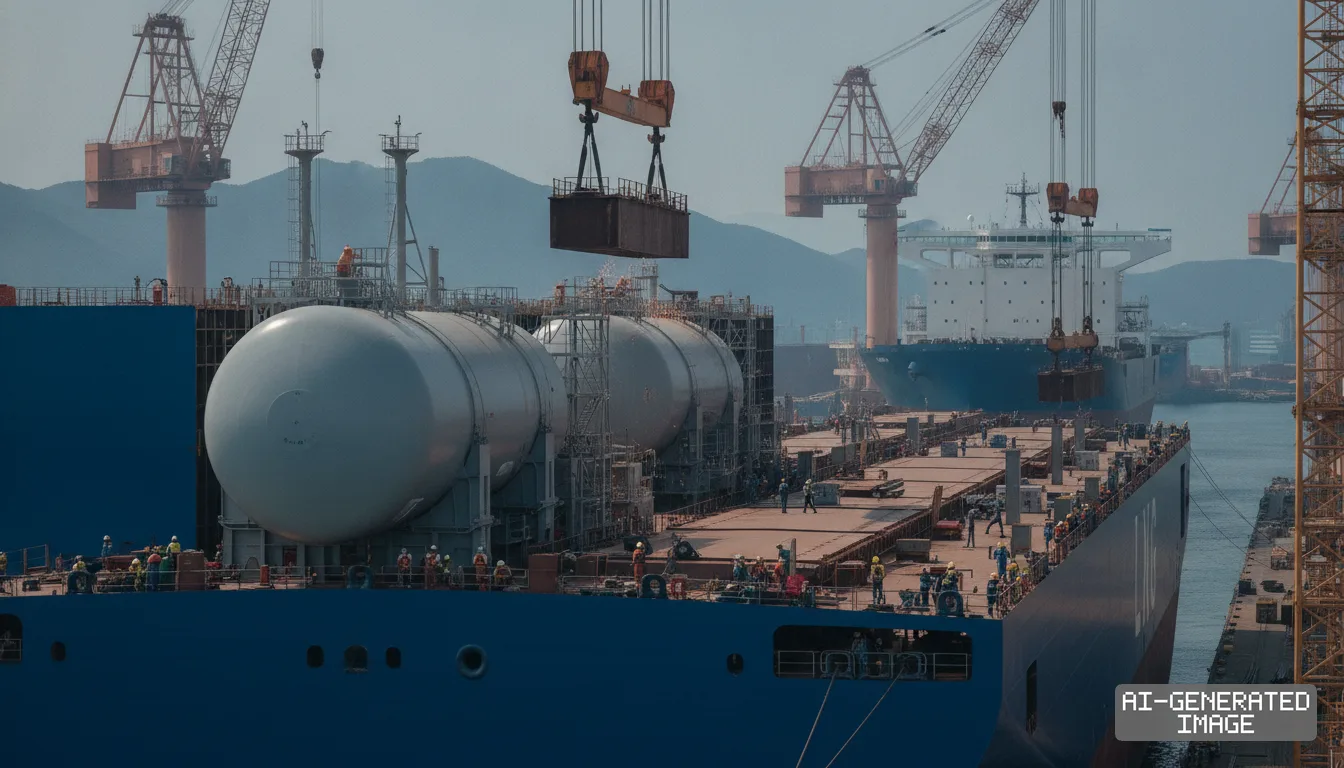
The investment will fund automated welding systems and robotic hull block assembly across the Geoje complex. The facility builds liquefied natural gas carriers, ultra-large container vessels and floating offshore production units.
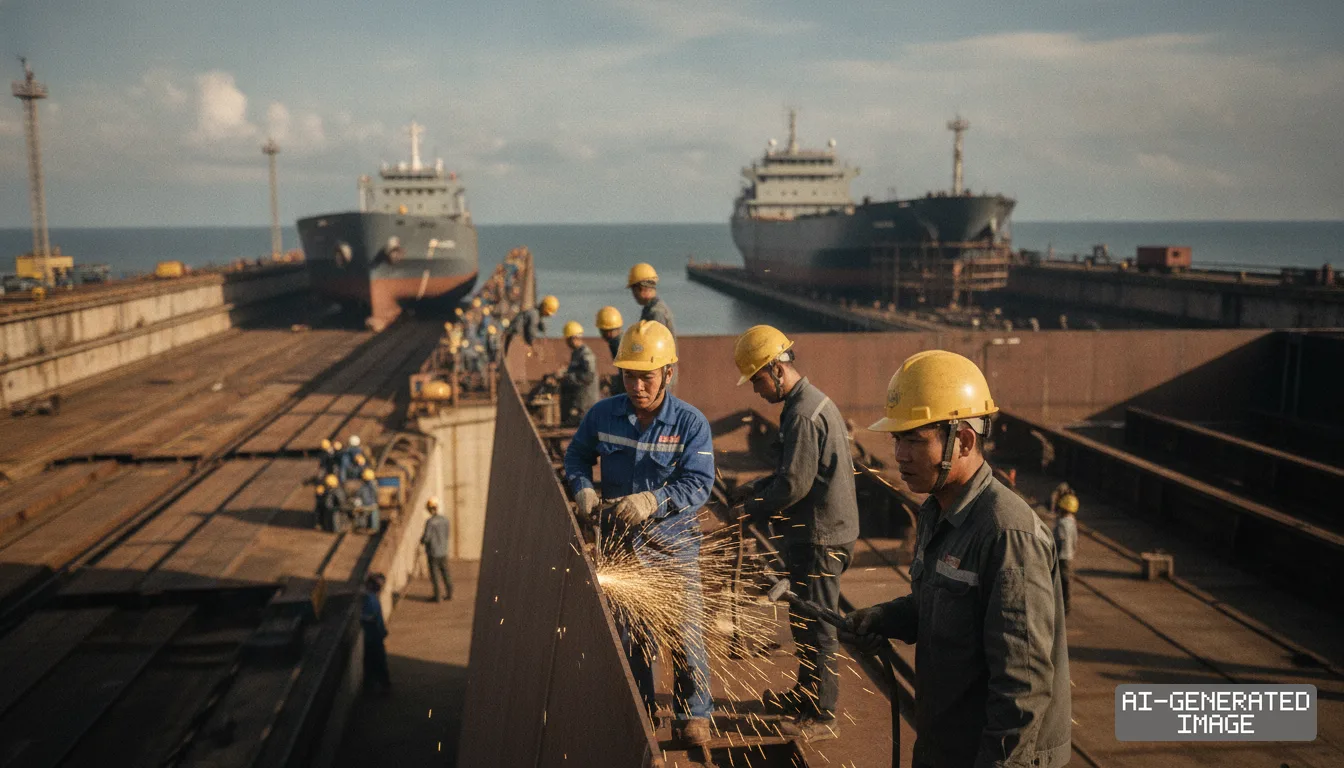
Shipyards across South Korea face chronic shortages of skilled welding and fitting labor. An aging domestic workforce has forced shipbuilders to recruit foreign subcontractors and entry-level technical trainees to maintain berth schedules.
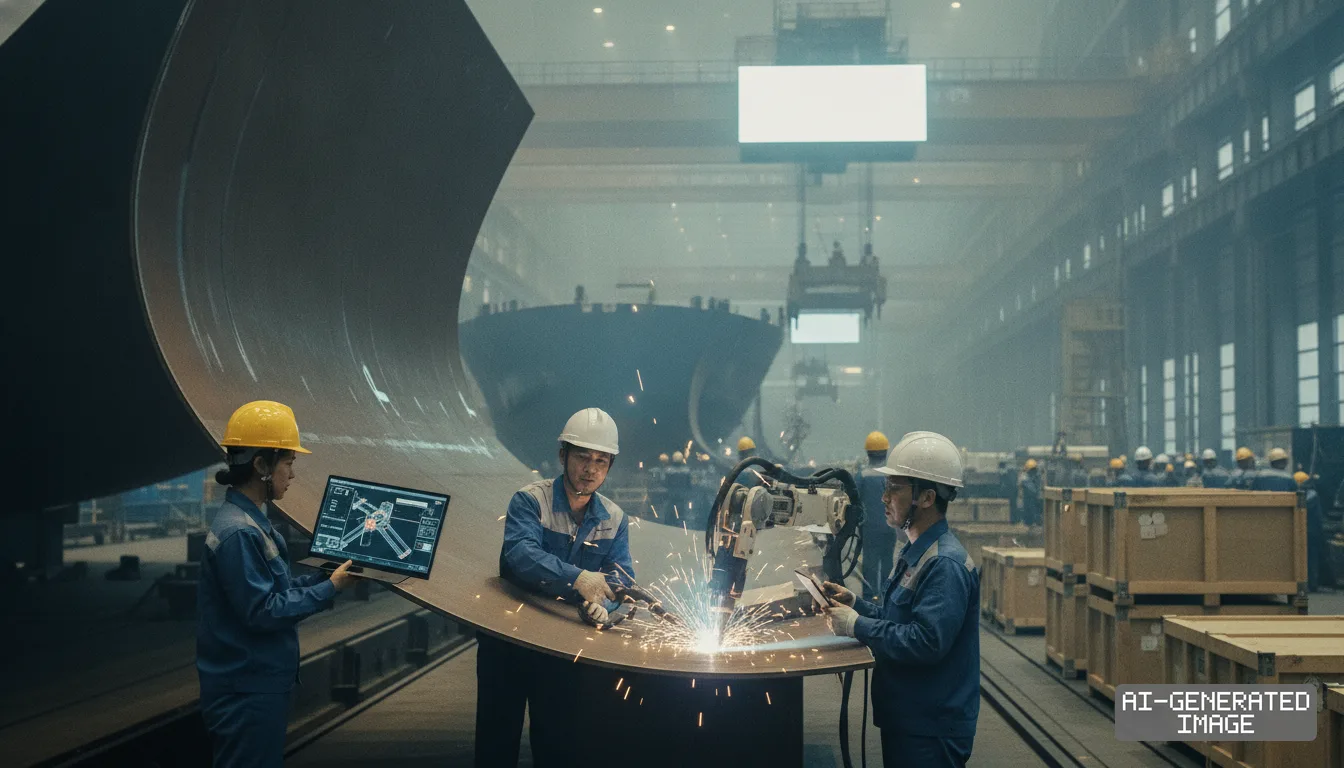
Automating curved block fabrication reduces reliance on senior plate benders who manually shape thick steel plates with torches. Software-guided robotic arms and magnetic crawler units now handle complex welding seams inside double-hull ballast tanks.
Samsung Heavy Industries previously deployed an automated engineering data platform called S-EDP. The software transfers digital design models directly to automated pipe bending machines and steel plate cutting tools.
Neighboring shipbuilder Hanwha Ocean is spending 160 billion won ($111 million) through 2026 to automate its adjacent Geoje yard. Hanwha Ocean reached a 67% automation rate for indoor welding operations earlier this year.
The Geoje upgrade aligns with central government industrial policy. South Korea's Ministry of Trade, Industry and Energy launched a 1.4 trillion won ($1.05 billion) public-private initiative on Oct. 12 to accelerate shipyard automation.
That national initiative allocates 500 billion won ($375 million) to an industrial corridor spanning Geoje and Busan. The program finances shared digital infrastructure that links shipyards to regional piping and electrical component suppliers.
Suppliers in South Gyeongsang and Busan produce roughly 60% of South Korea's marine equipment. Transmitting standardized production code directly to equipment vendors prevents fabrication errors that delay final vessel outfitting.
South Korea's major shipyards hold commercial delivery slots committed through late 2028. Physical drydock constraints and labor bottlenecks prevent domestic yards from lifting vessel completions without higher floor throughput.
The Oct. 20 memorandum covers offshore infrastructure fabrication alongside merchant ship construction. Samsung Heavy Industries fabricates floating liquefied natural gas facilities that require high-precision piping and structural steel assembly.
Shipbuilding operations form the economic base of Geoje, an island city in South Gyeongsang Province. Municipal leaders support robotic automation to protect yard output while local labor pools contract.
The provincial government organized a specialized task force to accelerate site permits and industrial zoning approvals. Administrative teams plan to review environmental filings before factory equipment installation begins next year.
The municipal announcement does not state the exact capital expenditure committed under the Oct. 20 pact. The notice also omits the specific hiring quota assigned to the Geoje yard project.
Samsung Heavy Industries has not published a separate regulatory filing detailing the transaction on the Korea Exchange. The shipbuilder has also not posted an independent announcement on its investor relations platform.
The investment agreement sets a completion target of Dec. 31, 2029 for the automated manufacturing base. South Gyeongsang Province plans to conduct quarterly administrative review meetings with the shipbuilder starting in January 2027.
Samsung Heavy Industries concluded the conference session alongside 16 other industrial manufacturers that signed investment commitments with South Gyeongsang Province.
Impact map
How this development propagates across the region and out to global buyers.
| Event | Korea | China | Japan | Global impact |
|---|---|---|---|---|
| Geoje shipyard automation pact | Samsung Heavy modernizes Geoje yard by 2029 to relieve skilled labor constraints | CSSC yards face tighter competition on LNG carrier berth availability and lead times | Imabari and Nihon Shipyard face widened automation gap on dual-fuel merchant orders | Shipowners secure faster delivery slots on high-specification gas carriers and offshore hulls |
In this story
- Companies
- Samsung Heavy Industries
- Tickers
- 010140.KS
- Exposed
- Hanwha Ocean
- Policy
- Subsidies
- Impact
- CapexSupply ChainOrder Book
Track every Subsidies development →
Related briefings
- Samsung Heavy targets US Navy MRO work via Vigor partnership Also on Samsung Heavy Industries, Hanwha Ocean, Order Book
- Japan Clears $635 Million in Subsidies to Modernize Shipyards by 2035 Also on Samsung Heavy Industries, Hanwha Ocean, Order Book
- Samsung Heavy expands Busan R&D center into offshore engineering hub Also on Samsung Heavy Industries, Hanwha Ocean, Order Book
- Korean shipbuilders localize Arctic ice design software Also on Samsung Heavy Industries, Hanwha Ocean, Order Book
Sources
Reporting
Confidence: medium — how we grade this
The documents behind this briefing are linked above. East Asia Brief produces its English text with AI assistance under human editorial review, and does not translate or republish other outlets' articles. See our methodology and AI policy. Spotted an error? Tell us.
The Morning Brief
What changed in Korean, Chinese and Japanese industry overnight — and what it means for your supply chain. One email, weekday mornings, US time. Free.
The Morning Brief is in preparation. Leave your address and we will write to you once — when the first issue is ready. Nothing before that.