China-Nigeria trade hits $17.4B after zero-tariff policy launch
Bilateral goods turnover expanded 35% in the first half of 2026, driven by an 81% surge in Nigerian exports under duty waivers across 8,000 tariff lines.
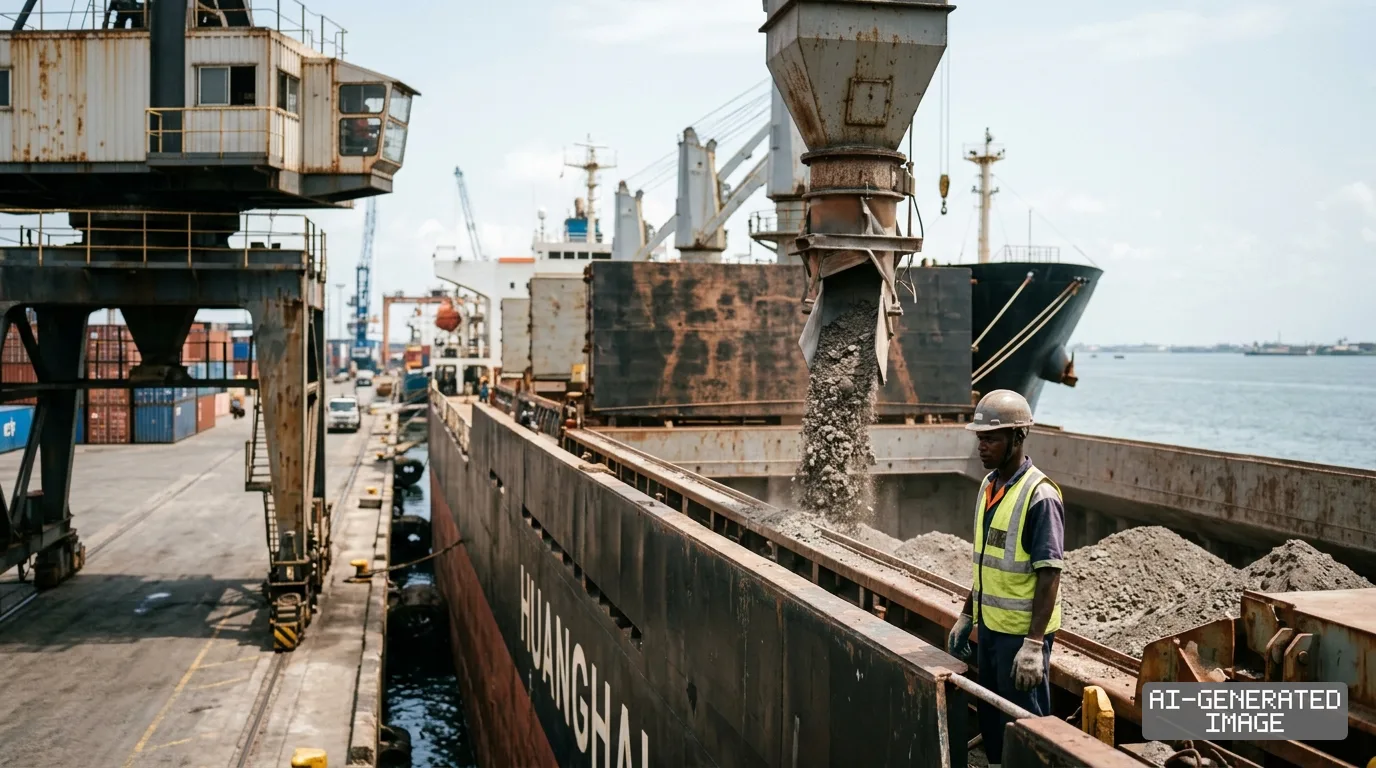
The Chinese Embassy in Nigeria confirmed Nov. 16, 2026, that bilateral goods trade reached $17.4 billion in the first half of the year, following Beijing's rollout of zero-tariff market access.
The figure represents a 35% increase from the same period in 2025. Nigerian shipments to China rose 81% to $2.25 billion, accounting for 13% of total two-way turnover.
China's Customs Tariff Commission eliminated import levies on May 1, 2026, granting unilateral duty-free entry to 20 non-least developed African nations. The concession covers roughly 8,000 tariff lines across industrial and agricultural goods.
The policy broadened a duty waiver enacted Dec. 1, 2024, for 33 least developed African countries. The extension brought 53 African states with diplomatic ties to Beijing under zero-tariff treatment.
The tariff elimination removes duties that previously ranged between 8% and 30% on African goods. Only 47 items subject to tariff-rate quotas, including wheat and cotton, face standard duties when exceeding quota volumes.
Chinese Cultural Counsellor Yang Jianxing highlighted the trade expansion in Abuja on Nov. 12 during the launch of Voice of Nigeria's Chinese radio service, pointing to accelerated customs clearance as a growth driver.
Beijing established a "green lane" logistics mechanism to cut port dwell times for African goods. The system routes inbound agricultural containers and minerals through prioritized inspection terminals at major southern ports.
The trade data shows Nigeria's trade deficit with China widened despite surging outbound volume. Chinese exports to Nigeria reached $15.15 billion in the six-month period, dominating roughly 87% of all bilateral exchanges.
Manufactured equipment, electronics and capital goods made up three-quarters of China's outbound flow. Those supplies fed infrastructure programs and industrial assembly parks built by Chinese contractors across Lagos and Ogun states.
The duty-free window directly benefits Chinese battery materials processors operating in Nigeria. Chinese companies have invested more than $1.3 billion in Nigerian solid mineral processing assets since September 2023, Nigerian government records show.
Canmax Technologies backs a $250 million lithium processing facility in Nasarawa State. The plant operates a processing capacity of 6,000 tonnes of lithium ore daily, converting raw rock into export concentrate.
The Nasarawa complex processes 3 million tonnes of run-of-mine ore annually. Local beneficiation fulfills Nigerian regulations that ban unprocessed mineral exports, while zero Chinese import duties protect downstream margins for battery chemical plants.
Ganfeng Lithium operates mining assets across West Africa to supply its domestic battery material plants. Ganfeng produced 128.76 billion yuan ($17.8 billion) in chemical revenue in 2025, consuming imported African spodumene feedstocks.
Unilateral tariff removal secures critical mineral flows for Chinese refiners facing procurement curbs elsewhere. Beijing relies on African lithium, cobalt and copper to offset Western export controls and mineral supply risks in the Pacific.
Chinese state planners structured the zero-tariff mechanism as a temporary preferential window. The policy runs for two years until April 30, 2028, acting as a bridge toward formal free trade agreements.
China is using the interim window to negotiate the China-Africa Economic Partnership for Shared Development. Kenya and the Republic of the Congo signed early harvest arrangements under the framework earlier this year.
The bilateral pacts will eventually require reciprocal market access from African signatories. For now, Beijing absorbs unilateral tariff cuts to anchor trade flows before Western trading partners adjust their tariff structures.
Washington paused its African Growth and Opportunity Act preferences in September 2025, creating regulatory uncertainty for African exporters. Beijing's immediate waiver contrasts with rising trade friction across North American and European markets.
The Lekki Deep Sea Port in Lagos handles the majority of container traffic between both nations. China Harbour Engineering built the $1.5 billion terminal, which operates a design throughput of 2.7 million containers annually.
Direct maritime routes between Lekki and Guangzhou cut shipping times for Nigerian agricultural exports. Sesame seeds, raw ginger and cocoa beans make up the bulk of Nigeria's non-oil commercial shipments to Asia.
The preferential tariff regime expires April 30, 2028, setting a strict deadline for negotiators to complete the broader economic partnership treaty. Working-level tariff talks will convene in Beijing next quarter, officials said.
The Chinese and Nigerian customs administrations have not published the commodity-level trade breakdown, leaving the exact dollar share of lithium, crude oil and agricultural shipments unverified in the headline data.
Impact map
How this development propagates across the region and out to global buyers.
| Event | Korea | China | Japan | Global impact |
|---|---|---|---|---|
| China-Africa zero-tariff window | battery makers face widening raw material cost gaps against Chinese refiners | Canmax and Ganfeng secure duty-free West African spodumene feedstock | trading houses encounter tighter pricing competition for Nigerian battery minerals | West African lithium supply chains integrate directly into Chinese smelting networks |
| China-Africa zero-tariff window | battery makers face widening raw material cost gaps against Chinese refiners | Canmax and Ganfeng secure duty-free West African spodumene feedstock | trading houses encounter tighter pricing competition for Nigerian battery minerals | West African lithium supply chains integrate directly into Chinese smelting networks |
In this story
- Companies
- Canmax TechnologiesGanfeng Lithium
- Tickers
- 300390.SZ002460.SZ
- Exposed
- China Harbour Engineering
- Policy
- Tariffs
- Impact
- Supply ChainPricingCost Structure
Track every Tariffs development →
Related briefings
- Guangzhou bourse adds lithium hydroxide futures on CSRC approval Also on Ganfeng Lithium, Pricing
- BYD evaluates Argentina lithium battery plant for EV export Also on Ganfeng Lithium
- US offers India tariff edge over Vietnam under Mission 500 pact Also on Tariffs, Pricing, Cost Structure
- USTR and MOFCOM target reciprocal tariff cuts on $60B of trade Also on Tariffs, Pricing, Cost Structure
Sources
Primary documents
Reporting
Confidence: high — how we grade this
The documents behind this briefing are linked above. East Asia Brief produces its English text with AI assistance under human editorial review, and does not translate or republish other outlets' articles. See our methodology and AI policy. Spotted an error? Tell us.
The Morning Brief
What changed in Korean, Chinese and Japanese industry overnight — and what it means for your supply chain. One email, weekday mornings, US time. Free.
The Morning Brief is in preparation. Leave your address and we will write to you once — when the first issue is ready. Nothing before that.