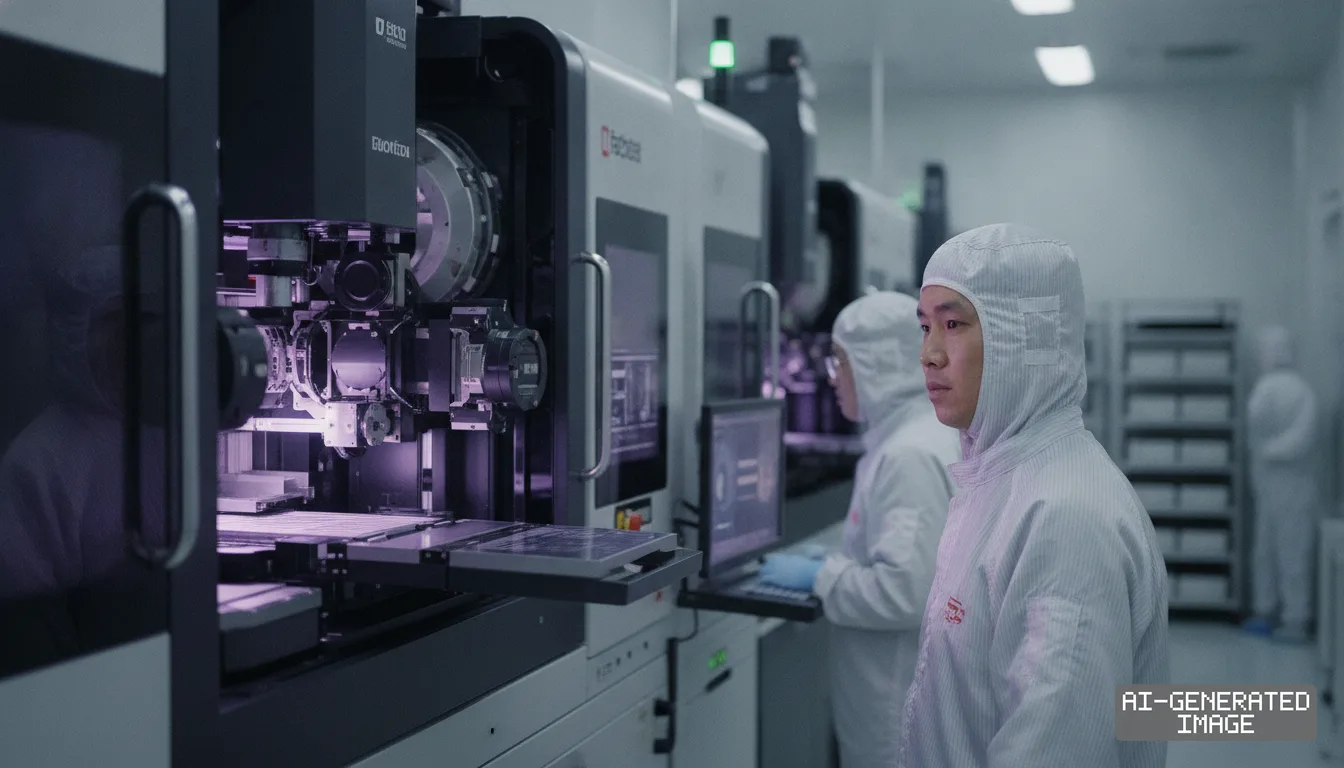
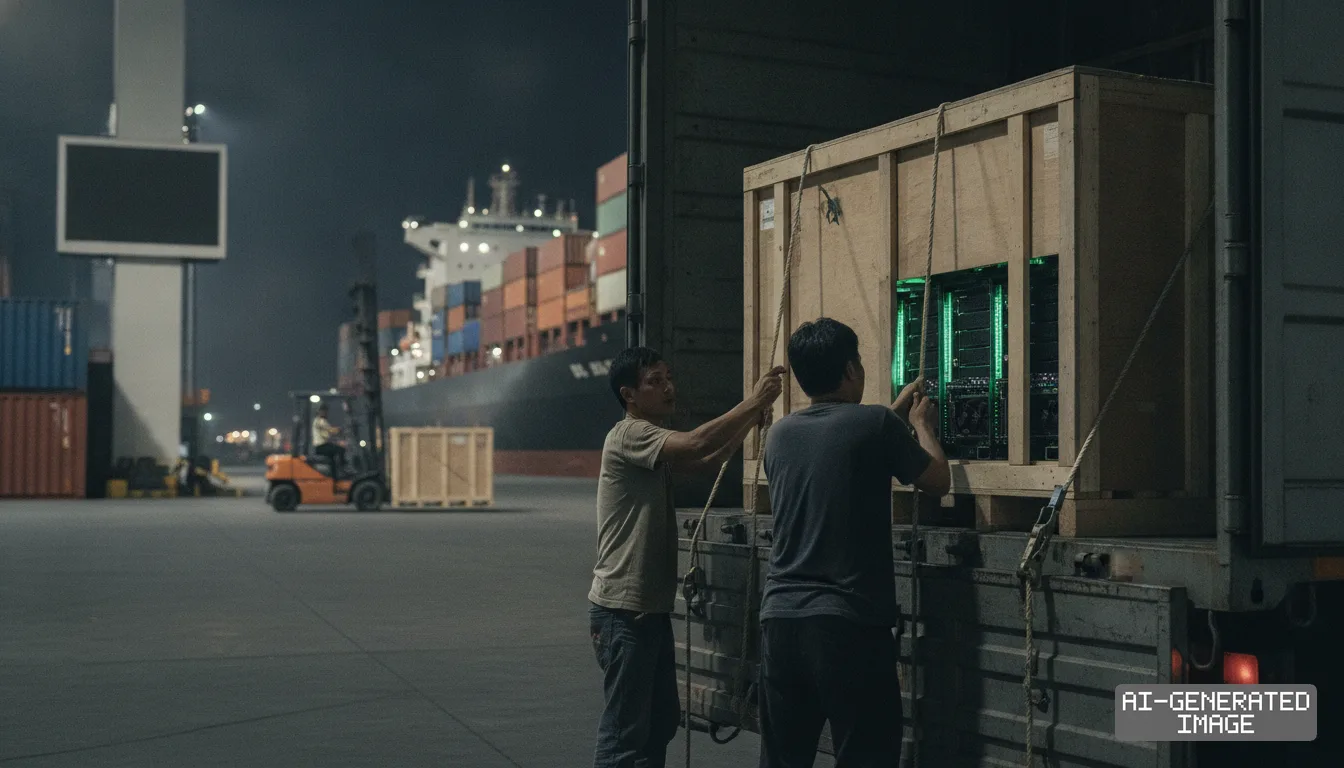
China finalizes export controls on 40 technologies across AI and solar
The Ministry of Commerce enforces licensing curbs and bans on 23 artificial intelligence tools, 12 photovoltaic lines, and five biomedical processes.
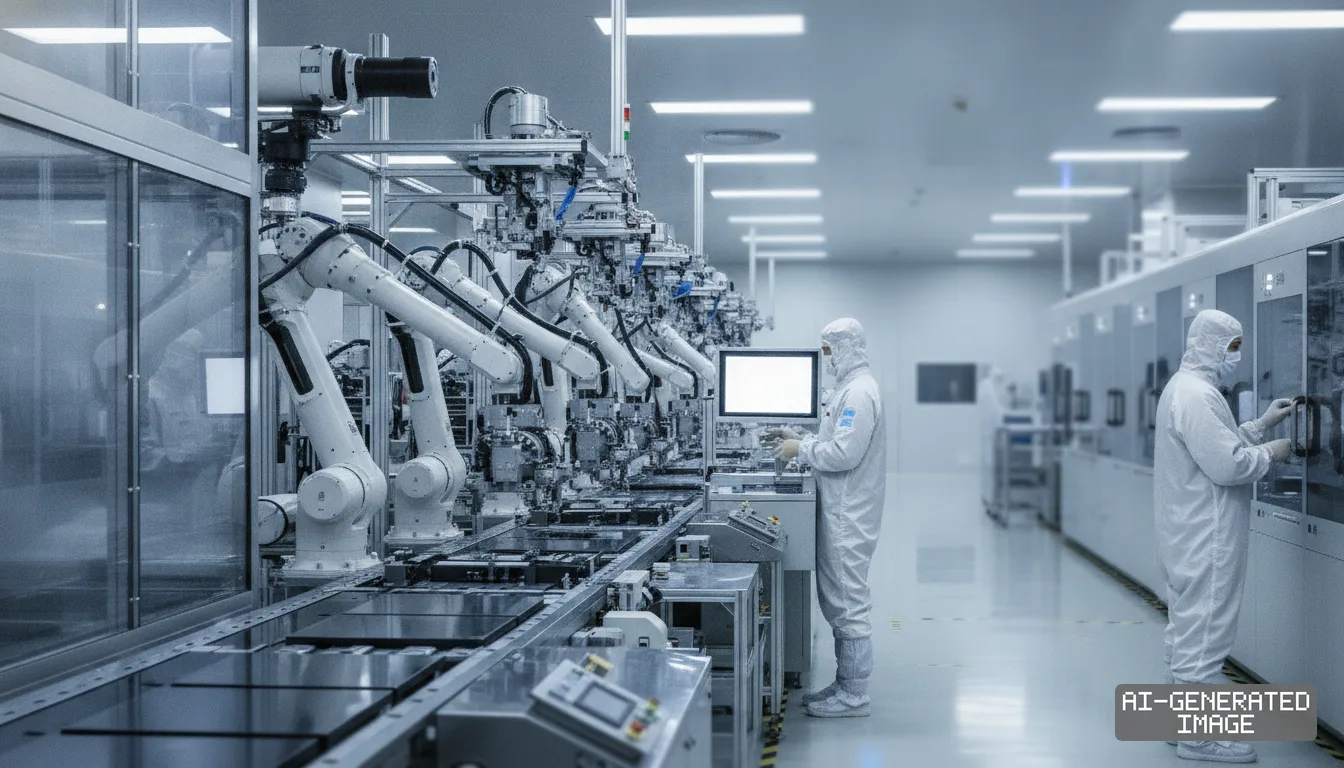
China's Ministry of Commerce moved to finalize export curbs across 40 advanced technologies on Nov. 23, maintaining mandatory pre-export registrations after public consultations closed on its revised trade catalogue.
The ministry, which jointly administers China's technology trade regime with the Ministry of Science and Technology, issued the draft revisions under Announcement No. 48 of 2026 on Oct. 16.
The package covers 40 strategic technologies—14 under total prohibition and 26 under strict licensing restrictions. Photovoltaic manufacturing accounts for 12 entries, while artificial intelligence represents 23 and biomedicine spans five.
The measures target polysilicon production facilities with single-line capacity of at least 30,000 metric tons per year. That scale accounts for more than 90% of global high-purity silicon feedstock capacity.
The revisions bar Chinese enterprises from transferring complete manufacturing plants or licensing production know-how abroad without prior state clearance. The restrictions also apply to turnkey equipment embodying the underlying processes.
Tongwei operates multiple polysilicon lines exceeding the 30,000-ton single-line threshold, anchoring an annual capacity above 400,000 metric tons. The company faces direct export licensing reviews for outbound engineering contracts.
LONGi Green Energy Technology holds laboratory efficiency records of 35.5% for silicon-perovskite tandem cells. The draft catalogue places all manufacturing technology for perovskite and tandem cell modules on the outright prohibition list.
The ban blocks domestic solar manufacturers from deploying proprietary tandem cell production lines into overseas subsidiaries. That barrier complicates cross-border ventures designed to serve foreign markets.
LONGi previously partnered with American developer Invenergy to supply equipment and engineering for the 5-gigawatt Illuminate USA module facility in Ohio. Future factory expansions involving next-generation cell machinery will require Beijing's regulatory clearance.
The commerce ministry extended the photovoltaic controls beyond chemical processes to physical manufacturing machinery. Specialized wafer-slicing machines, high-efficiency deposition chambers and automated inspection tools fall under export scrutiny.
The draft restricts exports of frontier artificial intelligence models. Weights and source code for systems trained with two trillion parameters or more require Ministry of Commerce export licences.
Technologies published openly through academic journals or open-source software libraries are exempt from export controls, the ministry said. Routine application programming interface calls and local software deployments also avoid licensing obligations.
Export controls also cover high-performance computing cluster networking and heterogeneous scheduling software. Autonomous malware generation systems face outright export bans, according to the ministry filing.
Biomedical restrictions prohibit the export of proprietary cell and gene therapy processing platforms. Gene editing systems and small interfering RNA target discovery tools are classified as restricted technologies.
WuXi AppTec booked 7.26 billion yuan ($1.02 billion) in first-half revenue at its TIDES division, which synthesizes oligonucleotides and peptides. The company provides contract development and manufacturing services across North America and Europe.
The ministry established streamlined automatic licensing for routine drug licensing agreements that do not surrender underlying intellectual property ownership. Contract research organizations like WuXi AppTec and WuXi Biologics retain clearance to provide standard analytical testing.
Exporters must log every covered cross-border transaction through the commerce ministry's digital trade portal prior to shipment. The pre-export registration mandate applies to patent sales, international licence grants and changes in domestic corporate control.
The interim registration rule took effect Oct. 16 and applies to pending transactions that have not concluded. Exporters must declare contractual values, foreign recipients and technical parameters before executing transfers.
Public feedback on Announcement No. 48 closed Nov. 15 following a 30-day statutory comment window. The interim pre-export registration mechanism remains in force until the State Council formally enacts the finalized catalogue.
The notice does not state when the State Council will formally enact the finalized catalogue, and the ministry has not published a timetable for inter-agency review.
Exporters of the 40 listed technologies continue submitting filing dossiers through the commerce ministry's unified trade platform at ecomp.mofcom.gov.cn.
Impact map
How this development propagates across the region and out to global buyers.
| Event | Korea | China | Japan | Global impact |
|---|---|---|---|---|
| China technology export catalogue revision | Hanwha Qcells faces higher barriers sourcing Chinese high-efficiency tandem cell equipment | Tongwei and LONGi face export licensing on polysilicon lines and tandem IP | Solar equipment vendors face Chinese export blocks on specialized wafer tools | Overseas solar and biopharma ventures face prolonged clearance timelines for Chinese IP |
In this story
- Companies
- LONGi Green Energy TechnologyTongweiWuXi AppTec
- Tickers
- 601012.SS600438.SS603259.SS
- Exposed
- WuXi BiologicsInvenergy
- Policy
- Export Controls
- Impact
- Supply ChainComplianceCapex
Track every Export Controls development →
Related briefings
- China limits biotech platform exports as MOFCOM targets cell therapy Also on WuXi Biologics, Export Controls, Compliance
- China curbs biotech exports while shielding drug licensing Also on WuXi AppTec, Export Controls, Compliance
- US advisory panel seeks India drug supply pact to counter China Also on WuXi AppTec, Compliance
- China Solar Cell Exports Surge to $3.34B Ahead of Pending US Duties Also on Tongwei, LONGi Green Energy Technology, Export Controls
Sources
Primary documents
Reporting
Confidence: high — how we grade this
The documents behind this briefing are linked above. East Asia Brief produces its English text with AI assistance under human editorial review, and does not translate or republish other outlets' articles. See our methodology and AI policy. Spotted an error? Tell us.
The Morning Brief
What changed in Korean, Chinese and Japanese industry overnight — and what it means for your supply chain. One email, weekday mornings, US time. Free.
The Morning Brief is in preparation. Leave your address and we will write to you once — when the first issue is ready. Nothing before that.