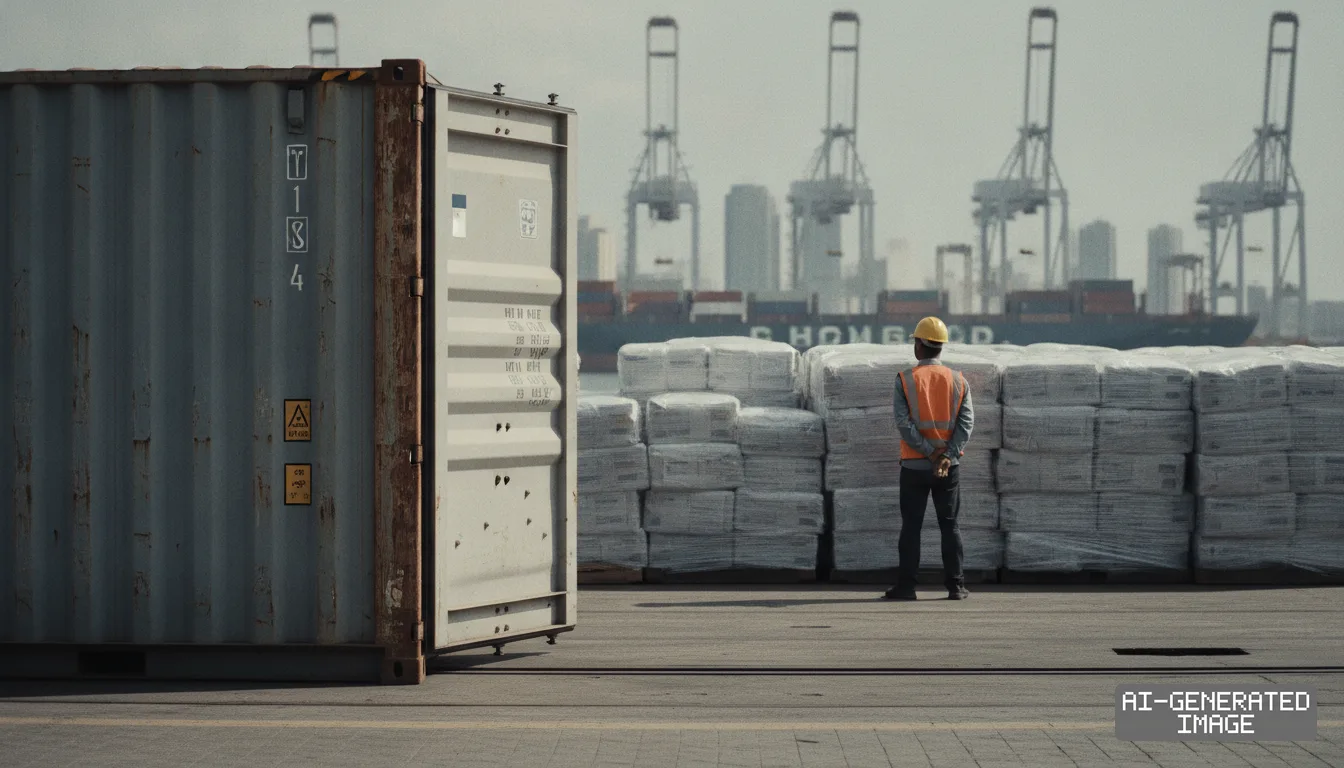
China curbs biotech exports while shielding drug licensing
A joint ministry proposal bans transfers of core therapy platforms abroad but permits cross-border out-licensing and contract research to protect $110 billion in pharmaceutical partnerships.

China's Ministry of Commerce proposed biotech export controls on Oct. 16, 2026, while explicitly exempting cross-border drug licensing deals to preserve foreign revenue for domestic pharmaceutical developers.
The draft revises China's export control catalog, adding 40 technologies across artificial intelligence, photovoltaics and biomedicine. Authorities designated 14 entries as prohibited and 26 as restricted from outbound transfer.
The five biomedicine entries represent 12.5% of the additions. They target cell and gene therapy platforms, small interfering RNA molecules and pathogenic microorganisms, according to the ministry notice.
The rules prohibit the outbound transfer of proprietary platforms used to manufacture cell and gene therapies and small interfering RNA medicines. Those mechanisms silence disease-causing genes or modify patient cells.
Regulators separated platform ownership from commercial drug development. The draft allows domestic biopharma companies to out-license individual clinical candidates and provide contract manufacturing services to overseas partners without facing the ban.
The carve-out protects the fastest-growing revenue stream in Chinese biotechnology. Chinese drug developers completed 81 cross-border licensing transactions during the first six months of 2026, totaling $110 billion in deal value.
Global drugmakers rely heavily on those licensing pipelines. AstraZeneca Plc and Pfizer Inc. have expanded licensing pacts with Chinese developers, securing rights to experimental cancer drugs and antibody-drug conjugates.
Western biopharmaceutical firms have accounted for nearly all recent licensing activity in the country. A blanket embargo on cross-border deals would have cut off pipeline replenishment for multinational drugmakers.
Under the draft rules, proprietary target discovery and validation technologies will face restricted status rather than an outright ban. The ministry will apply an automatic licensing mechanism to standard licensing transactions.
Automatic licensing allows routine cross-border agreements to clear regulatory hurdles through expedited administrative filings. That procedural relief applies as long as legal ownership of the discovery platform remains in China.
The announcement caused brief volatility among domestic contract research organizations. Shares of WuXi AppTec Co., which operates contract laboratory and manufacturing facilities across China, fell 2.19% in Hong Kong before recovering.
Investors stabilized after legal teams confirmed that contract research operations are exempt from the platform ownership prohibition. Domestic service providers generate substantial revenue by handling clinical trials and process manufacturing for foreign clients.
The policy shift signals that Beijing is guarding fundamental biotechnology tools rather than clinical assets. Officials seek to prevent the permanent relocation of platform intellectual property while encouraging foreign cash inflows.
A ministry spokesperson said the measures aim to standardize technology exports while supporting legitimate cross-border research cooperation. The spokesperson said export restrictions could be relaxed during global public health emergencies.
The Ministry of Commerce and the Ministry of Science and Technology activated an interim pre-export registration system on Oct. 16, 2026. The mandatory online filing requirement applies immediately.
The interim measure covers outbound transfers, overseas licensing and ownership shifts that transfer corporate control to foreign entities. It also covers transactions that began before the notice but have not closed.
The public consultation period runs until Nov. 15, 2026, when authorities will begin finalizing the catalog. Companies must use the temporary registration system until the formal revisions take effect.
The notice does not state the exhaustive technical screening thresholds from Annex 1, leaving specific numeric criteria and sub-entry pathogen classification codes unpublished.
Cross-border licensing filings submitted under the temporary registration framework will show how regional commerce bureaus interpret the automatic licensing provisions ahead of the November deadline.
Impact map
How this development propagates across the region and out to global buyers.
| Event | Korea | China | Japan | Global impact |
|---|---|---|---|---|
| Biotech export control revision | drug developers face no direct limits but monitor competing target assets | developers keep outbound licensing channels open while platform sales are barred | pharmaceutical majors must verify that licensed programs clear pre-export filings | multinational drugmakers retain access to clinical pipelines under automatic licensing |
| Biotech export control revision | drug developers face no direct limits but monitor competing target assets | developers keep outbound licensing channels open while platform sales are barred | pharmaceutical majors must verify that licensed programs clear pre-export filings | multinational drugmakers retain access to clinical pipelines under automatic licensing |
In this story
- Companies
- WuXi AppTecAstraZenecaPfizer
- Tickers
- 2359.HKAZNPFE
- Policy
- Export Controls
- Impact
- ComplianceSupply ChainOrder Book
Track every Export Controls development →
Related briefings
- Rainbow Robotics files US waiver to bypass robot import ban Also on Export Controls, Compliance, Order Book
- US limits aircraft part licenses to China to counter mineral limits Also on Export Controls, Compliance, Order Book
- US Senator Daines urges China talks to protect rare earths Also on Export Controls, Compliance, Order Book
- Vulcan Elements wins US Army drone permanent magnet contract Also on Export Controls, Compliance, Order Book
Sources
Primary documents
Reporting
Confidence: high — how we grade this
The documents behind this briefing are linked above. East Asia Brief produces its English text with AI assistance under human editorial review, and does not translate or republish other outlets' articles. See our methodology and AI policy. Spotted an error? Tell us.
The Morning Brief
What changed in Korean, Chinese and Japanese industry overnight — and what it means for your supply chain. One email, weekday mornings, US time. Free.
The Morning Brief is in preparation. Leave your address and we will write to you once — when the first issue is ready. Nothing before that.