US advisory panel seeks India drug supply pact to counter China
A congressional report recommends joint purchasing mandates with New Delhi as Chinese suppliers control 45% of active drug master files with US regulators.
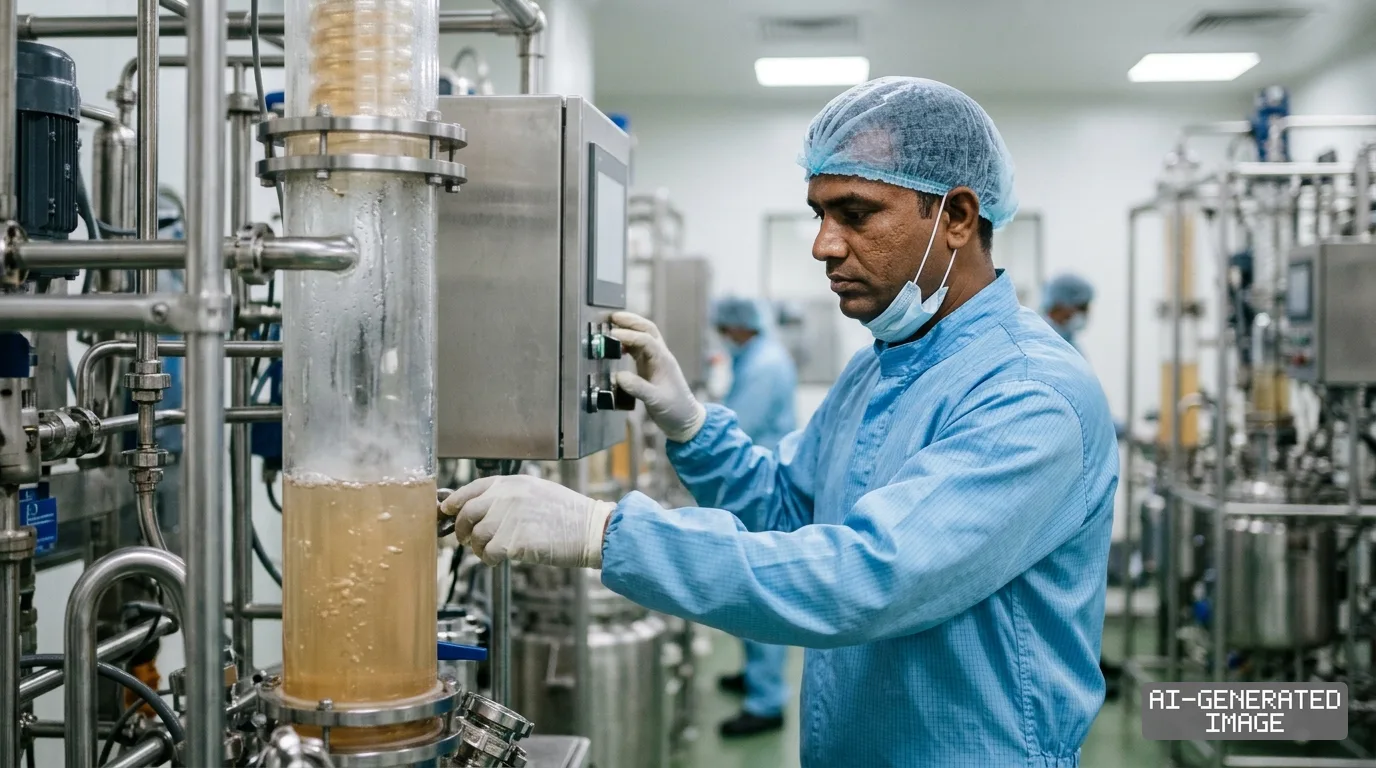
The U.S.-China Economic and Security Review Commission urged lawmakers Nov. 19 to establish a joint pharmaceutical procurement initiative with India to break Chinese leverage over essential medicine supply chains.
The bipartisan commission monitors bilateral economic ties for the U.S. Congress. Its statutory report focuses on active pharmaceutical ingredients, which provide the therapeutic biological effect in generic antibiotics and finished tablets.
China accounts for 45% of active Drug Master Files filed with U.S. regulators, while American domestic producers hold 3%. In 1981, U.S. facilities maintained 25% of global filings and European drugmakers held 63%.
Europe's share of active ingredient filings has contracted to 6%. European manufacturers now purchase 79% of their antibiotic ingredients from China, alongside 70% of imported organic chemical building blocks by weight, the report said.
The commission proposed the Comprehensive Critical Drug Diversification program, designated C2D2, to resolve commercial hurdles facing alternative suppliers. Western drugmakers avoid non-Chinese suppliers because state-subsidized Chinese ingredients cost 35% to 40% less.
Under the C2D2 initiative, Congress would establish a pharmaceutical supply chain early warning mechanism. The system would identify manufacturing sites for active ingredients, key starting materials and chemical intermediates across essential drug categories.
The surveillance mechanism would flag emerging supply disruptions and trace single-facility concentrations. Federal agencies would direct procurement orders and capital grants toward identified supply vulnerabilities, according to the recommendations.
The proposal directs the U.S. Department of Health and Human Services to create a Federal Trusted Demand Program. The department would issue multiyear purchase commitments for critical generic medicines made with qualifying partner inputs.
The U.S. government would require verified ingredient provenance as a mandatory condition for participating pharmaceutical vendors. Participating federal agencies would coordinate pricing standards and receive subpoena authority to audit supplier documentation.
Capital support for Indian manufacturing facilities under C2D2 would include strict chemical sourcing conditions. Indian producers must prove minimal and declining reliance on Chinese starting materials to qualify for funding, the commission said.
The funding rules require matching financial commitments from the Indian government. The commission said coordinated purchasing is necessary to defend alternative producers against aggressive Chinese price cutting.
Chinese chemical exporters cut export prices 40% to 50% across 41 critical active ingredients in late 2025. Several Chinese manufacturers dumped chemical precursors below cash production costs to undercut newly commissioned Indian plants.
The price cuts hit Indian factories producing clavulanate potassium and penicillin-G, the fundamental chemical inputs for hospital antibiotics. Those facilities had received capital subsidies under India's production-linked incentive scheme in Himachal and Telangana.
Indian pharmaceutical firms supply roughly 60% of generic finished doses consumed in the United States. However, Indian bulk manufacturers like Divi's Laboratories depend on Chinese suppliers for up to 70% of upstream starting materials.
This upstream dependency leaves finished generic drug distribution vulnerable to Chinese chemical export curbs. Beijing deployed export controls on rare earth minerals in 2025 to exert economic leverage over Western technology industries, the report said.
The commission warned that Chinese authorities could replicate rare earth restrictions across active pharmaceutical ingredients. A sudden export halt on hospital antibiotics or the blood thinner heparin would create immediate clinical shortages.
The policy recommendations arrive alongside intensifying congressional scrutiny of Chinese biotechnology service providers. Lawmakers are advancing the BIOSECURE Act to prohibit federal contracts with designated Chinese contract research and testing corporations.
Chinese contract research leader WuXi AppTec draws roughly 65% of its corporate revenue from overseas customers, primarily U.S. biopharmaceutical developers. Restrictive procurement statutes would force Western drug developers to terminate service pacts with Chinese laboratories.
South Korea's Samsung Biologics operates 604,000 liters of biomanufacturing capacity across four production facilities in Songdo. The company is investing in fifth-plant expansion to capture Western outsourcing demand shifting away from Chinese contractors.
Swiss drugmaker Lonza and Japanese bioprocessors are expanding their regional facilities to handle redirected clinical development contracts. Western pharmaceutical developers are auditing active ingredient vendors to prepare for statutory sourcing mandates.
Commission member Leland Miller said during a Nov. 19 congressional hearing that China is expanding innovative biotechnology capabilities. Miller said Chinese laboratories are shifting from basic chemical replication toward proprietary therapeutic development.
The 119th U.S. Congress convenes Jan. 3, 2027, when legislative committees will consider statutory language for C2D2. Congressional committees are scheduled to examine federal health procurement mandates during the first legislative work period.
The report does not state the federal budget allocation for the C2D2 initiative, and the commission has not published a binding implementation date. The document also omits the numerical threshold required to prove declining Chinese starting material usage.
The commission delivered its annual recommendations to the House of Representatives and the Senate following unanimous approval by 10 commissioners. Current federal procurement regulations allow government purchasers to acquire generic drugs without certifying raw chemical origins.
Impact map
How this development propagates across the region and out to global buyers.
| Event | Korea | China | Japan | Global impact |
|---|---|---|---|---|
| USCC drug supply diversification proposal | Samsung Biologics targets Western outsourcing shifting from Chinese biopharma, expanding beyond 604,000-liter capacity | WuXi AppTec faces procurement curbs across US client base generating ~65% of revenue | Japanese biomanufacturers add cleanroom capacity to absorb redirected Western development contracts | Generic medicine supply chains face rising compliance audits and dual-sourcing costs for essential chemical inputs |
In this story
- Companies
- WuXi AppTecSamsung BiologicsDivi's Laboratories
- Tickers
- 603259.SS082660.KS532488.BOM
- Exposed
- Lonza
- Policy
- Procurement RulesSubsidies
- Impact
- Supply ChainPricingCompliance
Track every Procurement Rules development → Track every Subsidies development →
Related briefings
- China curbs biotech exports while shielding drug licensing Also on WuXi AppTec, Compliance
- China limits biotech platform exports as MOFCOM targets cell therapy Also on Samsung Biologics, Compliance
- Commerce exempts South Korean biopharma from import tariffs on Sept. 29 Also on Samsung Biologics, Pricing
- Merck opens €300m South Korea plant for regional biopharma Also on Samsung Biologics
Sources
Primary documents
Reporting
Confidence: high — how we grade this
The documents behind this briefing are linked above. East Asia Brief produces its English text with AI assistance under human editorial review, and does not translate or republish other outlets' articles. See our methodology and AI policy. Spotted an error? Tell us.
The Morning Brief
What changed in Korean, Chinese and Japanese industry overnight — and what it means for your supply chain. One email, weekday mornings, US time. Free.
The Morning Brief is in preparation. Leave your address and we will write to you once — when the first issue is ready. Nothing before that.