US Senator Daines urges China talks to protect rare earths
The appeal follows a 21% drop in August magnet imports from China, with bilateral working groups seeking to avert shortages before a tariff and licensing truce expires Nov. 10.
US Senator Steve Daines urged Washington and Beijing on Oct. 2 to maintain direct negotiations over rare earths, warning against diplomatic retreat despite ongoing trade friction.
The appeal follows official trade data showing China shipped 512 metric tons of rare-earth permanent magnets to the United States in August. That volume marked a 21% drop from July and a 13% decline from a year earlier.
August shipments sat near China's 2026 monthly average of 504 metric tons. However, they remained well below the 2024 monthly pace of 621 metric tons recorded before Beijing tightened export controls.
Speaking in an interview published Oct. 2 by the South China Morning Post, Daines stressed that both capitals must resolve mineral disputes through steady engagement rather than isolation.
Both sides acknowledge serious differences, but the answer is to stay engaged rather than retreat, Daines said. He emphasized that critical mineral supply chains require continuous bilateral discussion to prevent abrupt industrial shortfalls.
His remarks responded to public criticism delivered Sept. 27 by US Ambassador to China David Perdue. Perdue accused Beijing on Fox News Sunday of weaponizing its single-source dominance over critical minerals against global industry.
The legislative intervention aligns with a White House fact sheet released Sept. 25 following leader-level meetings in Washington between President Donald Trump and Chinese President Xi Jinping.
That official summary confirmed both governments are continuing working-level discussions on rare earths and critical minerals. The stated objective is restoring bilateral shipment volumes to appropriate levels.
Those talks operate alongside the newly activated US-China Board of Trade and Board of Investment. Both bodies were chartered during bilateral summits earlier in 2026 to govern non-sensitive commerce and investment disputes.
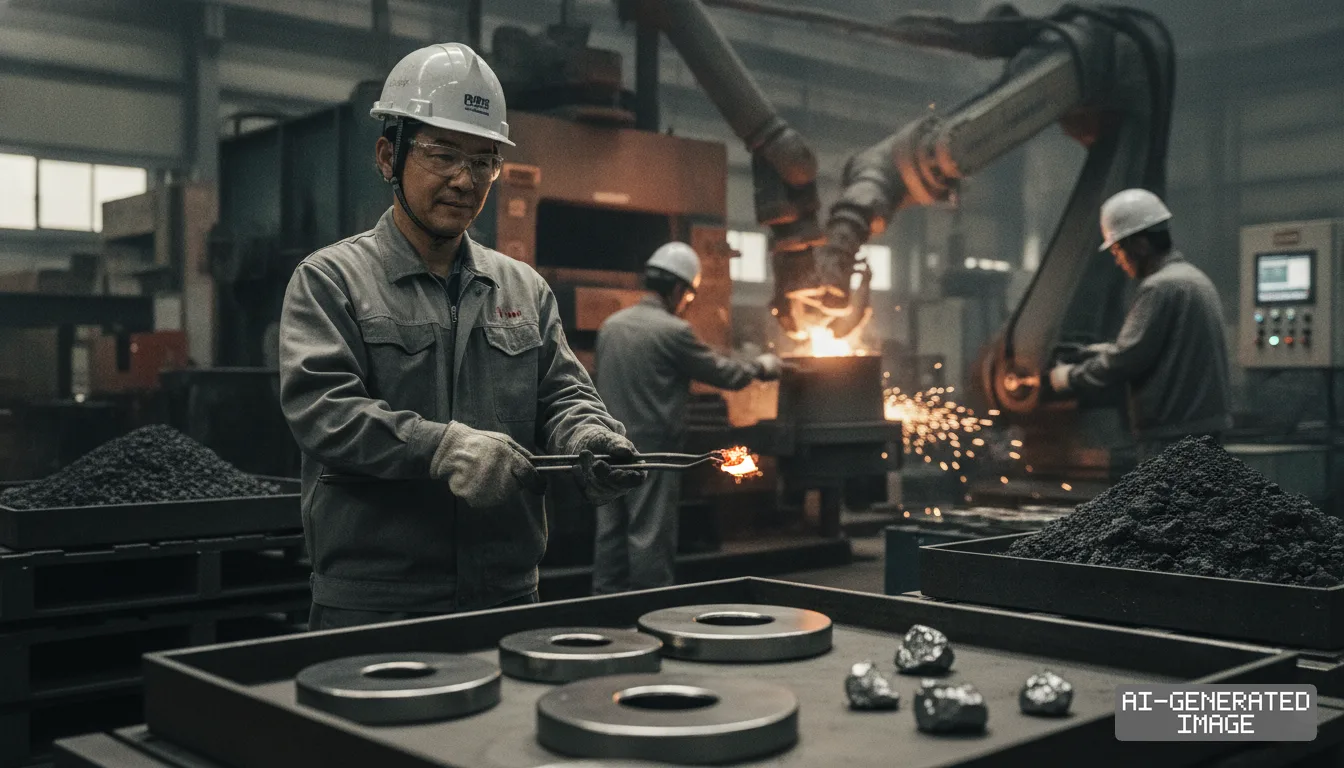
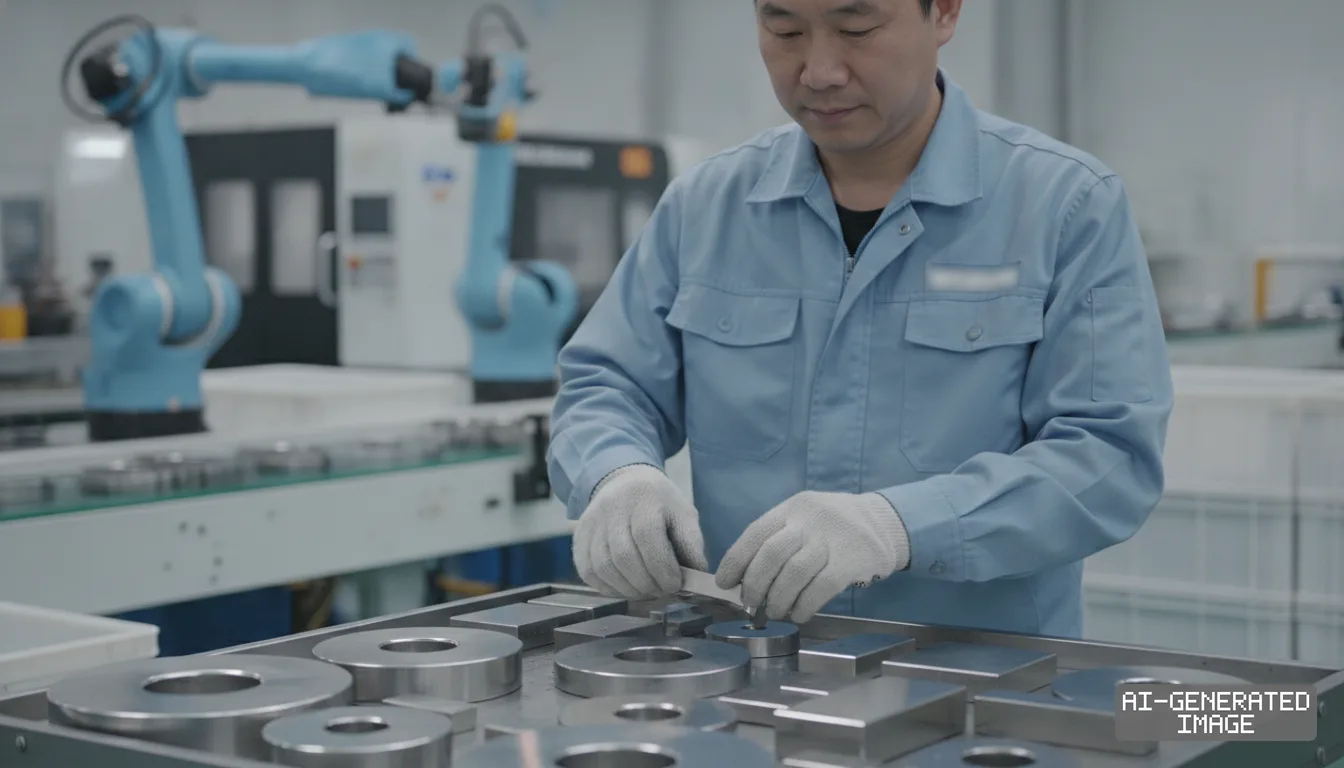
Permanent magnets remain central to the dispute because manufacturing alternatives do not exist at scale. The components are essential for electric vehicle drive units, precision robotics, wind turbines, fighter jet actuators and guided missiles.
Supply bottlenecks fall directly on US processors and magnet developers. MP Materials operates the Mountain Pass mine in California, which accounts for roughly 15% of global rare earth concentrate extraction.
MP Materials still ships rare earth concentrate overseas because domestic heavy rare earth separation facilities remain under construction. Chinese refiners control approximately 90% of global commercial capacity for separating heavy elements like dysprosium and terbium.
Beijing placed export restrictions on MP Materials and USA Rare Earth in July. Those controls limited access to specialized processing equipment, technical data and intermediate reagents across North American processing projects.
Downstream pressure will mount on Jan. 1, 2027, when the Department of Defense is scheduled to halt procurement of defense equipment containing Chinese-origin rare earth magnets under statutory sourcing rules.
China introduced specialized export licensing requirements in April 2025 for seven medium and heavy rare earth elements. The system requires exporters to secure case-by-case government approvals before cargo clears customs.
The export licensing regime produced immediate friction in international supply chains. Bureaucratic reviews caused temporary delivery halts in early 2026, producing zero recorded US imports of yttrium during multiple monthly reporting cycles.
The supply constraint exposes what trade specialists describe as a two-clock problem. Diplomatic relief through expedited export licenses operates on weeks, while building alternative separation circuits and magnet plants requires three to seven years.
The current diplomatic baseline rests on an October 2025 bilateral agreement reached in Busan, South Korea. Under that arrangement, Washington adjusted select tariffs while Beijing paused secondary critical-mineral curbs.
China's Ministry of Commerce and the General Administration of Customs issued Announcement No. 70 of 2025 in November, formally suspending broadened export controls on rare earth equipment and raw materials.
That suspension expires Nov. 10, 2026, creating a hard calendar deadline before scheduled bilateral meetings at the Asia-Pacific Economic Cooperation gathering in Shenzhen and the Group of 20 summit in Miami.
The senator's office has not published a formal roster of congressional backchannel participants, and neither government has released draft documentation establishing specific magnet quota volumes.
Working groups under the US-China Board of Trade remain scheduled to review critical mineral licensing tallies before the mid-November expiration date.
Impact map
How this development propagates across the region and out to global buyers.
| Event | Korea | China | Japan | Global impact |
|---|---|---|---|---|
| rare earth licensing talks | Korean magnet makers face tight Chinese dysprosium allocations | refiners retain leverage over 90% of global heavy rare earth separation | motor suppliers maintain 60-day permanent magnet buffer stocks | defense and EV supply chains face licensing deadline on Nov. 10 |
In this story
- Companies
- MP MaterialsUSA Rare Earth
- Tickers
- MP
- Policy
- Export ControlsTariffs
- Impact
- Supply ChainOrder BookCompliance
Track every Export Controls development → Track every Tariffs development →
Related briefings
- China rare earth suppliers halt US shipments ahead of Washington summit talks Also on USA Rare Earth, MP Materials, Export Controls
- China bans dual-use sales to MP Materials and US refiners Also on USA Rare Earth, Export Controls, Compliance
- China bars dual-use exports to Japan citing military end-use Also on USA Rare Earth, Export Controls, Compliance
- Evolution Metals scales Korea magnet capacity to 10,000 tons Also on MP Materials, Export Controls, Compliance
Sources
Primary documents
Reporting
Confidence: high — how we grade this
The documents behind this briefing are linked above. East Asia Brief produces its English text with AI assistance under human editorial review, and does not translate or republish other outlets' articles. See our methodology and AI policy. Spotted an error? Tell us.
The Morning Brief
What changed in Korean, Chinese and Japanese industry overnight — and what it means for your supply chain. One email, weekday mornings, US time. Free.
The Morning Brief is in preparation. Leave your address and we will write to you once — when the first issue is ready. Nothing before that.