India Rebukes China on Trade Barriers as Deficit Hits $100B
Finance Minister Nirmala Sitharaman said Beijing blocks generic drugs and agricultural goods through phytosanitary rules while Indian factories remain dependent on Chinese parts.
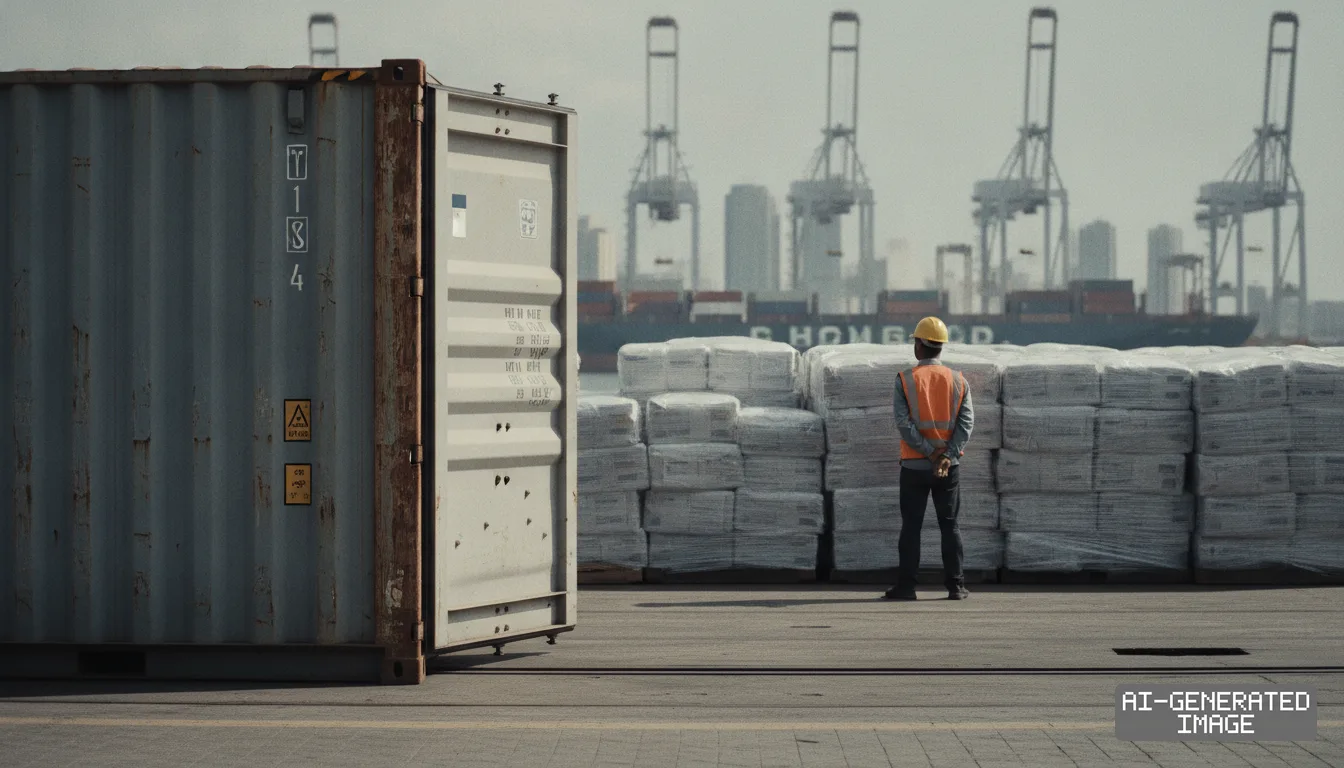
Indian Finance Minister Nirmala Sitharaman said Oct. 16 that Chinese non-tariff barriers have become the primary hurdle in bilateral ties as New Delhi's trade deficit with Beijing topped $100 billion.
Speaking at an Atlantic Council dialogue during the International Monetary Fund and World Bank annual meetings in Bangkok, Sitharaman pointed to Chinese market restrictions. She said the bilateral trade imbalance has expanded at an unsustainable pace this year.
The shortfall crossed $100 billion across the first nine months of 2026, according to trade data cited during the session. That deficit accounts for more than a third of India's total merchandise trade imbalance with the world.
India has sought access to Chinese buyers for competitive export sectors without meaningful progress, Sitharaman said. She singled out pharmaceutical generics, bovine meat and agricultural vegetables as categories facing persistent resistance.
Chinese regulators use sanitary and phytosanitary rules to delay or halt Indian agricultural and protein shipments at customs checkpoints, Sitharaman said. Similar administrative vetting protocols have slowed market clearance for Indian finished pharmaceuticals in mainland hospitals.
New Delhi has avoided retaliating with unilateral punitive tariffs or countervailing duties, Sitharaman said. She noted that the Indian government continues to prioritize institutional negotiations even as trade frictions widen.
The trade rift exposes an operational contradiction inside India's manufacturing expansion. Prime Minister Narendra Modi's administration has deployed production-linked incentive schemes to build domestic manufacturing scale, but those domestic assembly lines rely heavily on Chinese sub-assemblies.
Intermediate components make up roughly 70% of India's total purchases from China, according to trade ministry customs classifications. Capital equipment for industrial factories represents another 22% of inbound shipments.
Indian generic drug makers face substantial cost exposure to Chinese chemical plants. Sun Pharmaceutical Industries and Dr. Reddy's Laboratories procure roughly 60% of their active pharmaceutical ingredients and key starting materials from Chinese chemical vendors.
A supply disruption in Chinese active ingredients raises unit manufacturing costs for Indian formulation plants within four weeks. The Indian government has funded domestic bulk drug parks, but Indian chemical inputs remain 15% to 20% more expensive than Chinese baseline imports.
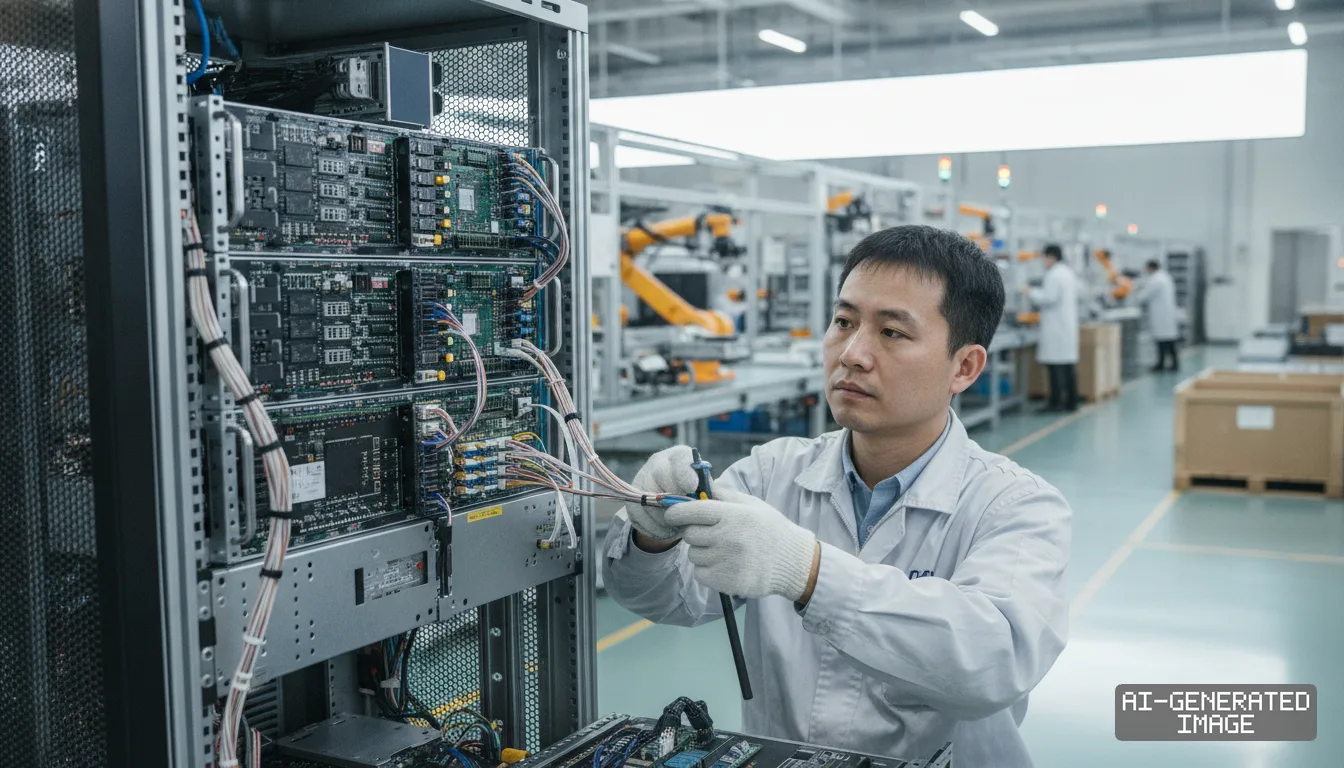
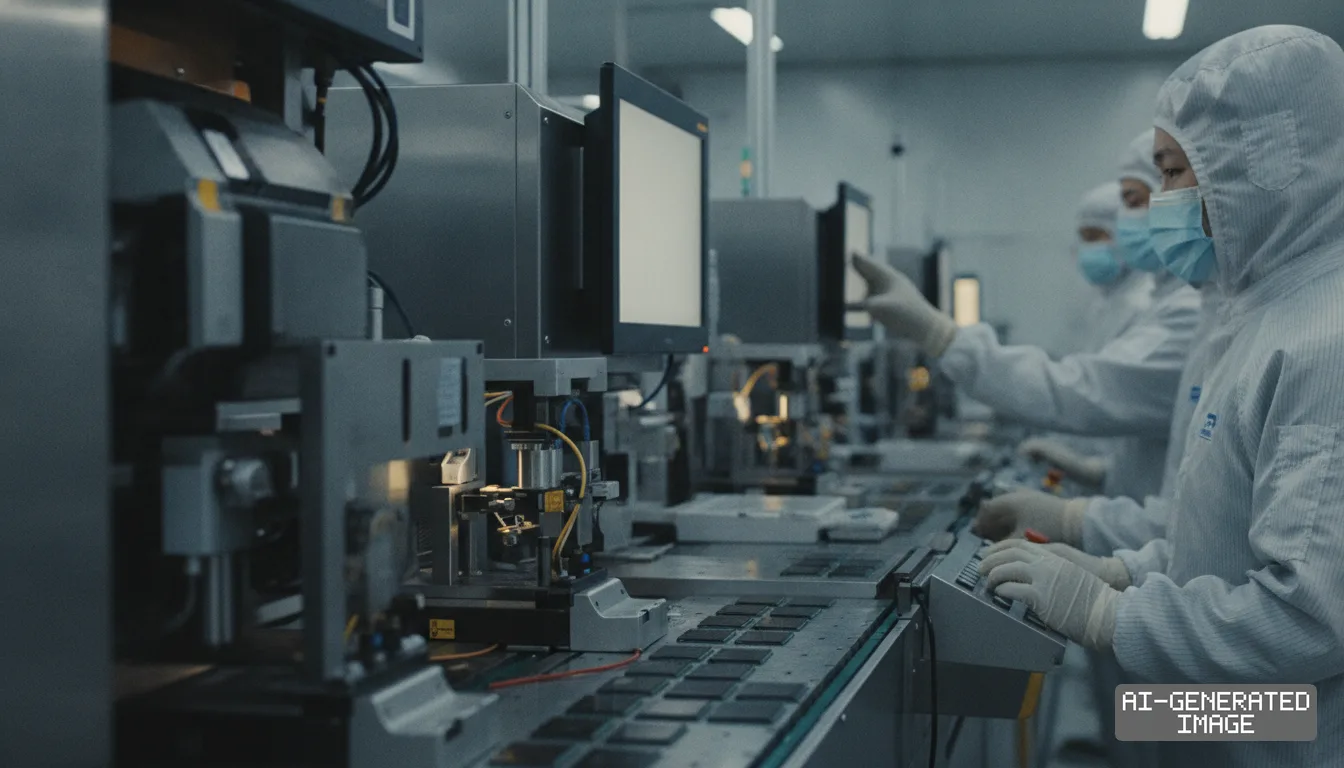
India's electronics assembly sector shows an identical operational bottleneck. Contract manufacturer Dixon Technologies sources more than 70% of its sub-components, including printed circuit board assemblies and display panels, from Chinese industrial suppliers.
Electronics hardware under Chapter 85 generated a $43.1 billion deficit with China in the latest fiscal cycle. Indian plants assemble the final smartphones and appliances, but value addition inside India averages less than 20% of total product billing.
Clean energy supply chains face similar vulnerabilities. Indian solar developers and electric vehicle producers buy over 80% of their photovoltaic cells and lithium-ion cells directly from Chinese producers, including Contemporary Amperex Technology.
Chinese cell makers retain a 25% cost advantage over newly commissioned Indian plants due to cheaper electricity tariffs and established mineral refining scale. Tariff barriers on these items immediately drive up installation costs for Indian utility solar farms.
Diplomatic tensions have complicated regulatory policy since the 2020 border clashes between Indian and Chinese forces. India's Department for Promotion of Industry and Internal Trade still requires prior screening for all direct foreign investment originating from nations sharing land boundaries.
That restriction has frozen multiple joint ventures between Chinese component suppliers and Indian manufacturing conglomerates. Indian industrial chambers have urged the finance ministry to allow selective Chinese joint ventures in specialized electronics packaging to accelerate local component fabrication.
Sitharaman's remarks coincide with broader discussions on external trade diversification. She expressed optimism in Bangkok that the first phase of a proposed bilateral trade pact with the United States will conclude rapidly following ongoing legal drafting.
New Delhi also plans to review existing free trade pacts with Southeast Asian neighbors to halt Chinese transshipments, Sitharaman said. Indian customs authorities suspect Chinese manufacturers redirect finished electronics and chemical consignments through regional third-party ports.
The IMF and World Bank annual meetings in Bangkok conclude Oct. 18, 2026, when finance ministers formalize their multilateral statements. Indian trade negotiators are scheduled to review bilateral import quotas and technical standards in New Delhi before the end of November.
The Indian Ministry of Finance has not published an official transcript of the Bangkok dialogue, and China's Ministry of Commerce has not issued a formal response to Sitharaman's comments.
Impact map
How this development propagates across the region and out to global buyers.
| Event | Korea | China | Japan | Global impact |
|---|---|---|---|---|
| Chinese non-tariff barriers on Indian exports | Indian drugmakers seeking Korean API alternatives to replace blocked Chinese supply channels | Chinese customs tightens SPS checks on agricultural lines while sustaining $100B export surplus | Tokyo component suppliers gain leverage as Indian electronics makers seek alternatives to China | India's assembly sectors face margin squeeze as intermediate import reliance offsets assembly subsidies |
| Chinese non-tariff barriers on Indian exports | Indian drugmakers seeking Korean API alternatives to replace blocked Chinese supply channels | Chinese customs tightens SPS checks on agricultural lines while sustaining | — | — |
| Chinese non-tariff barriers on Indian exports | Indian drugmakers seeking Korean API alternatives to replace blocked Chinese supply channels | Chinese customs tightens SPS checks on agricultural lines while sustaining $100B export surplus | Tokyo component suppliers gain leverage as Indian electronics makers seek alternatives to China | India's assembly sectors face margin squeeze as intermediate import reliance offsets assembly subsidies |
In this story
- Companies
- Sun Pharmaceutical IndustriesDr. Reddy's LaboratoriesDixon Technologies
- Tickers
- SUNPHARMA.NSDRREDDY.NSDIXON.NS
- Exposed
- Contemporary Amperex Technology
- Policy
- StandardsLocal Content Rules
- Impact
- Supply ChainCost Structure
Related briefings
- Kioxia sheds two-thirds of market value as Chinese NAND rivals surge Also on Local Content Rules
- Samsung SDI targets 2027 to produce cylindrical LFP for AI server units Also on Standards, Contemporary Amperex Technology
- Boston Dynamics faces US supply curb on Chinese robot parts Also on Standards, Cost Structure
- HD Hyundai delivers world’s first lashing-free boxship to CMA CGM Also on Standards, Cost Structure
Sources
Reporting
Confidence: medium — how we grade this
The documents behind this briefing are linked above. East Asia Brief produces its English text with AI assistance under human editorial review, and does not translate or republish other outlets' articles. See our methodology and AI policy. Spotted an error? Tell us.
The Morning Brief
What changed in Korean, Chinese and Japanese industry overnight — and what it means for your supply chain. One email, weekday mornings, US time. Free.
The Morning Brief is in preparation. Leave your address and we will write to you once — when the first issue is ready. Nothing before that.