US maritime agency inspects HD Hyundai yard for auxiliary ship bids
A delegation visited the Ulsan complex to review White House terms permitting foreign shipbuilders investing in the US to build two auxiliary hulls abroad.
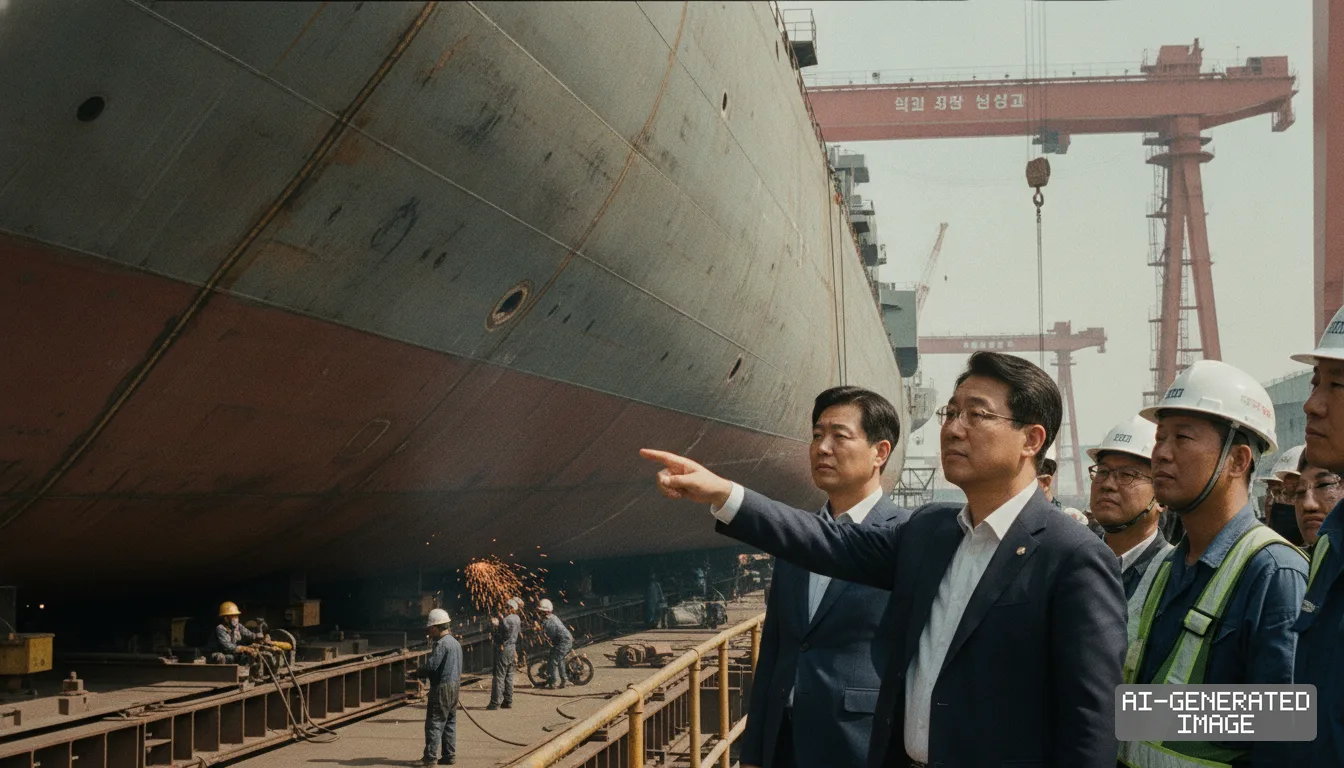
HD Hyundai said Nov. 20 that a delegation from the U.S. Maritime Administration visited its shipyard in Ulsan to inspect vessel production lines and review procurement programs.
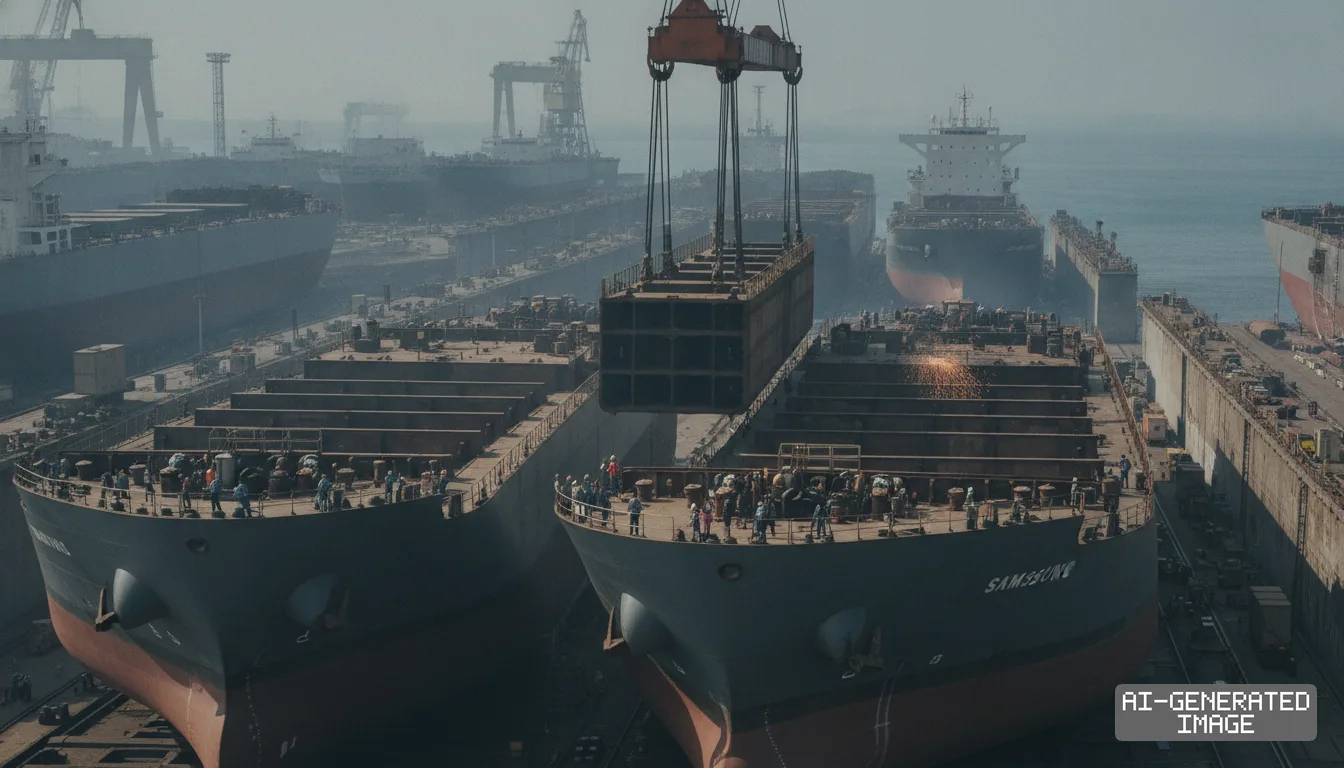
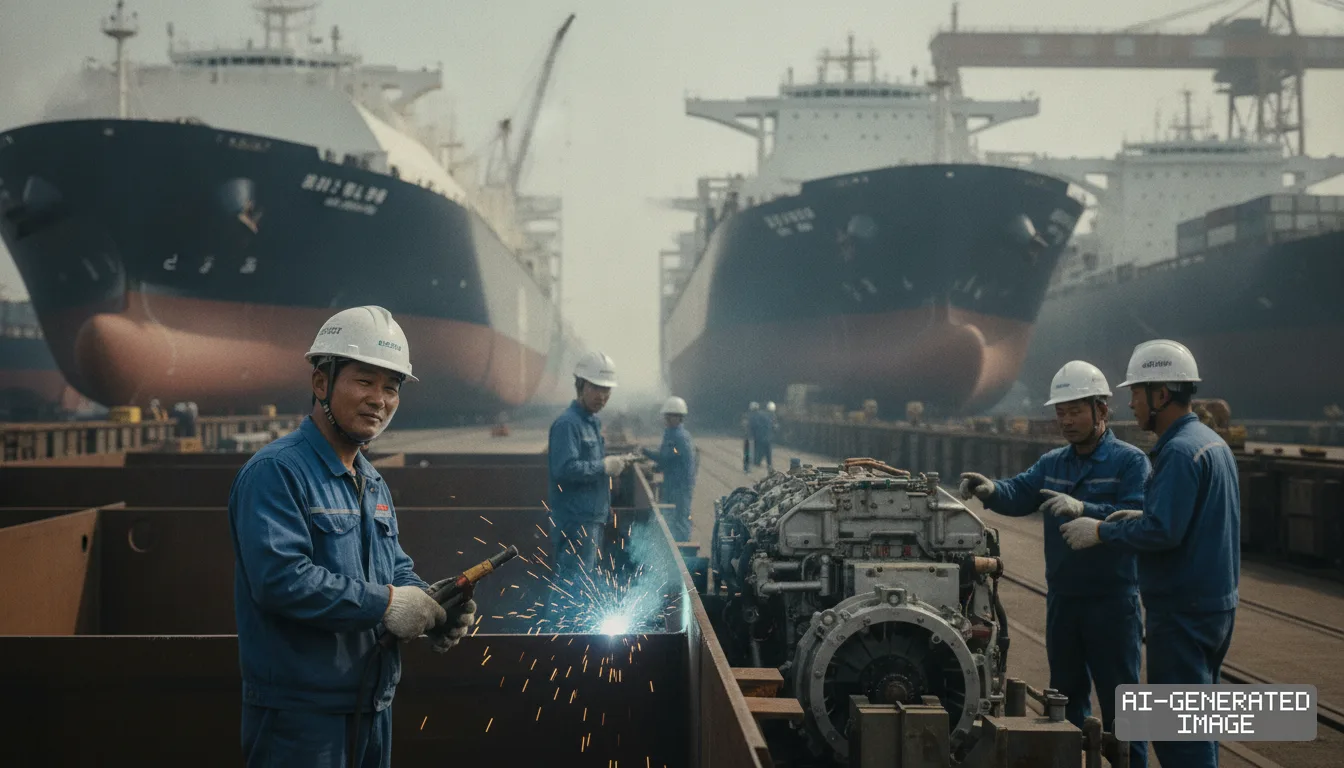
The visit took place Nov. 19 at the world's largest single shipyard, the shipbuilder said. The Ulsan complex delivers dozens of merchant hulls annually and operates dedicated naval berths.
The discussions focused on a White House memorandum issued in August that permits foreign shipbuilders investing in the United States to build up to two auxiliary hulls abroad.
The U.S. Maritime Administration oversees emergency sealift operations and federal port grant programs. The agency operates within the U.S. Department of Transportation to maintain strategic logistics capacity during military mobilizations.
Mark D. Johnson, deputy administrator of the agency, led the delegation through the facility. HD Hyundai Heavy Industries President Joo Won-ho, who heads the company's naval and medium-sized vessel division, received the American group.
The officials inspected a pure car and truck carrier under construction on the yard's commercial ways. These carriers feature multi-deck roll-on roll-off configurations designed to drive vehicles directly aboard via stern ramps.
MARAD operates similar roll-on roll-off transports to deploy battle tanks, armored vehicles and heavy tactical trucks during defense contingencies. Commercial vehicle carriers rely on identical hull forms and high-load internal ramp geometries.
The delegation also discussed technical cooperation in harbor infrastructure and equipment, the company said. MARAD distributes federal grants to modernize American container terminals and improve waterside freight access.
HD Hyundai presented its dockside crane manufacturing and industrial logistics engineering capabilities. The shipbuilder highlighted its ability to manufacture heavy port equipment alongside specialized vessel hulls.
The Ulsan inspection follows an agreement signed in October between HD Hyundai and Omaha-based construction contractor Kiewit. That deal created a corporate joint venture named HD Kiewit Shipbuilding.
The joint venture plans to construct a purpose-built smart shipyard in the United States. HD Hyundai is pursuing an equity holding of more than 50% in the operating company.
Groundbreaking for the American production facility is scheduled for 2027. The joint venture aims to begin full manufacturing operations at the site in 2029.
The American facility is designed to employ roughly 3,000 workers once operating at scale. The venture plans to incorporate automated welding equipment and digital production systems developed in South Korea.
HD Kiewit Shipbuilding will target federal contracts for military auxiliary hulls and specialized commercial ships. The targeted designs include roll-on roll-off sealift ships and consolidated cargo replenishment tankers.
Replenishment tankers transfer marine diesel fuel, aviation kerosene and dry provisions to combat fleets underway. The U.S. Navy relies on civilian-crewed auxiliary fleets to sustain forward naval strike groups.
The venture also plans to fabricate steel hull blocks and machinery modules for established American shipyards. Supplying pre-outfitted modules allows drydock operators in the United States to shorten final assembly cycles.
Washington faces acute capacity constraints across its commercial and naval industrial base. High-tier defense shipyards are backlogged with submarine and destroyer construction, leaving auxiliary repair lines short of drydocks.
The White House bridge policy creates an interim procurement pathway for allied shipyards. Under the directive, foreign shipbuilders that build domestic facilities can assemble early hulls abroad while domestic lines take shape.
South Korea operates extensive commercial yard infrastructure that can compress fabrication timelines. The country delivered more than 30% of global commercial vessel tonnage by deadweight last year.
Ulsan lines run automated cutting workshops, indoor block assembly halls and drydocks capable of finishing multiple vessels concurrently. The facility maintains dedicated supply chains for high-tensile marine plate and propulsion units.
The company's announcement did not state the total capital investment planned for the Kiewit joint venture. MARAD has not published budget estimates or procurement timelines for the auxiliary vessel tenders.
HD Hyundai and Kiewit plan to select the industrial site for their American shipyard before the end of December, the company said.
Impact map
How this development propagates across the region and out to global buyers.
| Event | Korea | China | Japan | Global impact |
|---|---|---|---|---|
| MARAD auxiliary vessel cooperation | HD Hyundai opens qualification pathway for US auxiliary hulls while expanding block exports | Chinese state yards face exclusion from US military auxiliary supply chains | Mitsubishi Heavy and Mitsui E&S maintain separate US commercial repair ties without greenfield yard plans | Allied shipyards absorb US sealift shortfall under presidential investment exemptions |
In this story
- Companies
- HD Hyundai Heavy IndustriesKiewit
- Tickers
- 329180.KS
- Policy
- Procurement RulesInvestment Screening
- Impact
- Order BookCapexSupply Chain
Track every Procurement Rules development → Track every Investment Screening development →
Related briefings
- U.S. military inspects HD Hyundai yard to expand fleet repairs Also on Kiewit, Procurement Rules, HD Hyundai Heavy Industries
- HD Hyundai and Kiewit to build automated Gulf Coast shipyard Also on Kiewit, Procurement Rules, Order Book
- HD Hyundai signs US shipyard pact with Kiewit for naval work Also on Kiewit, Procurement Rules, Order Book
- South Korea commits $1 billion to shipyard robots and yard AI Also on Kiewit, Order Book
Sources
Reporting
Confidence: medium — how we grade this
The documents behind this briefing are linked above. East Asia Brief produces its English text with AI assistance under human editorial review, and does not translate or republish other outlets' articles. See our methodology and AI policy. Spotted an error? Tell us.
The Morning Brief
What changed in Korean, Chinese and Japanese industry overnight — and what it means for your supply chain. One email, weekday mornings, US time. Free.
The Morning Brief is in preparation. Leave your address and we will write to you once — when the first issue is ready. Nothing before that.