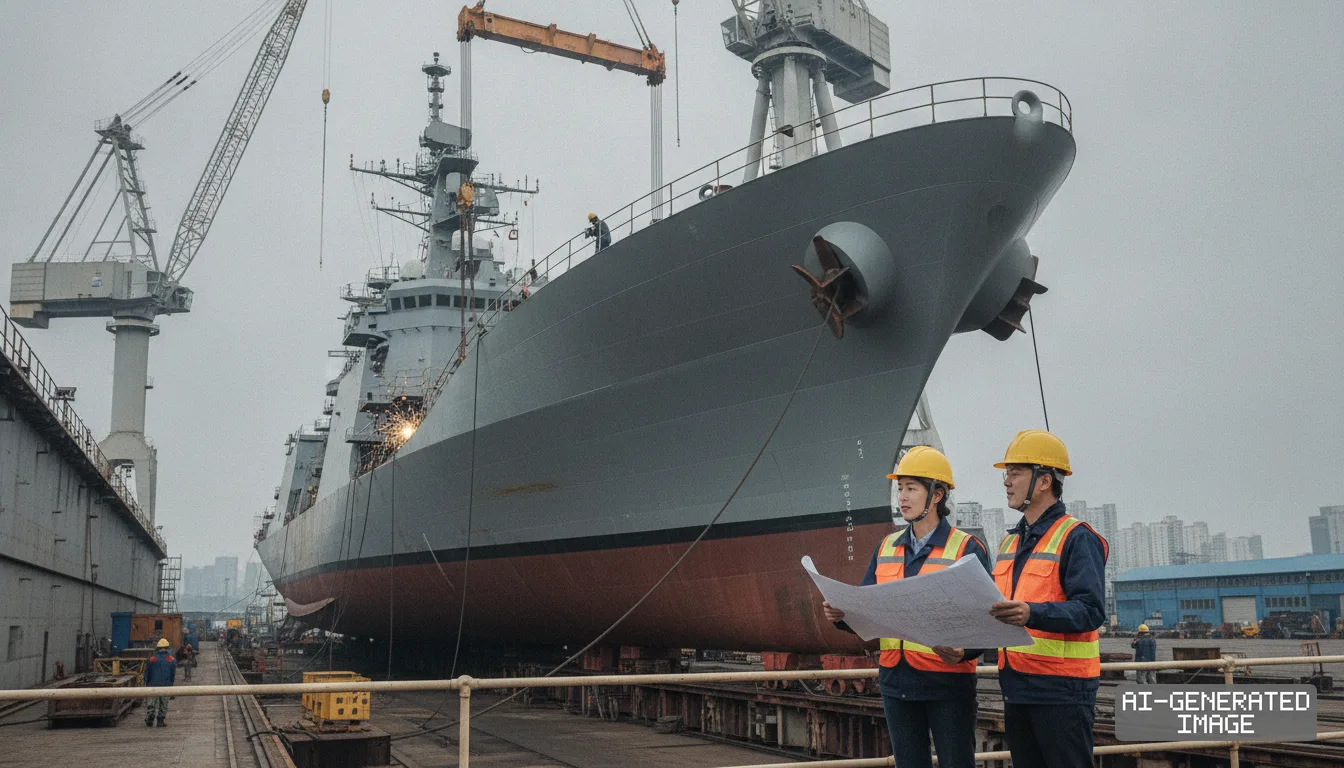
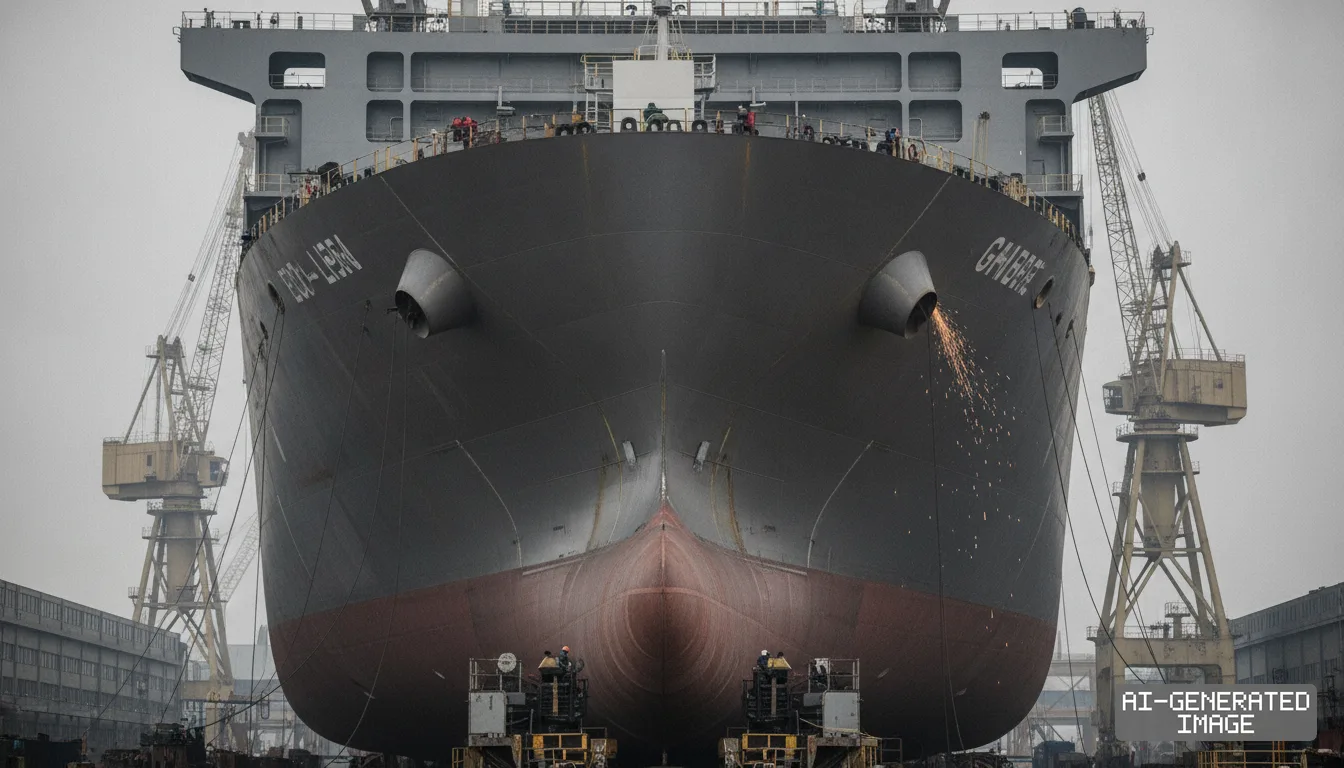
Hanwha spends $3.3M lobbying US on naval MRO as HD Hyundai reports zero
Congressional filings show Hanwha Aerospace accounted for $2.90 million of the outlays covering the defense authorization bill and naval fleet support.
Hanwha Group disclosed $3.29 million in U.S. federal lobbying spending on Nov. 19, 2026, while rival shipbuilder HD Hyundai reported zero lobbying expenditure over the same nine-month period.
The quarterly disclosures filed under the Lobbying Disclosure Act cover January through September 2026. The filings reveal contrasting commercial playbooks as both South Korean conglomerates seek entry into the U.S. naval maintenance, repair and overhaul market.
Hanwha Aerospace accounted for $2.90 million of the group's total lobbying outlay. The defense manufacturer registered lobbying activities on the National Defense Authorization Act, defense appropriations bills, and commercial and military warship construction policies.
The aerospace unit increased its spending trajectory throughout the year. Its quarterly lobbying expenditures grew from $80,000 in late 2025 to $1.42 million in the first quarter of 2026, according to congressional records.
An additional $390,000 came from Hanwha Defense USA through three external advocacy firms. The subsidiary paid $150,000 to Checkmate Government Relations, $120,000 to The Nickles Group and $120,000 to Venture Government Strategies.
Checkmate registered as an outside lobbyist for Hanwha in the third quarter of 2026. The firm disclosed direct contacts with the White House and the Department of Defense regarding domestic shipyard investments.
Hanwha is using Washington lobbying to support direct acquisitions of American maritime infrastructure. The group acquired Philly Shipyard in Pennsylvania for $100 million in 2024 to secure operational drydocks on the U.S. East Coast.
Hanwha is also seeking regulatory clearance to acquire Austal USA, the Alabama-based military shipbuilder. Austal USA spent $548,000 on its own federal lobbying efforts during the same nine-month period, congressional filings show.
The heavy advocacy campaign reflects Hanwha's strategy of owning domestic manufacturing capacity outright. By purchasing American yards, the shipbuilder aims to bypass statutory restrictions that limit foreign participation in military construction and maintenance programs.
In contrast, HD Hyundai registered zero lobbying expenditures under the federal statute through September 2026. Public records show no filings submitted by HD Korea Shipbuilding & Offshore Engineering or HD Hyundai Heavy Industries.
The company's sole federal filings came from HD Hyundai Electric, an affiliate managing trade issues for heavy power transformers. That filing remained separate from the group's naval and commercial shipbuilding units.
HD Hyundai attributed the lack of advocacy spending to its operational timeline. The group only recently established its U.S. corporate entity and considers its American shipyard business to be in an early phase, an official said.
Rather than funding Capitol Hill lobbyists, HD Hyundai has focused on industrial alliances with American defense contractors. HD Hyundai Heavy Industries operates four primary dockyards in South Korea and holds roughly 13% of global shipbuilding output.
On Nov. 12, 2026, HD Hyundai launched a 600-ton autonomous surface vessel developed jointly with Anduril Industries. The companies completed construction of the uncrewed vessel, code-named Alpha, within one year at the Ulsan shipyard.
The vessel combines HD Hyundai's autonomous navigation and machinery management platform with Anduril's Lattice artificial intelligence software. The system automates navigation, damage control and mission execution without requiring an onboard crew.
The prototype follows an earlier demonstration of a 368-ton uncrewed vessel off Long Beach, California, in October. HD Hyundai and Anduril are targeting an upcoming U.S. Navy procurement program for 83 medium unmanned vessels by 2031.
HD Hyundai has also partnered with Huntington Ingalls Industries, the largest military shipbuilder in the United States. In October 2025, the two companies signed a memorandum of agreement in Gyeongju to collaborate on naval auxiliary ships.
The agreement covers joint engineering and construction for next-generation logistics and replenishment vessels. It also outlines potential joint ventures for shipyard facilities in the United States and collaborative fleet maintenance programs.
In October 2026, HD Hyundai signed a separate memorandum of understanding with American engineering firm Kiewit. That partnership examines a prospective joint venture to develop or modernize shipyard capacity on the U.S. coast.
The divergent corporate choices reflect two distinct legal routes through American maritime law. The Merchant Marine Act of 1920, known as the Jones Act, requires vessels operating in domestic coastal trade to be built in U.S. shipyards.
Separate federal defense acquisition statutes also restrict foreign shipyards from overhauling forward-deployed U.S. combat vessels. Foreign yards are generally restricted to non-combat maintenance or voyage repairs unless authorized under bilateral security agreements.
Hanwha is betting that owned domestic yards and sustained lobbying will unlock legislative relief and naval contract awards. The group's advocacy focuses directly on procurement funding lines and shipyard ownership approvals.
HD Hyundai is betting that technological partnerships insulate the shipbuilder from foreign ownership controversies. The company positions itself as an engineering subcontractor to established American primes rather than a foreign buyer of domestic industrial yards.
The federal disclosure filings do not state the full transaction value of Hanwha's proposed purchase of Austal USA. HD Hyundai has not disclosed capital expenditure commitments for its prospective shipyard venture with Kiewit.
The prototype vessel Alpha will undergo three months of sea trials off Ulsan before moving to the United States for Navy testing in early 2027. Fourth-quarter lobbying disclosure reports for all registrants are due Jan. 20, 2027.
Impact map
How this development propagates across the region and out to global buyers.
| Event | Korea | China | Japan | Global impact |
|---|---|---|---|---|
| U.S. naval market entry | Hanwha commits $3.29 million to lobbying while HD Hyundai relies on zero-dollar technical alliances | State shipyards maintain commercial cost edge but face absolute exclusion from allied naval programs | Mitsubishi Heavy monitors Korean naval MRO moves to benchmark future U.S. depot bids | U.S. Navy expands Western Pacific shipyard partnerships to resolve chronic fleet maintenance backlogs |
In this story
- Companies
- Hanwha AerospaceHD Hyundai Heavy Industries
- Tickers
- 012450.KS329180.KS
- Exposed
- Anduril IndustriesHuntington Ingalls IndustriesAustal
- Policy
- Procurement RulesInvestment Screening
- Impact
- Order BookComplianceCapex
Track every Procurement Rules development → Track every Investment Screening development →
Related briefings
- HD Hyundai launches 600-ton autonomous warship with Anduril Also on Anduril Industries, Procurement Rules, HD Hyundai Heavy Industries
- HD Hyundai Tests Autonomous Drone Ship With Anduril in U.S. Also on Anduril Industries, Procurement Rules, Order Book
- HD Hyundai Draws U.S. Navy Focus on Anduril $6.6B Project Also on Anduril Industries, HD Hyundai Heavy Industries, Order Book
- China curbs drone tech exports to US defense contractors in 2026 Also on Anduril Industries, Compliance
Sources
Reporting
Confidence: medium — how we grade this
The documents behind this briefing are linked above. East Asia Brief produces its English text with AI assistance under human editorial review, and does not translate or republish other outlets' articles. See our methodology and AI policy. Spotted an error? Tell us.
The Morning Brief
What changed in Korean, Chinese and Japanese industry overnight — and what it means for your supply chain. One email, weekday mornings, US time. Free.
The Morning Brief is in preparation. Leave your address and we will write to you once — when the first issue is ready. Nothing before that.