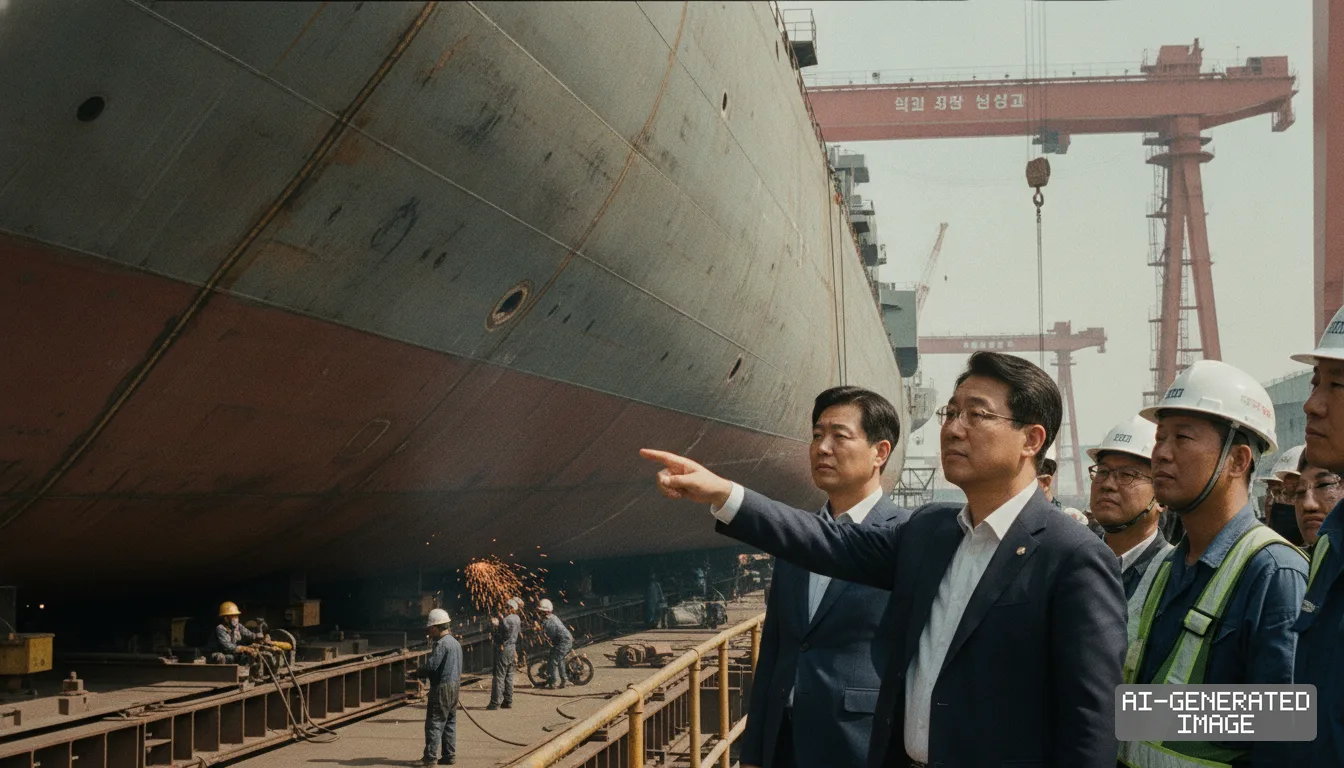
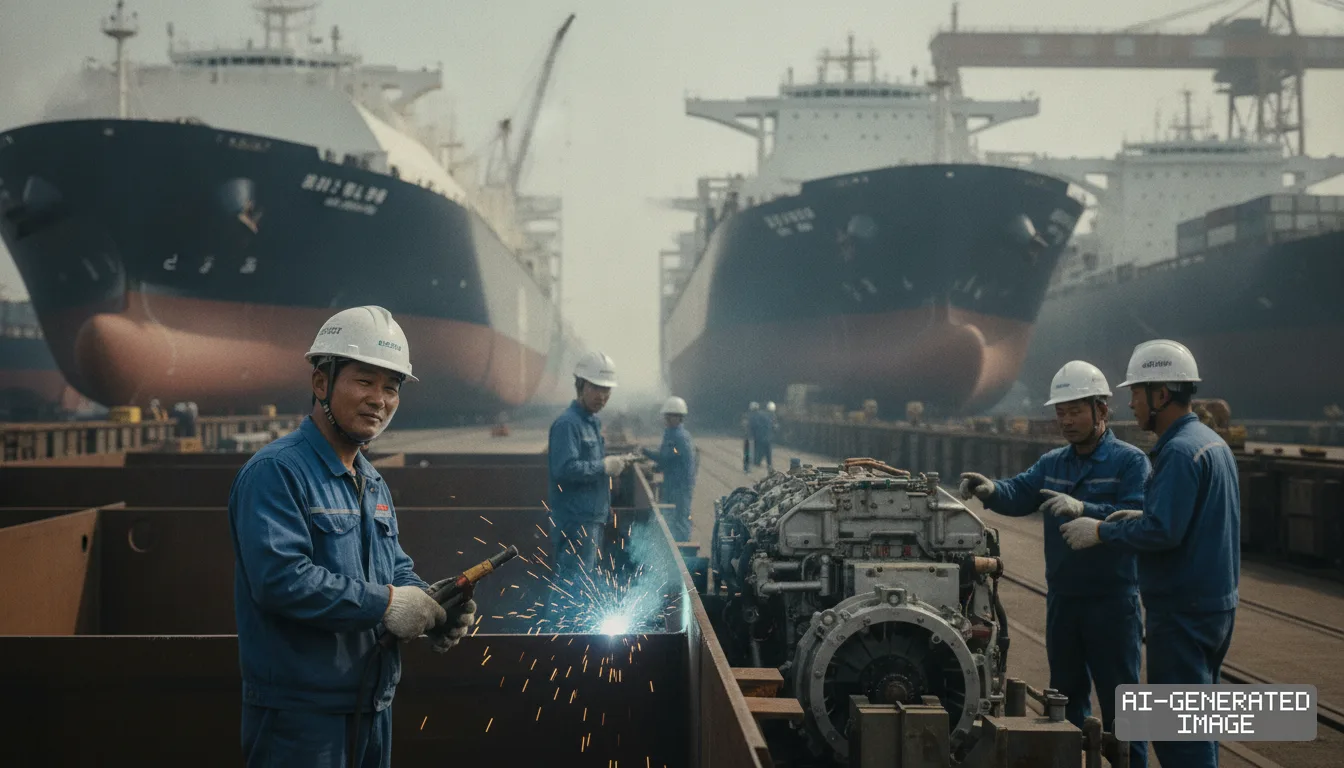
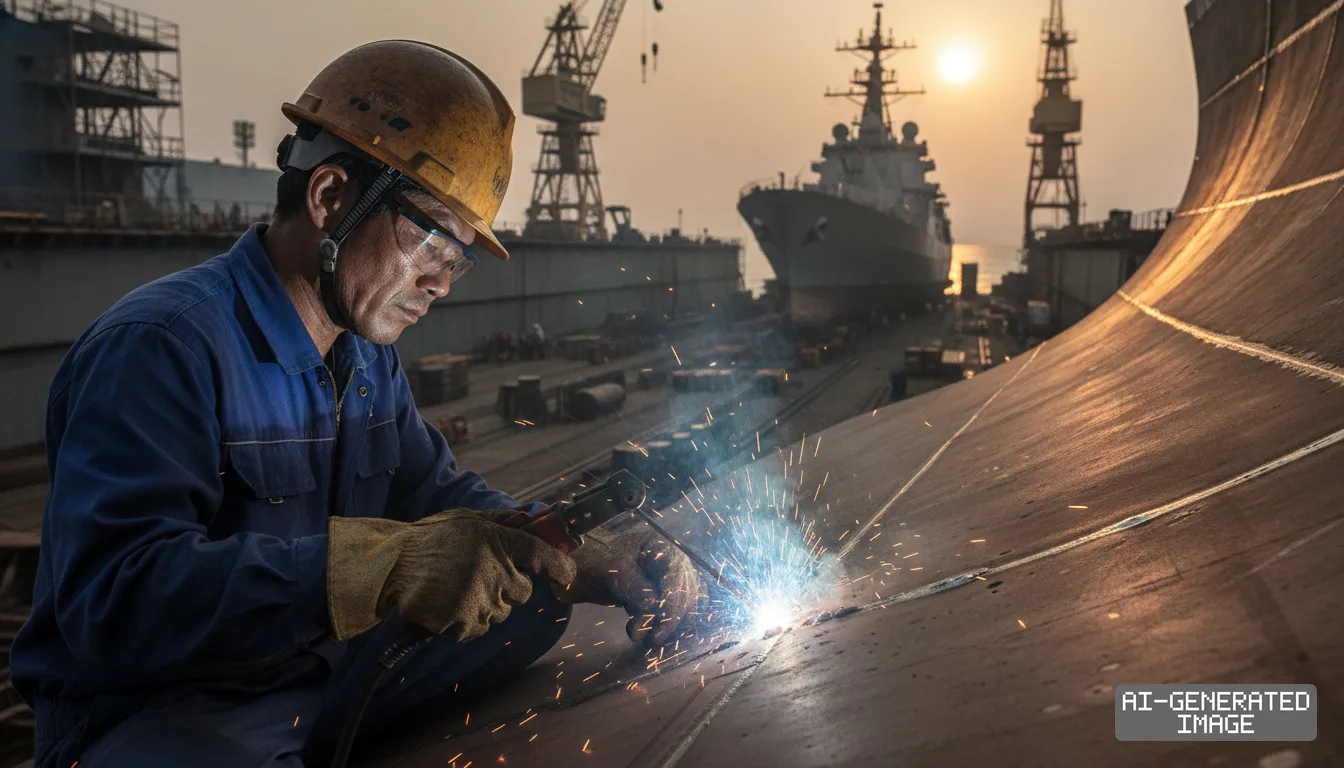
Samsung Heavy targets Indian yards for hull blocks as docks fill
With Geoje order books filled through 2029 for premium gas carriers, the shipbuilder is weighing Indian block fabrication to prevent delivery delays.
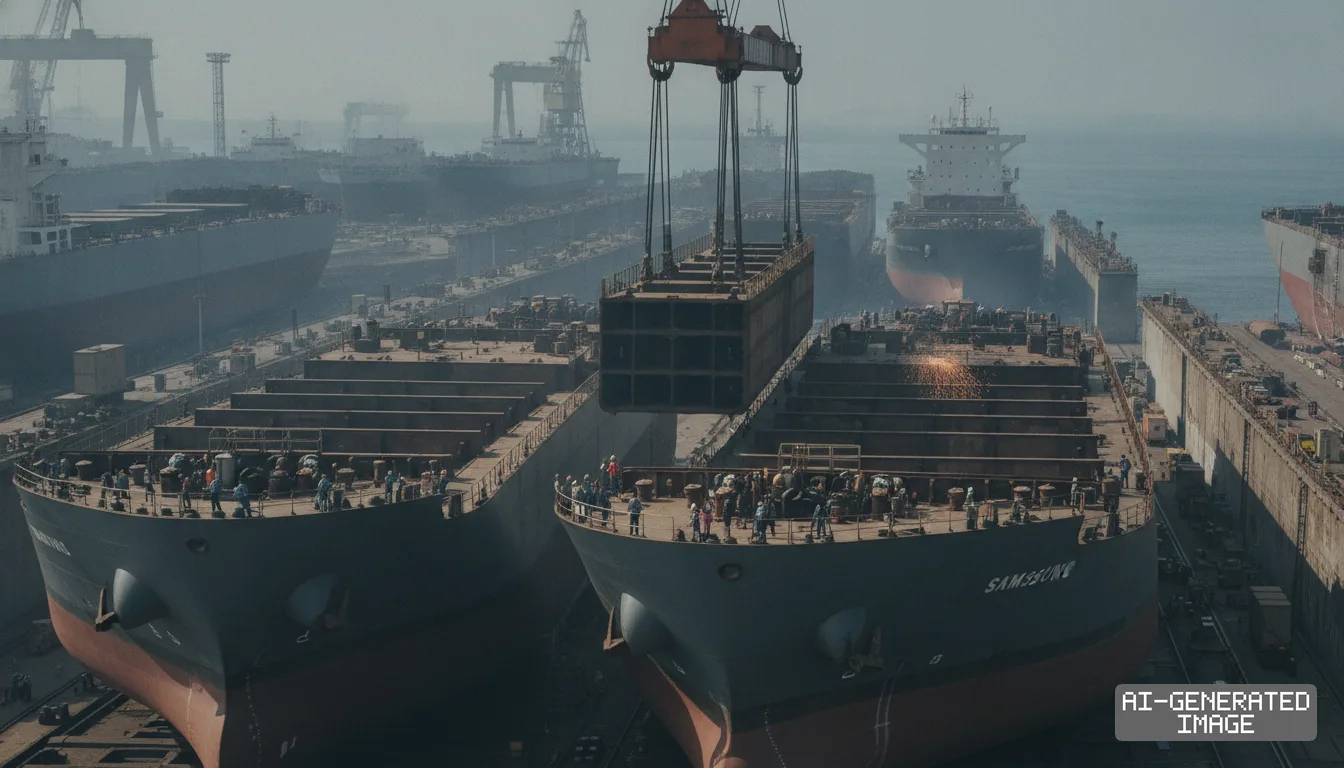
Samsung Heavy Industries reviewed options Nov. 19 to outsource vessel blocks and assemble merchant ships in India, responding to capacity saturation across its South Korean dry docks.
The shipbuilder's main yard in Geoje operates near an annual ceiling of 60 vessels. Its order backlog spans three full years through 2029, leaving little space for standard commercial hulls.
That backlog is dominated by high-margin liquefied natural gas carriers and eco-friendly containerships. Diverting dry dock space toward lower-margin conventional tankers threatens operating margins and invites delivery delay penalties.
Subcontracting structural hull blocks to Indian shipyards provides Samsung Heavy Industries with an operational escape valve. It allows the company to accept secondary orders without expanding its domestic physical footprint.
The South Korean company established initial ties in September 2025 by signing a memorandum of understanding with Swan Defence and Heavy Industries. That agreement targeted joint engineering, procurement and yard production management.
Swan Defence operates India's largest dry dock at Pipavav in Gujarat, measuring 662 meters by 65 meters. The facility handles vessels up to 400,000 deadweight tonnes and fabricates 144,000 tonnes of steel annually.
Under the partnership, the two shipbuilders submitted an expression of interest to build eight 88,000-cubic-meter very large gas carriers for state-owned Shipping Corporation of India.
The pair also submitted a joint proposal to construct four dual-fuel ready medium range product tankers. The two tenders form part of a 22-vessel state fleet replacement valued at $3.2 billion.
The Indian gas carrier contract requires local vessel construction as part of New Delhi's domestic manufacturing mandate. Partnering with a domestic dock allows Samsung Heavy Industries to bid on work it cannot build in Geoje.
Indian maritime authorities are pushing for deeper industrial integration. Sarbananda Sonowal, India's ports and shipping minister, met Samsung Heavy Industries Chief Executive Officer Choi Sung-an in Seoul on Oct. 29.
Sonowal invited the shipbuilder to anchor development in five coastal manufacturing hubs. The federal program aims to channel roughly $10 billion into greenfield shipbuilding complexes across five maritime states.
One proposed site is Kendrapara in Odisha, where state officials are offering a 20% capital investment subsidy for new yards. The location provides access to domestic steelmakers and mineral logistics corridors.
Samsung Heavy Industries is evaluating manufacturing arrangements at Kendrapara alongside expanded fabrication subcontracts at Pipavav, according to senior maritime executives familiar with the discussions.
Domestic yard utilization in South Korea remains above 100% of nominal capacity across all major builders. High labor costs and skilled welder shortages make physical dock expansions in South Korea economically unviable.
Korean yards have previously outsourced hull block manufacturing to facilities in China. Rising geopolitical friction and supply chain risk policies are prompting Seoul shipbuilders to diversify external fabrication networks.
India provides lower industrial wage rates and a growing pool of heavy fabrication labor. In return, Indian shipyards require naval architecture licenses, automated welding technology and modern yard scheduling systems from Korean partners.
For Samsung Heavy Industries, external block fabrication preserves high-value dry docks for complex offshore installations and floating liquefied natural gas units, where yard margins are widest.
Standard merchant hulls require significant steel assembly volume but generate comparatively thin gross returns. Fabricating lower hull sections in Gujarat allows engineers in Geoje to focus on cryogenic containment assembly.
Rival South Korean shipbuilders are pursuing parallel regional strategies. HD Korea Shipbuilding and Offshore Engineering outlined plans in April 2026 to develop a $4 billion shipyard in Thoothukudi, Tamil Nadu.
That project targets an annual production throughput of 2.5 million gross tonnes. The concentration of Korean engineering in India reflects a shared push to bypass domestic shipyard constraints.
India currently accounts for just over 0.1 million gross tonnes of annual shipbuilding output. The federal government has set targets to expand national capacity to 4.5 million gross tonnes by 2047.
To support those targets, the Indian cabinet approved an approximately $8 billion maritime assistance package in September 2025, which funds shared waterfront infrastructure and equipment procurement.
Samsung Heavy Industries has not filed a regulatory disclosure regarding capital investments in Odisha, and the shipbuilder has not published a formal statement detailing terms for hull block subcontracts.
Tender submissions for the Shipping Corporation of India gas carrier contract close Jan. 27, 2027, which will determine the commercial structure of Samsung Heavy Industries' initial Indian build program.
Impact map
How this development propagates across the region and out to global buyers.
| Event | Korea | China | Japan | Global impact |
|---|---|---|---|---|
| Indian yard subcontracting | Samsung Heavy Industries shields LNG slots, outsources steel blocks | Chinese block fabricators face competition from Indian yards | Japanese yards face heightened price pressure on standard tanker orders | Global fleet renewal gains secondary build capacity outside Northeast Asia |
In this story
- Companies
- Samsung Heavy IndustriesSwan Defence and Heavy Industries
- Tickers
- 010140.KS
- Exposed
- Shipping Corporation of IndiaHD Korea Shipbuilding & Offshore Engineering
- Policy
- SubsidiesLocal Content Rules
- Impact
- Supply ChainOrder BookCost Structure
Track every Subsidies development → Track every Local Content Rules development →
Related briefings
- India eases shipyard subsidy rules with 20% local content floor Also on HD Korea Shipbuilding & Offshore Engineering, Samsung Heavy Industries, Local Content Rules
- KOGAS Plans LNG Carrier Tender to Test Domestic Tank Design Also on HD Korea Shipbuilding & Offshore Engineering, Samsung Heavy Industries, Subsidies
- Shipyard labor policies diverge as Korea, Japan, and China tackle yard manning gaps Also on HD Korea Shipbuilding & Offshore Engineering, Samsung Heavy Industries, Subsidies
- South Korea pours $1B into AI smart shipyards to fight Chinese yards Also on HD Korea Shipbuilding & Offshore Engineering, Samsung Heavy Industries, Subsidies
Sources
Reporting
Confidence: medium — how we grade this
The documents behind this briefing are linked above. East Asia Brief produces its English text with AI assistance under human editorial review, and does not translate or republish other outlets' articles. See our methodology and AI policy. Spotted an error? Tell us.
The Morning Brief
What changed in Korean, Chinese and Japanese industry overnight — and what it means for your supply chain. One email, weekday mornings, US time. Free.
The Morning Brief is in preparation. Leave your address and we will write to you once — when the first issue is ready. Nothing before that.