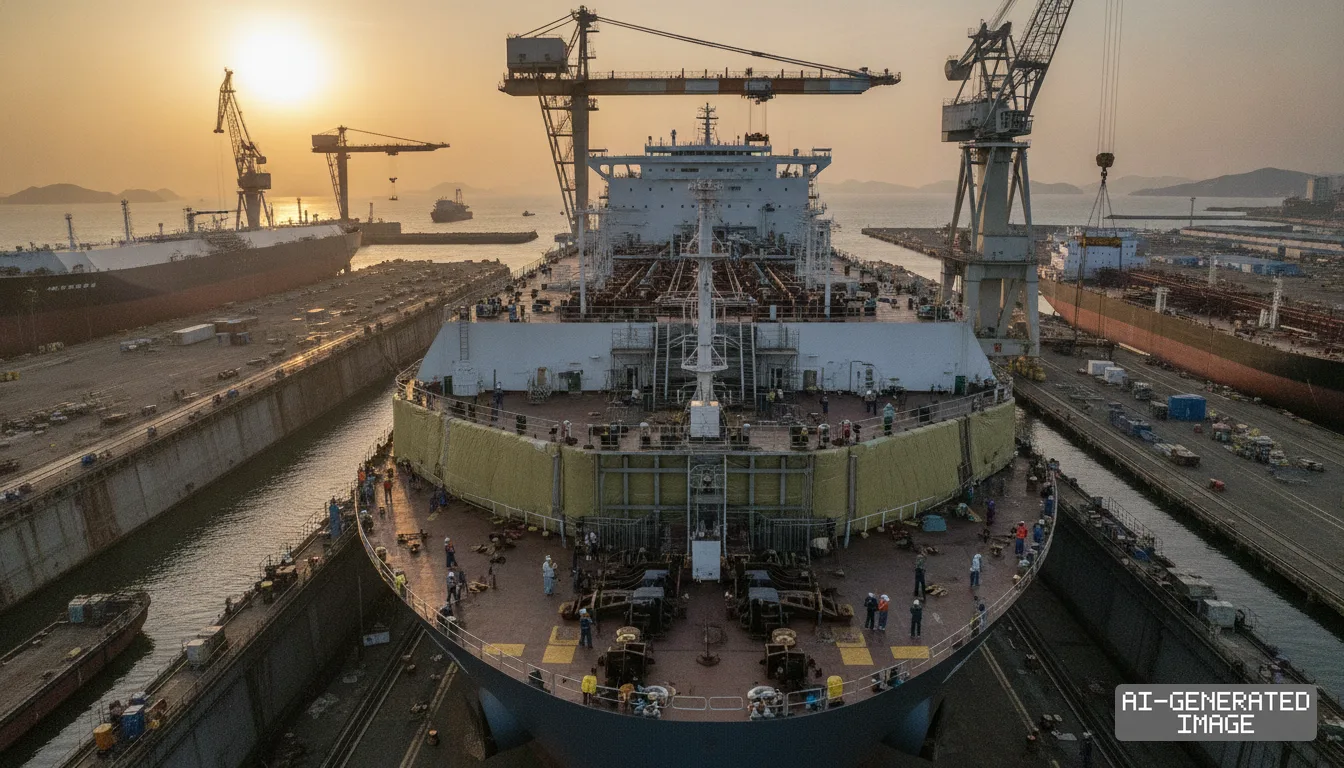
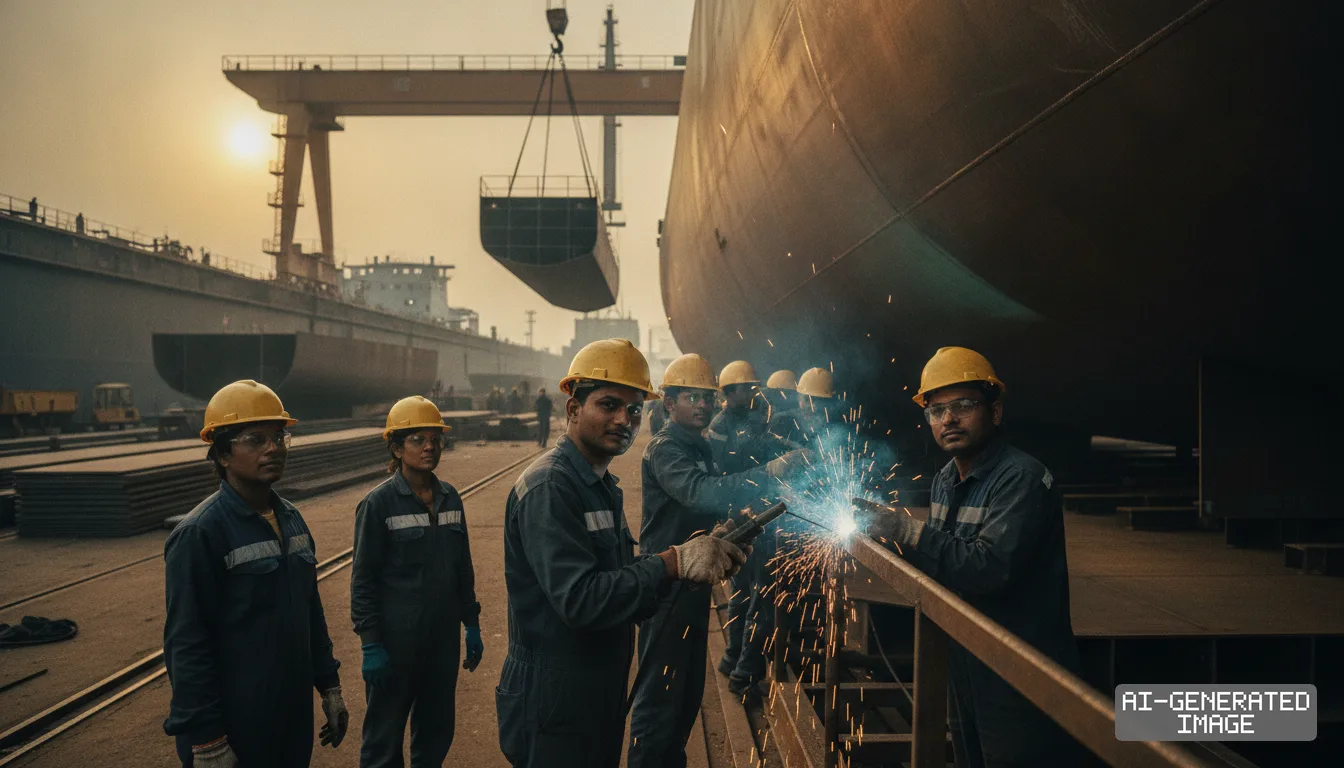
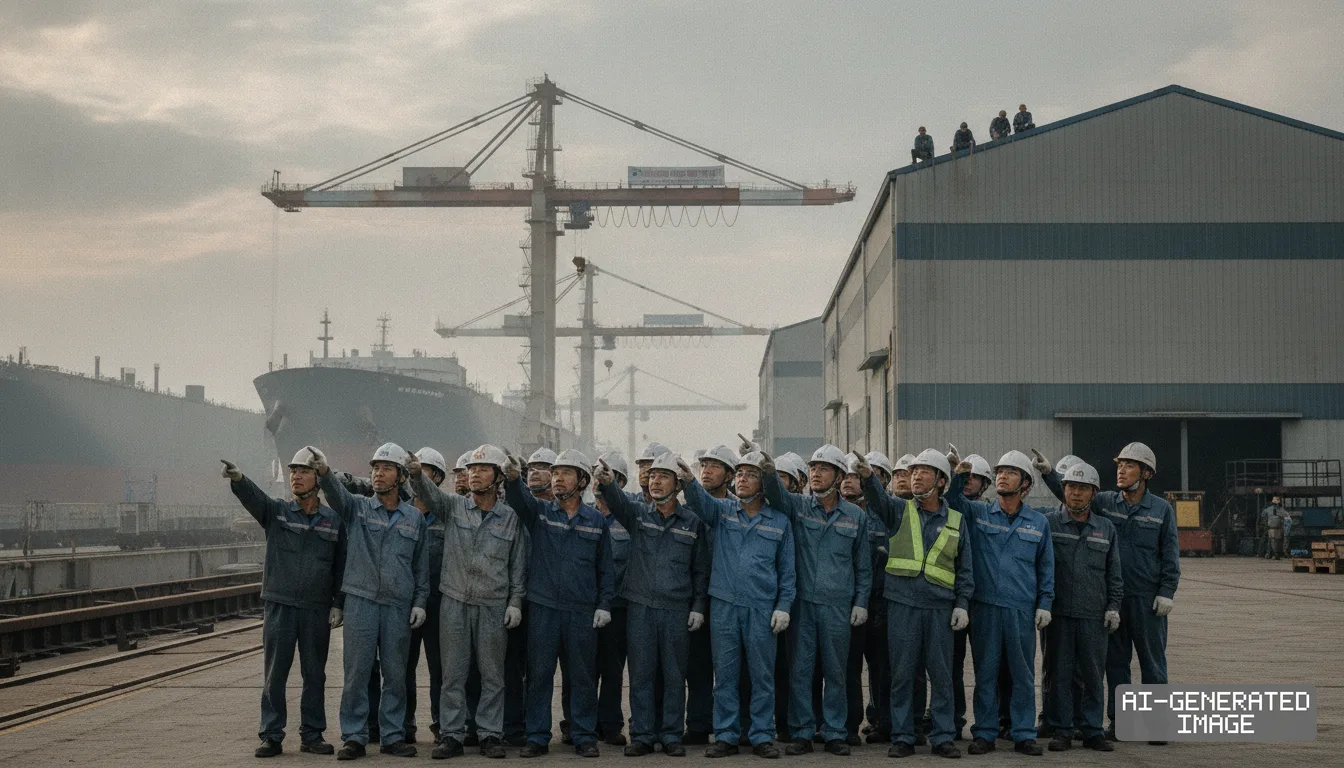
U.S. military inspects HD Hyundai yard to expand fleet repairs
Pentagon delegates evaluated drydocks and logistics in Ulsan under a five-year pact signed in July 2024 to qualify the shipbuilder for auxiliary maintenance.
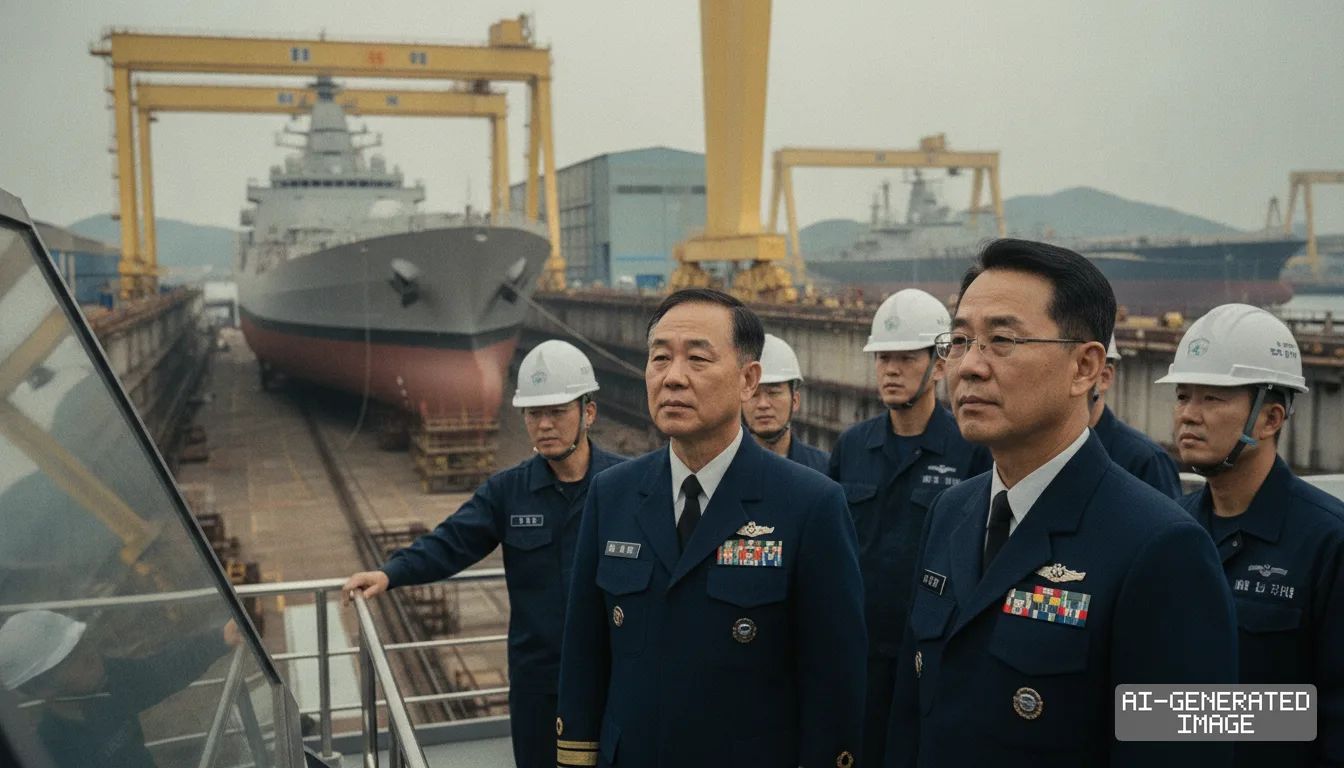
Senior U.S. military officials inspected HD Hyundai Heavy Industries' Ulsan shipyard on Nov. 8, evaluating naval construction lines and maintenance drydocks to expand forward repair capacity for allied fleets.
The delegation evaluated industrial infrastructure across South Korea to assess drydock capacity, military logistics and vessel sustainment workflows. The inspection focused on surface ship construction and foreign repair readiness.
The yard operates under a five-year Master Ship Repair Agreement signed in July 2024 with the U.S. Naval Supply Systems Command. That agreement qualified HD Hyundai to bid on maintenance work for auxiliary vessels across the Indo-Pacific.
In August 2025, HD Hyundai secured an overhaul contract for the 41,000-displacement-ton cargo ship USNS Alan Shepard. The dry cargo ship docked at Yeompo Quay in Ulsan on Sept. 30, 2025 for scheduled depot-level maintenance.
Assistant Secretary of the Navy for Energy, Installations and Environment Brendan P. Rogers led the visiting group alongside Marine Corps leadership. The officials examined specialized naval docks and installation support infrastructure during the tour.
Deputy Commandant for Installations and Logistics Lt. Gen. Andrew M. Niebel and Marine Corps Forces Korea Commander Maj. Gen. Valerie A. Jackson joined the review. Yard representatives briefed the officers on drydock availability.
HD Hyundai Heavy Industries President Joo Won-ho, who leads the naval and special ship business, received the military delegation. Management demonstrated fabrication lines for guided-missile destroyers, frigates and auxiliary craft built for export.
U.S. Navy and Marine Corps leaders reviewed opportunities to shorten logistics lines and sustain operational readiness, according to Defense Department records. The visit examined how allied facilities support forward-deployed forces during extended naval deployments.
The U.S. Navy faces maintenance backlogs across domestic public shipyards, where limited drydock space delays scheduled surface ship overhauls. Commercial shipyards in Virginia, Maine and Mississippi face skilled labor shortages and congested order books.
Those domestic bottlenecks prompted the Pentagon to seek certified private shipyards in allied Asian countries. Delegating auxiliary maintenance to overseas facilities frees domestic U.S. yards to focus on nuclear submarines and aircraft carrier overhauls.
HD Hyundai Heavy Industries, which allocates roughly 10% of total shipbuilding dock capacity to naval and special-purpose vessels, seeks larger foreign maintenance contracts. The Ulsan site covers 10 drydocks dedicated to commercial and defense shipbuilding.
Commercial vessel construction dominates the Ulsan waterfront, where the builder holds multi-year orders for liquefied natural gas carriers and containerships. Integrating foreign naval repairs requires managing berth availability alongside commercial delivery schedules.
The inspection also assessed facility security, industrial logistics and supply chain access for U.S.-sourced parts. Certified shipyards must maintain segregated work zones and controlled data networks to handle allied defense hardware.
Defense planners evaluate how rapidly private Asian yards can handle unscheduled battle-damage repairs. Repairing fleet supply vessels in South Korea shortens transit times compared to sailing back to Pearl Harbor or San Diego.
Regional defense competition has accelerated the Pentagon's search for allied maritime maintenance hubs. Chinese shipyards outproduce U.S. commercial and naval yards, prompting Washington to deepen defense-industrial ties with shipbuilders in South Korea and Japan.
South Korea's commercial builders offer automated steel-cutting facilities and experienced technical workforces. Those capabilities allow yards to finish drydock maintenance faster than congested domestic facilities in North America, military officials noted during discussions.
Rival shipbuilders in South Korea also pursue U.S. naval maintenance contracts. Hanwha Ocean acquired the Philly Shipyard in Pennsylvania to establish a domestic American footprint while bidding on local repair availabilities.
HD Hyundai has pursued an overseas engineering partnership with U.S. construction firm Kiewit to develop shipyard infrastructure. That initiative runs parallel to the company's direct bidding for Asian-theater maintenance tenders from Ulsan.
Maintaining auxiliary logistics ships allows the U.S. Military Sealift Command to keep fuel, ammunition and dry goods moving to frontline battle groups. Any disruption in auxiliary maintenance directly degrades carrier strike group endurance at sea.
Naval planners require private yards to prove quality compliance under strict Pentagon engineering standards before awarding combatant ship repair work. Non-combatant vessels serve as the testing ground for international maintenance arrangements.
The company's five-year Master Ship Repair Agreement runs through July 2029, establishing the formal contracting framework before HD Hyundai must apply for agreement renewal.
HD Hyundai has not published an official corporate statement regarding the visit, and U.S. defense officials have not released dock allocation targets or schedules for subsequent naval maintenance tenders.
The Ulsan shipyard continues work on current commercial and naval backlogs while maintaining berth capacity for upcoming Military Sealift Command maintenance cycles.
Impact map
How this development propagates across the region and out to global buyers.
| Event | Korea | China | Japan | Global impact |
|---|---|---|---|---|
| U.S. Navy MRO yard assessment | HD Hyundai opens dock slots for allied logistics vessels, special-ship unit targets foreign fleet overhauls | PLAN maintains naval production pace while U.S. shifts maintenance to allied Asian commercial yards | Japanese private shipyards compete for 7th Fleet auxiliary repair task orders under bilateral security frameworks | Indo-Pacific naval logistics turnaround times contract as forward-deployed maintenance expands outside U.S. domestic ports |
In this story
- Companies
- HD Hyundai Heavy Industries
- Tickers
- 329180.KS
- Exposed
- Hanwha OceanKiewit
- Policy
- Procurement Rules
- Impact
- Order BookSupply ChainCapex
Track every Procurement Rules development →
Related briefings
- HD Hyundai and Kiewit to build automated Gulf Coast shipyard Also on Kiewit, Procurement Rules, Hanwha Ocean
- HD Hyundai signs US shipyard pact with Kiewit for naval work Also on Kiewit, Procurement Rules, Hanwha Ocean
- South Korea commits $1 billion to shipyard robots and yard AI Also on Kiewit, Hanwha Ocean, Order Book
- Korean Yards Win US Navy Overhauls for 43% of Cargo Fleet Also on Procurement Rules, Hanwha Ocean, HD Hyundai Heavy Industries
Sources
Reporting
Confidence: medium — how we grade this
The documents behind this briefing are linked above. East Asia Brief produces its English text with AI assistance under human editorial review, and does not translate or republish other outlets' articles. See our methodology and AI policy. Spotted an error? Tell us.
The Morning Brief
What changed in Korean, Chinese and Japanese industry overnight — and what it means for your supply chain. One email, weekday mornings, US time. Free.
The Morning Brief is in preparation. Leave your address and we will write to you once — when the first issue is ready. Nothing before that.