HD Hyundai and Kiewit to build automated Gulf Coast shipyard
The joint venture will construct a greenfield smart yard for U.S. Navy auxiliary vessels and commercial hulls, creating 3,000 jobs by 2029.
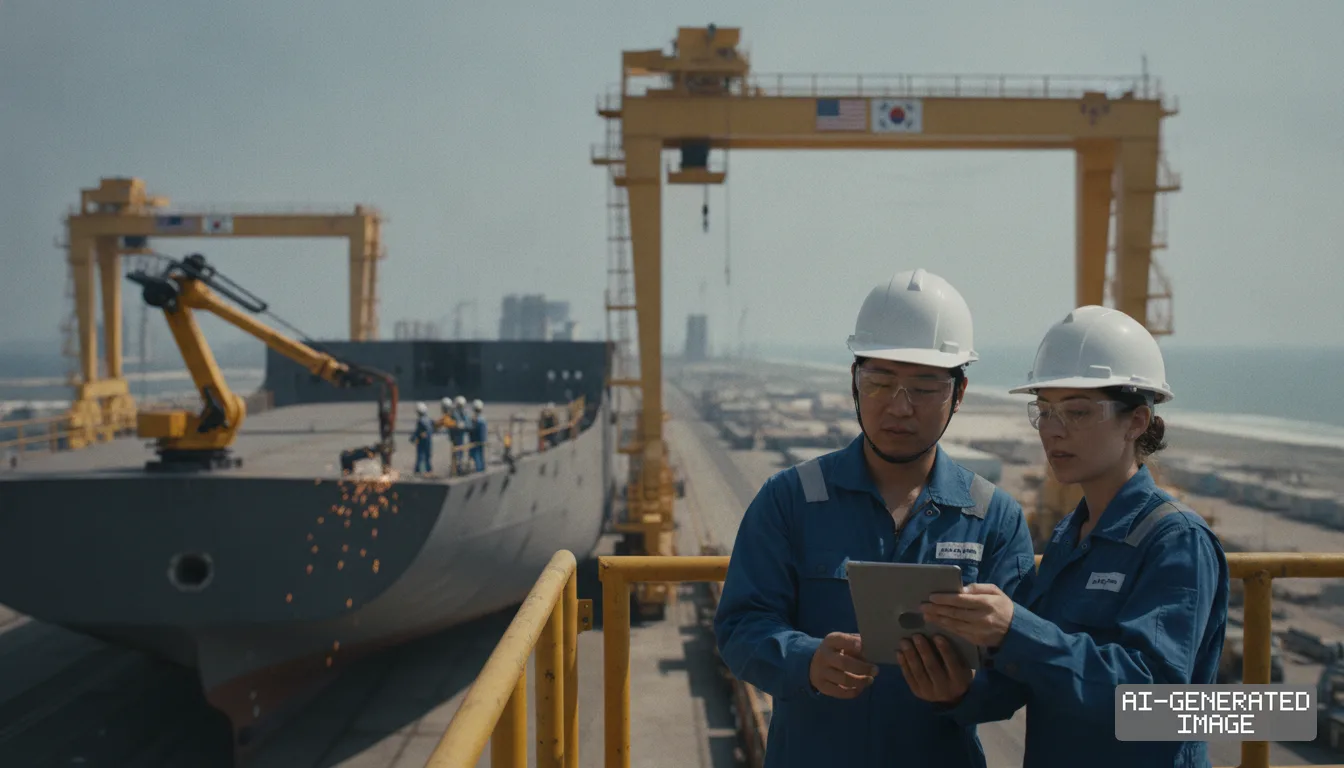
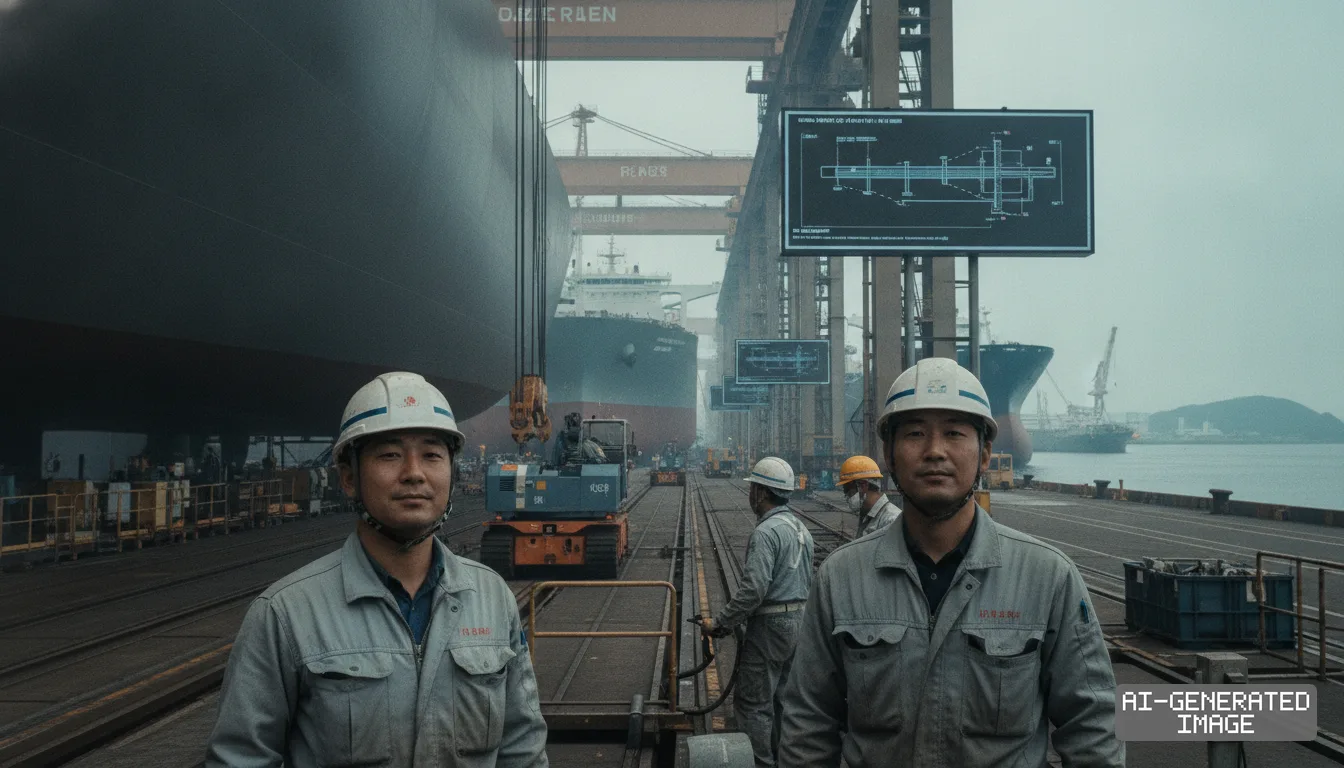
HD Hyundai finalized terms on Oct. 26, 2026, to establish a joint venture with Kiewit Maritime to build an automated digital shipyard on the U.S. Gulf Coast.
The venture, named HD Kiewit Shipbuilding, pairs South Korea's largest shipbuilder by order backlog with the offshore fabrication arm of Kiewit, the largest construction contractor in the United States.
The project will establish a purpose-built production yard designed to create up to 3,000 local jobs once fully operational.
The facility will target construction contracts for U.S. Navy logistics support vessels and commercial ships. It will also fabricate structural blocks and outfitting modules for existing domestic defense yards.
The partners plan to break ground on the facility in 2027, according to the partnership agreement. Full-scale commercial and naval production is scheduled to begin in 2029.
The shipyard marks the first greenfield production yard built on U.S. soil by a foreign commercial shipbuilder in decades.
South Korean competitor Hanwha Ocean entered the American market in 2024 through a $100 million acquisition of Philly Shipyard. HD Hyundai chose instead to build a new digital facility from the ground up.
Constructing a greenfield yard avoids the retrofitting expenses associated with century-old domestic drydocks, the company said.
The site will incorporate HD Hyundai's proprietary production platform, known as the Future of Shipyard model.
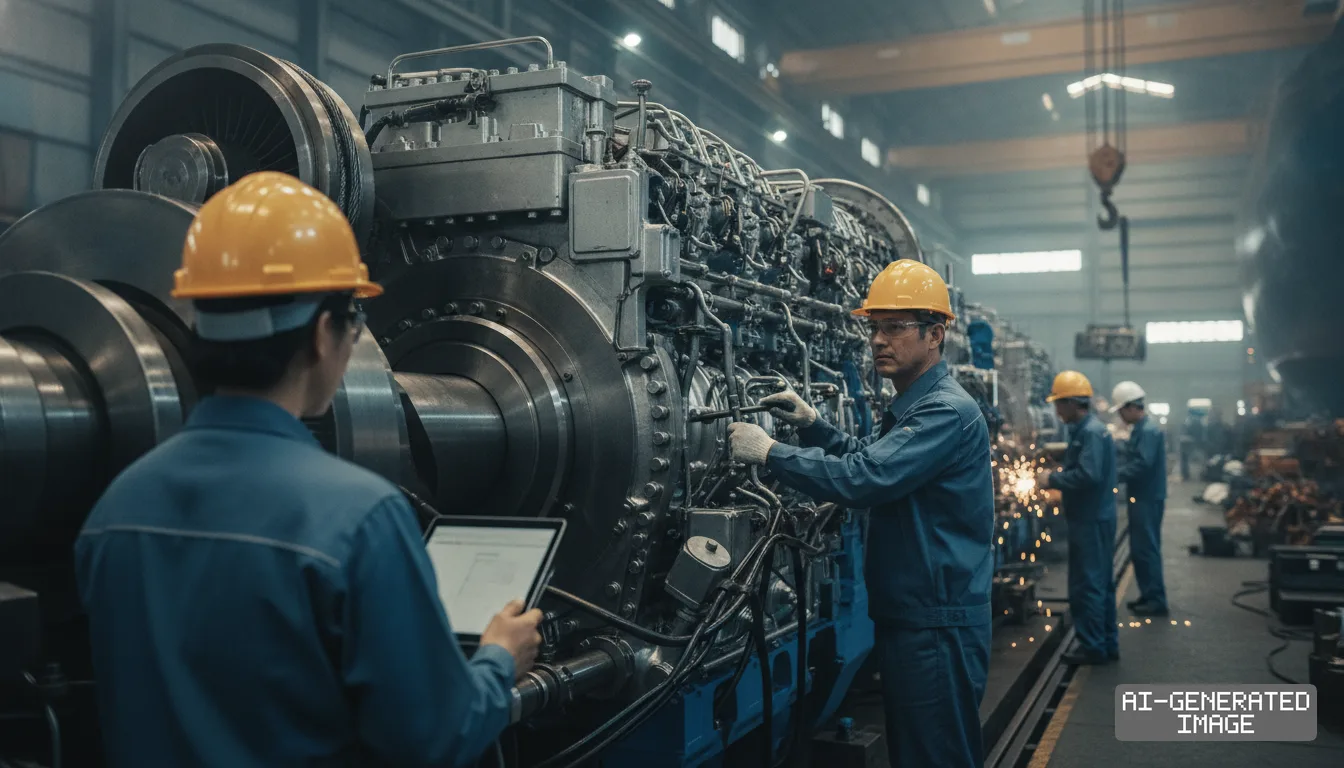
The manufacturing platform uses digital twin technology to create a virtual replica of the yard in real time. Software systems track steel plates, pipe assemblies and block erection sequences across every workshop.
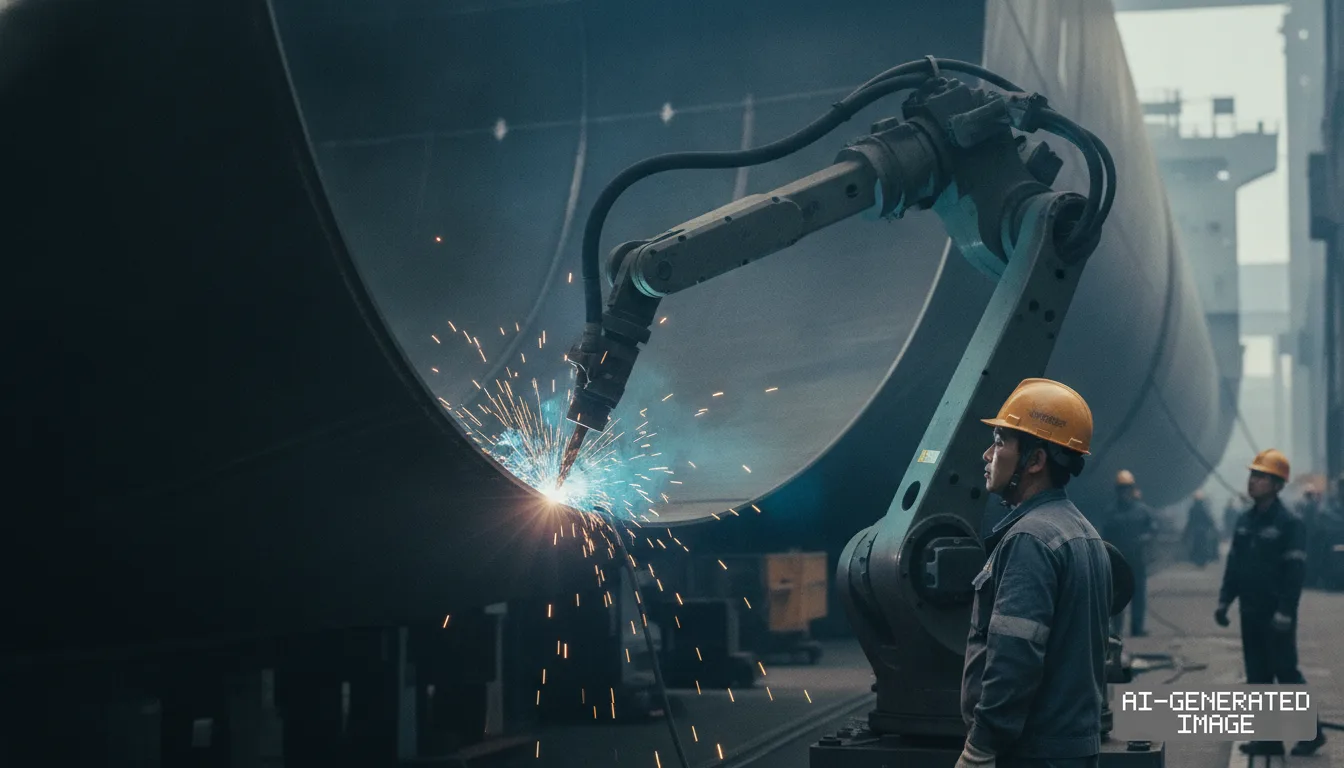
Automated plate cutting, curved block handling and robotic welding will operate across primary fabrication shops.
Those automation systems are intended to limit the impact of chronic skilled-labor shortages in the U.S. maritime sector, HD Hyundai said.
American shipyards face deep workforce deficits that have delayed major naval overhauls and new fleet construction schedules.
U.S. defense procurement rules require military hulls to be built in domestic facilities by American workers.
The merchant fleet faces identical restrictions under the Jones Act, which mandates domestic construction for vessels moving between American ports.
The joint venture allows HD Hyundai to enter protected U.S. procurement channels without violating federal cabotage statutes.
Kiewit Maritime brings deepwater fabrication yards, industrial permitting access and heavy engineering crews to the venture.
The contractor operates major fabrication facilities along the Texas coast through its Kiewit Offshore Services division.
HD Hyundai will oversee naval architecture, production engineering, machinery sourcing and shipyard automation.
The companies will establish specialized vocational training programs to qualify American technicians on robotic systems, the group said.
HD Hyundai has steadily expanded technical ties with American shipbuilders over the past six months.
The group launched an automated welding pilot with Huntington Ingalls Industries at Ingalls Shipbuilding in Mississippi in August. Ingalls builds guided-missile destroyers and amphibious assault ships for the U.S. Navy.
HD Hyundai also partnered with Edison Chouest Offshore to design liquefied natural gas dual-fuel container vessels at Tampa Ship.
The new Gulf Coast yard will be equipped to supply curved hull sections and machinery flats directly to those regional shipbuilders.
Subcontracting intermediate hull modules can ease delivery bottlenecks at American yards that hold multi-year naval order books.
The project aligns with bilateral defense-industrial discussions aimed at rebuilding sealift and naval auxiliary capacity.
The U.S. Military Sealift Command operates dozens of aging fleet replenishment oilers, dry cargo ships and crane vessels that require replacement over the coming decade.
The joint venture agreement does not state the total capital expenditure, the equity split between the partners, or the precise municipal tract selected along the Gulf Coast.
A person familiar with the talks said HD Hyundai is pursuing a controlling equity position in the operating company.
Detailed engineering design and coastal environmental reviews will proceed through 2027. Commercial vessel production tenders and naval auxiliary contract bidding will open ahead of commissioning in 2029.
Impact map
How this development propagates across the region and out to global buyers.
| Event | Korea | China | Japan | Global impact |
|---|---|---|---|---|
| Gulf Coast digital shipyard venture | HD Hyundai deploys smart yard automation and captures U.S. auxiliary naval supply chain | Yard construction cements U.S.-Korea alliance to bypass Chinese commercial shipbuilding scale | Japanese yards face wider gap in North American naval and commercial module supply | U.S. domestic shipbuilding capacity gains 3,000 automated manufacturing berths by 2029 |
In this story
- Companies
- HD HyundaiKiewit
- Tickers
- 267250.KS009540.KS
- Exposed
- Hanwha OceanHuntington Ingalls Industries
- Policy
- Procurement RulesLocal Content Rules
- Impact
- CapexSupply ChainOrder Book
Track every Procurement Rules development → Track every Local Content Rules development →
Related briefings
- HD Hyundai signs US shipyard pact with Kiewit for naval work Also on Kiewit, Procurement Rules, Local Content Rules
- South Korea commits $1 billion to shipyard robots and yard AI Also on Kiewit, HD Hyundai, Hanwha Ocean
- HD Hyundai and Kiewit form U.S. shipyard venture for 2029 Also on Huntington Ingalls Industries, Procurement Rules, HD Hyundai
- HD Hyundai Offers Welding Robots to U.S. Naval Shipbuilders Also on Huntington Ingalls Industries, HD Hyundai, Order Book
Sources
Reporting
Confidence: medium — how we grade this
The documents behind this briefing are linked above. East Asia Brief produces its English text with AI assistance under human editorial review, and does not translate or republish other outlets' articles. See our methodology and AI policy. Spotted an error? Tell us.
The Morning Brief
What changed in Korean, Chinese and Japanese industry overnight — and what it means for your supply chain. One email, weekday mornings, US time. Free.
The Morning Brief is in preparation. Leave your address and we will write to you once — when the first issue is ready. Nothing before that.