South Korea commits $1 billion to shipyard robots and yard AI
A five-year spending package aims to counter chronic labor shortages at major shipbuilders by deploying automated welding robots and shared digital twin platforms across three coastal hubs.
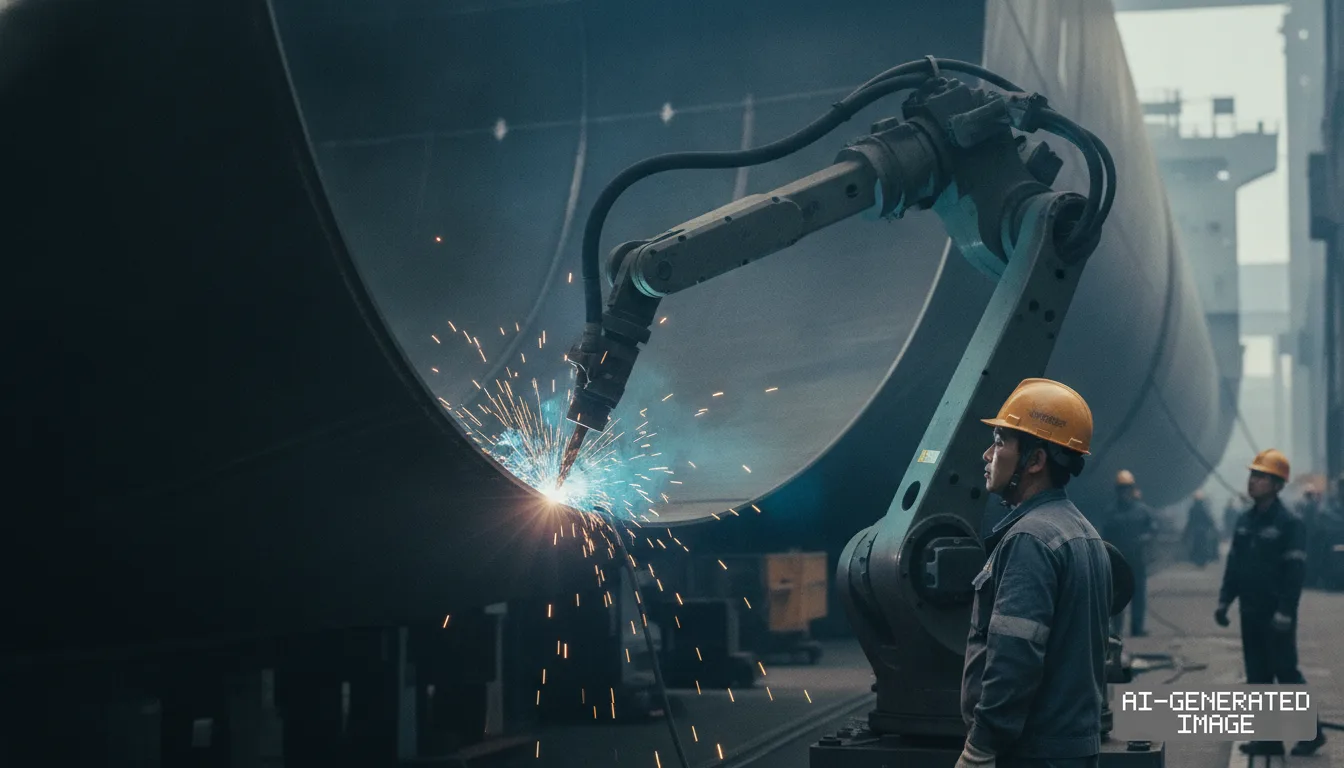
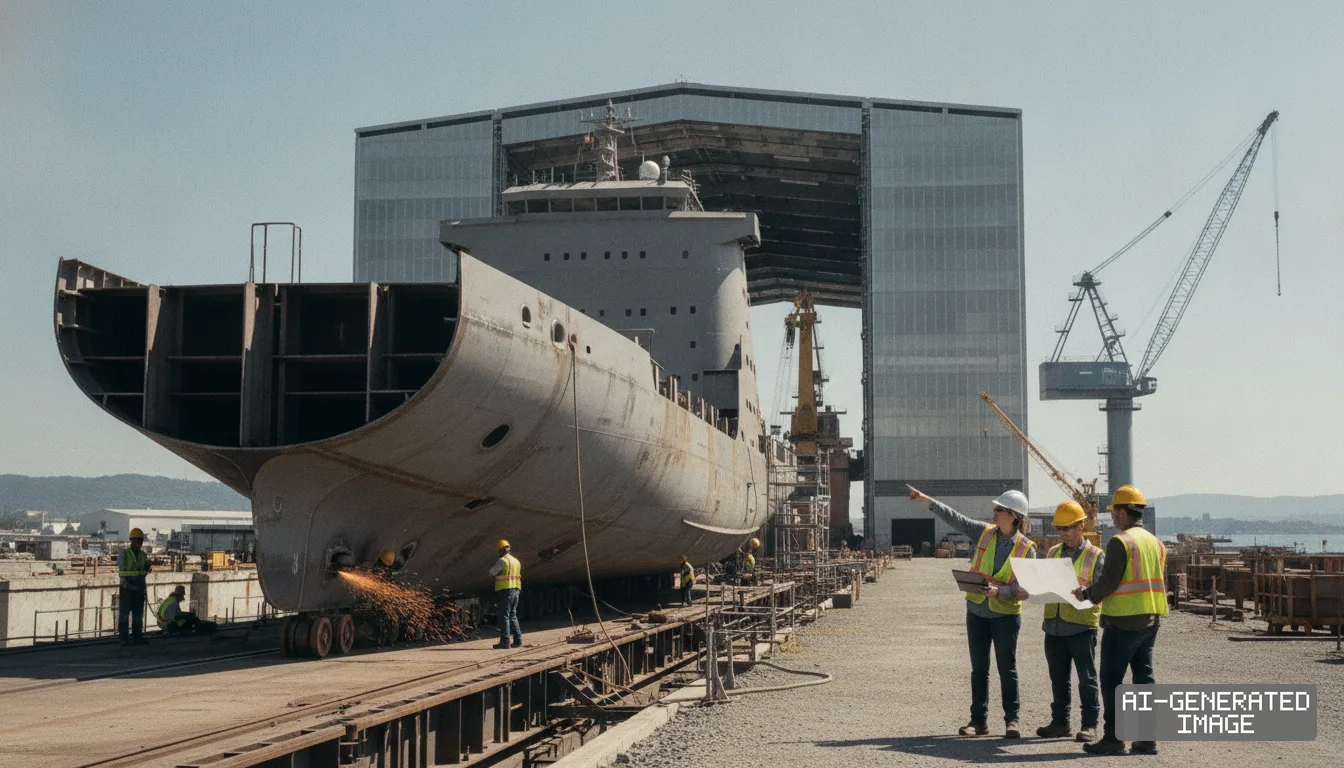
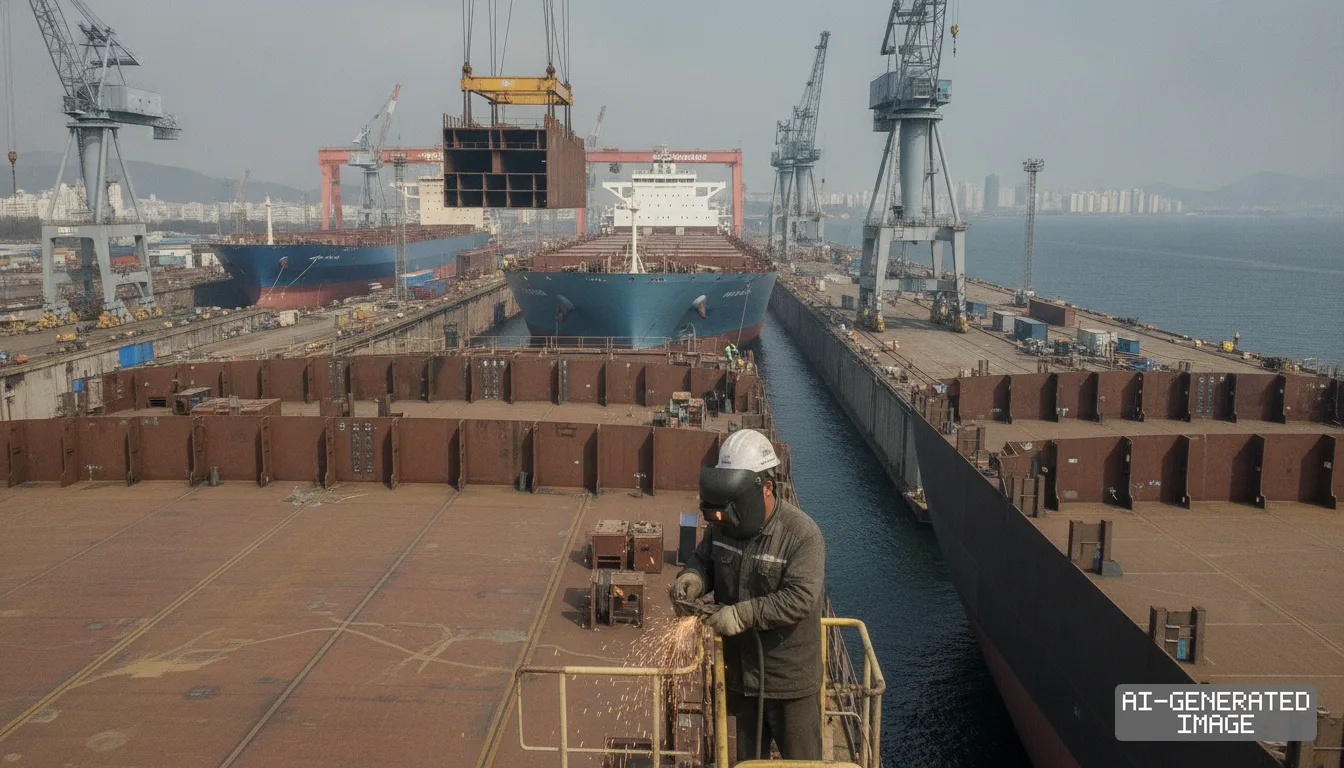
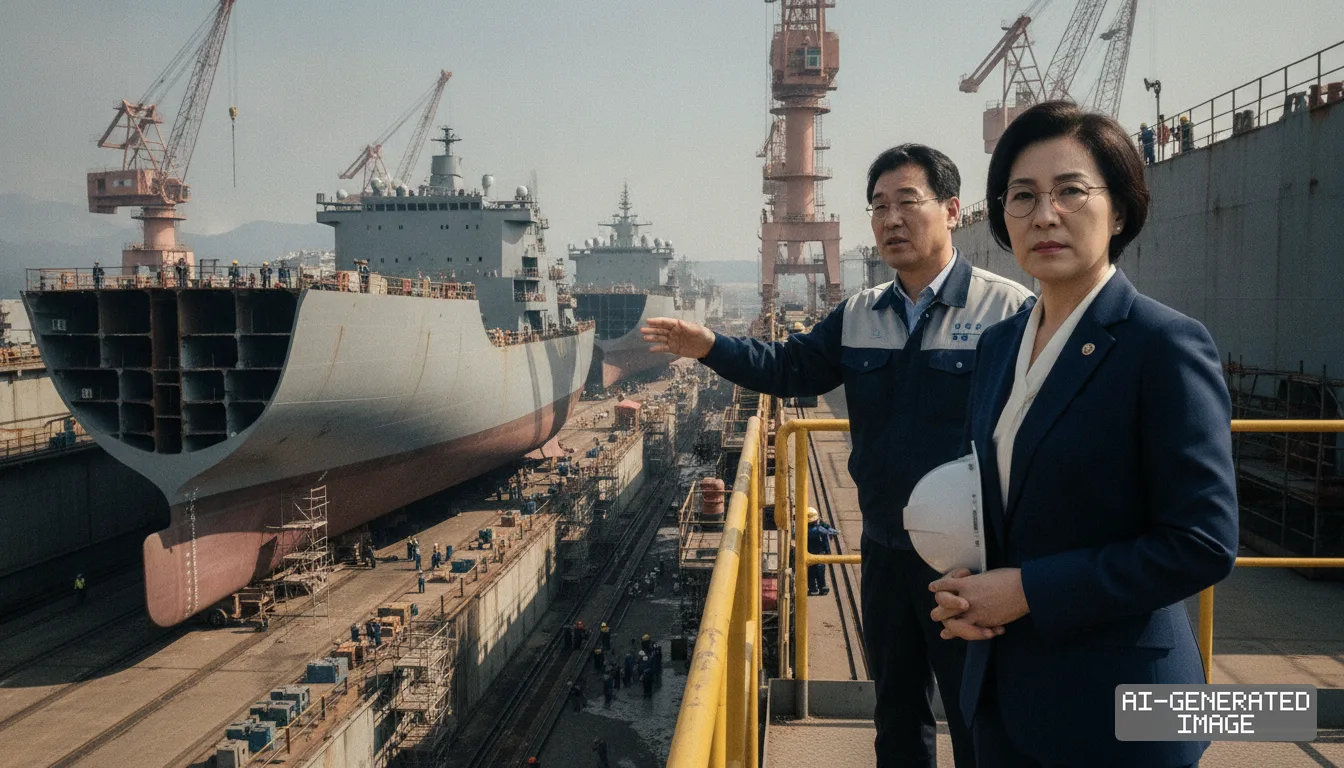
South Korea finalized plans on Oct. 25, 2026, to channel 1.406 trillion won ($1.02 billion) into shipyard robotics and artificial intelligence through 2030. The joint public-private investment package seeks to automate labor-intensive fabrication lines as chronic yard staffing shortages squeeze delivery windows against Chinese competitors.
The program commits state and private funds across three regional manufacturing corridors to lift yard automation above current pilot levels. State planners designed the initiative to shield operating margins from rising domestic subcontracting wages while protecting delivery commitments for liquefied natural gas carriers and dual-fuel boxships.
The capital outlay represents the country's largest single automation push for marine fabrication, with the state treasury providing roughly 26% of direct funding. Private shipbuilders and equipment makers will contribute the remaining 1.036 trillion won ($751 million) across the five-year spending window.
The plan expands the Manufacturing AI Transformation Alliance, a coordination body linking the trade ministry, the oceans ministry and major shipbuilders. The group will direct automation capital into steel cutting, block transport and specialized fitting tasks that still rely heavily on manual trade crews.
Mokpo and Yeongam in South Jeolla province take the largest project allocation, receiving 596 billion won ($432 million). HD Hyundai Samho and regional metal fabricator Dae-A Industrial committed 400 billion won ($290 million) of private capital under a preliminary pact signed in Yeongam.
The South Jeolla project will build an automated lighthouse yard in the Daebul Industrial Complex, focused on curved hull welding and panel staging. The Ministry of Trade, Industry and Energy will supply 160 billion won in research grants and 36 billion won for equipment subsidies.
The southeastern shipbuilding belt of Geoje and Busan receives the second allocation, totaling 500 billion won ($362 million). Samsung Heavy Industries and Hanwha Ocean lead this tranche, which focuses on shared engineering software and autonomous outfitting equipment.
Outfitting — the complex installation of piping, electrical conduits and machinery inside pre-assembled hull sections — remains the primary bottleneck for South Korean yards. The Geoje-Busan program deploys mobile robotic arms designed to navigate confined double-hull spaces and weld piping joints without continuous human supervision.
The trade ministry will provide 100 billion won ($72.5 million) in infrastructure support to standardize digital equipment drawings across the two rival shipbuilders. Establishing a single data architecture allows shared domestic sub-tier suppliers to feed digital cutting lines without reformatting CAD files for each prime yard.
The third regional hub, centered in Gunsan in North Jeolla province, receives 310 billion won ($225 million). Regional shipbuilder J-Ocean Heavy Industries will lead the group, supported by 110 billion won in government infrastructure grants.
The Gunsan line will operate as a commercial testbed for small-block subassembly automation connected by dedicated industrial fifth-generation wireless networks. The private network links transport carriers and overhead cranes to an artificial intelligence scheduling engine that sequences parts to eliminate yard crane waiting times.
South Korea's three major yards hold order books extending past 2028, but domestic workforce recruitment has fallen short of retirement rates for five consecutive years. Chinese competitors run yards with significantly lower baseline labor overhead, giving them an advantage on mid-tier container and dry bulk delivery slots.
The automation push coincides with export efforts for Korean yard design systems. HD Hyundai signed an operating joint venture pact with US engineering firm Kiewit on Oct. 22 to build a smart commercial shipyard in the United States.
The joint venture, named HD Kiewit Shipbuilding, plans to break ground on a domestic American fabrication facility in 2027, the companies said. The site will apply HD Hyundai's Future of Shipyard digital platform and automated welding tools, with commercial vessel assembly scheduled to begin by 2029.
In parallel with yard automation, maritime authorities published the First Basic Plan for Autonomous Ships on Oct. 12, running through 2035. The policy outlines safety certification and remote monitoring standards to commercialize International Maritime Organization Level 4 uncrewed navigation systems by the middle of the next decade.
The inter-ministerial program documents do not state the baseline hourly production savings targeted for each yard cohort, nor have officials published procurement timetables for robotic hardware tenders. The alliance steering committee will convene its first quarterly capital review in Seoul on Jan. 14, 2027, to sign formal contract schedules for the Yeongam site.
Impact map
How this development propagates across the region and out to global buyers.
| Event | Korea | China | Japan | Global impact |
|---|---|---|---|---|
| Korea smart yard automation drive | Big three yards automate outfitting and hull welding to offset chronic labor shortages | Chinese rival yards face wider Korean cycle-time edge in high-spec LNG carriers | Imabari and regional builders face widening gap in yard automation digital twin tech | Shipowners gain faster berth turnover and lower delivery delay risk on dual-fuel tonnage |
| Korea smart yard automation drive | Big three yards automate outfitting and hull welding to offset chronic labor shortages | Chinese rival yards face wider Korean cycle-time edge in high-spec LNG carriers | Imabari and regional builders face widening gap in yard automation digital twin tech | Shipowners gain faster berth turnover and lower delivery delay risk on dual-fuel tonnage |
In this story
- Companies
- HD HyundaiSamsung Heavy IndustriesHanwha Ocean
- Tickers
- 267250.KS010140.KS042660.KS
- Exposed
- Kiewit
- Policy
- Subsidies
- Impact
- CapexSupply ChainOrder Book
Track every Subsidies development →
Related briefings
- HD Hyundai signs US shipyard pact with Kiewit for naval work Also on Kiewit, HD Hyundai, Hanwha Ocean
- HD Hyundai will automate shipyards with digital twins by 2030 Also on HD Hyundai, Samsung Heavy Industries, Hanwha Ocean
- Hormuz Tanker Transits Plunge as Freight Costs Spike Also on HD Hyundai, Samsung Heavy Industries, Hanwha Ocean
- HD Hyundai Heavy union votes down wage deal, reopening talks Also on HD Hyundai, Samsung Heavy Industries, Hanwha Ocean
Sources
Primary documents
Reporting
Confidence: high — how we grade this
The documents behind this briefing are linked above. East Asia Brief produces its English text with AI assistance under human editorial review, and does not translate or republish other outlets' articles. See our methodology and AI policy. Spotted an error? Tell us.
The Morning Brief
What changed in Korean, Chinese and Japanese industry overnight — and what it means for your supply chain. One email, weekday mornings, US time. Free.
The Morning Brief is in preparation. Leave your address and we will write to you once — when the first issue is ready. Nothing before that.