South Korea and Japan compete for Southeast Asian surface combatant naval export contracts
Shipbuilders offer modular frigate designs, state-backed loan facilities, and dockyard technology transfers across regional fleets.
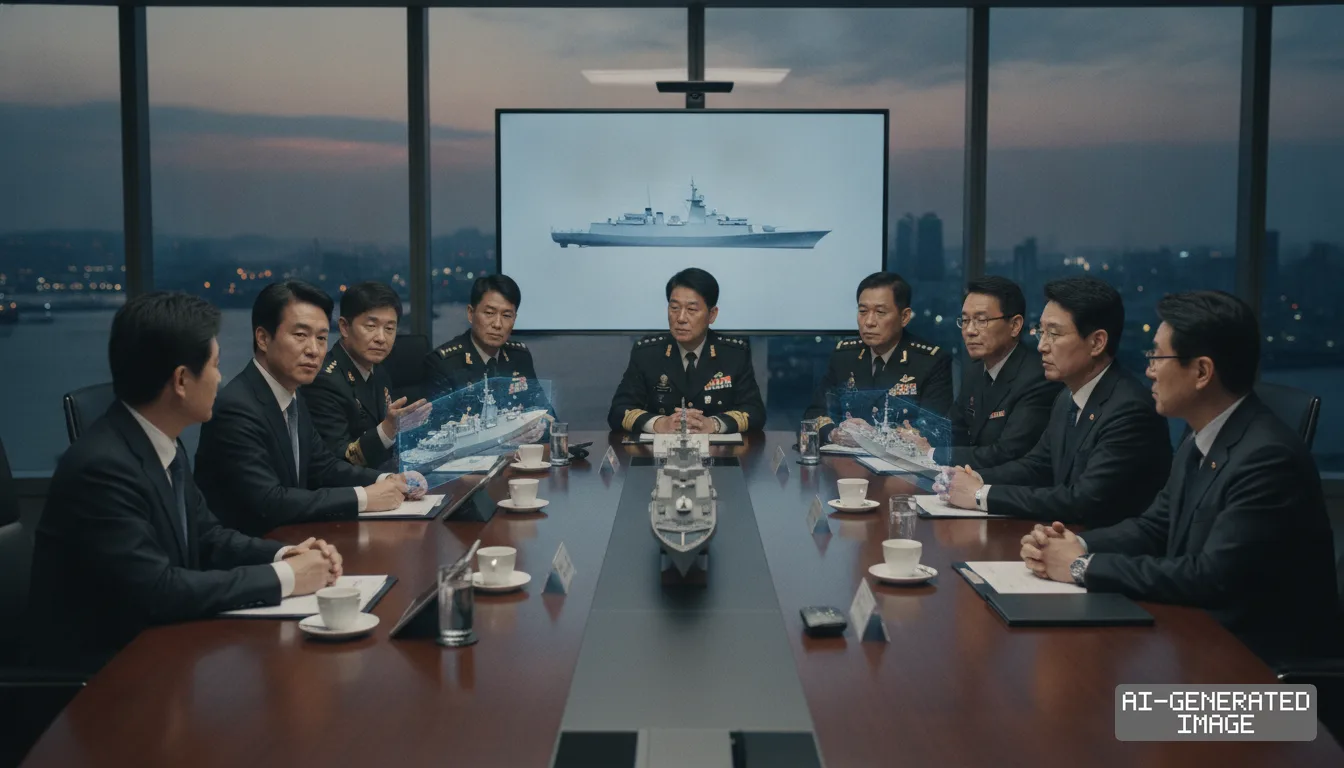
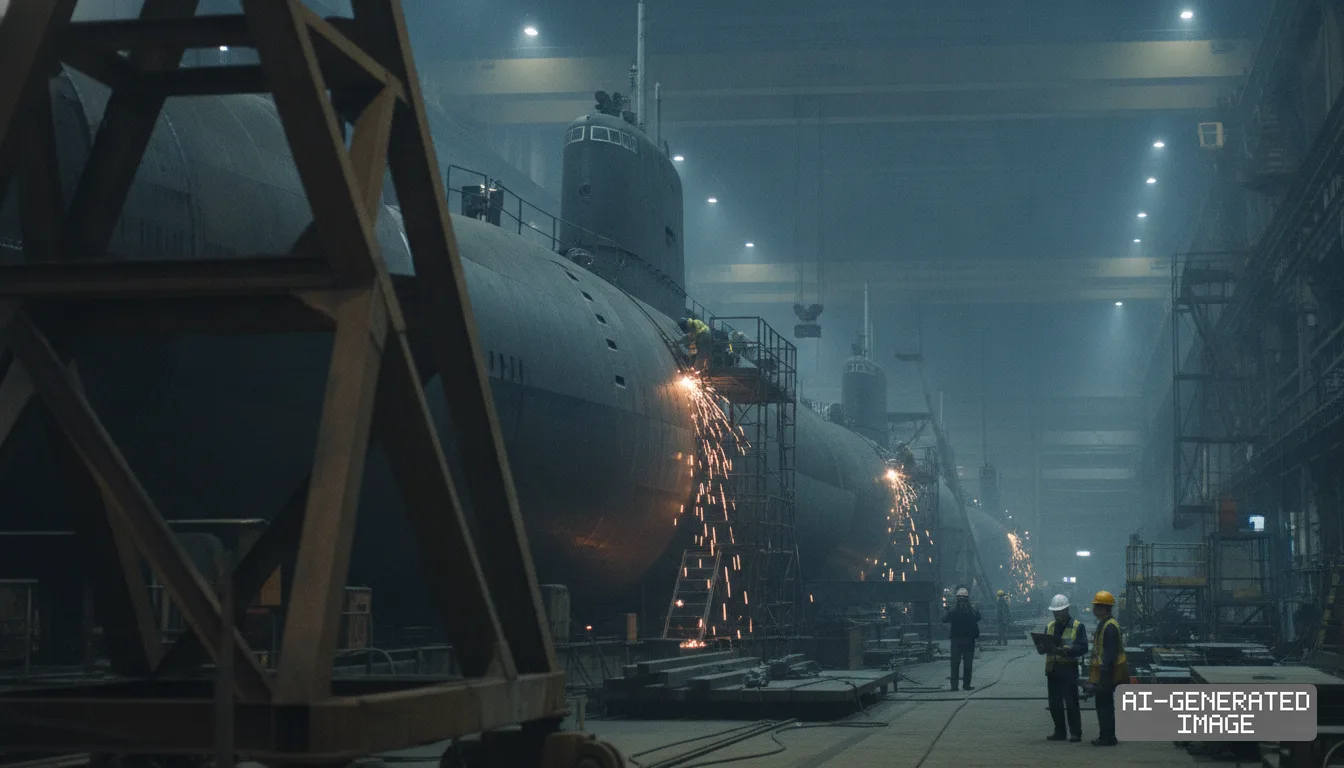
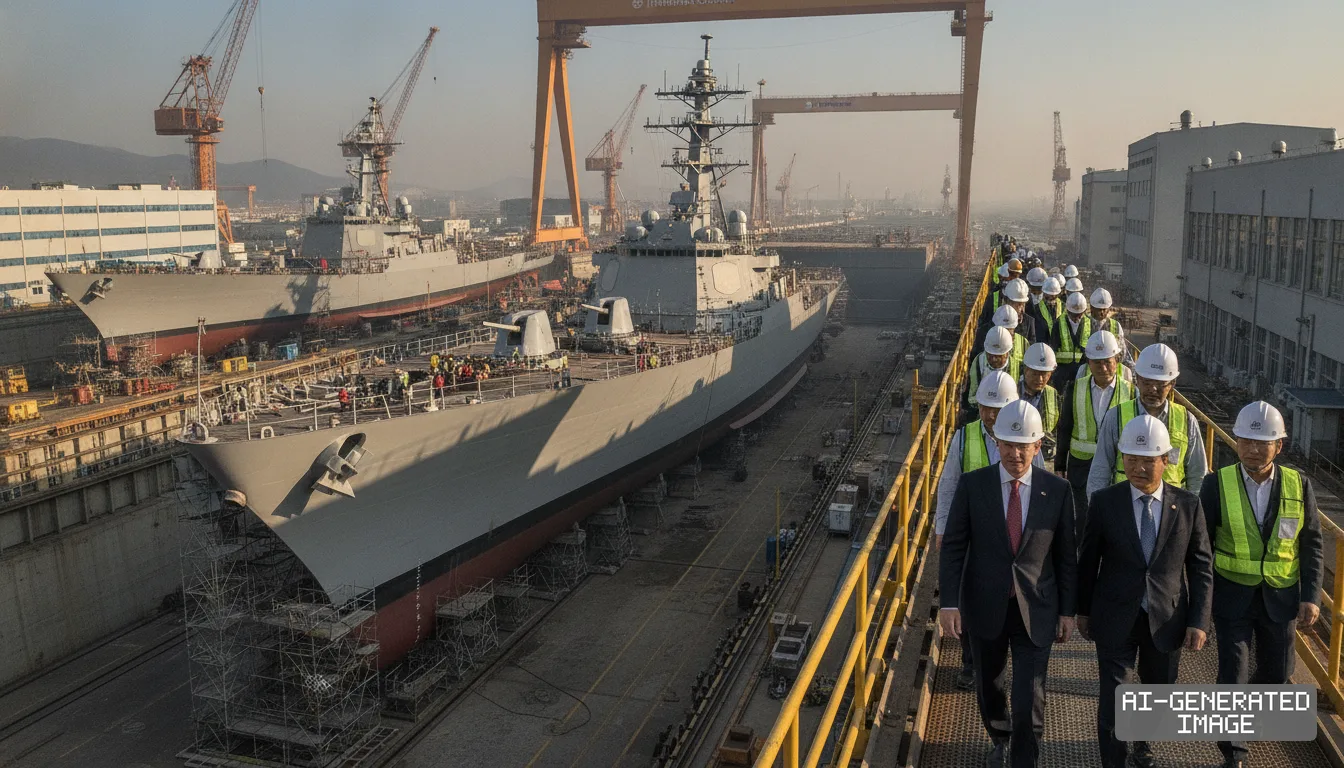
South Korean and Japanese defense contractors are submitting rival surface combatant proposals to Southeast Asian defense ministries, intensifying competition to supply multi-role frigates and corvettes across the region. Hanwha Ocean and HD Hyundai Heavy Industries from South Korea, alongside Japan's Mitsubishi Heavy Industries, are positioning modular multi-mission warship designs backed by competing state credit facilities and maintenance transfer packages. The bids target long-term naval modernization programs in the Philippines, Indonesia, and Malaysia, where littoral navies seek capable multi-purpose hulls to replace aging patrol vessels.
Southeast Asian surface combatant procurement has expanded as regional maritime agencies and armed forces allocate larger capital expenditure shares to offshore patrol vessels and guided-missile frigates. Defense planners across the Association of Southeast Asian Nations operate diverse fleets requiring upgrades in sensor coverage, anti-submarine warfare suites, and air defense integration. For South Korea and Japan, the contracts represent high-value export milestones that support domestic yard utilization, lower unit production costs for domestic naval programs, and establish multi-decade logistics footprints in regional waters.
The industrial rivalry highlights divergent engineering architectures and manufacturing strategies developed for domestic naval doctrines. Mitsubishi Heavy Industries is offering variants of its Mogami-class frigate, designated as the 30FFM platform, which incorporates advanced stealth geometry, an integrated sensor mast, and comprehensive mine countermeasures capabilities. The Japanese design emphasizes extreme crew reduction through advanced combat management systems and automated damage control architecture, requiring an operating complement of approximately 90 personnel compared to the 120 to 150 sailors typical of conventional frigates in the same 3,900 to 5,500-ton displacement envelope.
South Korean shipbuilders are countering with export variants derived from the Republic of Korea Navy's FFX program, including Batch-II Daegu-class and Batch-III Chungnam-class platforms. Hanwha Ocean and HD Hyundai Heavy Industries offer modular configurations ranging from 2,800 to 4,000 tons displacement, integrating combined diesel-electric and gas turbine propulsion arrangements alongside indigenous multi-function phased array radar systems. The South Korean platforms emphasize high weapons density, offering combinations of 16-cell to 32-cell vertical launching systems compatible with diverse surface-to-air, anti-ship, and land-attack cruise missiles, providing procurement authorities with broader ordnance sourcing options.
Financing mechanisms have emerged as a decisive variable in contract evaluation tables across Southeast Asian procurement ministries. South Korean bids leverage official export credit financing from the Export-Import Bank of Korea and state-backed insurance guarantees through the Korea Trade Insurance Corporation. These facilities allow purchasing governments to structure sovereign loan repayments over extended amortization schedules linked to delivery milestones. The financing model has previously supported South Korean naval sales of Jose Rizal-class frigates and HDC-3100 corvettes to the Philippine Navy, establishing commercial financing templates for follow-on procurement phases.
Japan has deployed sovereign financial tools following revisions to its operational guidelines under the Three Principles on Transfer of Defense Equipment and Technology. Tokyo integrates Official Security Assistance, an overseas grant framework managed by the Ministry of Foreign Affairs, alongside sovereign loan packages from state-linked financial institutions to fund coastal defense radar stations, patrol craft, and supporting port infrastructure. While Official Security Assistance provides non-lethal and monitoring equipment grants, larger surface combatant export proposals rely on blended export credit arrangements from the Japan Bank for International Cooperation and Nippon Export and Investment Insurance.
Technology transfer and in-country maintenance support represent the second critical axis of competition between Tokyo and Seoul. South Korean shipbuilders have integrated local drydock utilization, crew training programs, and depot-level maintenance facilities into their contract proposals. HD Hyundai Heavy Industries maintains a dedicated naval support and lifecycle maintenance center in Subic Bay, allowing the Philippine Navy to perform intermediate repair overhauls and electronics calibrations without sending vessels back to South Korean shipyards. Hanwha Ocean has similarly proposed complete combat system software integration kits and technical training for local naval engineering corps.
Japanese industrial teams are structuring maintenance proposals around joint industrial consortiums and licensed component overhauls. Mitsubishi Heavy Industries collaborates with Japanese sensor and weapons manufacturers to establish regional logistics hubs for integrated radar masts, gas turbines, and sonar systems. Japan's Ministry of Defense has supported technical bilateral exchanges to evaluate shipyard capacity in target export markets, assessing how local shipbuilders can handle composite superstructure maintenance and advanced hull coating repairs under Japanese technical supervision.
The immediate competition centers on the Philippine Navy's Horizon 3 modernization pipeline and upcoming surface combatant procurement stages in regional navies. The Philippine Department of National Defense is evaluating proposals for multi-role frigates equipped with medium-range surface-to-air missile systems, active electronically scanned array radars, and dedicated anti-submarine warfare combat suites. Indonesian defense authorities continue exploratory discussions with foreign yards for light frigate designs compatible with locally produced naval command-and-control software from PT PAL, while Malaysia's Littoral Mission Ship Batch 2 program remains focused on proven hull designs from Asian builders.
Contract determinations across the region hinge on formal tender submissions, shipyard build slots, and sovereign loan approval schedules finalized by national treasury departments. Mitsubishi Heavy Industries, Hanwha Ocean, and HD Hyundai Heavy Industries maintain active marketing and technical consultation offices in Manila, Jakarta, and Kuala Lumpur as procurement agencies draft formal technical specifications.
Impact map
How this development propagates across the region and out to global buyers.
| Event | Korea | China | Japan | Global impact |
|---|---|---|---|---|
| Naval frigate export competition | yard build slots allocated | regional surveillance exposure | defense export expansion | naval supply chain integration |
In this story
- Companies
- Mitsubishi Heavy IndustriesHanwha OceanHD Hyundai Heavy Industries
- Tickers
- 7011.T042660.KS329180.KS
- Exposed
- PT PAL Indonesia
- Policy
- Economic SecuritySubsidies
- Impact
- Order BookSupply ChainCapex
Track every Economic Security development → Track every Subsidies development →
Related briefings
- Mitsubishi Heavy Industries refines Mogami frigate design for Oceanian naval tenders Also on Mitsubishi Heavy Industries, Hanwha Ocean, HD Hyundai Heavy Industries
- Pentagon ends Chinese mineral waivers before 2027 deadline Also on Mitsubishi Heavy Industries, Hanwha Ocean, HD Hyundai Heavy Industries
- Mitsubishi Heavy buys shipyard land in Shimonoseki buildout Also on Mitsubishi Heavy Industries, Order Book
- Mitsubishi Heavy buys Shimonoseki site in $638M yard plan Also on Mitsubishi Heavy Industries, Order Book
Sources
This briefing carries no sources block. It was written from our desks’ working knowledge of the sector rather than from documents retrieved for this piece. Read it as orientation and check any figure you intend to act on — how we source briefings.
This briefing carries no linked sources: it was written from our desks' working knowledge of the sector rather than from documents retrieved for this piece. East Asia Brief publishes no citation it cannot link. Our English text is produced with AI assistance under human editorial review. See our methodology and AI policy. Spotted an error? Tell us.
The Morning Brief
What changed in Korean, Chinese and Japanese industry overnight — and what it means for your supply chain. One email, weekday mornings, US time. Free.
The Morning Brief is in preparation. Leave your address and we will write to you once — when the first issue is ready. Nothing before that.