Mitsubishi Heavy buys shipyard land in Shimonoseki buildout
The 100 billion yen investment will construct a hull-block factory backed by 40 billion yen in Japanese economic security subsidies to relieve bottlenecked berths.
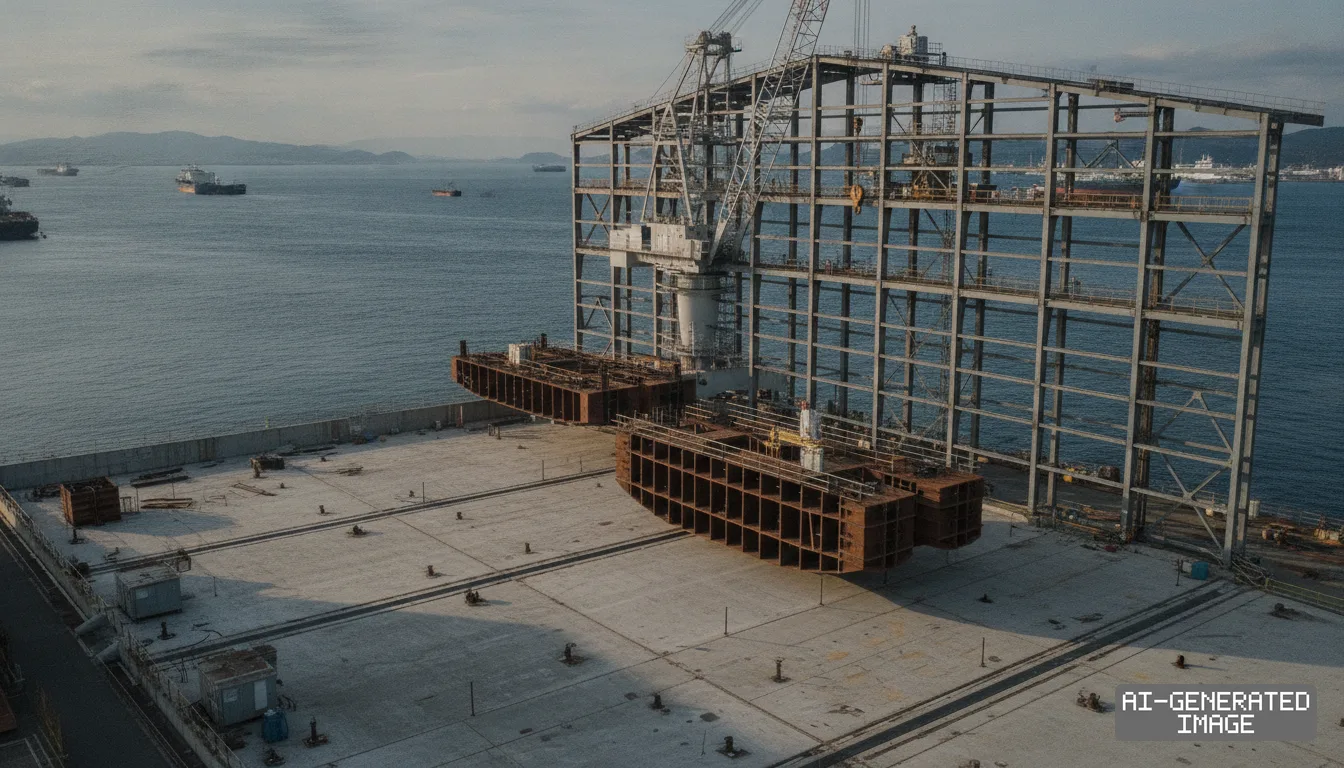
Mitsubishi Heavy Industries moved on Oct. 6, 2026, to acquire waterfront industrial land in Shimonoseki, Yamaguchi Prefecture, enabling Mitsubishi Shipbuilding to construct a dedicated hull-block assembly plant.
The planned capital expenditure totals approximately 100 billion yen ($680 million), the company said. Japanese government subsidies will cover up to 40 billion yen ($272 million) of that outlay.
The state grant provides 40% of the capital requirement for the yard expansion. The project marks the first major footprint expansion by Mitsubishi Heavy Industries in commercial shipbuilding in more than a decade.
Mitsubishi Heavy Industries signed the real estate acquisition agreement with Shimonoseki City for industrial land on Choshu Dejima, an artificial island port facility off the city's western coastline.
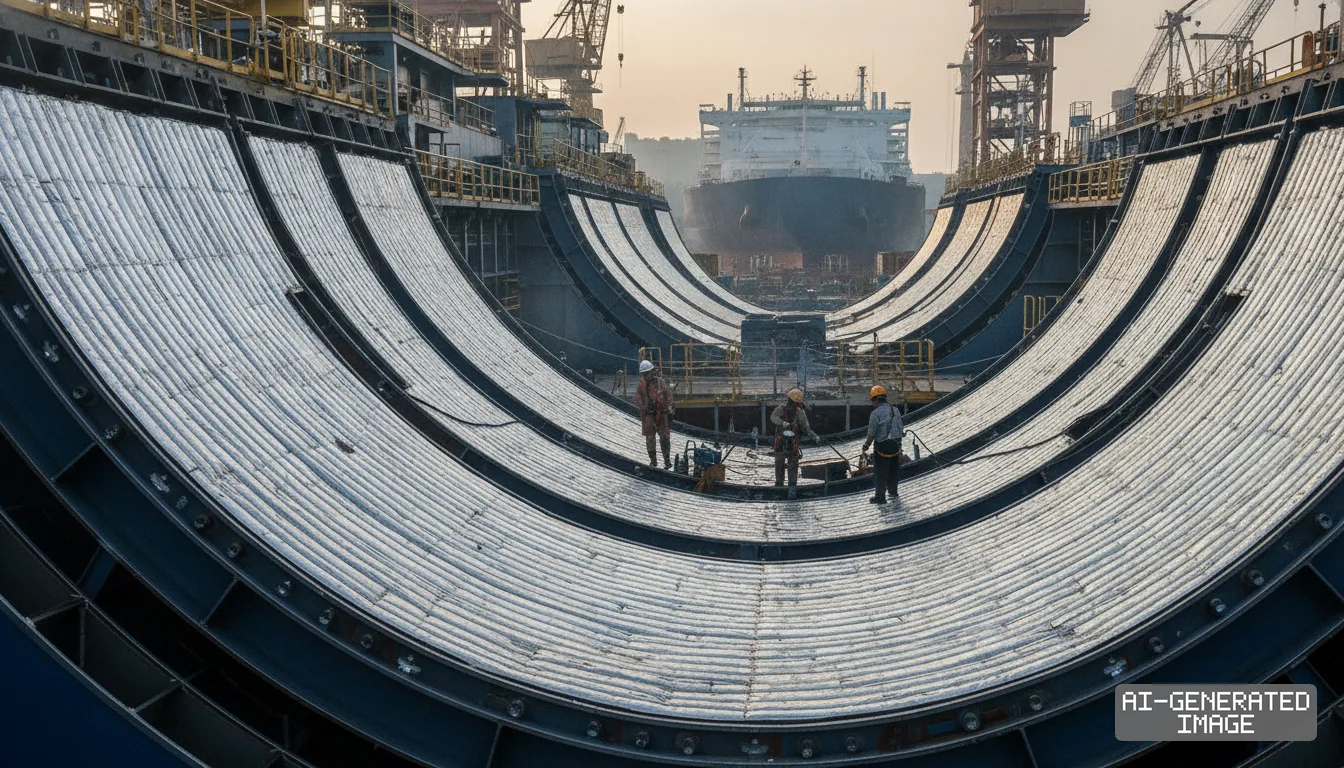
The site will host a factory producing hull blocks — the large pre-welded steel sections that form the structure of a ship before drydock assembly.
Mitsubishi Shipbuilding plans to transfer selected manufacturing operations from its existing Enoura Plant to the new island facility, the group said. The Enoura Plant operates along the narrow Kanmon Straits.
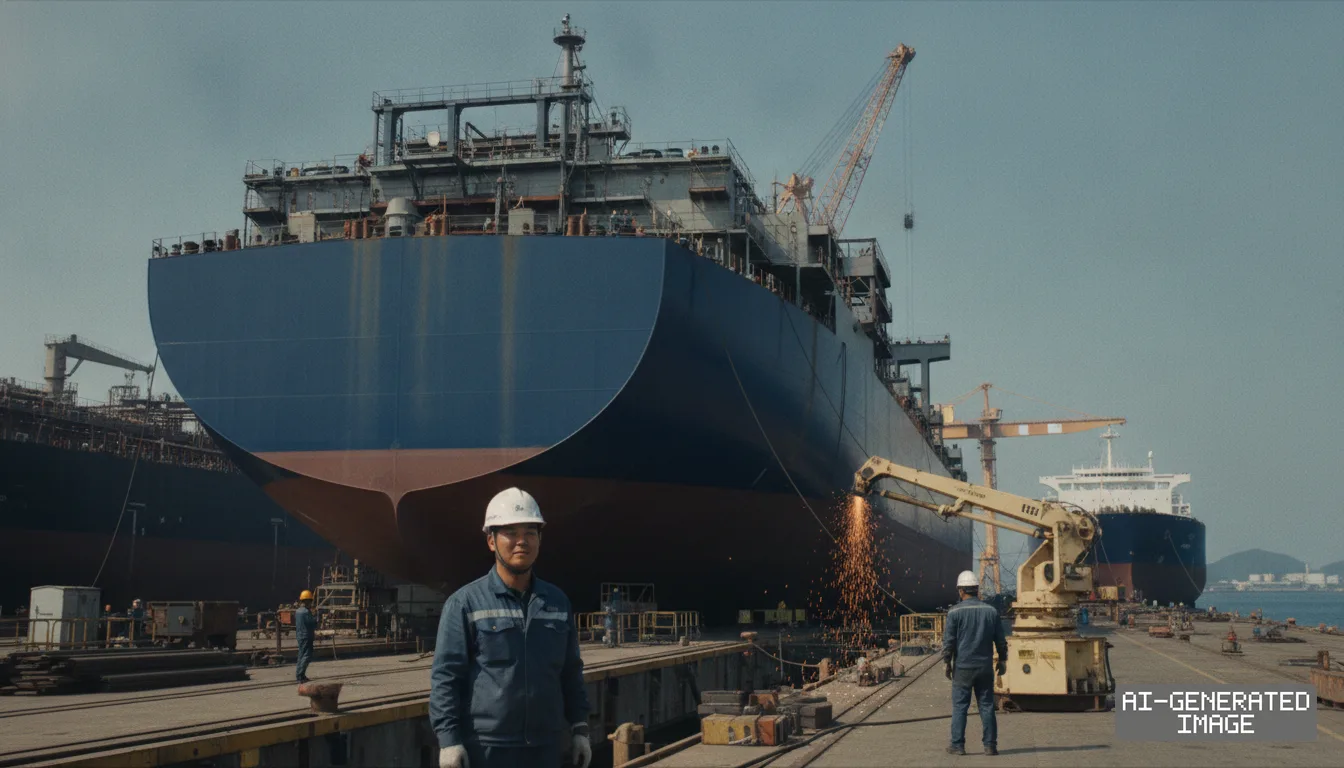
The relocation frees up limited drydock and assembly space at the legacy shipyard. That yard builds car ferries, roll-on/roll-off cargo vessels, patrol vessels and specialized gas carriers.
Japan's Ministry of Land, Infrastructure, Transport and Tourism certified the Shimonoseki expansion under the Economic Security Promotion Act on Sept. 11, the ministry notice showed.
Japanese authorities classified ship hulls as specified critical materials earlier this year. The designation allows direct state funding from the government's Shipbuilding Revitalization Fund.
Tokyo created the program to reverse a two-decade decline in domestic ship production, the ministry notice said. Japan aims to double annual commercial shipyard output by 2035.
Congestion across Japanese yards has constrained deliveries. Mitsubishi Shipbuilding had previously turned down inquiries for specialized vessels due to physical constraints at the Enoura works.
Building blocks at Choshu Dejima allows the shipbuilder to assemble larger modules offshore and barge them across to drydocks without disrupting local marine traffic in the strait.
The expansion reflects a strategic shift across Japanese manufacturing. Major shipbuilders are adding physical capacity rather than relying solely on productivity software and yard automation.
Other Japanese shipyards are drawing on the same fund. Imabari Shipbuilding, Tadotsu Shipyard and Steel Hub secured approval on Sept. 4 for up to 113.8 billion yen in government subsidies.
Japan Marine United secured approval for up to 49.4 billion yen under the program, the ministry notice showed. Namura Shipbuilding and Hakodate Dock obtained up to 49.9 billion yen.
Those grants total roughly 253 billion yen across Japan's top private shipbuilders, committing yards to expand domestic steel processing and drydock capacity through fiscal 2034.
The state-backed push pits Japanese yards directly against South Korean and Chinese competitors for high-value gas tonnage. Japanese yards had largely retreated from standard container vessels and bulkers.
Mitsubishi Shipbuilding focuses on complex hulls, including liquefied carbon dioxide carriers, liquefied natural gas bunkering vessels and methanol-fueled passenger ferries.
The Shimonoseki expansion ensures captive block capacity for those vessel classes, insulating Mitsubishi Heavy Industries from regional component bottlenecks.
South Korean builders Hanwha Ocean and HD Hyundai dominate large-scale gas carrier backlogs, while Chinese state yards hold broad commercial volume leads.
Japanese shipbuilders argue that domestic control of hull block fabrication is essential to keep maritime transport routes operational during regional supply chain shocks.
The official notice does not state the purchase price of the plot or the construction timetable, and the company has not published the total square meterage of the acquired land.
The Ministry of Land, Infrastructure, Transport and Tourism scheduled the next progress review of certified shipyard expansion plans for late November 2026.
Impact map
How this development propagates across the region and out to global buyers.
| Event | Korea | China | Japan | Global impact |
|---|---|---|---|---|
| Shimonoseki yard expansion | Hanwha Ocean and HD Hyundai face renewed Japanese competition for specialized gas and dual-fuel tonnage | CSSC retains merchant volume lead while Japanese yards reshore domestic hull-block manufacturing | Mitsubishi Shipbuilding commits 100 billion yen backed by 40 billion yen in state subsidies to add hull-block capacity | Fleet operators gain delivery slots for alternative-fuel and coastal vessels as Japan restores domestic yard capacity |
In this story
- Companies
- Mitsubishi Heavy IndustriesMitsubishi Shipbuilding
- Tickers
- 7011.T
- Exposed
- Imabari ShipbuildingJapan Marine UnitedNamura Shipbuilding
- Policy
- Economic SecuritySubsidies
- Impact
- CapexSupply ChainOrder Book
Track every Economic Security development → Track every Subsidies development →
Related briefings
- Japan Clears $635 Million in Subsidies to Modernize Shipyards by 2035 Also on Namura Shipbuilding, Mitsubishi Shipbuilding, Imabari Shipbuilding
- Japan awards $1.4bn shipbuilding subsidies to Imabari and seven domestic yards Also on Namura Shipbuilding, Japan Marine United, Imabari Shipbuilding
- Mitsubishi Heavy buys Shimonoseki site in $638M yard plan Also on Mitsubishi Shipbuilding, Japan Marine United, Mitsubishi Heavy Industries
- Japanese shipbuilders standardize electric coastal feeder designs to cut renewal costs Also on Mitsubishi Shipbuilding, Mitsubishi Heavy Industries, Order Book
Sources
Primary documents
Reporting
Confidence: high — how we grade this
The documents behind this briefing are linked above. East Asia Brief produces its English text with AI assistance under human editorial review, and does not translate or republish other outlets' articles. See our methodology and AI policy. Spotted an error? Tell us.
The Morning Brief
What changed in Korean, Chinese and Japanese industry overnight — and what it means for your supply chain. One email, weekday mornings, US time. Free.
The Morning Brief is in preparation. Leave your address and we will write to you once — when the first issue is ready. Nothing before that.