Pentagon ends Chinese mineral waivers before 2027 deadline
The phaseout forces Korean and Japanese naval contractors to trace all neodymium magnets down to the mine under DFARS 252.225-7052 rules.
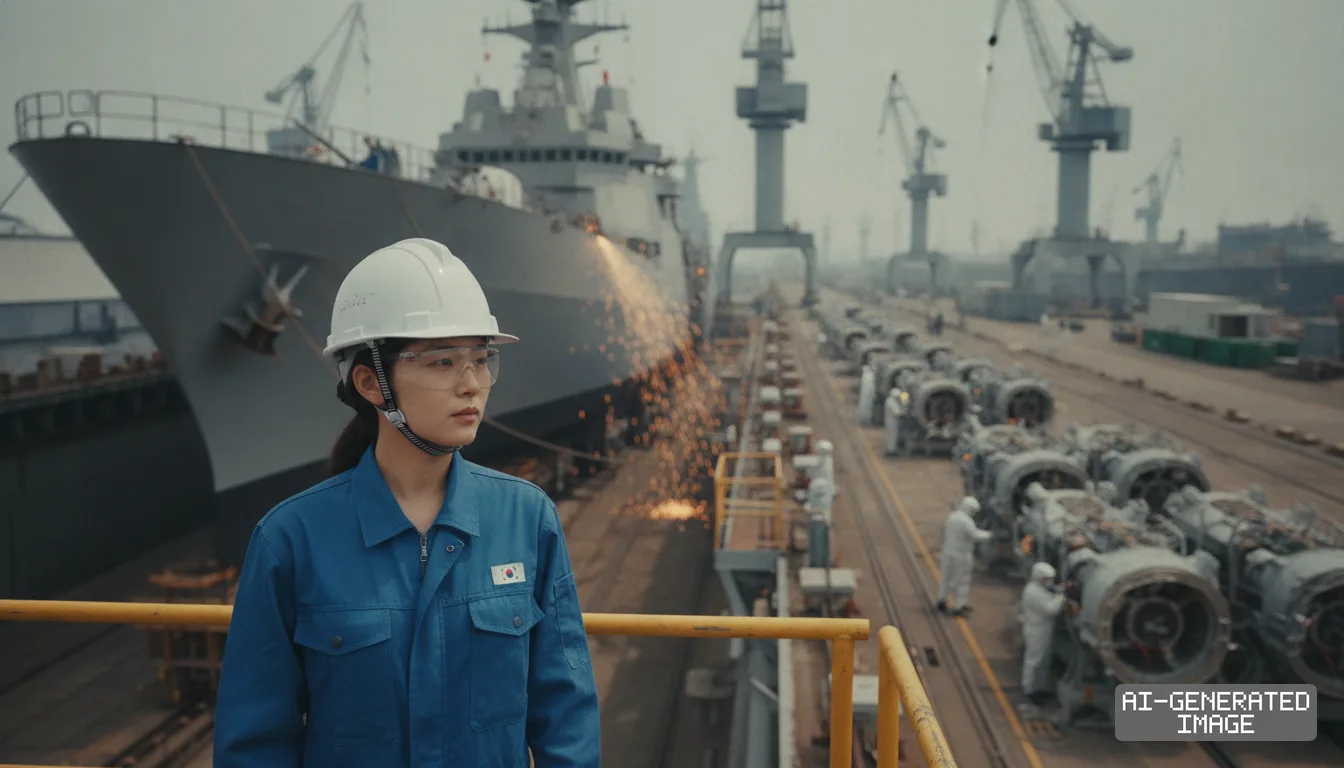
The U.S. Department of Defense reminded allied contractors on Oct. 2, 2026, that statutory waivers for Chinese critical minerals will expire on Jan. 1, 2027.
The policy change enforces full supply-chain origin audits across foreign defense contractors that supply naval ships and missile subcomponents to American forces.
China controls roughly 90% of global rare-earth refining and 93% of sintered neodymium-iron-boron magnet production, according to U.S. government industrial findings.
The shift implements the final rule for Defense Federal Acquisition Regulation Supplement Case 2021-D015, adopted under Section 854 of the fiscal 2024 defense authorization act.
The regulation amends DFARS clause 252.225-7052 to prohibit acquiring covered materials mined, refined, separated, melted or produced in covered countries.
Covered nations under Section 4872 of Title 10 of the U.S. Code are China, Russia, North Korea and Iran.
Restricted materials include neodymium-iron-boron magnets, samarium-cobalt magnets, tantalum metals and alloys, tungsten metal powder and tungsten heavy alloys.
Through Dec. 31, 2026, existing defense procurement rules restrict only the melting or production stages of covered materials.
The updated standard extends the restriction backward through the entire supply chain, covering extraction at the mine site and chemical separation.
Presidential Executive Order 14415, signed on July 20, 2026, directed the Pentagon to end standard nonavailability waivers by year-end.
Service secretaries previously granted nonavailability waivers when contractors demonstrated that compliant domestic materials were unavailable at reasonable prices.
From Jan. 1, 2027, waivers require an approved mitigation plan and proof of audited alternative supply lines, the White House order said.
Contractors must submit detailed indentured bills of materials that trace mineral inputs from raw ore to finished assemblies.
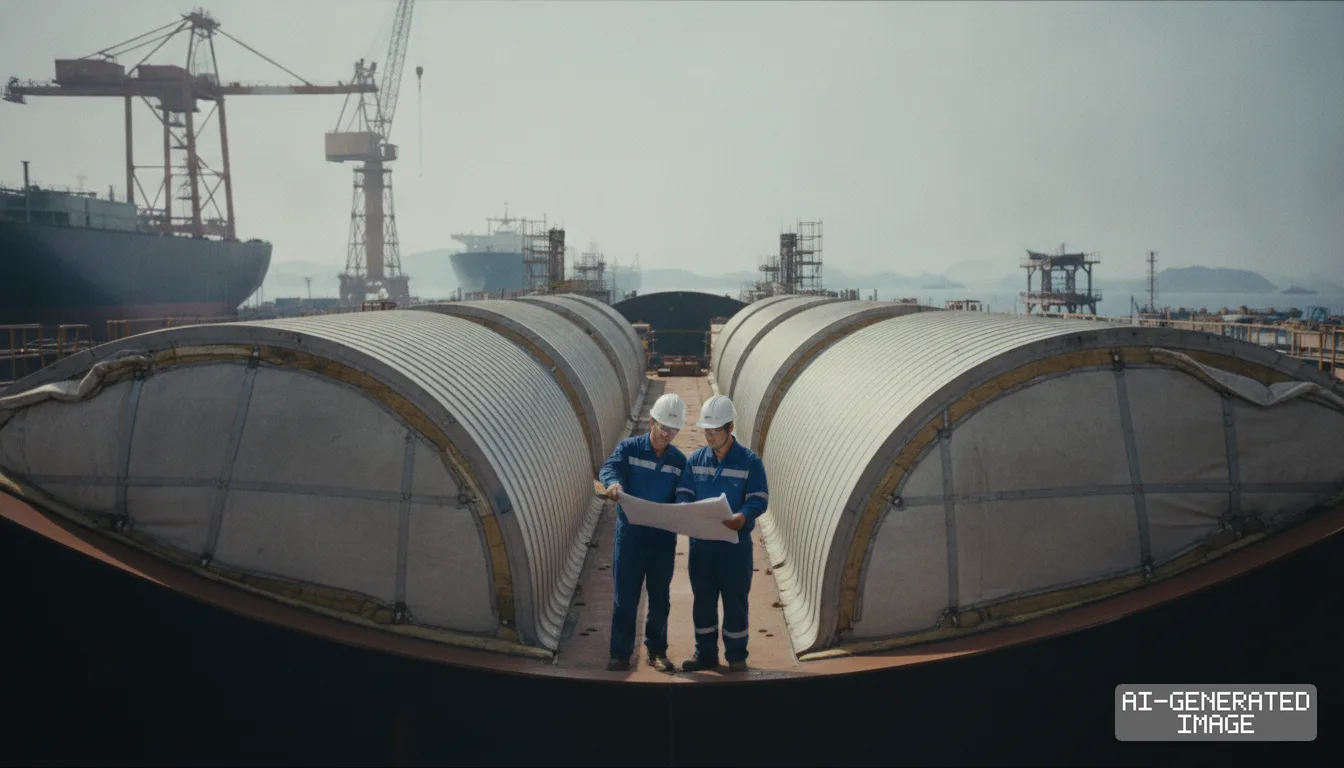
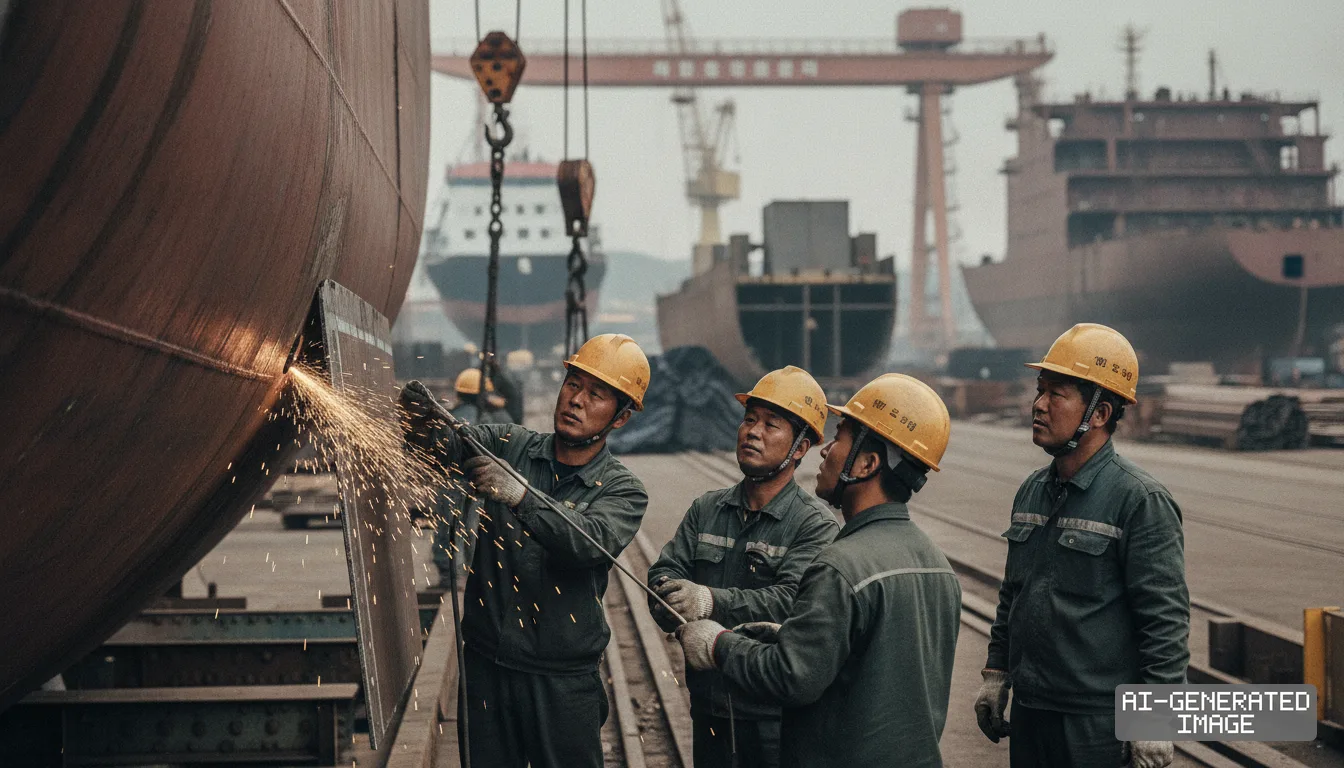
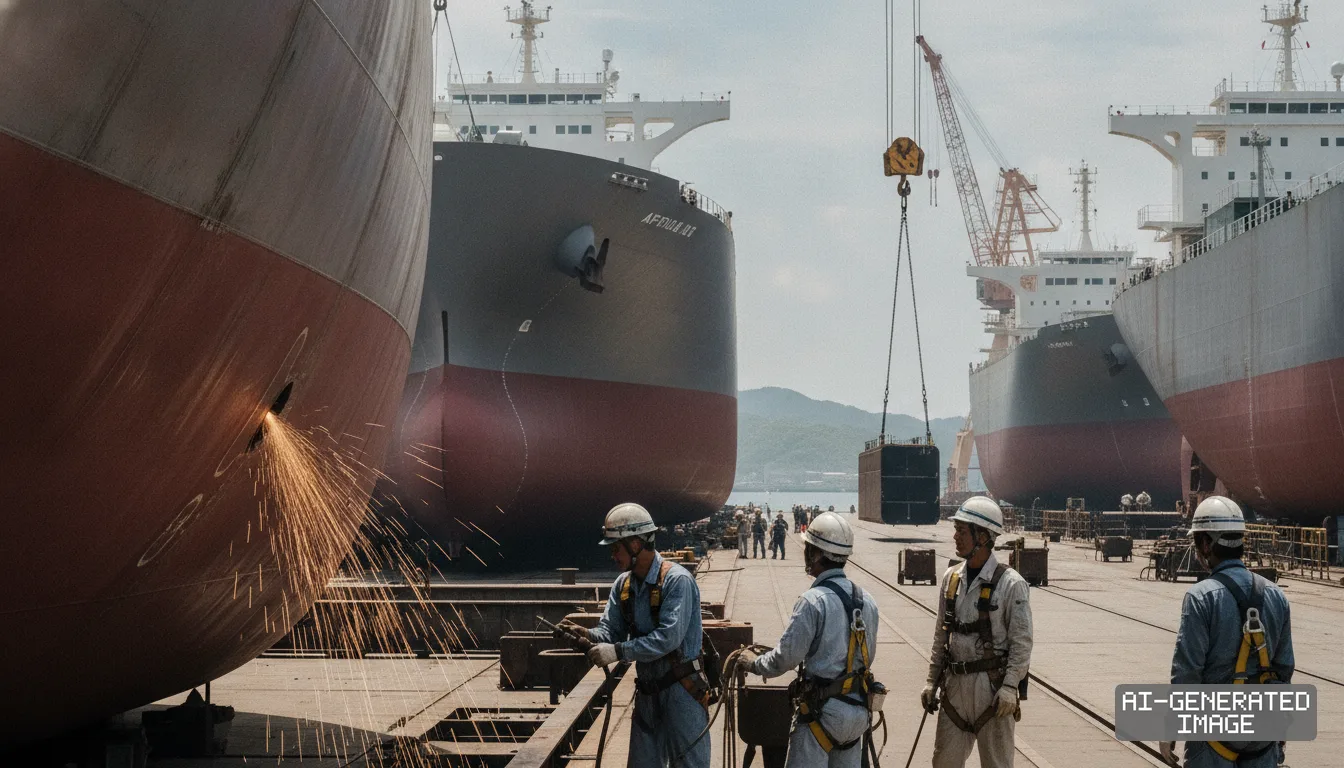
The expanded rules directly affect South Korean shipyards undertaking maintenance, repair and overhaul contracts for the U.S. Navy.
HD Hyundai Heavy Industries holds an active U.S. Navy Master Ship Repair Agreement, while naval defense work generates about 10% of its total order book.
The shipyard must verify that electric motors, auxiliary pumps, steering actuators and radar arrays contain no Chinese magnetic material.
Hanwha Ocean acquired Philly Shipyard for $100 million in 2024, with naval defense contracts accounting for roughly 15% of its annual sales.
The company must demonstrate origin compliance across sub-tier vendors supplying motor assemblies and power distribution components for auxiliary naval vessels.
Japanese defense manufacturers face parallel supply-chain screening across joint missile production and naval destroyer programs.
Mitsubishi Heavy Industries manufactures Patriot Advanced Capability-3 missile components and naval escort ships, with defense work representing roughly 20% of its order backlog.
The contractor uses permanent magnets in rocket fin actuators, seeker gyroscopes and high-output electrical generators across surface combatants.
Shin-Etsu Chemical manufactures rare-earth permanent magnets in Japan, holding roughly 12% of global high-performance magnet capacity outside China.
The company produces compliant samarium-cobalt and neodymium magnets, but limited raw-material feedstock outside China constrains rapid production increases.
Western processing bottlenecks complicate compliance because heavy rare earths like dysprosium and terbium remain concentrated in Chinese separation facilities.
Beijing placed seven heavy rare-earth categories and magnet fabrication technologies under mandatory export licensing in April 2025.
The dual-use export licensing regime administered by China's Ministry of Commerce requires 45 to 90 days for individual shipment reviews.
Contractors delivering non-compliant hardware after the deadline face delivery rejections, mandatory retrofit costs and regulatory penalties under federal procurement laws.
The Pentagon has not published an exhaustive cross-reference list of certified non-Chinese tier-three component vendors, nor confirmed how many outstanding nonavailability waiver requests are currently pending review.
The statutory waiver ban takes effect Jan. 1, 2027, when DFARS clause 252.225-7052 prohibits any covered magnet or mineral mined, refined or melted in China from entering Pentagon procurement.
Impact map
How this development propagates across the region and out to global buyers.
| Event | Korea | China | Japan | Global impact |
|---|---|---|---|---|
| Defense mineral waiver termination | Hanwha Ocean and HD Hyundai must verify motor and sensor magnet origins for US Navy MRO | Export licensing on heavy rare earths compounds DoD ban, restricting NdFeB flows to allied primes | Mitsubishi Heavy and Shin-Etsu must audit Tier-3 supply chains for Aegis and missile contracts | Defense primes face compliance delays and price premiums for traceable rare-earth magnets |
In this story
- Companies
- HD Hyundai Heavy IndustriesHanwha OceanMitsubishi Heavy IndustriesShin-Etsu Chemical
- Tickers
- 329180.KS042660.KS7011.T4063.T
- Policy
- ProcurementExport ControlsEconomic Security
- Impact
- Supply ChainComplianceCost Structure
Track every Export Controls development → Track every Economic Security development →
Related briefings
- Mitsubishi Heavy Industries refines Mogami frigate design for Oceanian naval tenders Also on Mitsubishi Heavy Industries, Hanwha Ocean, HD Hyundai Heavy Industries
- South Korea and Japan compete for Southeast Asian surface combatant naval export contracts Also on Mitsubishi Heavy Industries, Hanwha Ocean, HD Hyundai Heavy Industries
- China bars dual-use exports to Japan citing military end-use Also on Mitsubishi Heavy Industries, Export Controls, Compliance
- Japan vision makers deploy polarized image sensors for carbon fiber testing Also on Mitsubishi Heavy Industries, Cost Structure
Sources
Primary documents
Reporting
Confidence: high — how we grade this
The documents behind this briefing are linked above. East Asia Brief produces its English text with AI assistance under human editorial review, and does not translate or republish other outlets' articles. See our methodology and AI policy. Spotted an error? Tell us.
The Morning Brief
What changed in Korean, Chinese and Japanese industry overnight — and what it means for your supply chain. One email, weekday mornings, US time. Free.
The Morning Brief is in preparation. Leave your address and we will write to you once — when the first issue is ready. Nothing before that.