Mitsubishi Heavy Industries refines Mogami frigate design for Oceanian naval tenders
The shipbuilder offers tailored combat system integration and modular build plans to meet Australia and regional delivery timelines.
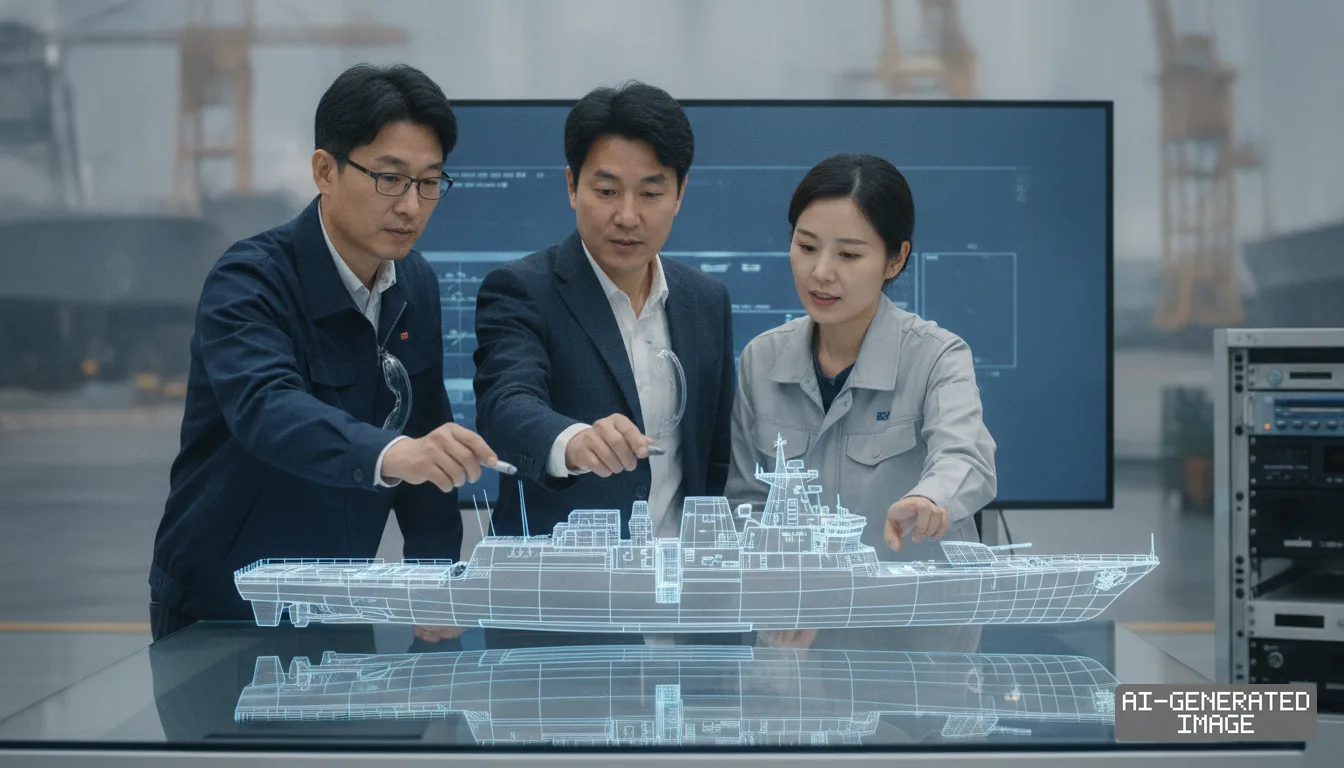
Mitsubishi Heavy Industries has modified the baseline design of its Mogami-class multi-role frigate to match the technical specifications and delivery schedules required by naval procurement programs across Oceania. The revised export variant incorporates open-architecture combat management options, expanded strike cell arrangements, and an industrial transfer framework tailored for split-build shipyard programs in Australia and partner nations. The engineering adjustments follow directives from Japan's Acquisition, Technology & Logistics Agency to adapt domestic naval platforms for foreign military sales following updates to national defense export guidelines.
The design adjustments center on the 5,000-to-6,200-metric-ton platform derived from the Japan Maritime Self-Defense Force Mogami-class and its enlarged successor class. The baseline Japanese platform operates with a core crew complement of approximately 90 personnel through extensive machinery automation and an integrated circular combat information center. For Oceanian buyers, particularly the Royal Australian Navy under its Tier 2 General Purpose Frigate requirement, Mitsubishi Heavy Industries has altered the hull layout to support Western combat subsystems and additional crew accommodations without expanding structural displacements.
A central engineering modification involves the weapons and sensor architecture. The standard Japanese configuration integrates Mitsubishi Electric OPY-2 multifunction radar arrays, OQQ-25 combined active variable depth sonar and towed passive arrays, and 16 Mk 41 Vertical Launching System cells. The export iteration provides structural reservations for up to 32 Mk 41 strike-length cells capable of housing RIM-162 Evolved SeaSparrow Missiles, Standard Missile variants, and long-range anti-ship weapons. The combat network interface has been re-engineered to accept the Saab 9LV combat management system alongside standard US Navy tactical datalinks, including Link 16 and Link 22, ensuring seamless data distribution across allied fleets.
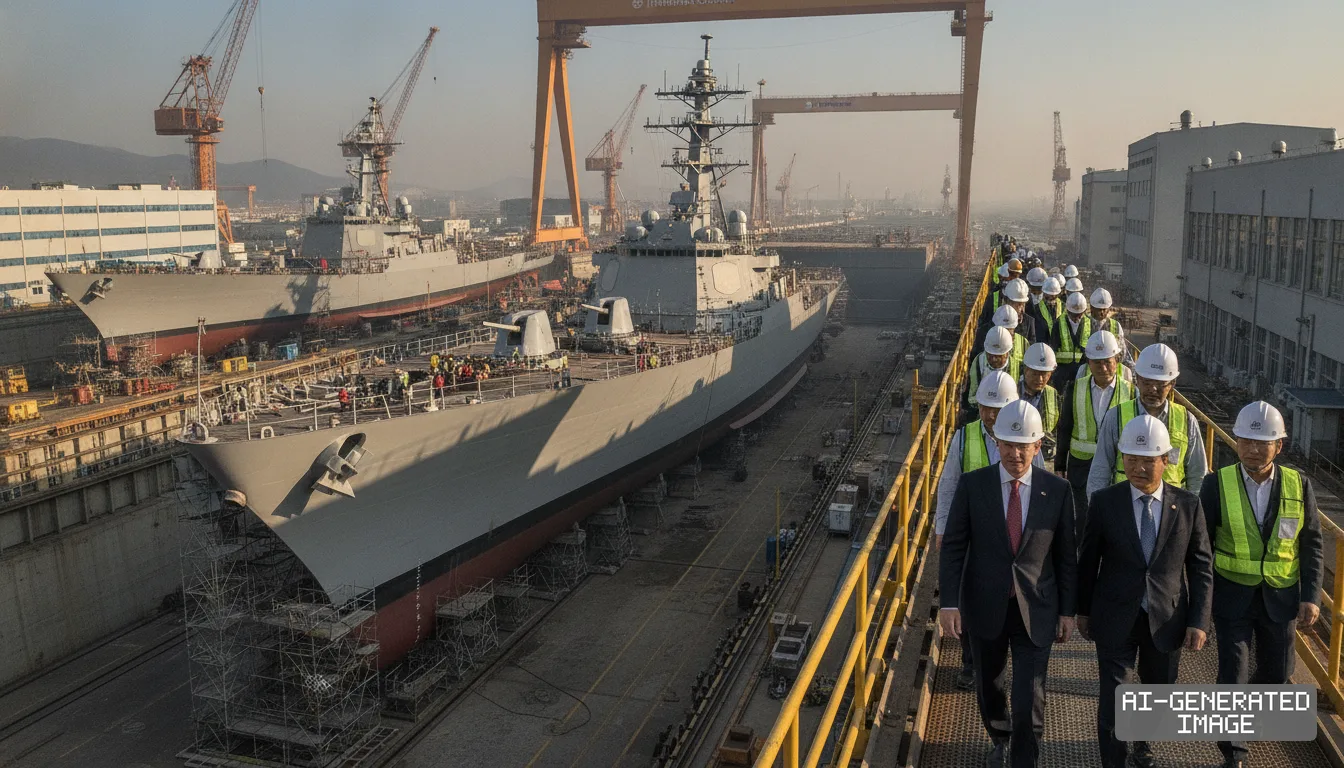
The industrial model proposed by Mitsubishi Heavy Industries splits production between its domestic shipyards and partner infrastructure in Western Australia. Under the initial phase of the proposed procurement schedule, the primary lead vessels would undergo fabrication and systems installation at the company's Nagasaki Shipyard & Machinery Works and the Tamano facility in Okayama Prefecture. Subsequent hulls would transition to assembly at the Henderson maritime precinct south of Perth, supported by on-site Japanese technical assistance teams and component supply pipelines from Japanese marine component vendors.
This phased manufacturing approach directly addresses the rapid-delivery timelines demanded by regional defense planners who require operational surface combatants before the end of the decade. By utilizing established tooling, automated plate-bending systems, and existing drydock capacity in Nagasaki, the Japanese builder can compress the delivery window for the first flight of vessels. Japanese shipyards have historically delivered Mogami-class hulls on steady one-year intervals from keel-laying to commissioning, presenting a predictable construction rhythm that foreign defense procurement agencies have struggled to secure through purely domestic programs.
The supply chain architecture for the export platform relies heavily on Japanese precision equipment manufacturers. Mitsubishi Electric supplies the unified radar and electronic warfare mast structure, Japan Radio Company provides satellite communication terminals, and Kawasaki Heavy Industries delivers the combined diesel and gas turbine propulsion machinery featuring Rolls-Royce MT30 gas turbines and MAN diesel engines. To satisfy regional industrial content requirements, Mitsubishi Heavy Industries has initiated preliminary technical discussions with Australian engineering firms to localize maintenance, electrical cabling, structural piping, and lifecycle depot servicing.
Regional competition for the surface combatant contracts remains concentrated among four allied shipbuilders. Germany's ThyssenKrupp Marine Systems has pitched MEKO A-200 and MEKO A-210 derivatives, Spain's Navantia offers the ALFA 3000 design, and South Korea's HD Hyundai Heavy Industries and Hanwha Ocean have proposed Chungnam-class variants. Mitsubishi Heavy Industries is positioning the Mogami derivative around its operational pedigree within the Japan Maritime Self-Defense Force, low onboard manpower requirements, and high acoustic silencing performance optimized for regional anti-submarine warfare operations.
The Japanese export push represents a commercial evolution authorized by Tokyo's revised Three Principles on Transfer of Defense Equipment and Technology. The revised regulatory framework permits the export of finished defense platforms that contribute directly to regional maritime security when transferred to designated security partner nations. The Acquisition, Technology & Logistics Agency oversees all foreign government consultations, ensuring that hull modifications and sensor integration meet bilateral security agreements and defense technology protection covenants.
Procurement authorities in Canberra are scheduled to finalize shortlisting decisions for the general-purpose frigate program following formal review of technical compliance submissions, build schedules, and domestic shipyard transition models submitted by the participating defense contractors.
Impact map
How this development propagates across the region and out to global buyers.
| Event | Korea | China | Japan | Global impact |
|---|---|---|---|---|
| Oceanian frigate tender | naval yard competition | regional fleet monitoring | shipyard export lines | allied naval interoperability |
In this story
- Companies
- Mitsubishi Heavy Industries
- Tickers
- 7011.T
- Exposed
- Mitsubishi ElectricKawasaki Heavy IndustriesSaab ABHanwha OceanHD Hyundai Heavy Industries
- Policy
- Export ControlsEconomic Security
- Impact
- Supply ChainOrder BookCapex
Track every Export Controls development → Track every Economic Security development →
Related briefings
- Mitsubishi Heavy buys Shimonoseki site in $638M yard plan Also on Kawasaki Heavy Industries, Mitsubishi Heavy Industries, Order Book
- China bars dual-use exports to Japan citing military end-use Also on Mitsubishi Electric, Mitsubishi Heavy Industries, Export Controls
- Japan Clears $635 Million in Subsidies to Modernize Shipyards by 2035 Also on Kawasaki Heavy Industries, Hanwha Ocean, Order Book
- Kawasaki Heavy advances 2030 target for AI humanoid robots Also on Kawasaki Heavy Industries, Order Book
Sources
This briefing carries no sources block. It was written from our desks’ working knowledge of the sector rather than from documents retrieved for this piece. Read it as orientation and check any figure you intend to act on — how we source briefings.
This briefing carries no linked sources: it was written from our desks' working knowledge of the sector rather than from documents retrieved for this piece. East Asia Brief publishes no citation it cannot link. Our English text is produced with AI assistance under human editorial review. See our methodology and AI policy. Spotted an error? Tell us.
The Morning Brief
What changed in Korean, Chinese and Japanese industry overnight — and what it means for your supply chain. One email, weekday mornings, US time. Free.
The Morning Brief is in preparation. Leave your address and we will write to you once — when the first issue is ready. Nothing before that.