Samsung Heavy taps GTT to design tanks for four LNG carriers
The French engineering group will deploy Mark III Flex+ membrane containment technology across the 200,000-cubic-meter vessels scheduled for 2029 delivery.
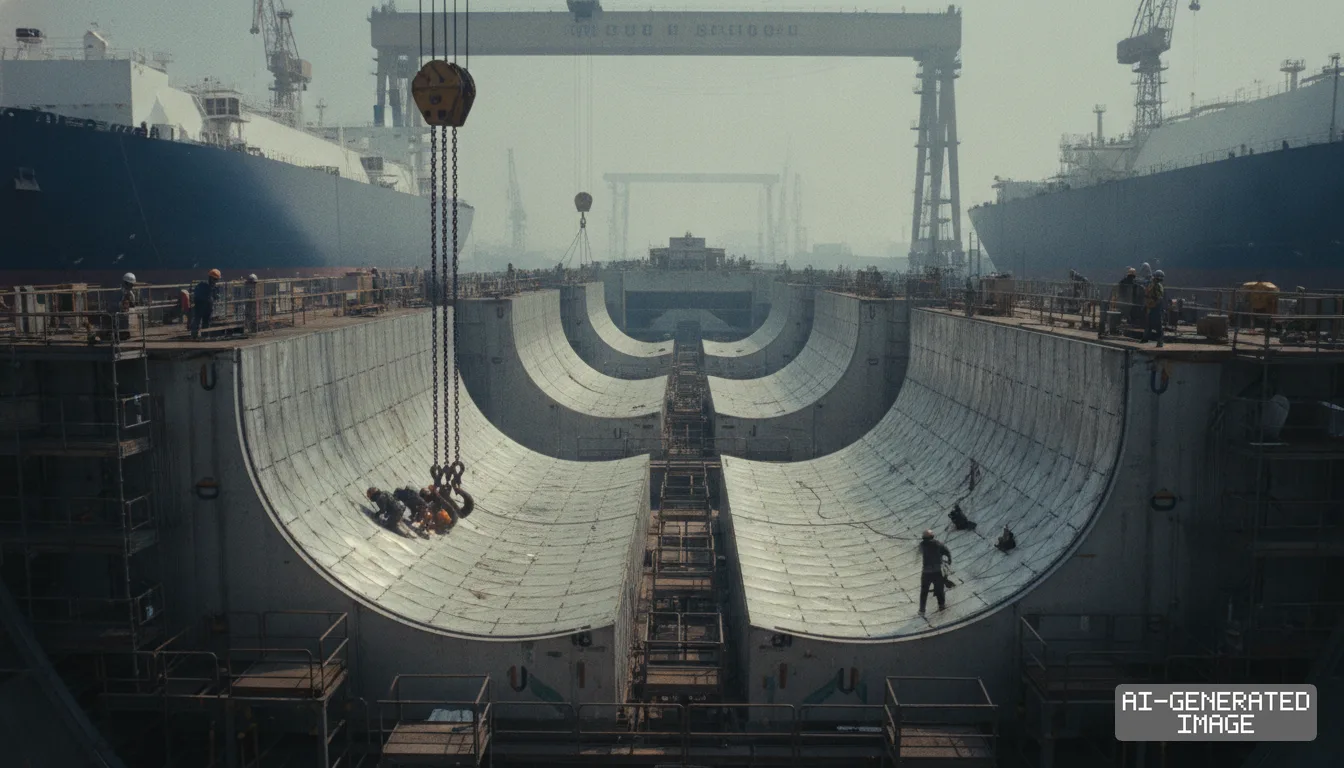
Samsung Heavy Industries contracted French engineering firm GTT on Oct. 8, 2026, to design cryogenic membrane containment tanks for four large liquefied natural gas carriers.
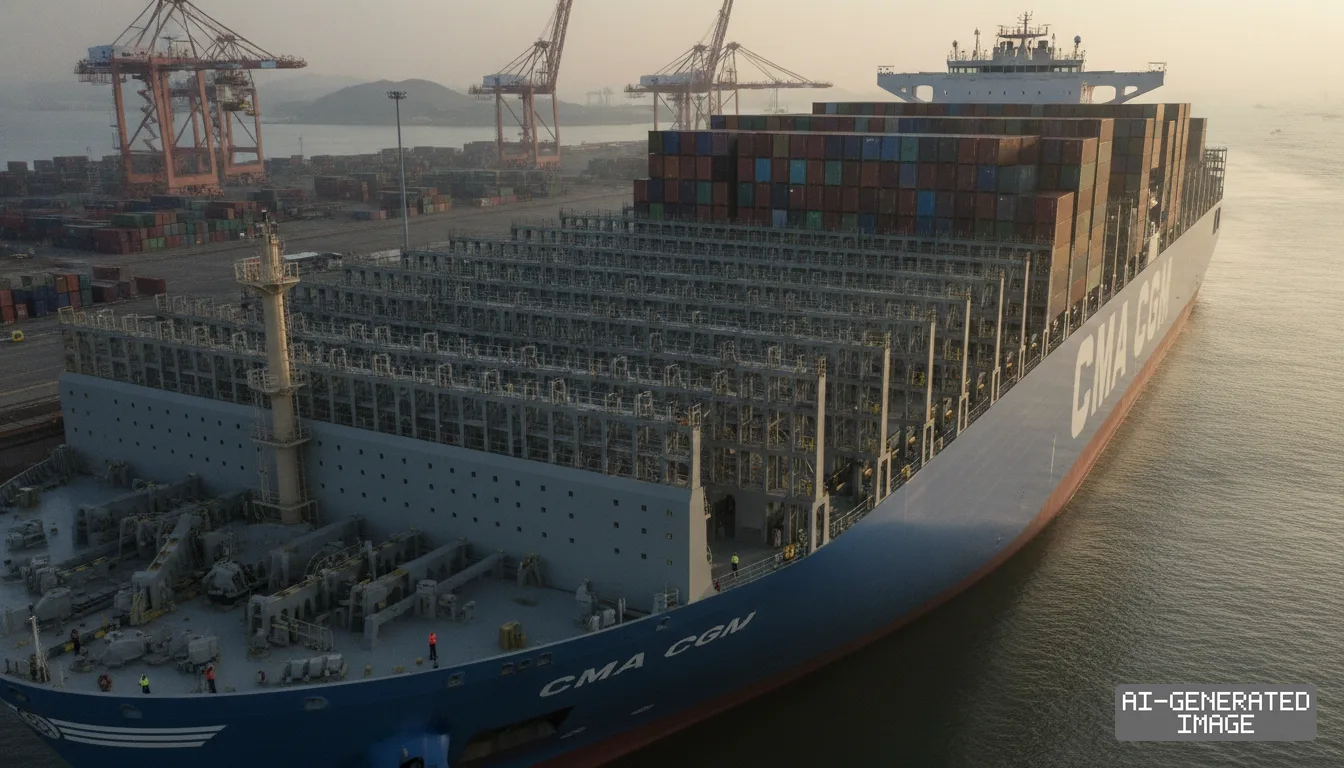
Each vessel will carry a cargo volume of 200,000 cubic meters, bringing total capacity across the order to 800,000 cubic meters. The four hulls represent a shift toward larger hull envelopes than standard 174,000-cubic-meter units.
Deliveries are scheduled to run through 2029, according to contractual milestones established by the shipyard. The project adds to South Korea's forward delivery slots that already stretch past 2028.
GTT said its specialized business unit, GTT Energy, will carry out the engineering work. The division handles low-temperature membrane fuel and containment tank engineering for international shipyards.
The vessels will use the Mark III Flex+ membrane containment system. The technology features corrugated stainless steel primary barriers and reinforced insulation designed to keep daily natural boil-off rates to 0.05% of cargo volume.
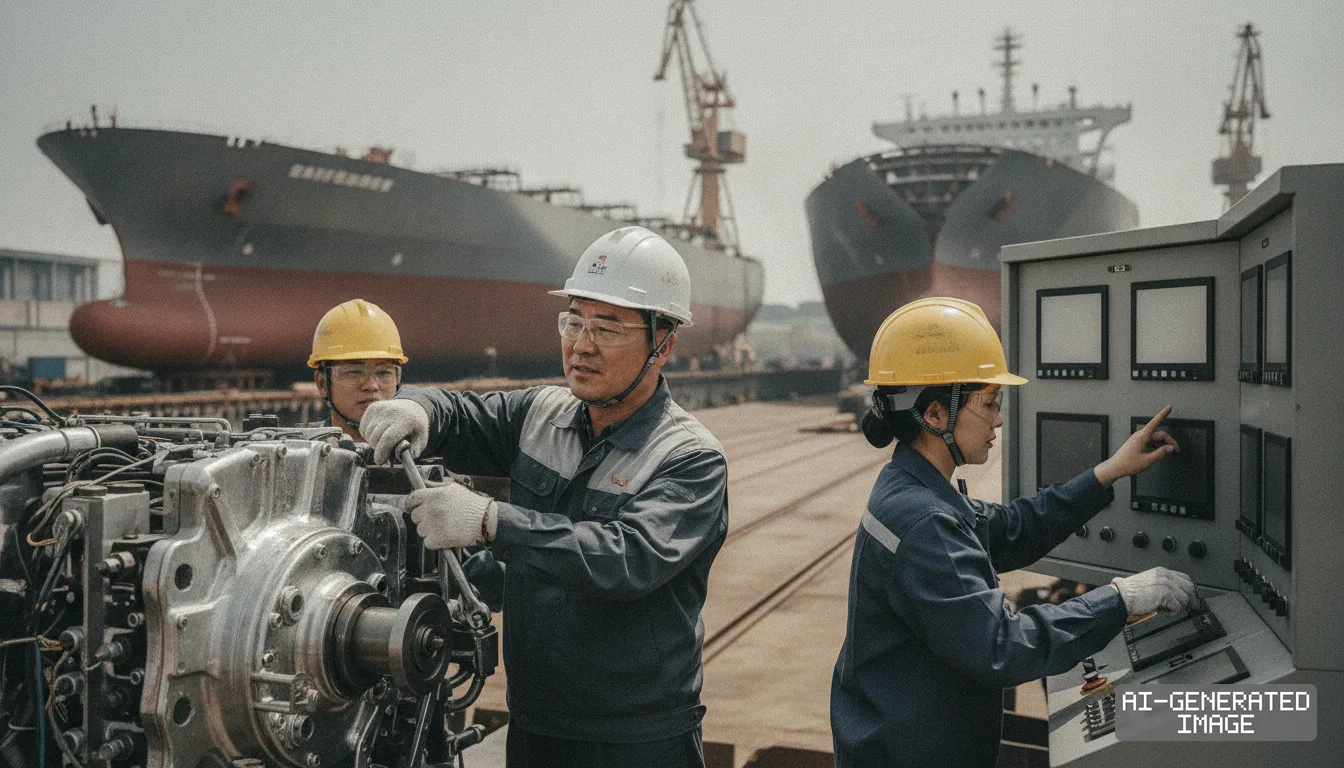
The builder confirmed the commercial contract originated from an undisclosed European shipowner. Samsung Heavy Industries books the construction slots at its primary yard in Geoje on South Korea's southern coast.
The technical licensing arrangement continues long-standing dependency patterns across South Korean commercial shipyards. Domestic yards construct more than 70% of global liquefied natural gas carriers but rely on French engineering patents for cargo containment.
Royalties paid to GTT typically average roughly 5% of the construction value of each standard liquefied natural gas vessel. That royalty stream accounts for an estimated $12 million to $14 million per delivered hull.
South Korean shipbuilders have sought to commercialize alternative indigenous containment systems, including the KC-1 and newer KC-2 designs. Technical setbacks and foreign shipowner resistance have slowed broader adoption across export order books.
Western shipowners and charterers consistently demand sea-proven tank designs with established operating records. GTT holds more than 90% of the active commercial membrane patent market for deep-sea gas shipping.
The order follows earlier four-vessel packaging agreements between the two corporations. Samsung Heavy Industries signed comparable engineering orders with GTT for four 174,000-cubic-meter vessels in March 2022 and October 2022.
The newer 200,000-cubic-meter design provides higher transport volumes per voyage on long-haul routes. Charterers moving liquefied natural gas between the Atlantic basin and East Asia prioritize lower transport costs per ton.
Samsung Heavy Industries has focused its commercial order strategy on premium tonnage. High-specification gas carriers and offshore production units offer wider operational margins than conventional merchant hulls.
Competitors in China, led by Hudong-Zhonghua Shipbuilding, also pay identical design fees to GTT for membrane containment licenses. The common royalty obligation keeps Korean and Chinese builders on identical intellectual property footing.
The French licensing firm operates on high gross margins because design engineering generates recurring income without direct manufacturing risks. Licensing revenue scales directly alongside global shipbuilding contracting runs.
Rising yard berth utilization across East Asia has limited open drydock capacity before late 2028. Shipowners must secure construction slots three to four years before expected delivery windows.
Yard managers in Geoje must coordinate procurement schedules for cryogenic insulation panels and secondary barrier membranes well ahead of steel cutting. Supply pinches in invar alloy or specialized polyurethane foam can trigger delivery penalties.
The technical contract locks in the engineering parameters for the entire four-ship series. Fabrication steps will align with the standardized Mark III Flex+ modular construction manuals provided by GTT.
Deliveries of the four carriers will begin in early 2029 and run through the end of that year. Yard inspections and sea trials will take place under survey supervision from international classification societies.
The notice does not state the financial value of the licensing contract, and Samsung Heavy Industries has not published the identity of the European shipowner.
Impact map
How this development propagates across the region and out to global buyers.
| Event | Korea | China | Japan | Global impact |
|---|---|---|---|---|
| GTT tank order | Samsung Heavy secures 800,000 cbm of LNG slots, pays standard ~5% tech royalty | Hudong-Zhonghua faces identical GTT royalty baseline on export LNG hulls | No direct yard impact, Japanese shipbuilders remain focused on domestic LNG orders | European charterers lock in large-scale 200,000-cbm gas transport capacity for 2029 |
In this story
- Companies
- Samsung Heavy IndustriesGTT
- Tickers
- 010140.KS
- Exposed
- Hudong-Zhonghua Shipbuilding
- Policy
- Intellectual PropertyMaritime Safety
- Impact
- Supply ChainOrder BookCost Structure
Related briefings
- Samsung Heavy orders GTT tank designs for four LNG ships Also on GTT, Samsung Heavy Industries, Cost Structure
- HD Hyundai develops 150,000 cbm ultra-large ethane carrier Also on GTT, Cost Structure, Order Book
- Shipyard labor policies diverge as Korea, Japan, and China tackle yard manning gaps Also on Hudong-Zhonghua Shipbuilding, Samsung Heavy Industries, Cost Structure
- HD Hyundai and Hanwha Ocean Lock In LNG Carrier Berth Slots Through 2029 Also on Hudong-Zhonghua Shipbuilding, Samsung Heavy Industries, Order Book
Sources
Reporting
Confidence: medium — how we grade this
The documents behind this briefing are linked above. East Asia Brief produces its English text with AI assistance under human editorial review, and does not translate or republish other outlets' articles. See our methodology and AI policy. Spotted an error? Tell us.
The Morning Brief
What changed in Korean, Chinese and Japanese industry overnight — and what it means for your supply chain. One email, weekday mornings, US time. Free.
The Morning Brief is in preparation. Leave your address and we will write to you once — when the first issue is ready. Nothing before that.