HD Hyundai and Hanwha Ocean Lock In LNG Carrier Berth Slots Through 2029
South Korean shipyards convert tight drydock availability into pricing power as shipowners secure multi-year slots for alternative-fuel tonnage.
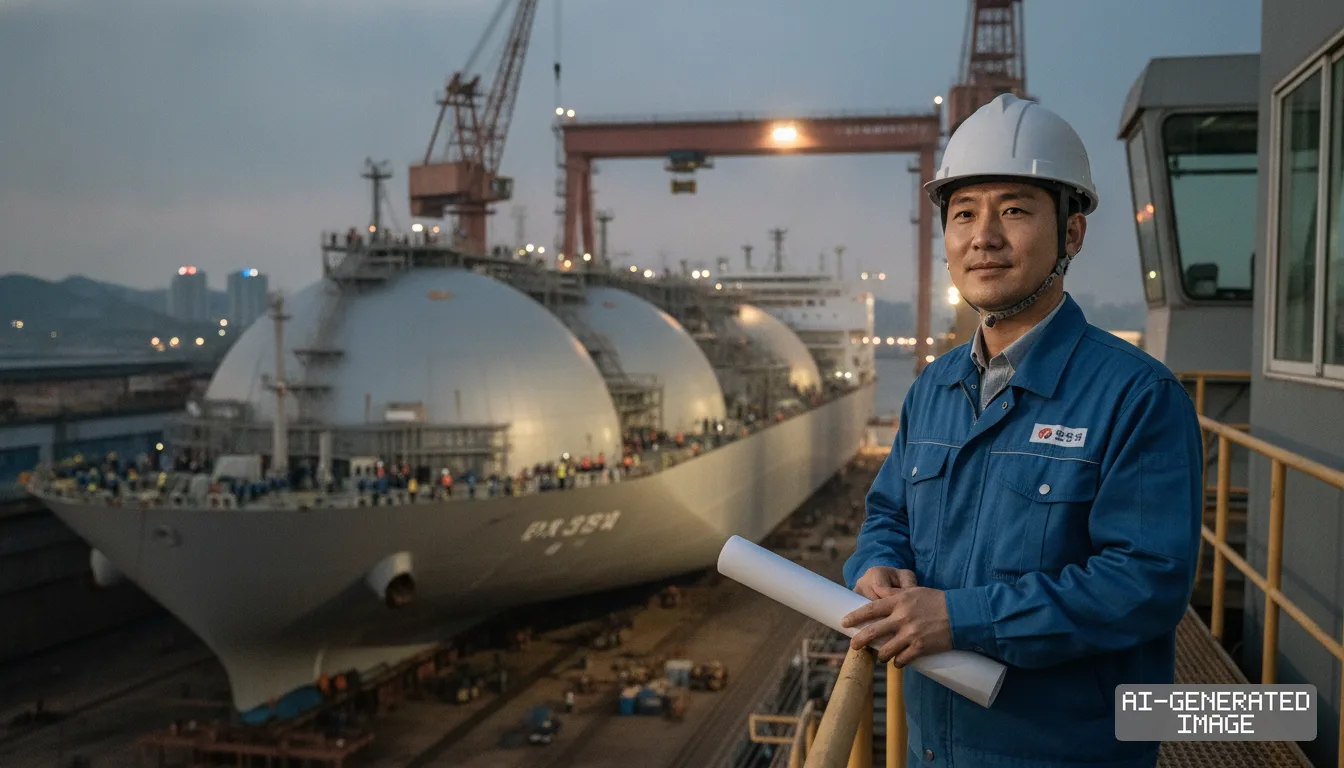
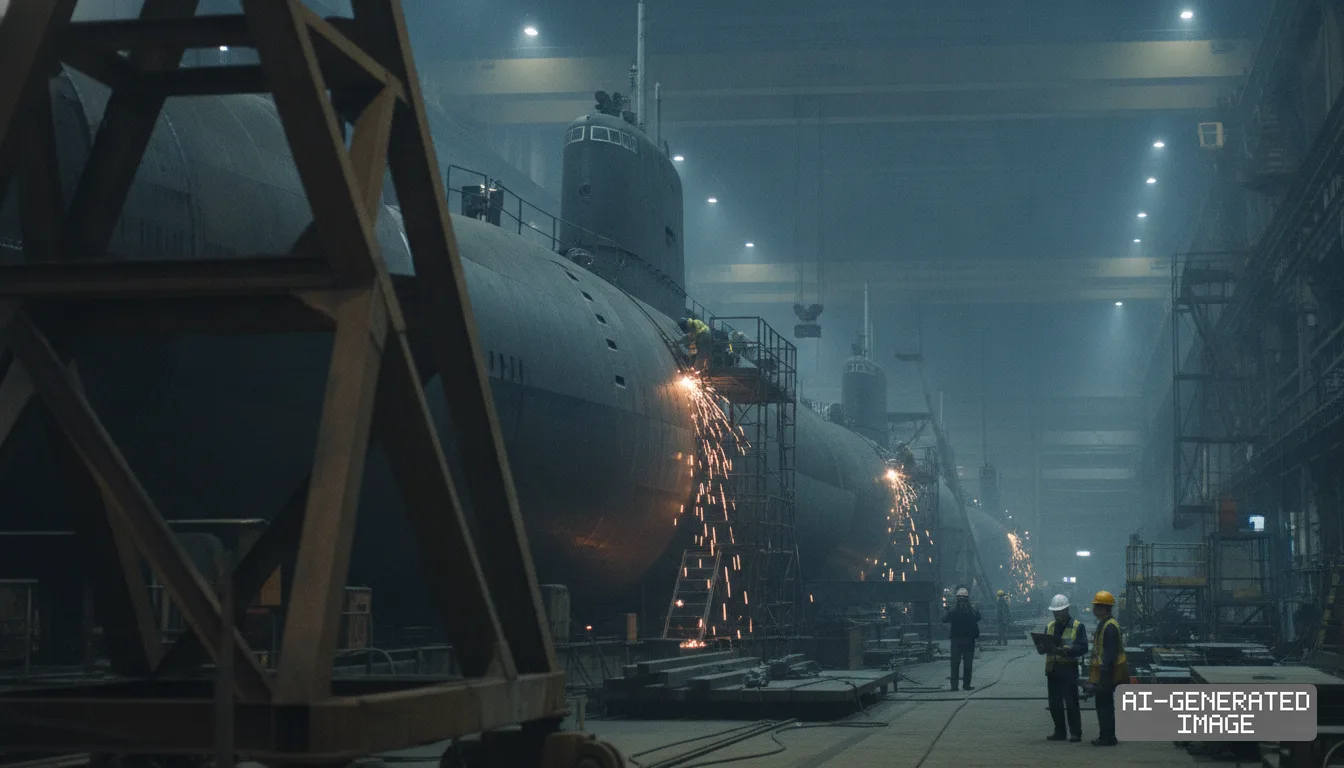
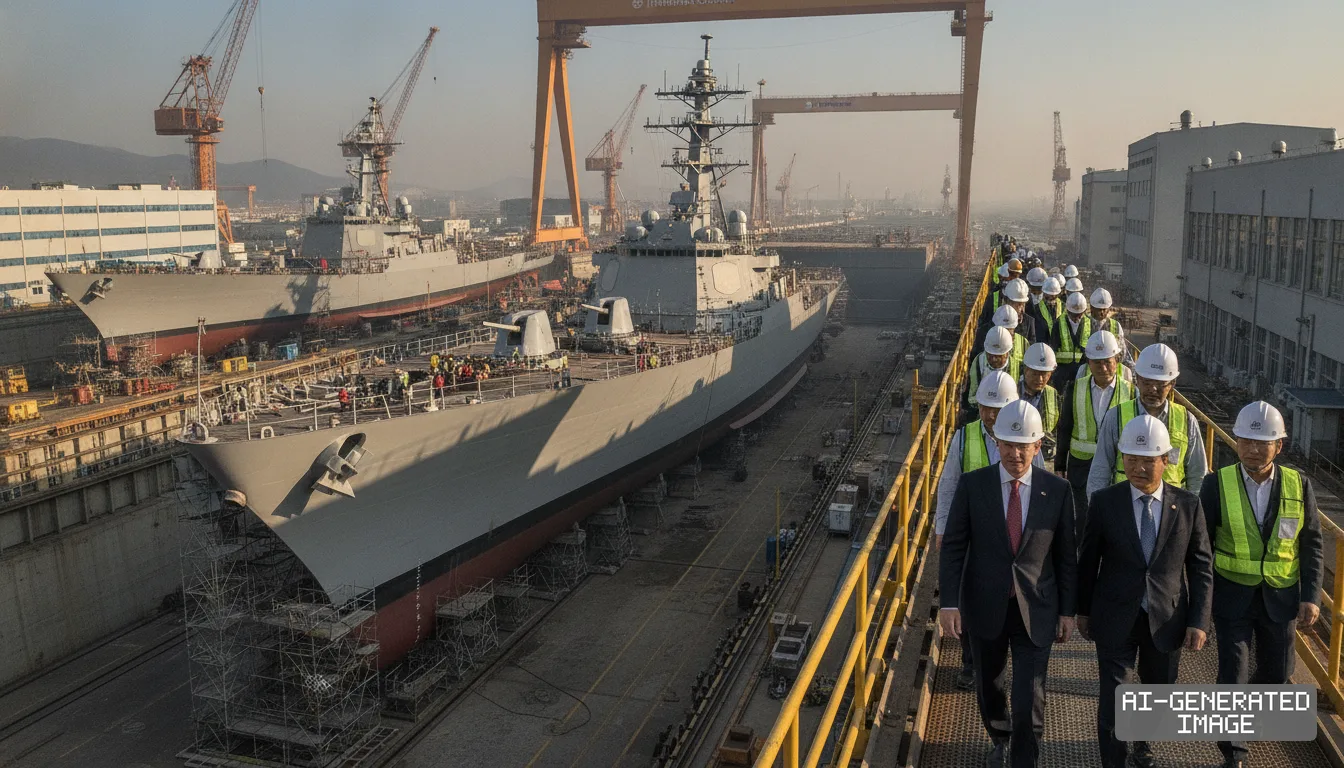
South Korea’s primary shipbuilders, led by HD Hyundai and Hanwha Ocean, have filled their large-scale commercial drydock schedules through the end of 2028 and are now locking in firm construction slots for delivery in late 2029. The multi-year backlog has allowed domestic shipyards to maintain strict pricing discipline for premium tonnage, requiring international shipowners to accept historically high newbuilding contract values to secure remaining delivery windows.
South Korea accounts for the majority of the world's high-specification liquefied natural gas (LNG) carrier order book, building vessels equipped with cryogenic containment systems capable of transporting 174,000 cubic meters or more of fuel at minus 162 degrees Celsius. The country’s major shipbuilding groups HD Korea Shipbuilding & Offshore Engineering (the intermediate holding company of HD Hyundai), Hanwha Ocean, and Samsung Heavy Industries operate the specialized drydock networks and membrane tank fabrication facilities required to manufacture these vessels at commercial scale.
The forward commitment of shipyard capacity stems from twin procurement cycles: the long-term fleet requirements of international energy export projects across North America and the Middle East, and the fleet renewal programs of global liner operators transitioning to alternative fuels. With global building capacity constrained by structural labor shortages and limited specialized dock space, shipowners have been forced to negotiate construction contracts three to four years ahead of scheduled steel-cutting dates.
Regulatory filings from South Korean shipbuilders show that standard 174,000-cubic-meter LNG carrier newbuilding prices have stabilized near record highs, consistently exceeding $260 million per vessel. That pricing level represents a substantial shift from previous contracting cycles, when yards competed on price to fill near-term dock gaps. The shift toward selective order intake reflects a structural strategy to prioritize margin expansion over gross compensated gross tonnage volume.
The practical consequence for shipping fund managers and fleet procurement directors is the near-total elimination of near-term delivery flexibility. Maritime operators seeking newbuilding slots for deliveries prior to the fourth quarter of 2028 must now rely on berth resales, secondary market charter contracts, or slot conversions within pre-existing framework agreements. For late-2028 and 2029 deliveries, shipbuilders are tying slot reservations to escalation clauses covering primary material inputs and specialized labor.
HD Korea Shipbuilding & Offshore Engineering, which manages shipbuilding yards at HD Hyundai Heavy Industries, HD Hyundai Samho, and HD Hyundai Mipo, has allocated its heavy building docks primarily to LNG carriers, very large ammonia carriers, and dual-fuel ultra-large containerships. Hanwha Ocean has mirrored this approach at its Geoje shipyard, directing dock throughput toward membrane-type gas carriers and specialized defense contracts. This operational alignment has effectively reduced the availability of conventional commercial docks for standard crude tankers and dry bulk vessels.
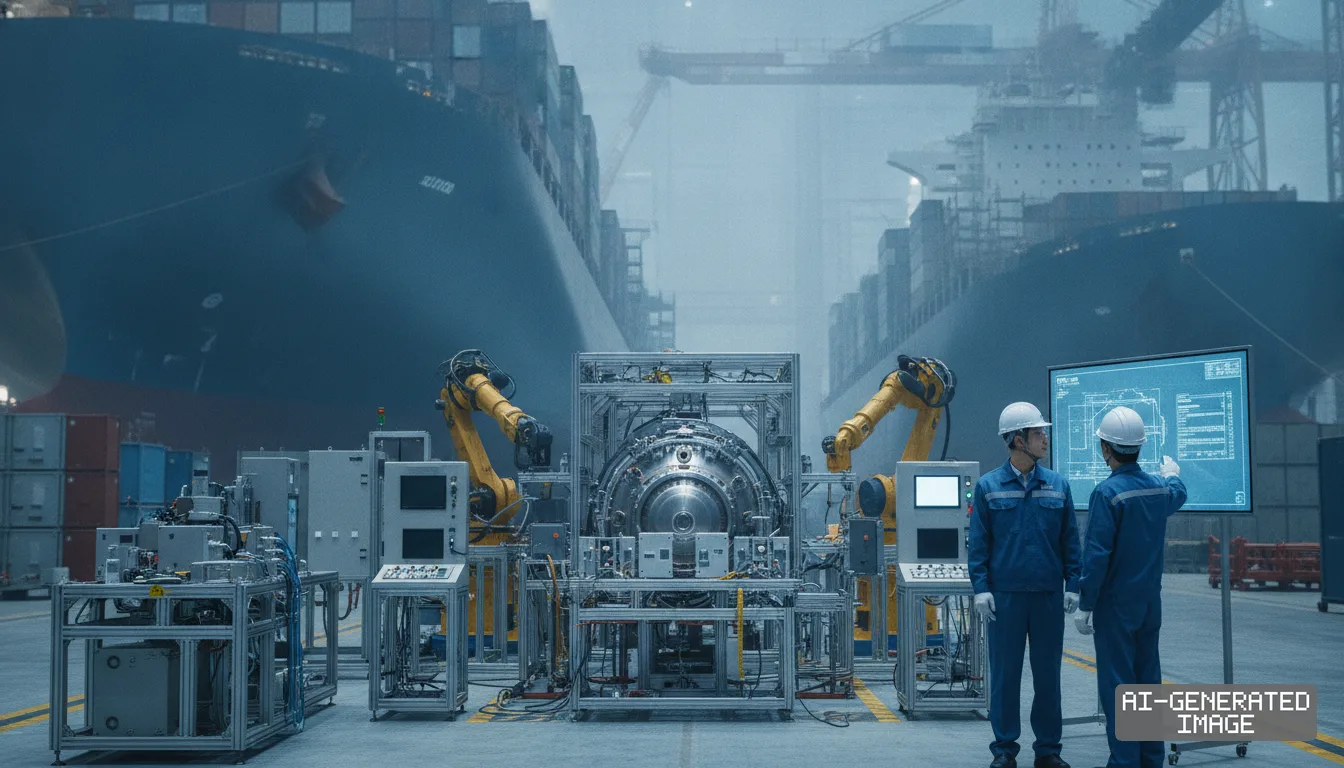
The concentration of high-value gas carrier construction also shifts procurement dynamics across the Tier-1 marine equipment supply chain. Demand for cryogenic insulation panels, secondary barrier membranes, high-pressure dual-fuel propulsion engines, and sub-cooling reliquefaction units has created delivery lead times that match shipyard slot schedules. Marine engine builders such as HD Hyundai Heavy Industries Engine & Machinery Division and HSD Engine are booking low-speed two-stroke dual-fuel engine capacity through 2028 to align with yard construction sequences.
Rising regulatory standards established by the International Maritime Organization and the extension of the European Union Emissions Trading System to maritime transport are accelerating the phase-out of steam turbine and older four-stroke dual-fuel diesel-electric LNG vessels. Because these legacy carriers suffer commercial penalties under carbon intensity indicators, charterers are systematically replacing them with standard two-stroke ME-GA and X-DF propulsion units paired with modern reliquefaction systems, sustaining structural replacement demand regardless of short-term freight rate volatility.
Shipyard steel procurement costs have also stabilized following prolonged negotiations between South Korean shipbuilders and domestic steelmakers over thick plate pricing. The ability of shipbuilders to pass through historical plate cost adjustments into current newbuilding price baselines has insulated operating margins against raw material price shocks. The commercial focus has consequently moved from material inflation recovery to operational execution and on-time dock turnaround.
Chinese shipbuilders, including Hudong-Zhonghua Shipbuilding and Jiangnan Shipyard, have expanded their domestic LNG carrier construction capacity and secured slot reservations from state-backed and European charterers. However, the international market for high-capacity membrane carriers remains concentrated in South Korea due to long-standing containment licensing arrangements, established delivery track records, and operational reliability ratings demanded by project financing syndicates.
South Korean shipbuilders are scheduled to finalize second-half slot allocation frameworks with independent shipowners and national oil companies over the coming quarters. Construction timetables indicate that the first commercial steel-cutting activities for the newly booked 2029 delivery slots will commence in early 2027.
Impact map
How this development propagates across the region and out to global buyers.
| Event | Korea | China | Japan | Global impact |
|---|---|---|---|---|
| LNG slot lockup | yards reserve docks to 2029 | secondary gas slot intake | equipment supplier backlogs | elevated replacement costs |
In this story
- Companies
- HD Korea Shipbuilding & Offshore EngineeringHanwha OceanSamsung Heavy Industries
- Tickers
- 009540.KS042660.KS010140.KS
- Exposed
- Hudong-Zhonghua ShipbuildingHD Hyundai Heavy Industries
- Policy
- Economic Security
- Impact
- Order BookPricingSupply ChainCapex
Track every Economic Security development →
Related briefings
- Shipyard labor policies diverge as Korea, Japan, and China tackle yard manning gaps Also on Hudong-Zhonghua Shipbuilding, HD Korea Shipbuilding & Offshore Engineering, Samsung Heavy Industries
- China State Shipyards Reconfigure Dry Docks for Dual-Fuel Mega-Boxships Also on Hudong-Zhonghua Shipbuilding, HD Korea Shipbuilding & Offshore Engineering, Order Book
- HD Hyundai Samho builds three-tank LNG carriers for BW LNG Also on Hudong-Zhonghua Shipbuilding, HD Korea Shipbuilding & Offshore Engineering, Order Book
- Samsung Heavy taps GTT to design tanks for four LNG carriers Also on Hudong-Zhonghua Shipbuilding, Samsung Heavy Industries, Order Book
Sources
This briefing carries no sources block. It was written from our desks’ working knowledge of the sector rather than from documents retrieved for this piece. Read it as orientation and check any figure you intend to act on — how we source briefings.
This briefing carries no linked sources: it was written from our desks' working knowledge of the sector rather than from documents retrieved for this piece. East Asia Brief publishes no citation it cannot link. Our English text is produced with AI assistance under human editorial review. See our methodology and AI policy. Spotted an error? Tell us.
The Morning Brief
What changed in Korean, Chinese and Japanese industry overnight — and what it means for your supply chain. One email, weekday mornings, US time. Free.
The Morning Brief is in preparation. Leave your address and we will write to you once — when the first issue is ready. Nothing before that.