Samsung Heavy joins Tesser to develop nuclear-powered LNG carrier
The exclusive pact targets a transatlantic demonstration vessel by the early 2030s using molten-salt reactor tech as Samsung Heavy holds 25% of global LNG orders.
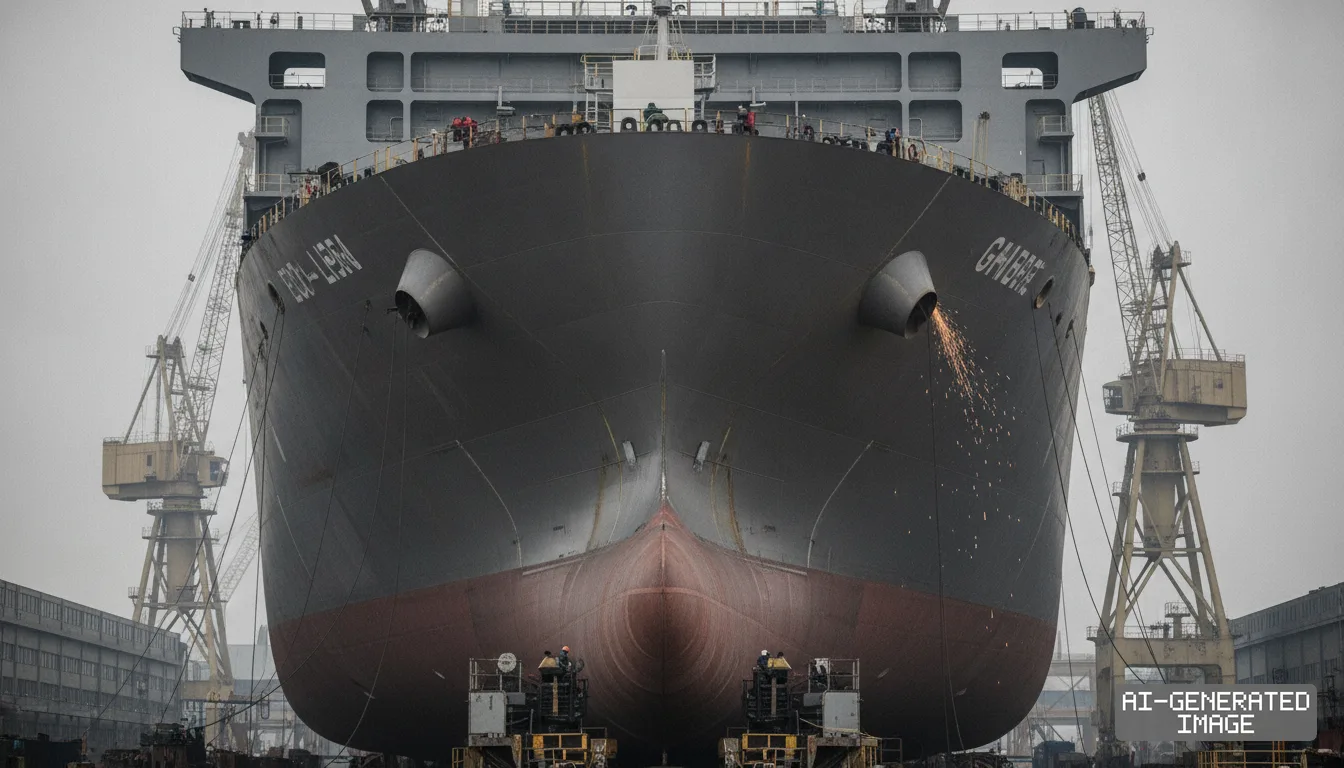
South Korea's Samsung Heavy Industries signed an exclusive partnership with US reactor developer Tesser Atomics on Nov. 19 to develop a commercial nuclear-powered liquefied natural gas carrier.
Under the agreement, Samsung Heavy serves as the exclusive shipbuilder and Tesser provides the reactor system. The companies did not disclose a project budget or contract value for the vessel.
Samsung Heavy holds roughly 25% of the global liquefied natural gas carrier orderbook. A standard 174,000-cubic-meter conventional gas carrier costs about 360 billion won ($260 million) at major South Korean shipyards.
The partners plan to deploy the demonstration vessel on commercial routes between the United States and Europe. That corridor faces carbon fees under the European Union emissions trading system for maritime transport.
Tesser will supply its Triton reactor, a fluoride-salt-cooled high-temperature reactor engineered for merchant vessels. The system uses liquid fluoride salt as a low-pressure coolant rather than pressurized water, the company said.
Because molten fluoride salt stays liquid at high temperatures without boiling, the reactor operates near atmospheric pressure. That design eliminates the danger of high-pressure steam ruptures seen in naval pressurized water reactors.
The Triton system uses ceramic-coated particle fuel known as TRISO — uranium encased in carbon and ceramic shells that resist melting. The reactor allows on-line refuelling while the vessel continues operating, engineers said.
On-line refuelling avoids the multi-month drydock shutdowns required to replace spent cores in traditional naval nuclear vessels. Crew members or port technicians can cycle fresh fuel elements through the core during normal voyages.
Nuclear engineer Per Peterson co-founded Tesser after helping establish land-based reactor company Kairos Power. While Kairos builds electricity generators for terrestrial utility grids, Tesser concentrates entirely on merchant marine hulls, Peterson said.
The joint project emerged from NuProShip, a Norwegian research program examining nuclear propulsion for merchant shipping. That initiative investigated whether commercial cargo vessels could adopt modular atomic power to replace fossil bunker fuels.
The research continues under SFI SAINT, a maritime research consortium led by the Norwegian University of Science and Technology. The Research Council of Norway provides public funding for the university-led engineering consortium.
Norwegian shipbuilder Vard and shipowner Knutsen OAS previously studied retrofitting molten-salt reactors onto the 77,200-deadweight-ton gas carrier Cadiz Knutsen. That research demonstrated that existing steam turbine drives can couple directly to nuclear heat exchangers.
Samsung Heavy has conducted domestic nuclear marine engineering since 2021 with the state-run Korea Atomic Energy Research Institute. That collaboration focuses on small modular molten-salt reactors for offshore power barges and container ships.
The American Bureau of Shipping granted approval in principle in September 2025 for Samsung Heavy's domestic 100-megawatt thermal design. The Tesser partnership gives the South Korean shipyard access to American reactor intellectual property.
Commercial shipowners face tightening mandates from the International Maritime Organization, which requires net-zero shipping emissions around 2050. Conventional dual-fuel gas carriers reduce carbon dioxide by only 20% compared with heavy bunker oil.
That 20% reduction leaves long-haul gas vessels exposed to increasing penalty fees in European ports. A nuclear propulsion unit produces zero operational greenhouse gas emissions during transatlantic transit, eliminating emissions penalties entirely.
Installing an atomic core also frees cargo space inside the commercial hull. Because the reactor consumes minimal fuel volume, the vessel does not require large fuel storage tanks or bulky carbon-capture equipment.
Tesser assumes sole responsibility for reactor licensing and regulatory approvals in North America and Europe. Nuclear merchant vessels must obtain safety clearances from both flag states and destination ports before entering commercial service.
Commercial seaports currently lack unified international rules for handling nuclear merchant ships and dockside emergency zones. The International Maritime Organization adopted safety guidelines for nuclear merchant vessels in 1981, but few governments enforce them.
The fuel supply chain also presents an unresolved hurdle for commercial adoption. The reactor requires high-assay low-enriched uranium, a specialized fuel grade with commercial production concentrated in very few enrichment facilities.
South Korea's Ministry of Oceans and Fisheries and Ministry of Science and ICT continue funding domestic marine reactor standards through 2026. Domestic policymakers want South Korean yards to control both vessel integration and reactor packaging.
The memorandum does not state the vessel construction cost, the reactor delivery price, or the shipyard fabrication timetable. Samsung Heavy has not published a regulatory filing regarding the partnership on the Korea Exchange.
The partnership targets commercial operations for the demonstration carrier in the early 2030s, a Tesser spokesperson said. Engineering teams from both companies will determine the binding delivery date during preliminary design work next year.
Impact map
How this development propagates across the region and out to global buyers.
| Event | Korea | China | Japan | Global impact |
|---|---|---|---|---|
| Nuclear LNG carrier agreement | Samsung Heavy secures exclusive hull construction role, leveraging 25% global LNG carrier share | Rival shipbuilders face widening technology lead in commercial nuclear propulsion design | Marine equipment makers assess steam turbine heat exchanger integration for atomic gas carriers | Transatlantic LNG shippers gain zero-emission compliance path under European Union carbon caps |
In this story
- Companies
- Samsung Heavy IndustriesTesser Atomics
- Tickers
- 010140.KS
- Exposed
- Kairos Power
- Policy
- Standards
- Impact
- Supply ChainOrder Book
Track every Standards development →
Related briefings
- Korean robotics makers unveil climbing inspection units at RobotWorld Also on Samsung Heavy Industries, Standards, Order Book
- Samsung Heavy Commercializes AI Berthing System BerthView Also on Samsung Heavy Industries, Standards, Order Book
- HD Hyundai Heavy signs $465m deal for four ammonia vessels Also on Samsung Heavy Industries, Standards, Order Book
- Korean yards lift Q3 R&D spending 78% to $327M for naval robotics Also on Samsung Heavy Industries, Order Book
Sources
Reporting
Confidence: medium — how we grade this
The documents behind this briefing are linked above. East Asia Brief produces its English text with AI assistance under human editorial review, and does not translate or republish other outlets' articles. See our methodology and AI policy. Spotted an error? Tell us.
The Morning Brief
What changed in Korean, Chinese and Japanese industry overnight — and what it means for your supply chain. One email, weekday mornings, US time. Free.
The Morning Brief is in preparation. Leave your address and we will write to you once — when the first issue is ready. Nothing before that.