HD Hyundai Heavy signs $465m deal for four ammonia vessels
The 630.1 billion won contract with an African shipowner lifts parent HD KSOE past 91% of its annual target and ties up berths through May 2030.
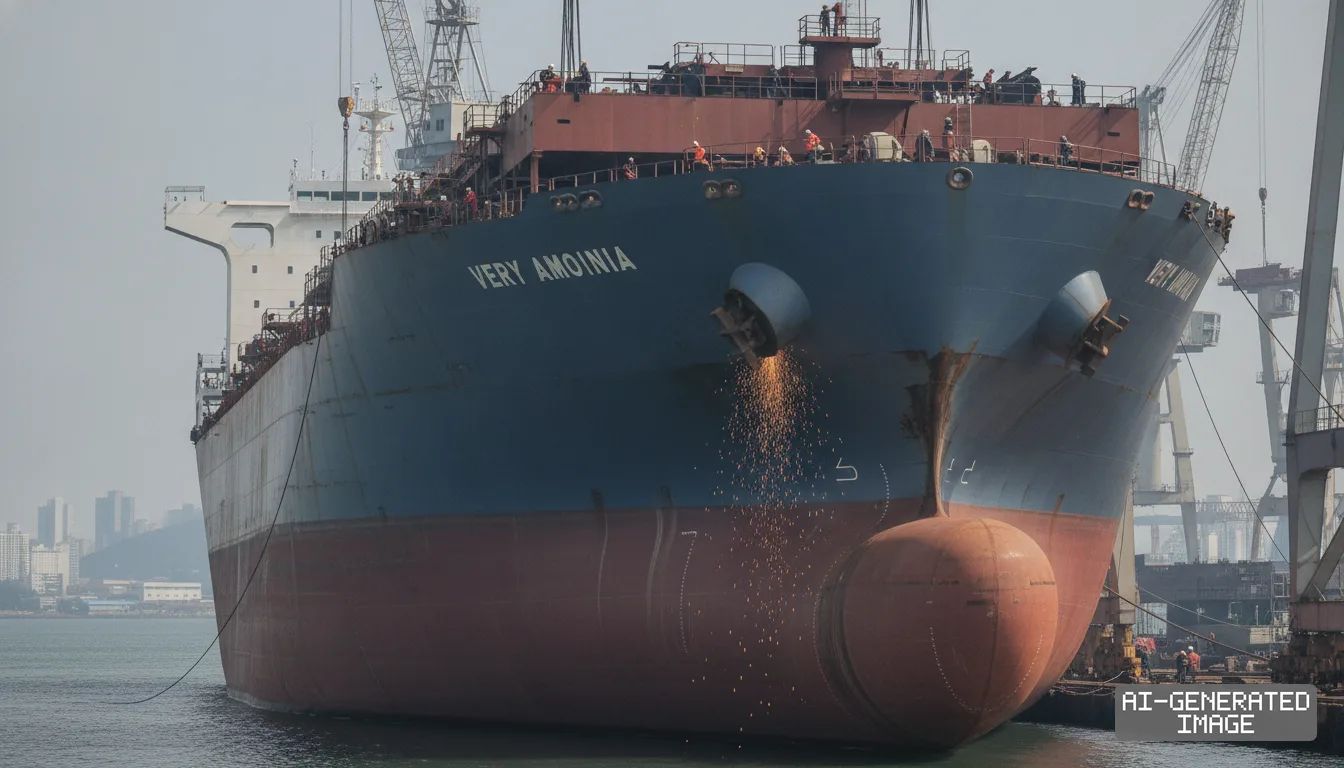
HD Hyundai Heavy Industries secured an order Nov. 6 to build four very large ammonia carriers for 630.1 billion won ($464.7 million), taking parent group contract volume past 91% of its annual target.
The order covers four specialized vessels capable of transporting liquefied ammonia and liquefied petroleum gas. The contract was signed with an African shipping company on Nov. 5, according to regulatory disclosures.
The 630.1 billion won total represents 3.58% of HD Hyundai Heavy Industries' 2025 consolidated revenue of 17.58 trillion won. The exchange rate applied at contract signing was 1,340.70 won per dollar.
Each vessel carries an average contract price of approximately 157.5 billion won ($116.2 million). That pricing reflects sustained demand for specialized gas tonnage across international deep-sea trade routes.
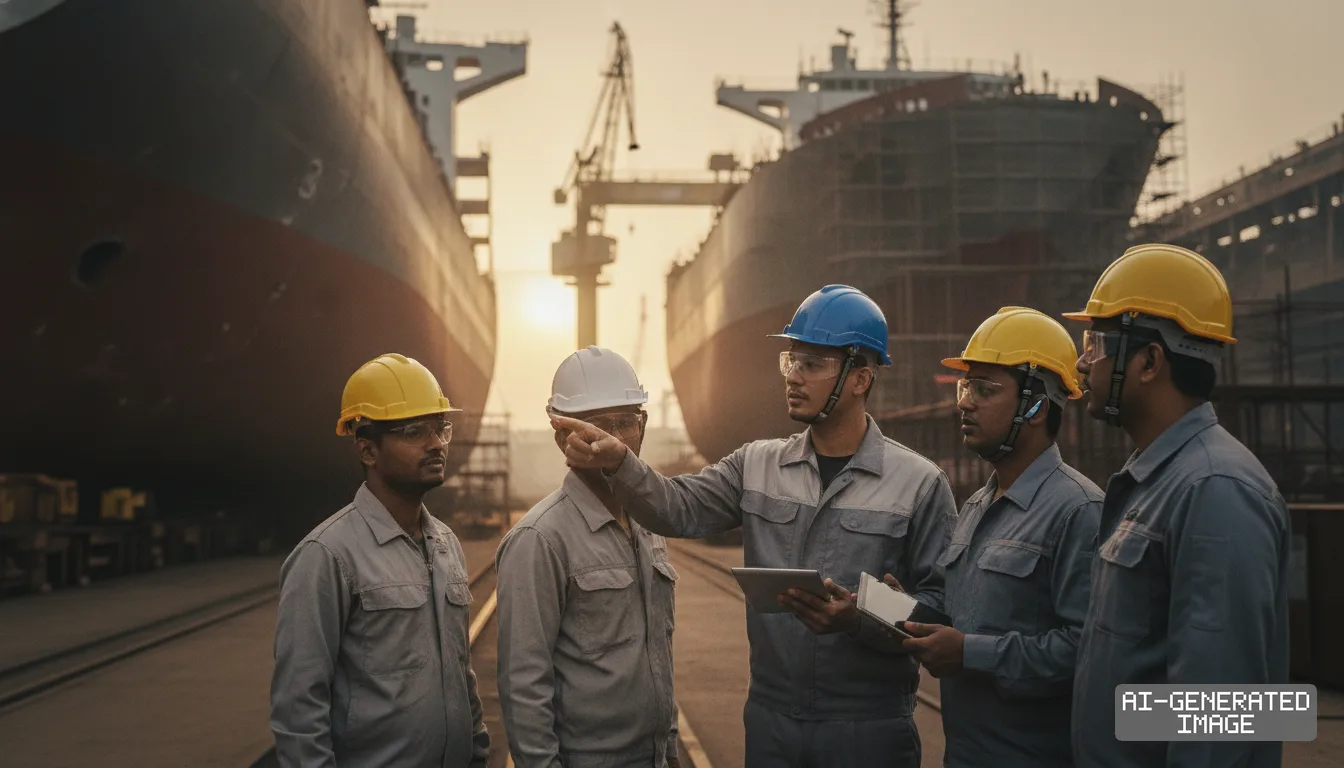
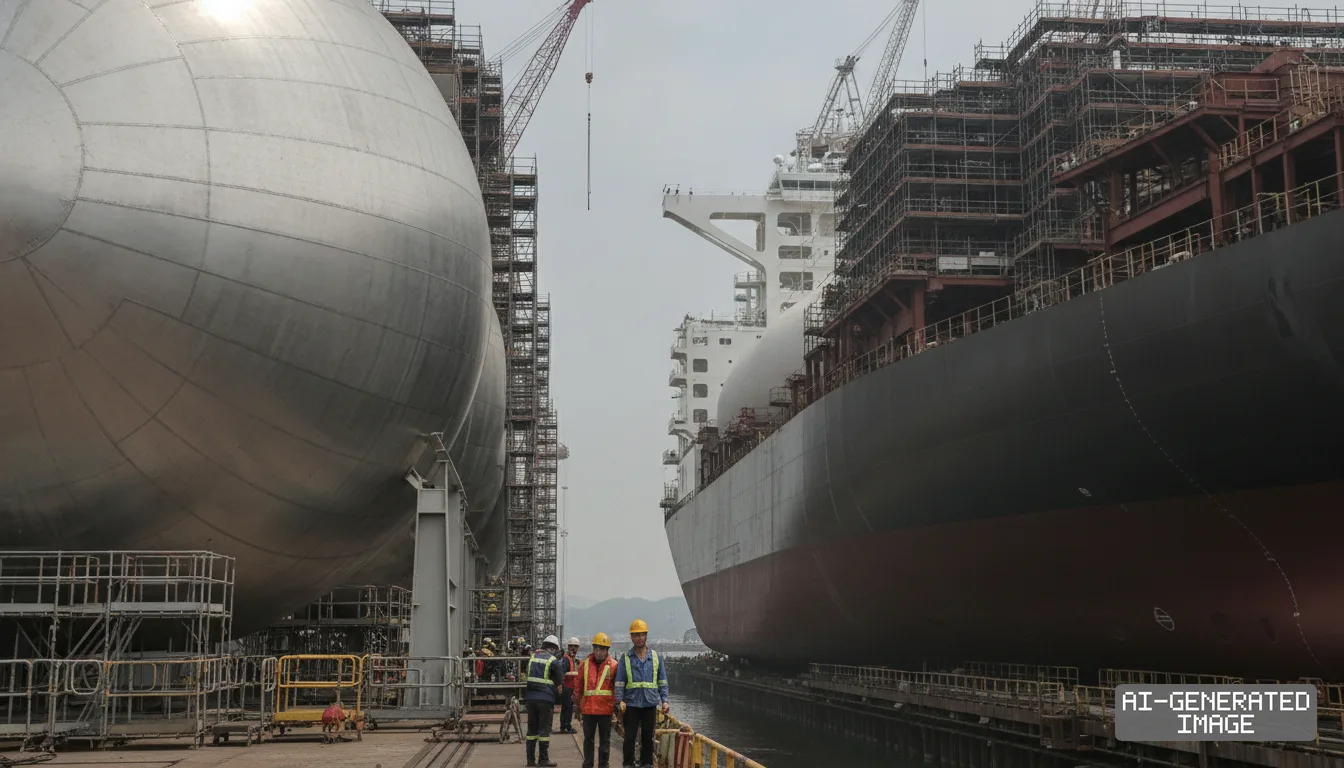
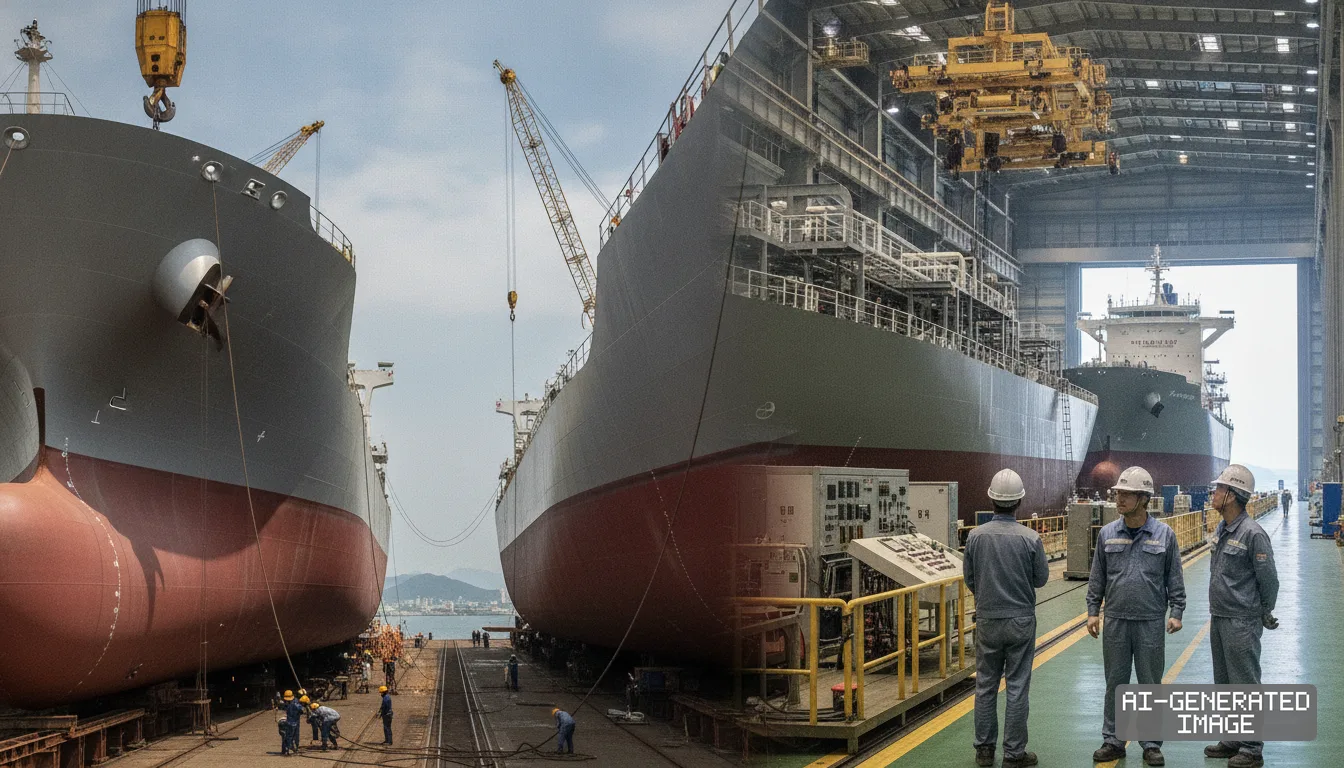
Construction will take place at the shipbuilder's primary yard in Ulsan. The contract period runs through May 31, 2030, formalizing delivery across the first half of that year.
The regulatory filing does not disclose the specific corporate identity of the African shipowner, citing commercial confidentiality clauses requested by the customer.
With this contract, parent intermediate holding company HD Korea Shipbuilding & Offshore Engineering has booked 193 vessels valued at $21.2 billion in 2026. The group has attained 91% of its annual order target of $23.31 billion.
The holding company requires roughly $2.11 billion in new vessel commitments before Dec. 31 to satisfy its annual intake objective. The 2026 performance represents the group's sixth consecutive year tracking near or above target levels.
Gas transport tonnage accounts for the largest component of group orders this year. Carriers designed for liquefied petroleum gas, ammonia and liquefied carbon dioxide represent 62 vessels within the cumulative orderbook.
Product tankers follow at 59 vessels, while container ships account for 38 hulls. Liquefied natural gas carriers stand at 17 vessels, reflecting selective bidding focused on high-margin designs.
Global fleet operators are adding ammonia carriers to prepare for anticipated seaborne shipments of clean ammonia. The compound functions as both an industrial chemical and a zero-carbon marine fuel.
Ammonia emits no carbon dioxide during combustion, making it an attractive medium for transporting renewable hydrogen across oceans. Fleet demand has risen as export projects advance in North America, the Middle East and Australia.
Very large ammonia carriers require advanced containment metallurgy to transport refrigerated liquid at minus 33 degrees Celsius without structural degradation. Ammonia induces stress corrosion cracking in conventional steels, demanding specialized tank welding and monitoring.
HD Hyundai Heavy Industries has developed proprietary cargo containment and fuel supply systems to address those operational hazards. The Ulsan shipyard recently completed the 93,000-cubic-meter Terra Clove, an ammonia dual-fuel carrier built for Eastern Pacific Shipping.
That vessel completed bunkering of 800 metric tons of green ammonia at Ulsan port in late October, demonstrating commercial fuel-handling protocols. The ship features double-walled fuel piping, nitrogen purge circuits and continuous vapor absorption units.
South Korean yards have absorbed the majority of early commercial orders for ammonia tonnage. Forward dock slots at major domestic shipyards are largely committed through 2028 and early 2029.
The long forward backlog enables South Korean builders to negotiate higher contract prices on berths opening in 2030. Shipowners seeking compliance with future decarbonization milestones must secure production slots years ahead of keel laying.
While HD Hyundai maintains a leading presence in the ammonia segment, it does not hold a domestic monopoly. Domestic peers Hanwha Ocean and Samsung Heavy Industries also hold contracts to build very large ammonia carriers.
Hanwha Ocean has secured approvals for convertible LNG-ammonia fuel configurations, competing directly for zero-emission gas transport work. Samsung Heavy Industries continues to market its own very large gas carrier hull forms to international owners.
Chinese shipyards maintain dominant global market share in bulk carriers, standard tankers and feeder container ships. However, South Korean shipbuilders retain higher market share in cryogenic and high-pressure gas transport categories.
HD Korea Shipbuilding has spread ammonia construction across its shipbuilding units. Subsidiary yard HD Hyundai Samho secured an order for three very large ammonia carriers valued at 545.6 billion won from a European owner in July.
HD Hyundai Samho also took orders for six 90,000-cubic-meter ammonia carriers earlier in the year, distributing engineering work across group drydocks. The commercial strategy leverages standardized vessel designs to reduce unit engineering overhead.
Cash payments for the latest four-ship order will be collected in stages under a standard milestone schedule as engineering, steel cutting and drydock assembly advance.
Progress payments protect yard working capital across lengthy production cycles, with advance installments collected upon contract signing. The shipyard will book the revenue over the construction cycle running into May 2030.
The four hulls will be assembled sequentially at Ulsan, with sea trials and final client handovers concluding before the May 31, 2030 deadline.
Impact map
How this development propagates across the region and out to global buyers.
| Event | Korea | China | Japan | Global impact |
|---|---|---|---|---|
| HD Hyundai Heavy four-VLAC contract | HD Hyundai Heavy books 630.1bn won, locking Ulsan dock capacity to May 2030 | Competing yards remain concentrated in dry bulk and feeder containers | Domestic yards hold limited drydock capacity for very large gas carriers | Deep-sea ammonia shipping capacity expands ahead of 2030 zero-carbon fuel mandates |
In this story
- Companies
- HD Hyundai Heavy IndustriesHD Korea Shipbuilding & Offshore Engineering
- Tickers
- 329180.KS009540.KS
- Exposed
- Hanwha OceanSamsung Heavy IndustriesEastern Pacific Shipping
- Policy
- Standards
- Impact
- Order BookCapexPricing
Track every Standards development →
Related briefings
- HD Hyundai Heavy union orders strike, disrupting Ulsan docks Also on Eastern Pacific Shipping, HD Korea Shipbuilding & Offshore Engineering, HD Hyundai Heavy Industries
- HD Hyundai Heavy names world's largest ammonia carrier Terra Clove Also on Eastern Pacific Shipping, Standards, HD Hyundai Heavy Industries
- Eastern Pacific Shipping Orders Four Imabari Boxships Also on Eastern Pacific Shipping, Hanwha Ocean, HD Hyundai Heavy Industries
- HD Hyundai develops 150,000 cbm ultra-large ethane carrier Also on Eastern Pacific Shipping, HD Hyundai Heavy Industries, Order Book
Sources
Reporting
Confidence: medium — how we grade this
The documents behind this briefing are linked above. East Asia Brief produces its English text with AI assistance under human editorial review, and does not translate or republish other outlets' articles. See our methodology and AI policy. Spotted an error? Tell us.
The Morning Brief
What changed in Korean, Chinese and Japanese industry overnight — and what it means for your supply chain. One email, weekday mornings, US time. Free.
The Morning Brief is in preparation. Leave your address and we will write to you once — when the first issue is ready. Nothing before that.