NYK Names Hyundai Samho LNG Carrier for Cameron Export Trade
The 174,000-cubic-meter Diamond Gas Nexus will transport American fuel under charter to Mitsubishi subsidiary Diamond Global Energy as Japanese utilities book tight Korean shipyard slots.
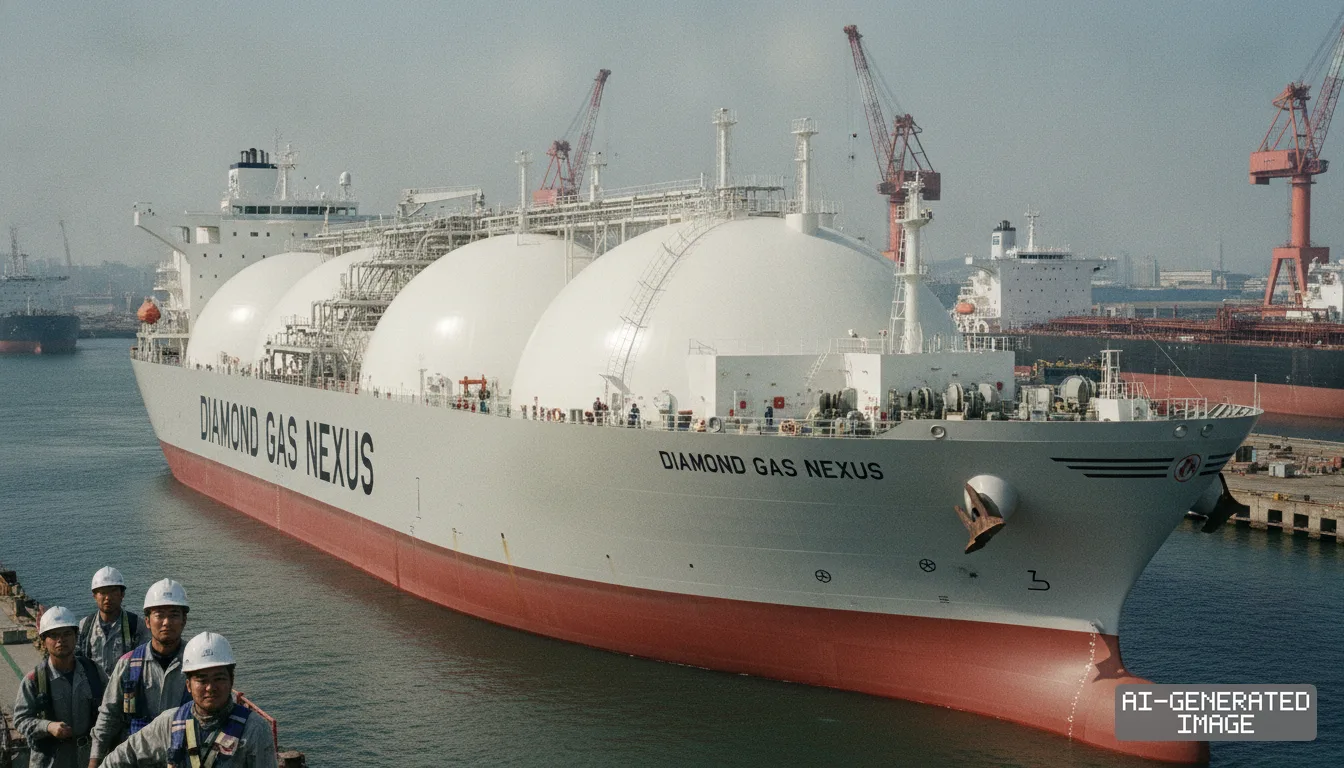
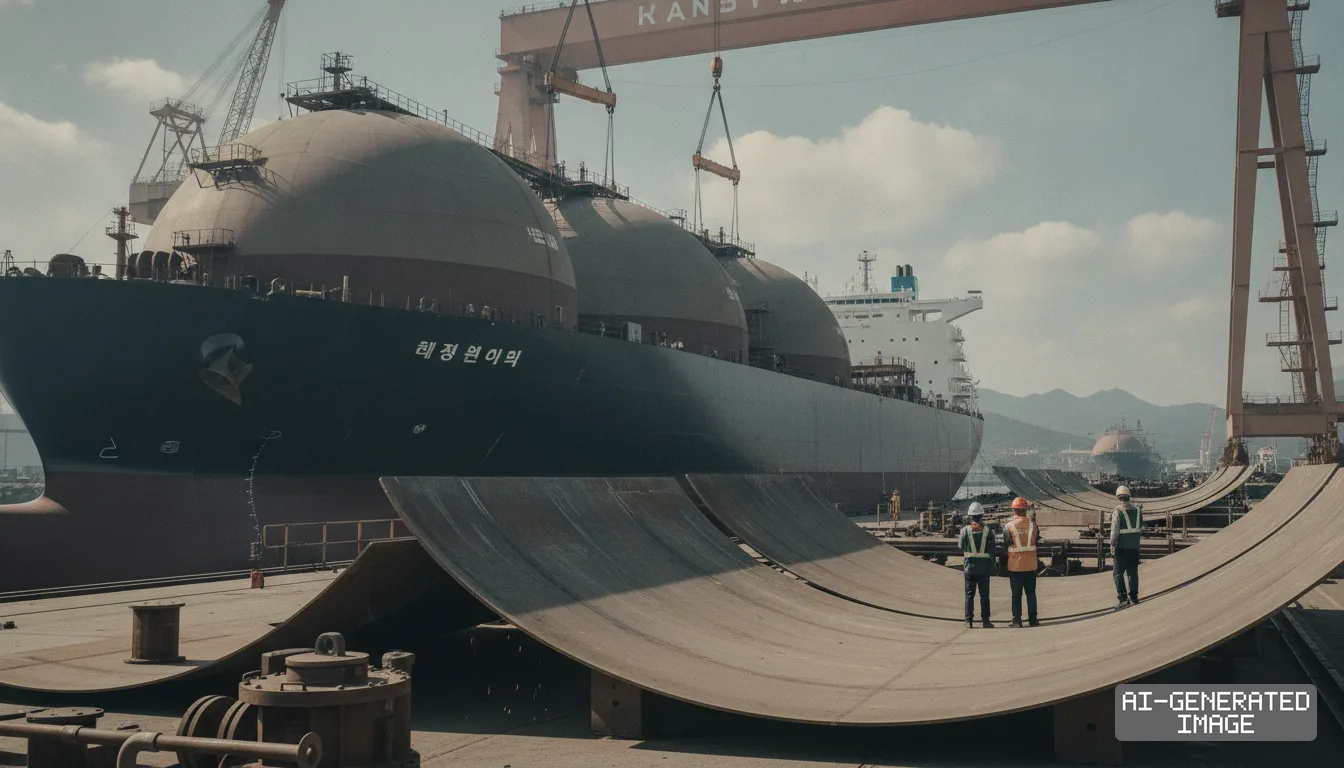
Nippon Yusen Kabushiki Kaisha confirmed Sept. 28 that shipbuilder HD Hyundai Samho completed the naming and outfitting of the Diamond Gas Nexus, a 174,000-cubic-meter liquefied natural gas carrier chartered to Diamond Global Energy.
The vessel measures 289.9 meters in length and 46.1 meters across the beam. It adds critical cargo volume to Japanese energy supply routes as global shipyard berths remain booked solid through 2028.
The carrier will lift fuel primarily from the Cameron LNG facility in Louisiana. That terminal produces 12 million metric tons of fuel annually, supplying utilities in Japan and across Asia under long-term purchase agreements.
Diamond Global Energy, a Singapore-based trading subsidiary wholly owned by Mitsubishi Corporation, holds the long-term time charter. Mitsubishi holds a 70% stake in Japan LNG Investment, which owns 16.6% of the Cameron LNG export terminal.
That ownership structure gives Mitsubishi tolling rights to roughly 4 million metric tons of LNG each year. Transporting that volume requires dedicated cryogenic tonnage capable of navigating the expanded Panama Canal locks between the Atlantic and Pacific oceans.
NYK owns the remaining 30% of Japan LNG Investment, giving the shipping group dual exposure as an equity investor and vessel operator. The company operates a gas fleet of 96 LNG carriers across international trade routes.
The delivery supports NYK's medium-term management plan, titled Sail Green, Drive Transformations 2026. The program positions gas transport as a core business to generate ¥56 billion ($390 million) in recurring energy division profit.
HD Hyundai Samho fitted the vessel with a WinGD X-DF 2.2 iCER dual-fuel slow-speed diesel engine. The system burns both marine fuel oil and natural gas vaporized during the voyage to cut greenhouse gas emissions.
The engine uses exhaust recirculation technology to curb methane slip — the release of unburned natural gas into the atmosphere. The system lowers emissions while maintaining high thermal efficiency during loaded voyages, the engine builder said.
Liquid methane naturally boils off into gas when ambient warmth penetrates insulated tanks. The vessel uses an onboard sub-cooler to chill cargo tanks below minus 160 degrees Celsius, suppressing excess gas generation during transits.
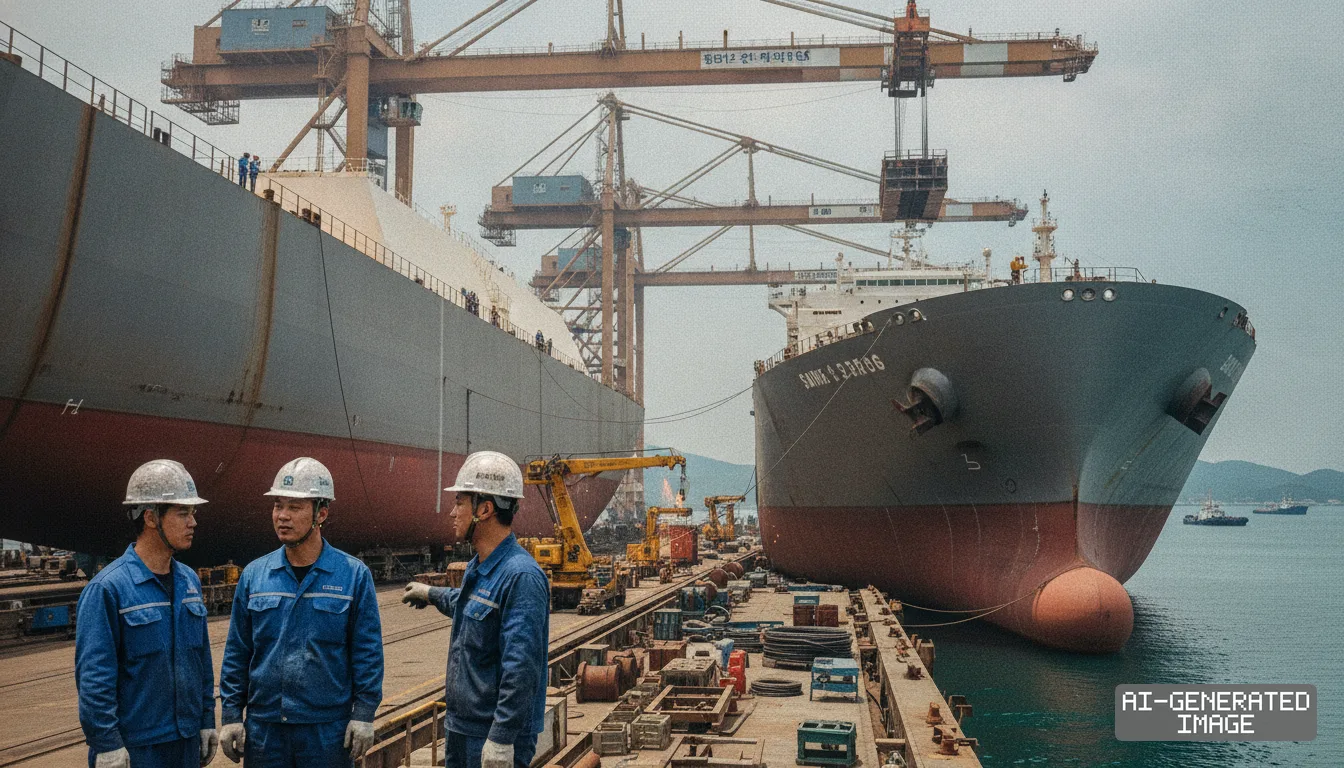
Construction took place at the Yeongam shipyard of HD Hyundai Samho in South Jeolla Province. The facility operates as the specialized large-vessel building unit of HD Korea Shipbuilding & Offshore Engineering.
South Korean shipbuilders hold order backlogs covering 3.5 years of drydock capacity. Major Korean yards dedicate roughly 33% of their collective orderbooks to high-value LNG carriers, prioritizing premium cryogenic tonnage over standard merchant vessels.
Korean yards secured slot dominance after Chinese competitors absorbed standard containership construction. Berth scarcity has pushed delivery dates for newly ordered 174,000-cubic-meter gas carriers into late 2028 and early 2029 across Asian shipbuilding hubs.
Japanese trading houses and shipping lines continue to place their most demanding cryogenic projects in South Korea. Domestic Japanese yards exited large membrane-type LNG carrier construction years ago, leaving buyers dependent on Korean drydocks for specialized tonnage.
Sempra Infrastructure operates the Cameron LNG terminal with a 50.2% majority equity stake. French energy major TotalEnergies and Japanese trading house Mitsui & Co. each hold 16.6% interests alongside the Mitsubishi and NYK joint venture.
NYK will manage vessel operations through its internal ship-management framework. The company coordinates vessel schedules directly with Mitsubishi trading desks to match Cameron liquefaction output with utility delivery requirements in Tokyo, Osaka and Chubu.
The Cameron facility exports cargoes through the Gulf of Mexico toward Asian regasification terminals. Modern low-boil-off insulation allows modern carriers to complete the transpacific voyage with minimal cargo shrinkage, lowering unit transport costs for Asian utilities.
Global environmental regulations from the International Maritime Organization penalize older steam-turbine vessels. Japanese utilities are replacing aging tonnage with modern dual-fuel ships to protect long-term delivery margins against rising international carbon penalties.
Tetsuro Wada, chief executive of Diamond Global Energy, named the vessel during ceremonies in Yeongam alongside NYK Executive Officer Ryutaro Okuzawa. Representatives from trading desks and maritime classification societies attended the gathering, NYK said.
Mitsubishi operates one of Asia's largest corporate liquefied gas portfolios, holding equity positions across seven producing nations. Securing dedicated tonnage through NYK shields the trading house from volatile spot charter rates during winter peak demand periods.
The shipping contract marks the latest collaboration between NYK and Mitsubishi on North American gas export routes. The partners previously placed sister carriers into service to haul production from both Cameron LNG and LNG Canada.
HD Hyundai Samho operates three drydocks in Yeongam, producing ultra-large container ships, tankers and gas carriers. The yard generated regular operating profits over recent quarters as higher-priced LNG contracts entered the active construction phase.
The corporate notice does not state the formal departure date from Yeongam, and HD Hyundai Samho has not published a regulatory filing detailing the ship's final construction contract value.
NYK concludes the capital deployment cycle of its Sail Green management roadmap at the end of fiscal 2026. Cameron LNG partners continue discussions regarding terminal expansion authorizations that could add liquefaction capacity toward 2028.
The Diamond Gas Nexus completed final equipment calibration at the quay on Sept. 28, clearing navigation certification ahead of its maiden voyage to the United States.
Impact map
How this development propagates across the region and out to global buyers.
| Event | Korea | China | Japan | Global impact |
|---|---|---|---|---|
| Transpacific LNG carrier delivery | HD Hyundai Samho fills high-margin berths as LNG backlog extends past 2028 | Domestic yards capture container work but lag in Japanese cryogenic procurement | NYK and Mitsubishi secure dedicated Cameron LNG transport against spot rate spikes | US Gulf Coast export channels gain 174,000 cbm of dual-fuel shipping capacity |
In this story
- Companies
- Nippon Yusen Kabushiki KaishaHD Hyundai Samho Co.
- Tickers
- 9101.T009540.KS
- Exposed
- Mitsubishi CorporationSempra Infrastructure
- Policy
- Economic Security
- Impact
- Order BookCapexSupply Chain
Track every Economic Security development →
Related briefings
- Japan, Uzbekistan agree to refine critical minerals locally for export Also on Mitsubishi Corporation
- HD Hyundai Samho and ClassNK Partner on Autonomous LNG Ships Also on Nippon Yusen Kabushiki Kaisha
- Japan shipyards agree long-term thick plate supply terms with Nippon Steel Also on Nippon Yusen Kabushiki Kaisha
- Synopsys certifies TSMC A14 EDA flows and tapes out 64G UCIe Also on Order Book
Sources
Reporting
Confidence: medium — how we grade this
The documents behind this briefing are linked above. East Asia Brief produces its English text with AI assistance under human editorial review, and does not translate or republish other outlets' articles. See our methodology and AI policy. Spotted an error? Tell us.
The Morning Brief
What changed in Korean, Chinese and Japanese industry overnight — and what it means for your supply chain. One email, weekday mornings, US time. Free.
The Morning Brief is in preparation. Leave your address and we will write to you once — when the first issue is ready. Nothing before that.