HD Hyundai Samho and ClassNK Partner on Autonomous LNG Ships
The joint development project applies Avikus autonomous navigation software to a 180,000-cubic-meter vessel to establish safety notations under new international maritime codes.
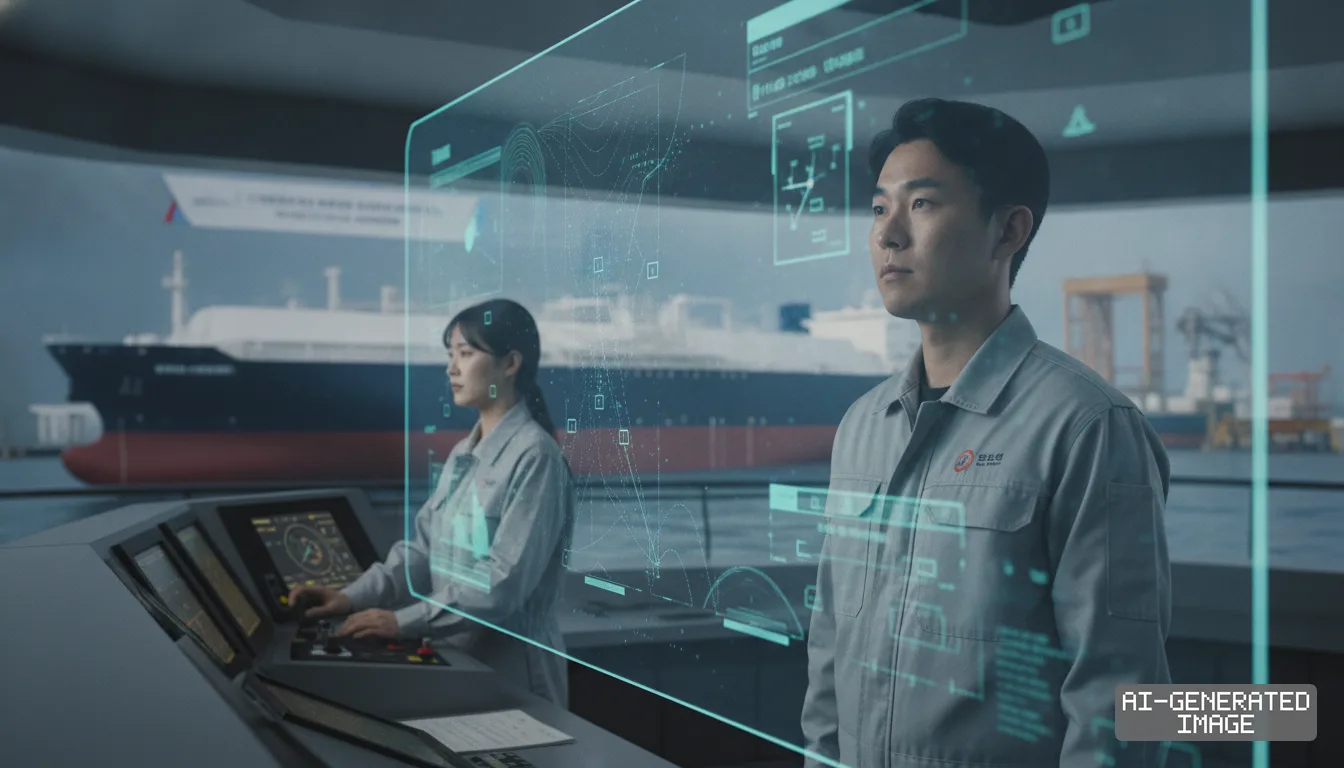
HD Hyundai Samho signed an agreement on Sept. 16 with navigation startup Avikus and Japanese classification society ClassNK to certify autonomous steering systems for deep-sea liquefied natural gas carriers.
The signing took place at the ClassNK exhibition booth during the Gastech 2026 conference in Bangkok. The three organizations formed a joint development project to evaluate autonomous vessel controls on full-scale commercial tonnage.
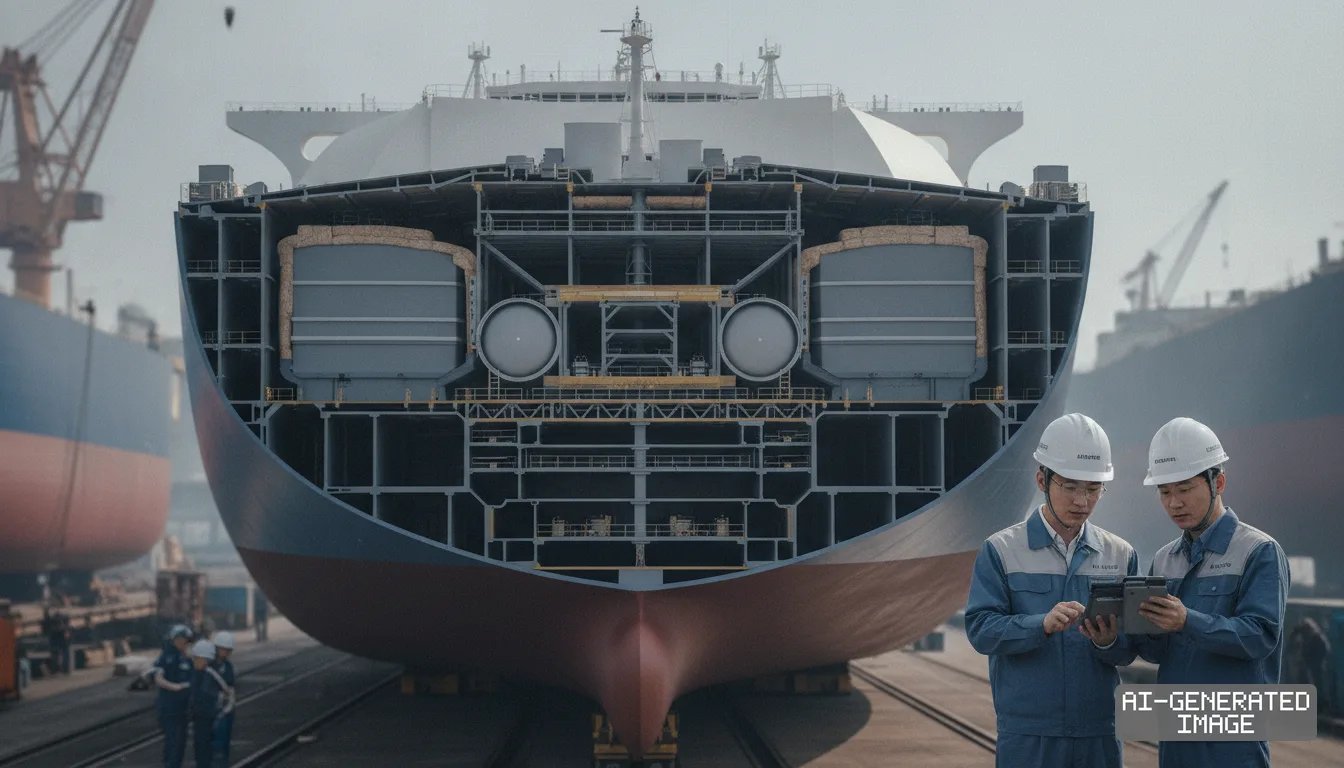
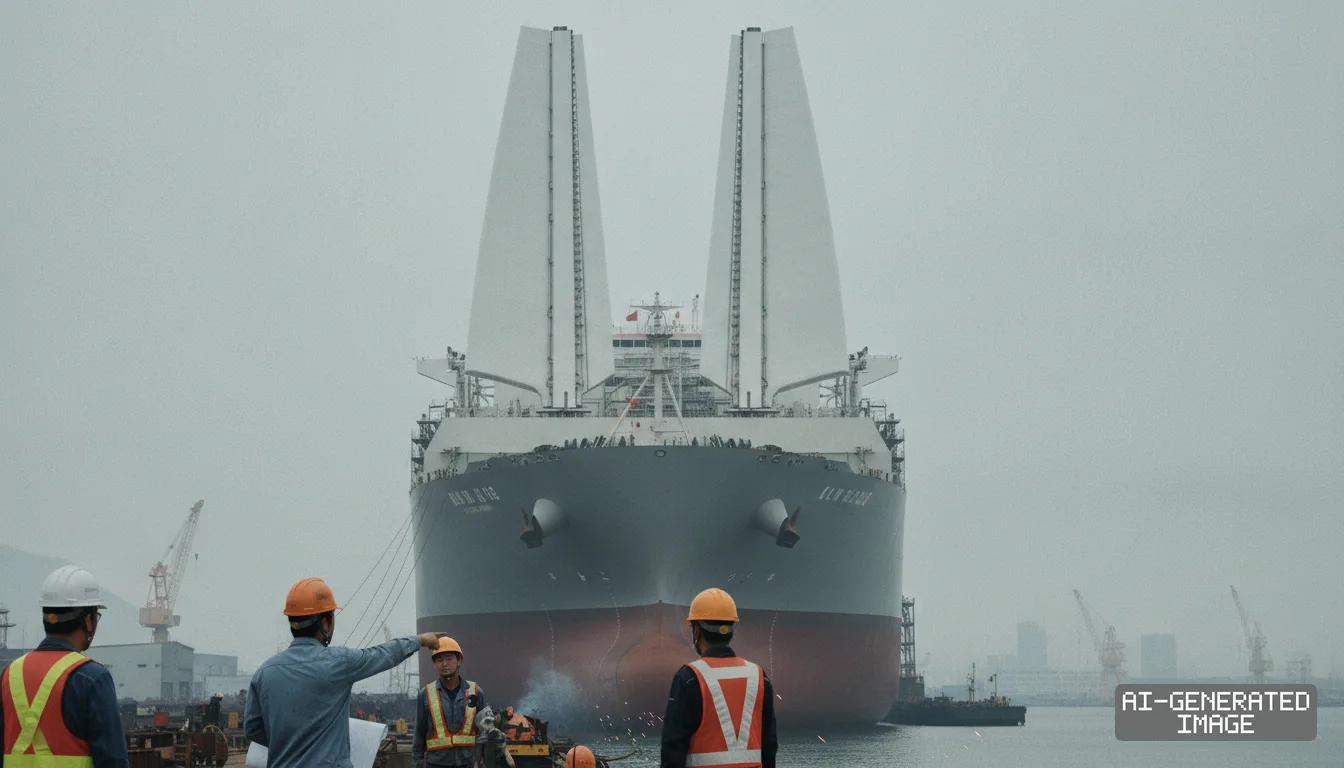
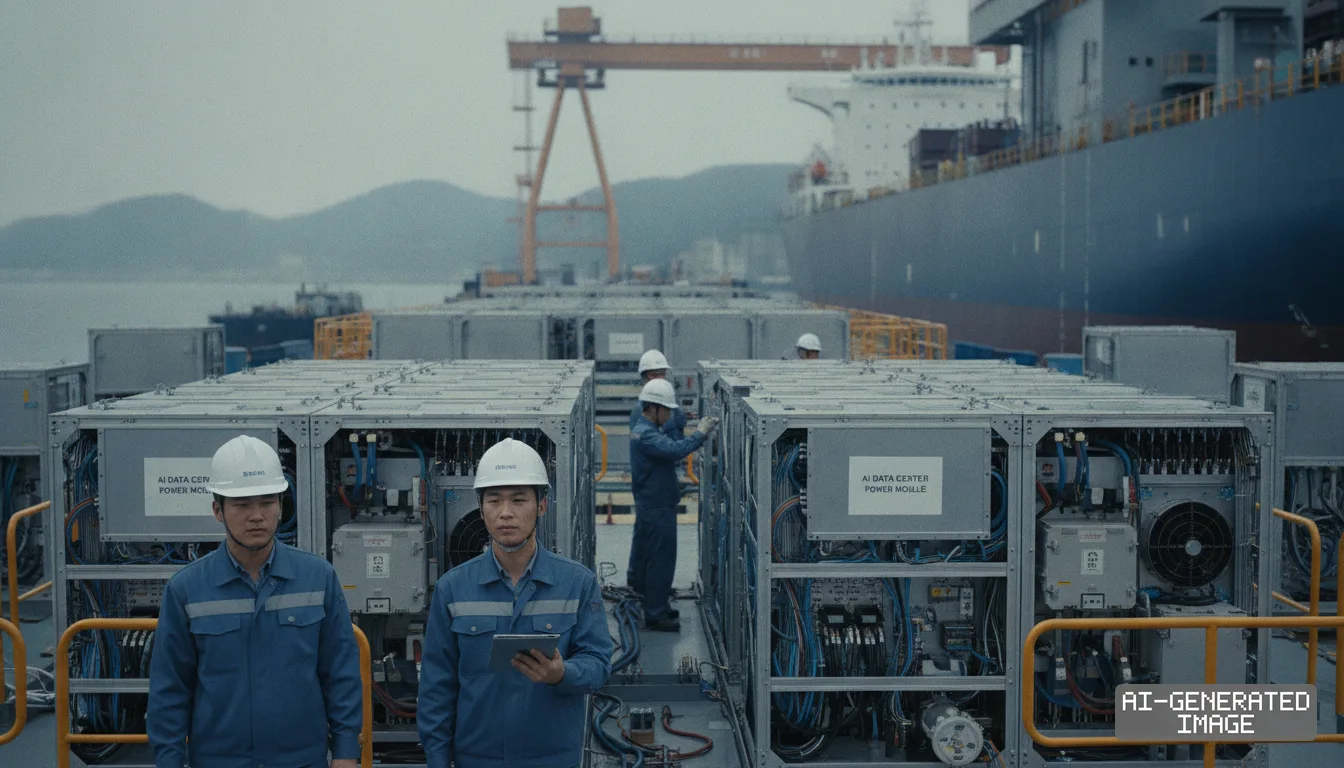
The engineering program centers on an 180,000-cubic-meter LNG carrier under construction at HD Hyundai Samho's shipyard in Yeongam, South Korea. That cargo volume represents a standard vessel class deployed on transpacific trade lanes.
The cross-border initiative responds directly to international maritime rulemaking. The non-mandatory International Code of Safety for Maritime Autonomous Surface Ships entered into force on July 1. The code was adopted at the 111th session of the IMO Maritime Safety Committee.
Under the joint agreement, the three partners will assess whether the vessel design complies with ClassNK guidelines for automated ship operations. The project aims to secure an official class notation for the navigation system.
HD Hyundai Samho will develop the basic vessel layout incorporating design criteria specified in ClassNK guidelines. The yard oversees structural engineering, equipment placement and system interfaces across the hull.
Avikus will supply its proprietary autonomous navigation package, called HiNAS Control. The software company will provide engineering support for navigational algorithms and automated steering functions.
ClassNK will examine technical documentation and review basic design calculations. The Japanese classification society will evaluate whether onboard hardware and algorithmic functions qualify for formal class notations.
"This agreement marks an important initial step toward obtaining an Approval in Principle for notation requirements," Shim Hak-mu said. Shim serves as executive vice president and head of ship design at HD Hyundai Samho.
Hayato Suga, chairman of ClassNK, attended the signing alongside Avikus Chief Executive Officer Lim Do-hyeong. Both executives agreed to advance practical trials on commercial merchant ships.
HiNAS Control uses sensor fusion and machine vision to track maritime traffic. The software calculates optimal waypoints in real time to avoid collisions with other ships and static hazards.
The system connects directly to propulsion and rudder machinery. It maintains vessel heading and speed across deep-ocean transit legs without requiring continuous manual helm control.
Shipbuilders and classification registries are pushing automation as ship operators face chronic shortages of qualified mariners. Reduced bridge workloads allow shipping lines to deploy smaller crews safely on long-haul routes.
Autonomous course keeping also reduces bunker fuel consumption by eliminating erratic steering corrections. On cryogenic gas tankers, maintaining steady open-ocean speeds reduces cargo boil-off losses during transit.
The partnership represents an uncommon technical collaboration between a South Korean shipyard and a Japanese classification society. South Korean shipbuilders have historically relied on European registries such as DNV and Lloyd's Register.
ClassNK registers approximately 20% of the world merchant fleet under its technical survey rules. Gaining class validation opens a direct commercial pathway to Japanese utilities and shipowners that contract heavy LNG tonnage.
The project unfolds alongside other major regulatory updates for gas carriers. The Maritime Safety Committee plans to adopt revisions to the International Gas Carrier Code at its 112th session in December.
Those revised gas carrier requirements will enter into force on July 1, 2028. HD Hyundai Samho executed a separate pact with ClassNK in Bangkok on Sept. 16 to adjust LNG hull designs to the new rules.
HD Hyundai Samho operates four dry docks and builds gas carriers, container vessels and crude tankers in South Jeolla Province. The Yeongam shipyard has delivered dozens of large gas carriers to international energy operators.
Avikus was founded in 2020 as a specialized autonomous navigation unit of HD Hyundai. The software company completed an autonomous transpacific voyage on an ultra-large gas carrier across 10,000 kilometers in 2022.
Global classification registries are competing to define binding standards for automated navigation. Maritime authorities in South Korea, Japan and Norway are each testing national safety protocols to shape future mandatory IMO codes.
Japanese fleet operators such as Mitsui O.S.K. Lines and Nippon Yusen Kabushiki Kaisha have conducted domestic coastal autonomy tests. The ClassNK program provides an accredited verification model for overseas yards serving those fleets.
Technical reviews on the 180,000-cubic-meter vessel will continue across upcoming construction stages. The partners plan to complete initial notation suitability assessments in early 2027.
The announcement does not disclose the delivery date of the vessel, the target schedule for granting the final class notation, or the commercial owner of the hull.
Impact map
How this development propagates across the region and out to global buyers.
| Event | Korea | China | Japan | Global impact |
|---|---|---|---|---|
| Autonomous LNG carrier design verification | HD Hyundai Samho and Avikus secure Japanese certification channel for 180,000-cbm gas carriers | Hudong-Zhonghua faces competition on certified autonomous gas carrier notations | ClassNK establishes verification baseline for foreign-built autonomous hulls | Fleet operators target lower boil-off fuel burn and smaller bridge crew requirements |
In this story
- Companies
- HD Hyundai SamhoAvikusClassNK
- Exposed
- HD Korea Shipbuilding & Offshore EngineeringMitsui O.S.K. LinesNippon Yusen Kabushiki Kaisha
- Policy
- Economic Security
- Impact
- ComplianceSupply Chain
Track every Economic Security development →
Related briefings
- Imabari and JMU consolidate dry bulk engineering to standardize ammonia dual-fuel vessels Also on ClassNK, Mitsui O.S.K. Lines, Compliance
- Japan shipyards agree long-term thick plate supply terms with Nippon Steel Also on Nippon Yusen Kabushiki Kaisha, Mitsui O.S.K. Lines
- HD Hyundai Unveils Three-Tank LNG Carrier Design at Gastech Also on HD Hyundai Samho, HD Korea Shipbuilding & Offshore Engineering
- South Korea engine builders expand methanol test benches for 2027 ship handoffs Also on HD Hyundai Samho
Sources
Primary documents
Reporting
Confidence: high — how we grade this
The documents behind this briefing are linked above. East Asia Brief produces its English text with AI assistance under human editorial review, and does not translate or republish other outlets' articles. See our methodology and AI policy. Spotted an error? Tell us.
The Morning Brief
What changed in Korean, Chinese and Japanese industry overnight — and what it means for your supply chain. One email, weekday mornings, US time. Free.
The first issue goes out shortly. Sign up now and you will not miss it.