Japan, Uzbekistan agree to refine critical minerals locally for export
A bilateral memorandum between TMK and Mitsubishi targets tungsten, molybdenum and lithium processing to reduce Tokyo's reliance on Chinese supply chains.
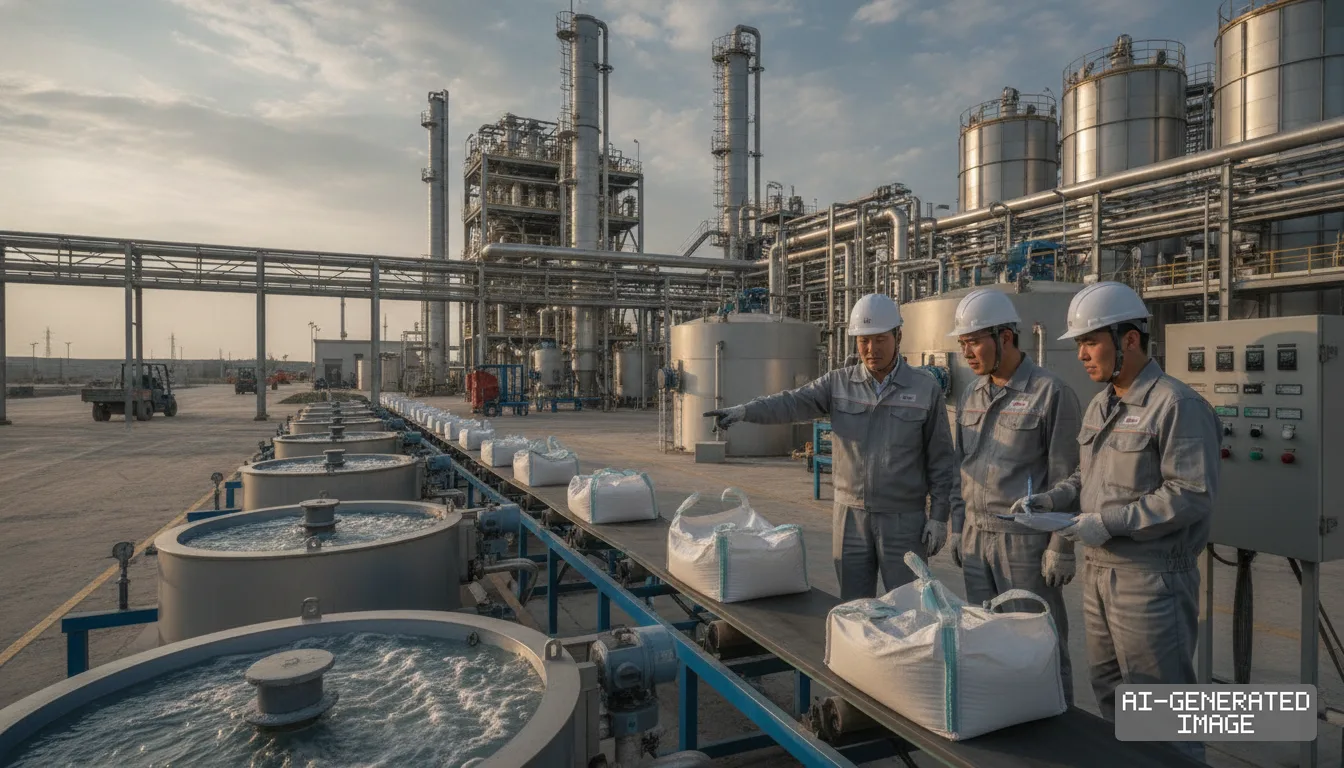
Uzbekistan and Japan agreed Sept. 14 to partner on domestic critical mineral refining, aiming to route processed tungsten, molybdenum and lithium directly to Japanese industrial buyers.
The initiative shifts bilateral resource diplomacy from raw ore extraction toward local chemical processing. It addresses long-standing bottlenecks in Tokyo's industrial supply chain.
Japan relies on China for more than 70% of its refined rare metals, according to Japanese government trade data. Ministry officials have targeted Central Asia to diversify procurement channels.
The documents released in Tashkent do not disclose a total capital expenditure figure for the joint processing facilities. They focus instead on technical validation and market promotion.
State-run Uzbekistan Technological Metals Complex signed the accord with the Japan-Uzbekistan Committee for Economic Cooperation. The committee was led by senior adviser Masaki Tanimoto of Mitsubishi Corporation.
The signing ceremony concluded the 18th Joint Meeting of the bilateral economic cooperation committees in Tashkent. A 130-member Japanese public-private delegation attended the sessions.
State Minister of Economy, Trade and Industry Kenji Yamada headed the Tokyo delegation. Uzbek Minister of Investment, Industry and Trade Laziz Kudratov represented the host government.
The agreement centers on developing the Metals of the Future Technopark in Uzbekistan. The facility will host research units and chemical processing pilot lines.
TMK seeks to process mined tungsten, molybdenum, rhenium and lithium into battery precursors and specialty alloys on site. It wants to halt the export of unrefined mineral concentrates.
Mitsubishi Corporation will structure marketing channels to distribute Uzbek refined metals across Japanese industrial consumers. The arrangement targets automotive component producers and electronics manufacturers.
State-backed Japanese financial institutions participated in the bilateral discussions. The group included the Japan Bank for International Cooperation and Nippon Export and Investment Insurance.
The Japan Organization for Metals and Energy Security joined technical working panels. JOGMEC oversees geological surveys and joint exploration projects in Central Asian deposits.
Japan's Ministry of Economy, Trade and Industry has allocated capital subsidies to underwrite critical mineral ventures abroad. Tokyo seeks to shield key industries against Chinese export controls.
Beijing imposed export licensing mandates on antimony, gallium, germanium and graphite over the past three years. Japanese manufacturers faced supply disruptions and higher administrative burdens.
Uzbekistan holds significant mineral deposits, including estimated tungsten reserves exceeding 100,000 metric tons. Most extraction sites historically shipped raw concentrate to Russian and Chinese smelters.
Processing materials inside Uzbekistan allows Tokyo to secure refined metals without transiting Chinese separation plants. The step reduces regulatory exposure to third-country export licensing.
Trading house Marubeni Corporation also took part in the Tashkent delegation. The trading house has explored uranium and nonferrous metal distribution agreements in the country.
Japan International Cooperation Agency representatives reviewed infrastructure requirements. The agency assesses local electrical grid upgrades and water treatment facilities required for chemical refining.
Landlocked geography remains a central physical obstacle for Central Asian trade. Refined metals must move across rail routes through Kazakhstan or the Trans-Caspian corridor before reaching ocean ports.
High-value refined metals lower transport friction compared with bulk raw ores. Concentrated powders and ingots command smaller freight footprints relative to aggregate cargo value.
The bilateral agreement leaves legal structures unresolved. The published memorandum does not establish binding minimum purchase quantities or dedicated pricing formulas for Japanese buyers.
The notice also does not state when ground will be broken on new commercial refining lines. Financing terms and equity structures remain subject to subsequent contract negotiations.
Officials from both governments scheduled follow-up technical working groups during the GEOMIN conference running through Sept. 16 in Tashkent. Commercial contract reviews are set for late October.
Impact map
How this development propagates across the region and out to global buyers.
| Event | Korea | China | Japan | Global impact |
|---|---|---|---|---|
| Japan-Uzbekistan critical mineral refining agreement | POSCO and Korea Zinc face competition from Japanese-backed Central Asian processing assets | Chinese custom smelters lose access to unprocessed Uzbek tungsten and molybdenum feeds | Mitsubishi and Japanese manufacturers secure non-China sourcing routes for specialty metals | Central Asian mineral refining capacity adds alternative battery and aerospace feedstock |
In this story
- Companies
- Uzbekistan Technological Metals ComplexMitsubishi Corporation
- Tickers
- 8058.T
- Exposed
- MarubeniJOGMECJapan Bank for International Cooperation
- Policy
- Economic SecuritySubsidies
- Impact
- Supply ChainCapexCompliance
Track every Economic Security development → Track every Subsidies development →
Related briefings
- Korea and Japan Diverge on Clean Hydrogen Incentives with Tax Credits and Contract Subsidies Also on Mitsubishi Corporation
- Korea expands critical mineral refining pact with Uzbekistan Also on Compliance
- US warns Ford over Chinese battery ties with CATL and Geely Also on Compliance
- Samsung deploys TSMC-tested photonics probers for CPO push Also on Compliance
Sources
Primary documents
Reporting
Confidence: high — how we grade this
The documents behind this briefing are linked above. East Asia Brief produces its English text with AI assistance under human editorial review, and does not translate or republish other outlets' articles. See our methodology and AI policy. Spotted an error? Tell us.
The Morning Brief
What changed in Korean, Chinese and Japanese industry overnight — and what it means for your supply chain. One email, weekday mornings, US time. Free.
The first issue goes out shortly. Sign up now and you will not miss it.