Korean shipyards hit 90% order target by prioritizing gas carriers
Yard schedules filled through 2028 allow HD KSOE and rivals to reject low-yield container ships and standard bulkers for ammonia and LNG tonnage.
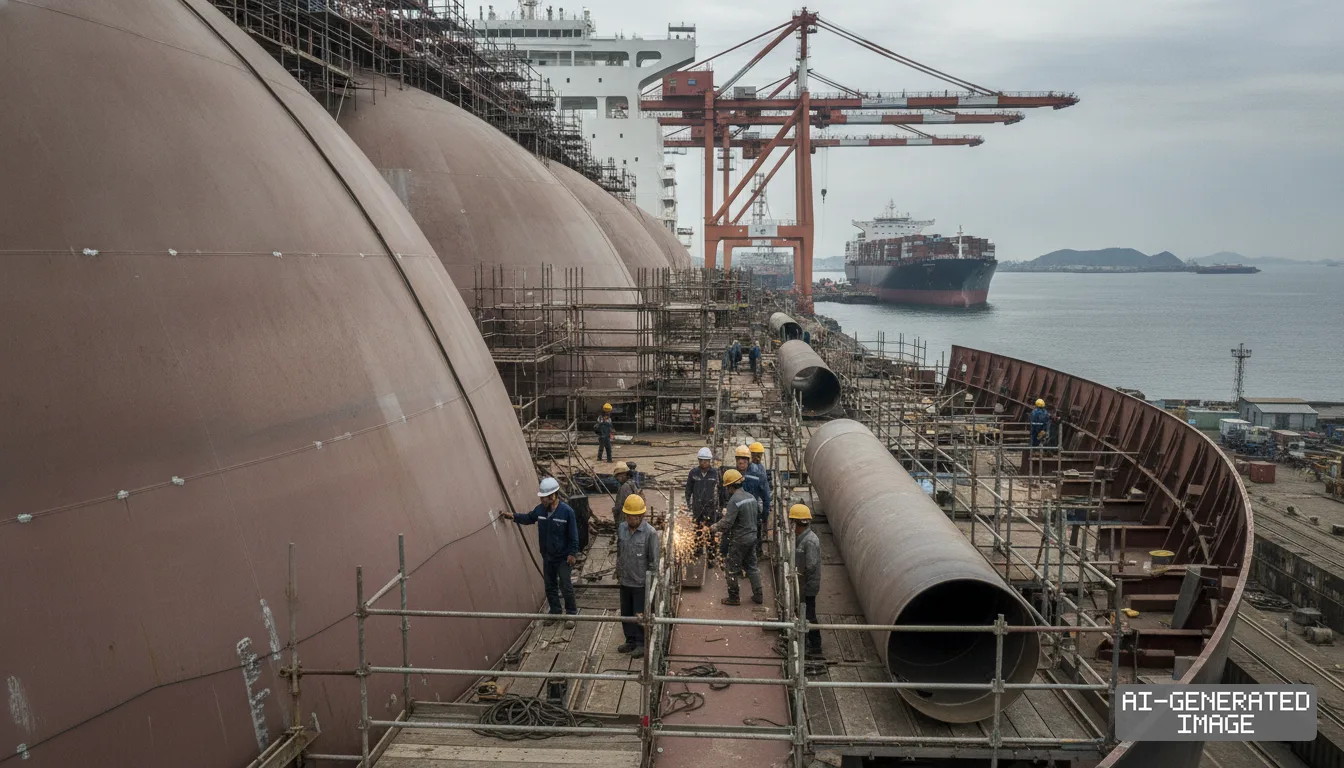
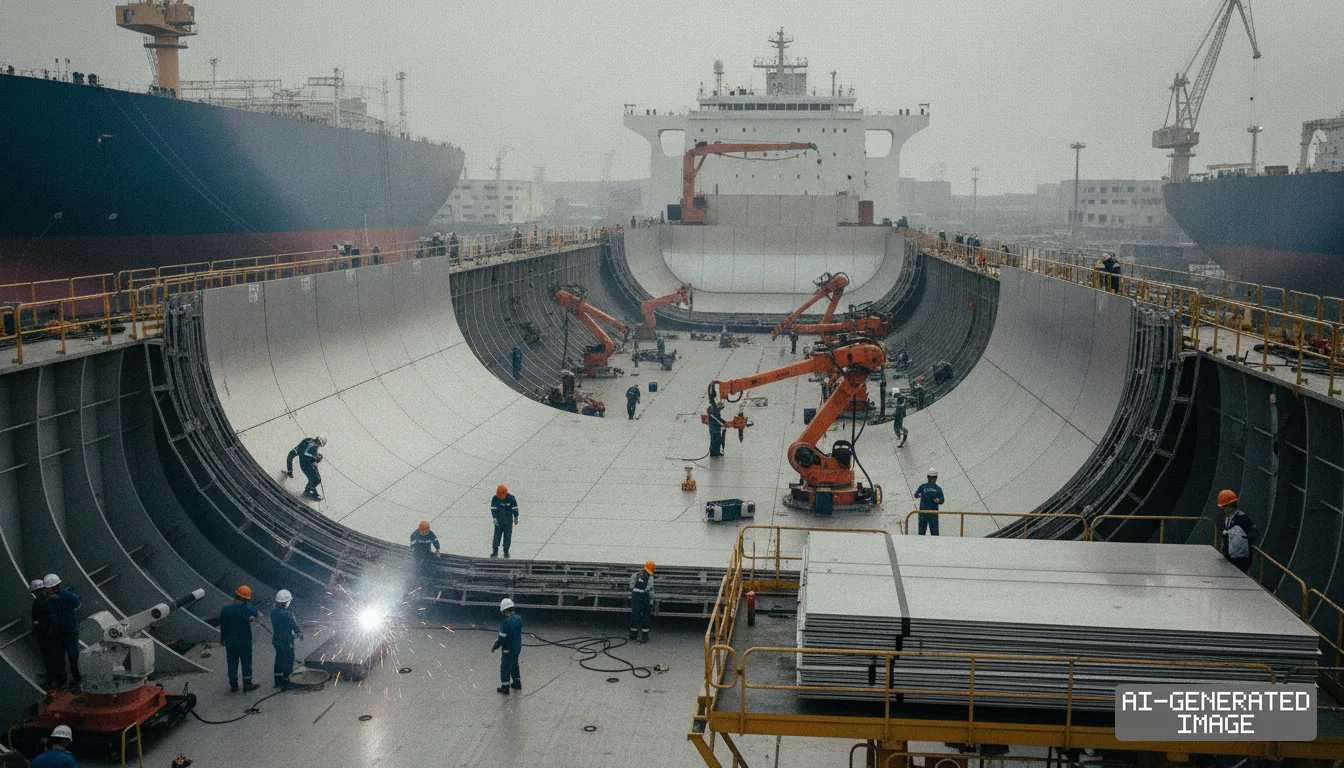
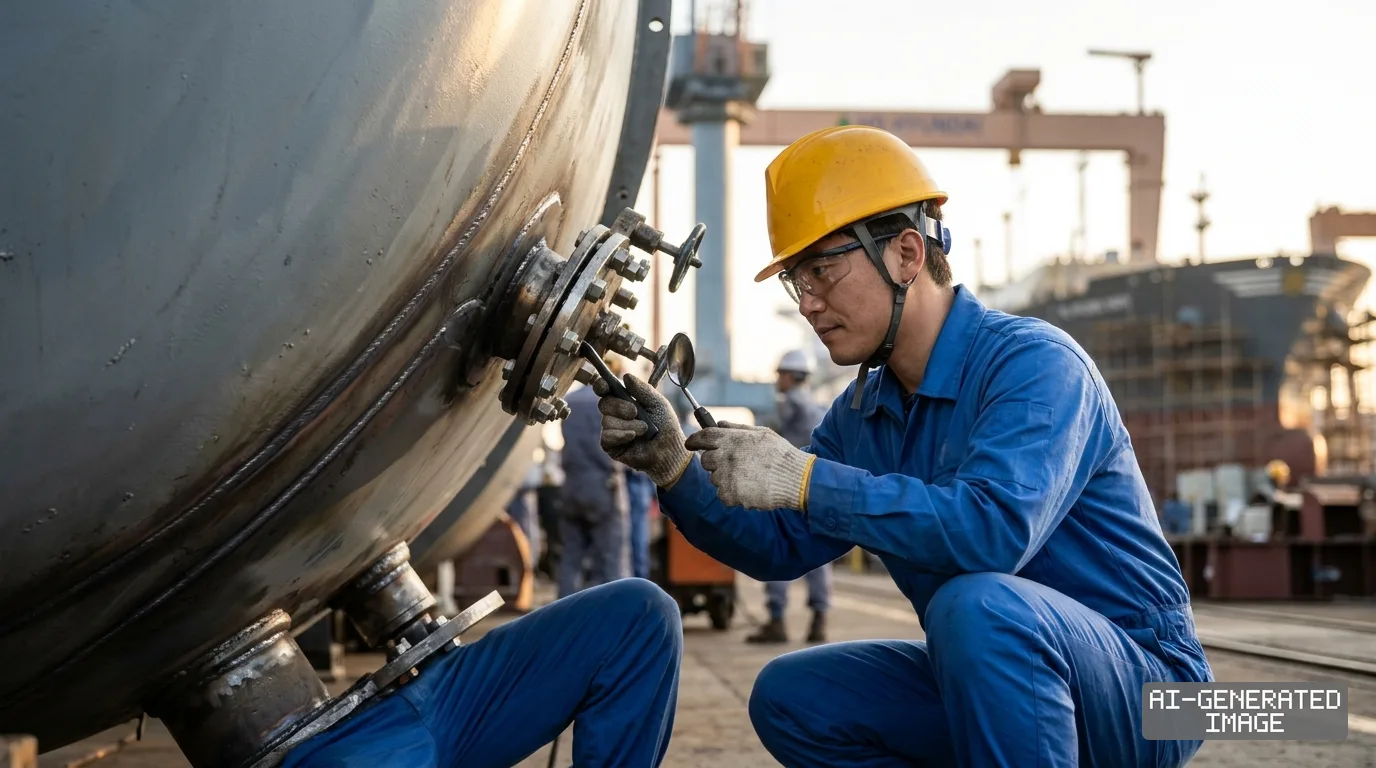
South Korea's major shipbuilders pushed order intake past 90% of their combined targets on Nov. 14, 2026, as selective bidding shifted dry-dock slots toward high-margin gas vessels.
The commercial pivot follows three consecutive years of heavy global contracting that filled yard schedules through 2028. That order cushion allows commercial teams to reject standard bulk carriers and small container vessels.
HD Korea Shipbuilding & Offshore Engineering led the volume, booking $21.69 billion across 195 vessels by Nov. 9. That intake represents 93.1% of its provisional $23.31 billion order target for 2026.
Gas carriers form the largest single component of the group's order book. HD KSOE secured 62 vessels across liquefied petroleum gas, ammonia and liquid carbon dioxide, alongside 19 liquefied natural gas carriers.
Subsidiary HD Hyundai Heavy Industries signed a construction contract Nov. 5 for four very large ammonia carriers with an African shipping company. The contract value totaled 630.1 billion won ($470 million).
The award equals 3.58% of HD Hyundai Heavy Industries' consolidated revenue for 2025. The builder will construct the ammonia vessels at its Ulsan shipyard, with deliveries running through May 31, 2030.
The same subsidiary contracted two liquefied natural gas carriers on Nov. 6 for 662.9 billion won ($494 million) from an African owner. The deal represents 3.77% of the yard's 2025 consolidated sales.
Contract terms schedule the handover of the two LNG carriers by Oct. 31, 2029. Installment payments will arrive across vessel construction milestones following initial advance deposits.
The group's remaining intake spans 59 petrochemical product carriers, 38 containerships and 11 crude oil tankers. Specialized contracts include two car carriers, two roll-on roll-off ships, one icebreaker and a floating storage regasification unit.
Samsung Heavy Industries reported cumulative orders of $12.4 billion across 48 vessels and offshore units in its third-quarter results on Oct. 29. The total reached 89.2% of its $13.9 billion annual target.
Commercial shipbuilding accounted for $8.0 billion across 46 vessels at Samsung Heavy Industries. That commercial intake surpassed the yard's full-year merchant vessel target of $5.7 billion by 40%.
Offshore manufacturing provided the remainder of Samsung Heavy Industries' intake. Two floating liquefied natural gas units added $4.4 billion, anchoring production capacity at its Geoje shipyard through the late 2020s.
Hanwha Ocean secured orders for 44 vessels worth about $8.11 billion through the end of October. The booking represents a 25.7% increase compared to the same period in 2025.
Crude tankers and gas carriers made up the bulk of Hanwha Ocean's new work. The intake included 21 very large crude carriers, eight LNG carriers, three ammonia carriers and one naval vessel.
Selective slot control supported firmer vessel prices across the industry. The Clarksons Newbuilding Price Index rose to 187.20 points on Oct. 30, reversing a three-week pause as gas carrier prices gained.
Ammonia and gas carrier pricing remained elevated. Contracts for very large ammonia carriers hovered between $117.5 million and $125 million per vessel, reflecting specialized containment systems and nickel-alloy cargo tanks.
Korean shipyards face growing competition from Chinese rivals for global gas carrier tonnage. Chinese shipbuilders secured 28 of the 44 very large ammonia carriers ordered globally through mid-November, while Korean yards booked 16.
Shipbuilders in South Korea responded by conceding near-term delivery positions to preserve contract margins. Chinese yards absorbed deliveries for 2027 and 2028, while Korean yards pushed deliveries into 2029 and 2030.
The strategy shields Korean yards from low-margin bulk vessels and mid-sized containerships. Chinese competitors have taken over standard commercial hulls where labor costs decide construction margins.
Shifting dock space toward gas tonnage provides multi-year revenue visibility for South Korean equipment suppliers. Domestic engine manufacturers and insulation providers hold order books matched to the yards' three-year delivery pipelines.
The transition to high-value gas tonnage is improving financial performance. Shipbuilders are completing lower-priced vessels contracted during 2021 and replacing them with gas carriers bearing higher profit margins.
Delivery schedules for the latest round of gas carriers run through the end of the decade. HD Hyundai Heavy Industries will deliver the newly contracted LNG pair by Oct. 31, 2029.
The regulatory filings do not disclose the identities of the African shipowners behind the recent gas carrier awards. Hanwha Ocean also did not publish an official annual order target for 2026.
HD Korea Shipbuilding & Offshore Engineering requires $1.62 billion in additional contracts before Dec. 31 to meet its provisional $23.31 billion annual order target.
Impact map
How this development propagates across the region and out to global buyers.
| Event | Korea | China | Japan | Global impact |
|---|---|---|---|---|
| selective gas carrier intake | yards fill berths to 2030, commercial ship target beaten by 40% at Samsung Heavy | yards capture 28 of 44 global VLAC orders on earlier delivery slots | zero commercial gas berth additions, production restricted to domestic fleet replacement | Clarksons index touches 187.20 as high-specification gas tonnage tightens |
In this story
- Companies
- HD Korea Shipbuilding & Offshore EngineeringHD Hyundai Heavy IndustriesSamsung Heavy IndustriesHanwha Ocean
- Tickers
- 009540.KS329180.KS010140.KS042660.KS
- Impact
- Order BookPricingCapex
Related briefings
- HD Hyundai Heavy signs $465m deal for four ammonia vessels Also on HD Korea Shipbuilding & Offshore Engineering, Samsung Heavy Industries, HD Hyundai Heavy Industries
- HD Hyundai and Hanwha Ocean Lock In LNG Carrier Berth Slots Through 2029 Also on HD Korea Shipbuilding & Offshore Engineering, Samsung Heavy Industries, HD Hyundai Heavy Industries
- HD Hyundai expands shipyard welding robot fleet for 2030 targets Also on HD Korea Shipbuilding & Offshore Engineering, Samsung Heavy Industries, HD Hyundai Heavy Industries
- Won rebound splits Korean shipbuilders on currency hedging Also on HD Korea Shipbuilding & Offshore Engineering, Samsung Heavy Industries, HD Hyundai Heavy Industries
Sources
Reporting
Confidence: medium — how we grade this
The documents behind this briefing are linked above. East Asia Brief produces its English text with AI assistance under human editorial review, and does not translate or republish other outlets' articles. See our methodology and AI policy. Spotted an error? Tell us.
The Morning Brief
What changed in Korean, Chinese and Japanese industry overnight — and what it means for your supply chain. One email, weekday mornings, US time. Free.
The Morning Brief is in preparation. Leave your address and we will write to you once — when the first issue is ready. Nothing before that.