HD Hyundai pairs with Kiewit to build US naval yard by 2029
The planned greenfield facility will employ 3,000 workers to produce auxiliary craft while project capital expenditure and financing ratios remain unannounced.
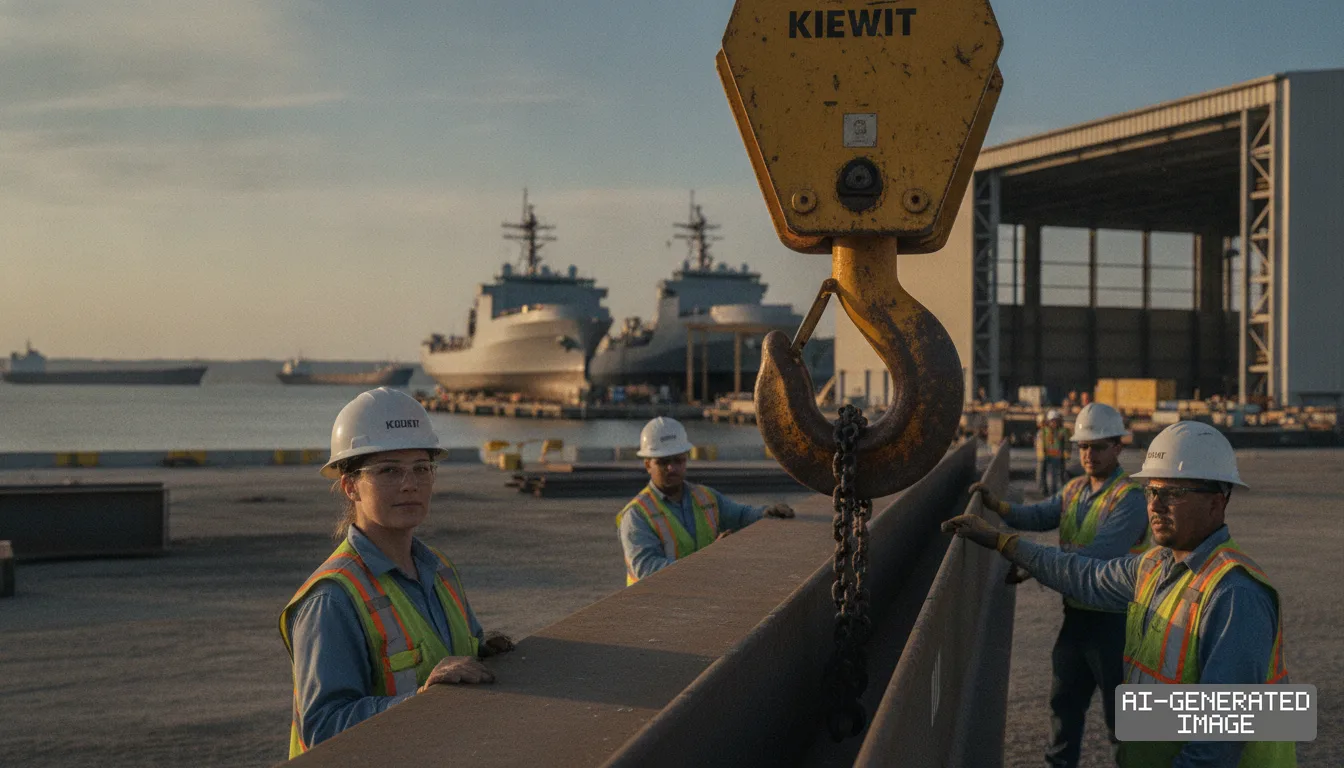
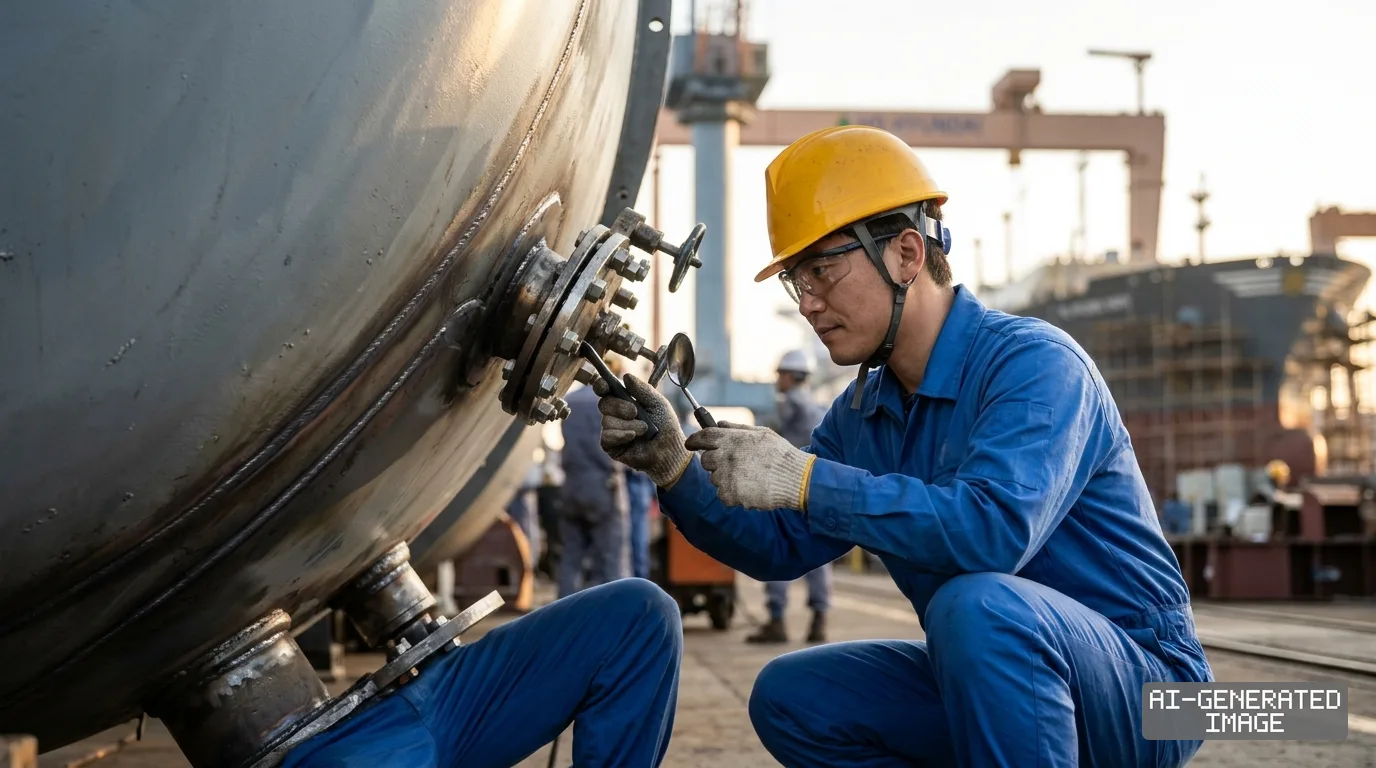
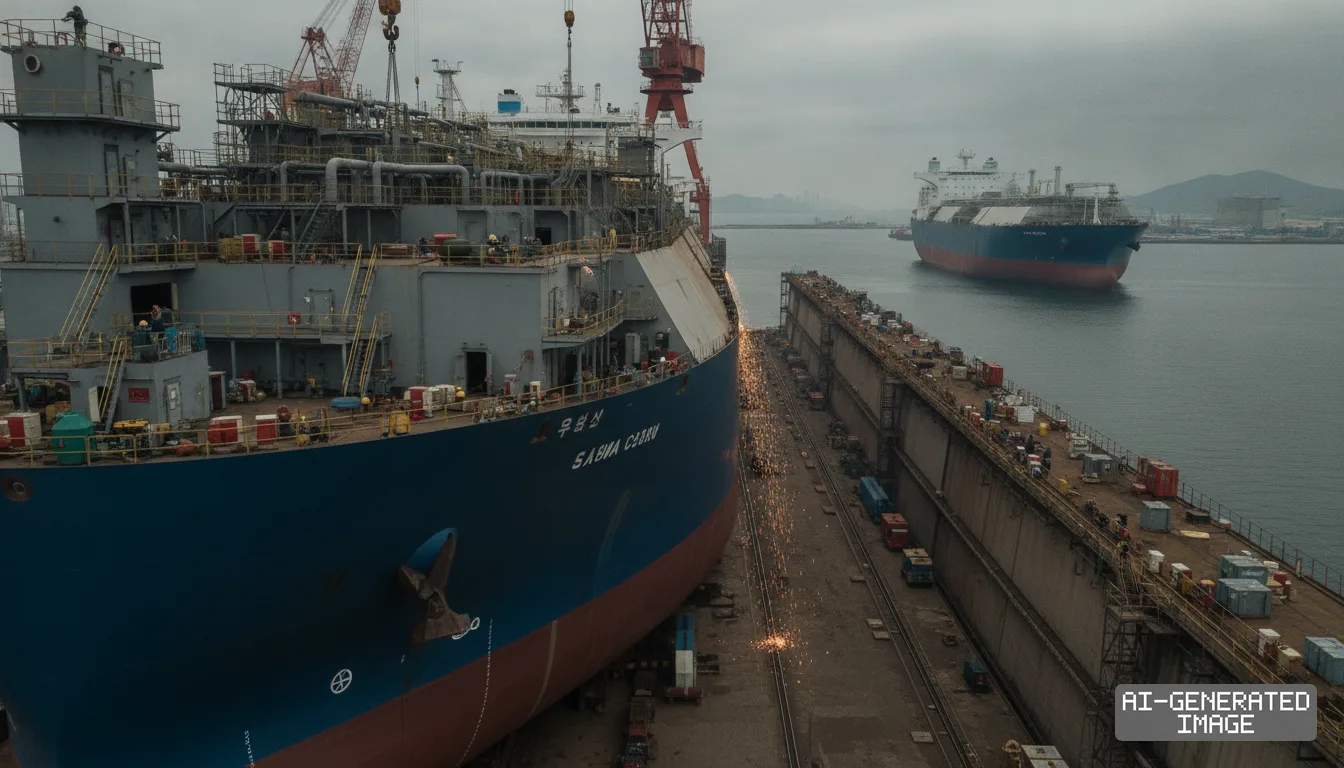
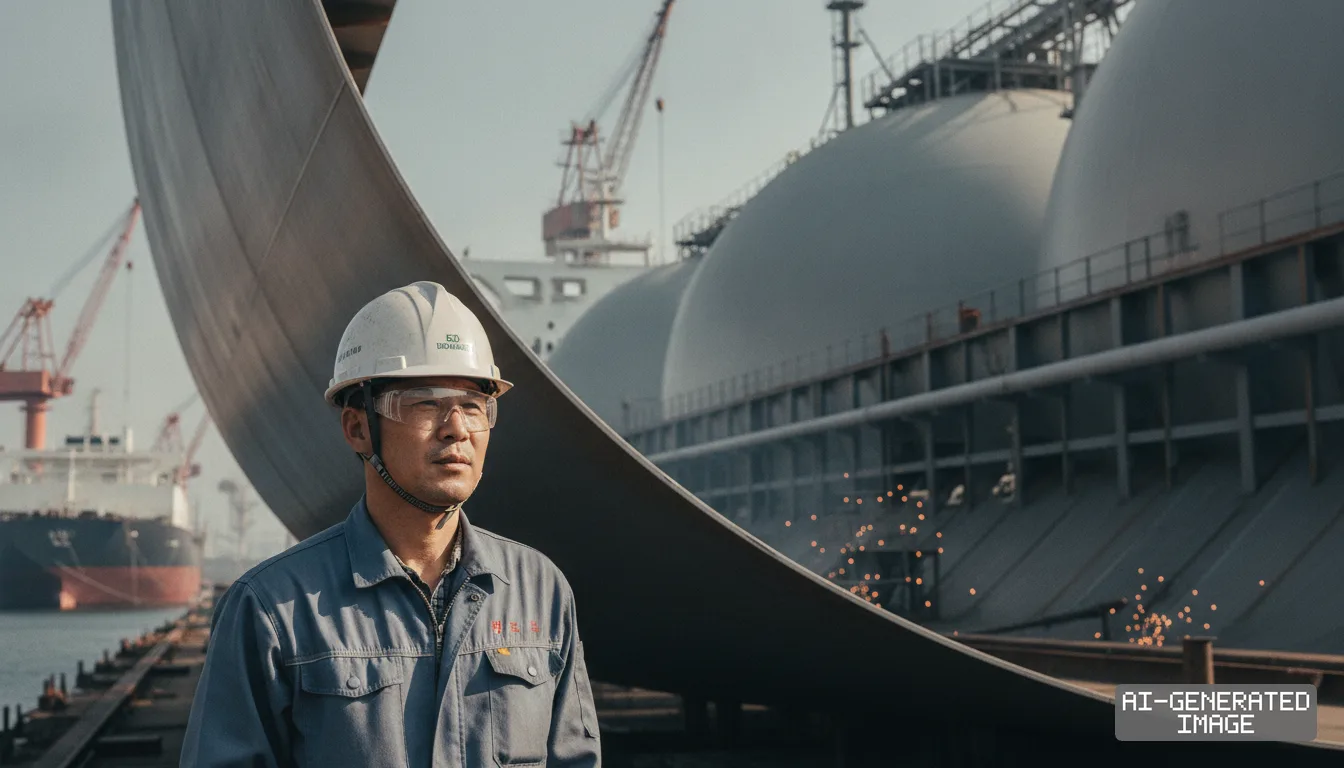
HD Hyundai advanced its plan on Nov. 13, 2026, to establish a greenfield shipyard in the United States with Kiewit Offshore Services, targeting naval auxiliary vessels by 2029.
The operating unit, HD Korea Shipbuilding & Offshore Engineering, controls about 22% of global commercial shipbuilding orders. Partner Kiewit Offshore Services operates major heavy fabrication yards in Ingleside, Texas, specializing in large marine structures.
The planned facility will employ about 3,000 workers once fully operational, according to the partnership terms. However, HD Korea Shipbuilding has not published the total capital expenditure, noting that financing ratios remain undetermined.
The project establishes an operating joint venture named HD Kiewit Shipbuilding. The partners combine Korean automated yard engineering with domestic fabrication capacity to construct vessels subject to the Merchant Marine Act of 1920, commonly known as the Jones Act.
The Jones Act requires vessels transporting goods between domestic ports to be built in US shipyards, flagged domestically and crewed by American citizens. Foreign shipbuilders cannot sell completed commercial hulls directly into that protected coastal trading network.
Under federal procurement statutes, combat vessels and fleet auxiliary craft for the US Navy must also be constructed in domestic shipyards. Foreign contractors face strict legal bars when attempting to deliver finished military hulls from overseas dry docks.
Instead of acquiring an older American dry dock, the partners selected a greenfield development model. Construction will take place on an existing industrial property along the Gulf Coast with direct deepwater access.
Groundbreaking for the facility is scheduled for 2027. Full production of vessel hulls, specialized maritime modules and ship blocks will follow in 2029, the companies said.
The yard will introduce HD Hyundai’s Future of Shipyard operational model, which deploys digital twins, automated steel processing and robotic welding lines. The technology aims to reduce the impact of skilled labor shortages in the American shipbuilding sector.
Commercial shipyards in the United States have faced persistent labor attrition and aging dry-dock infrastructure. Those operational constraints have created delivery delays for both merchant tonnage and naval auxiliary platforms.
HD Kiewit Shipbuilding plans to bid on contracts for US Navy logistics auxiliary ships and government agency craft. The venture will also manufacture mega-blocks and structural modules for supply to other overburdened domestic shipyards.
The contract formalizes an agreement signed in Houston between HD Hyundai USA LLC and Kiewit Maritime Co., an affiliate of Kiewit Offshore Services. The signing converted a preliminary strategic partnership established in July into an operational corporate structure.
Hannae Choi, head of corporate planning at HD Korea Shipbuilding, signed the operating pact alongside Chad Johnson, chief executive officer of Kiewit Maritime. The partners are completing site engineering studies for automated module assembly.
HD Korea Shipbuilding seeks an equity stake exceeding 50% in the joint venture. The company said majority ownership allows it to apply proprietary digital design frameworks while directing yard operations.
The venture follows wider moves by South Korean shipbuilders to establish North American industrial assets. South Korea, Japan and the United States have expanded naval industrial coordination under bilateral supply-chain agreements.
Domestic competitor Hanwha Ocean completed its $100 million purchase of Philly Shipyard in 2024, securing two operating commercial dry docks in Pennsylvania. Hanwha Ocean uses the yard for merchant construction and naval repair contracts.
HD Hyundai chose a different path by constructing a new automated plant with an established industrial contractor. The greenfield design avoids costly structural rehabilitation required at legacy American yards, the company said.
The joint venture will also evaluate commercial cargo vessels and port infrastructure fabrication. By manufacturing heavy structural blocks locally, the yard can supply domestic builders facing crane limits and backlogs.
Technical training programs run by Korean engineers will train domestic assembly workers at the Gulf Coast property. Establishing a local equipment supply chain remains necessary to meet federal domestic content rules, the company said.
HD Korea Shipbuilding stated in a regulatory filing that reports alleging multi-trillion-won capital increases for the American facility remain unconfirmed. The company said capital contributions and equity splits have not been finalized.
The company said during its third-quarter earnings call that final investment terms depend on project discussions with the Pentagon and the US Navy. Those discussions will determine hull procurement quantities and delivery schedules.
HD Korea Shipbuilding faces a regulatory disclosure deadline on Nov. 20, 2026, to provide an updated filing to the Korea Exchange. That submission will report progress on financing terms and equity participation.
The filing does not state the final dollar value of the investment, and the partners have not disclosed the specific coastal parcel selected for construction.
Impact map
How this development propagates across the region and out to global buyers.
| Event | Korea | China | Japan | Global impact |
|---|---|---|---|---|
| US shipyard joint venture | HD Korea Shipbuilding targets >50% JV stake, exports digital yard automation | Chinese shipbuilders remain barred from US naval and Jones Act procurement | Japanese yards face competing bids for allied US naval support maintenance work | US naval auxiliary and commercial fleet gains automated modular building capacity by 2029 |
In this story
- Companies
- HD Korea Shipbuilding & Offshore EngineeringHD Hyundai
- Tickers
- 009540.KS267250.KS
- Exposed
- Hanwha Ocean
- Policy
- Procurement RulesStandards
- Impact
- CapexSupply ChainOrder Book
Track every Procurement Rules development → Track every Standards development →
Related briefings
- HD Hyundai forms US shipyard venture with Kiewit Maritime Also on HD Hyundai, Procurement Rules, HD Korea Shipbuilding & Offshore Engineering
- HD Hyundai and Kiewit form U.S. shipyard venture for 2029 Also on HD Hyundai, Procurement Rules, HD Korea Shipbuilding & Offshore Engineering
- HD Hyundai and India Advance $4 Billion Tamil Nadu Shipyard Also on HD Hyundai, Procurement Rules, HD Korea Shipbuilding & Offshore Engineering
- HD Hyundai will fix US shipyard spending scale by year-end Also on HD Hyundai, Procurement Rules, HD Korea Shipbuilding & Offshore Engineering
Sources
Reporting
Confidence: medium — how we grade this
The documents behind this briefing are linked above. East Asia Brief produces its English text with AI assistance under human editorial review, and does not translate or republish other outlets' articles. See our methodology and AI policy. Spotted an error? Tell us.
The Morning Brief
What changed in Korean, Chinese and Japanese industry overnight — and what it means for your supply chain. One email, weekday mornings, US time. Free.
The Morning Brief is in preparation. Leave your address and we will write to you once — when the first issue is ready. Nothing before that.