HD Hyundai secures $470M Foresight order for four ammonia carriers
The 630.1 billion won deal covers 90,000-cubic-meter dual-fuel vessels built in Ulsan for 2030 delivery, equal to 3.58% of the yard's 2025 revenue.
Foresight Group finalized details Nov. 13, 2026, for an order of four very large ammonia carriers with HD Hyundai Heavy Industries, securing early delivery slots for clean gas transport.
The contract carries a total value of 630.1 billion won ($470 million). That commitment represents 3.58% of HD Hyundai Heavy Industries' 2025 consolidated revenue of 17.58 trillion won.
Each 90,000-cubic-meter vessel carries a build price of approximately 157.5 billion won ($117.5 million). The design incorporates dual-fuel propulsion equipment capable of burning either ammonia or liquefied petroleum gas.
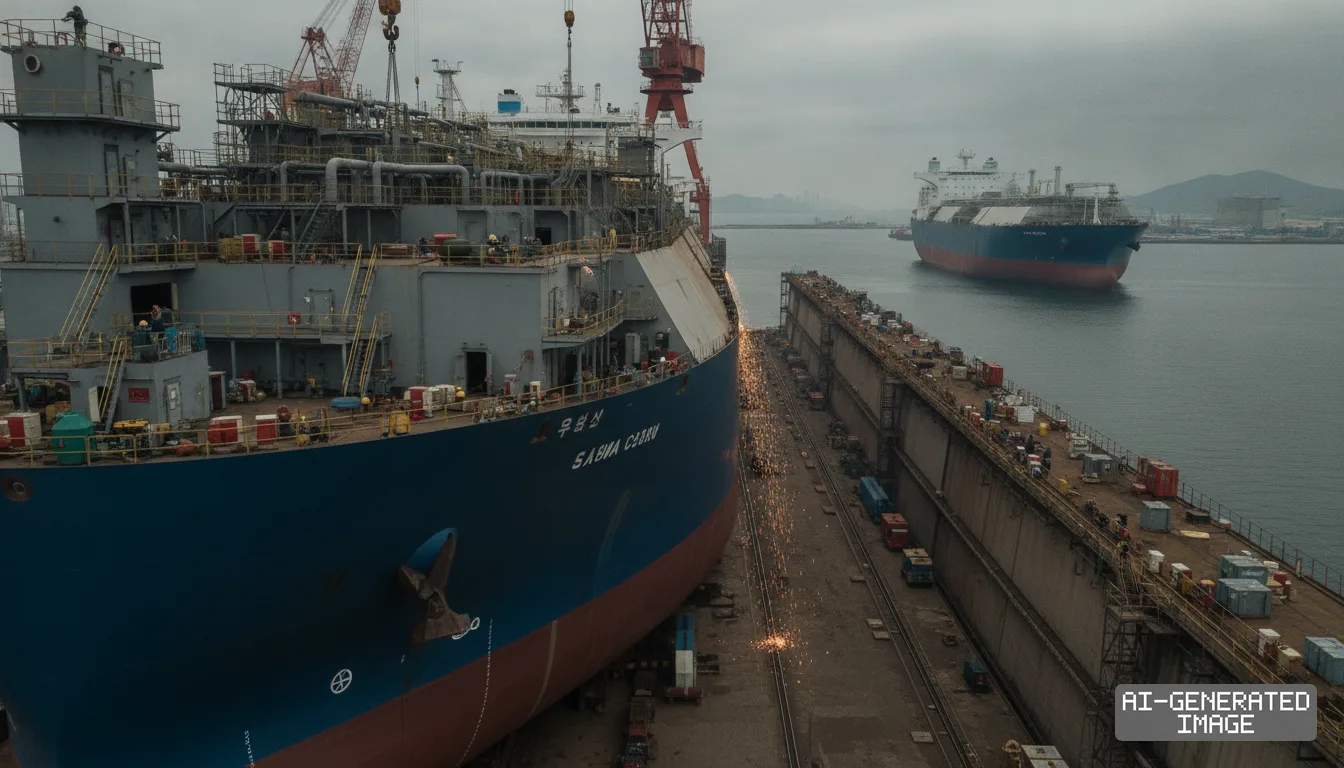
HD Hyundai Heavy Industries will construct all four vessels at its primary shipyard in Ulsan, South Korea. Deliveries will proceed sequentially across the first half of 2030 under the agreed schedule.
The order pushed cumulative 2026 contract volume at intermediate holding firm HD Korea Shipbuilding & Offshore Engineering to 193 vessels valued at $21.2 billion.
That intake volume accounts for 91% of the parent group's full-year target of $23.31 billion. The shipbuilder requires roughly $2.11 billion in new commitments before year-end to reach that annual objective.
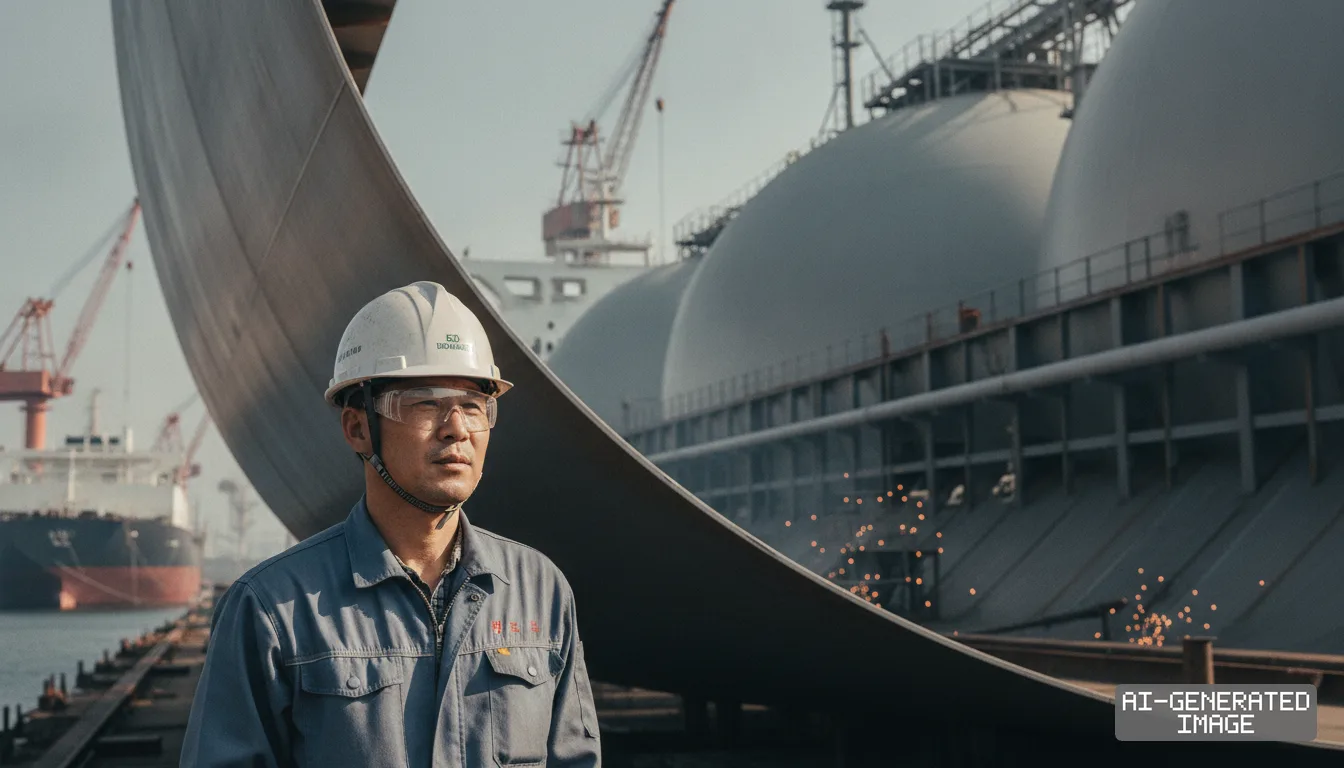
Eco-friendly gas carriers constitute the single largest category in the group's manufacturing backlog. Carriers configured for liquefied petroleum gas, ammonia and carbon dioxide total 62 vessels, or roughly one-third of all 2026 bookings.
Petrochemical product tankers form the second-largest grouping at 59 vessels, followed by 38 container vessels and 17 liquefied natural gas carriers. Drydock scheduling across the yards prioritizes premium gas hulls over lower-margin commercial vessels.
United Arab Emirates-based Foresight Group committed to the four vessels as the opening phase of a 10-ship fleet expansion program budgeted at $1.2 billion.
Foresight Group currently operates seven very large gas carriers that transport fuel from North America to Asian terminals. The company seeks modern tonnage to renew aging assets and satisfy tighter international emissions standards.
The newly contracted carriers will serve long-term charters with state-owned refiners in India. Charterers are seeking direct routes from the United States to avoid maritime chokepoints around the Strait of Hormuz.
Tightening environmental mandates from the International Maritime Organization drive commercial interest in alternative fuel vessels. Global rules penalize traditional bunker fuel by levying tiered carbon intensity requirements on vessels operating on deep-sea corridors.
In Europe, maritime emissions face mandatory inclusion under the European Union Emissions Trading System. Commercial ship operators incur direct financial surcharges per ton of carbon equivalent emitted during voyages calling at continental ports.
Ammonia emits no carbon dioxide during combustion, positioning the chemical compound as an effective replacement for fossil marine fuel. The substance also serves as an efficient carrier medium for industrial hydrogen trade.
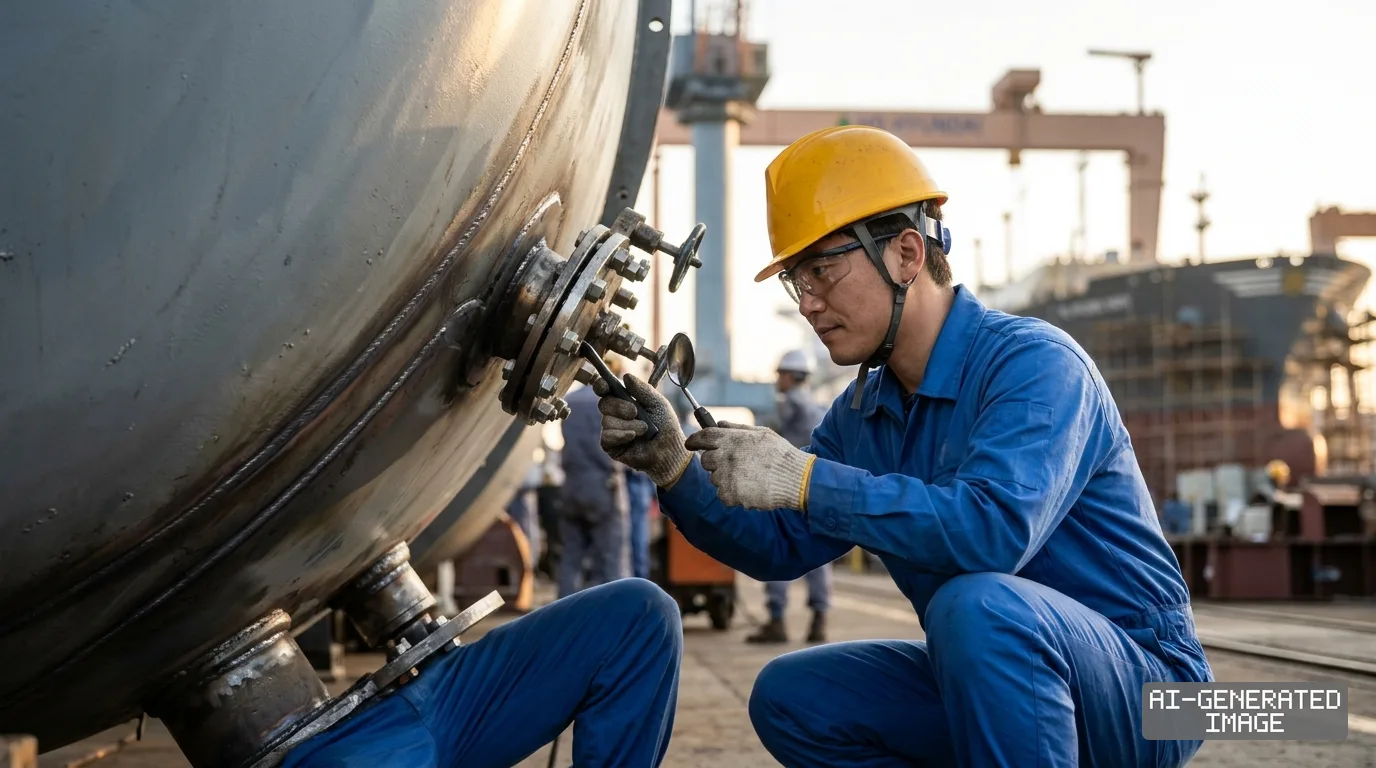
Burning ammonia at sea requires specialized fuel handling systems and vapor containment barriers to mitigate toxicity risks. South Korean yards hold proprietary patents for low-pressure gas piping and safety scrubbing mechanisms.
HD Hyundai produces ammonia-capable two-stroke marine engines through its internal machinery division. Domestic engine assembly shields the shipyard from delivery delays that have constrained European marine equipment suppliers.
Global demand for high-specification gas tonnage has filled drydock availability through 2029 across major Asian shipbuilders. South Korean yards hold a forward backlog exceeding three years of active yard capacity.
Extended slot backlogs have allowed South Korean shipbuilders to practice selective contracting. Yards reject discount tenders to protect profit margins against potential increases in heavy steel plate procurement costs.
Chinese shipbuilders have expanded their commercial gas vessel portfolio, capturing bulk carrier and container capacity. However, South Korean yards maintain a technical advantage in complex cryogenic containment systems and delivery reliability.
Contract terms follow standard industry milestones, releasing cash installments as steel cutting, keel laying and launching occur. HD Hyundai Heavy Industries secured an upfront deposit upon contract signing on Nov. 5, 2026.
The regulatory disclosure filed by HD Hyundai Heavy Industries does not state the buyer's corporate identity, identifying the client only as an African shipping company, and Foresight Group has not published a formal contract notice on its corporate website.
Financing syndicates backing the broader procurement program have also not been publicly disclosed.
Construction milestone payments will disburse in stages through May 31, 2030. Foresight Group retains contractual options for six sister vessels slated for phased delivery through the fourth quarter of 2033.
Impact map
How this development propagates across the region and out to global buyers.
| Event | Korea | China | Japan | Global impact |
|---|---|---|---|---|
| Ammonia carrier contract | HD Hyundai Heavy Industries commits Ulsan dock slots through 2030, booking 3.58% of annual revenue | CSSC and Hengli face slot competition for high-margin cryogenic gas hulls | Imabari and Mitsubishi Shipbuilding remain constrained by dual-fuel engine integration capacity | Indian refiners secure dedicated US gas transport capacity bypassing Strait of Hormuz chokepoints |
| Ammonia carrier contract | HD Hyundai Heavy Industries commits Ulsan dock slots through 2030, booking 3.58% of annual revenue | CSSC and Hengli face slot competition for high-margin cryogenic gas hulls | Imabari and Mitsubishi Shipbuilding remain constrained by dual-fuel engine integration capacity | Indian refiners secure dedicated US gas transport capacity bypassing Strait of Hormuz chokepoints |
In this story
- Companies
- HD Hyundai Heavy IndustriesForesight Group
- Tickers
- 329180.KS
- Exposed
- HD Korea Shipbuilding & Offshore Engineering
- Impact
- Order BookCapexSupply Chain
Related briefings
- HD Hyundai launches 600-ton autonomous warship with Anduril Also on HD Korea Shipbuilding & Offshore Engineering, HD Hyundai Heavy Industries, Order Book
- HD Hyundai expands shipyard welding robot fleet for 2030 targets Also on HD Korea Shipbuilding & Offshore Engineering, HD Hyundai Heavy Industries, Order Book
- HD Hyundai wins $1.42 billion HMM order for eight LNG ships Also on HD Korea Shipbuilding & Offshore Engineering, HD Hyundai Heavy Industries, Order Book
- HD Hyundai expands Vietnam shipyard in $100 million program Also on HD Korea Shipbuilding & Offshore Engineering, HD Hyundai Heavy Industries, Order Book
Sources
Reporting
Confidence: medium — how we grade this
The documents behind this briefing are linked above. East Asia Brief produces its English text with AI assistance under human editorial review, and does not translate or republish other outlets' articles. See our methodology and AI policy. Spotted an error? Tell us.
The Morning Brief
What changed in Korean, Chinese and Japanese industry overnight — and what it means for your supply chain. One email, weekday mornings, US time. Free.
The Morning Brief is in preparation. Leave your address and we will write to you once — when the first issue is ready. Nothing before that.