Imabari Delivers 13,932-TEU Container Vessel ONE Symphony
The neo-Panamax vessel cut emissions 60% below baseline levels with future-fuel approvals, concluding a multi-ship series built at Marugame.
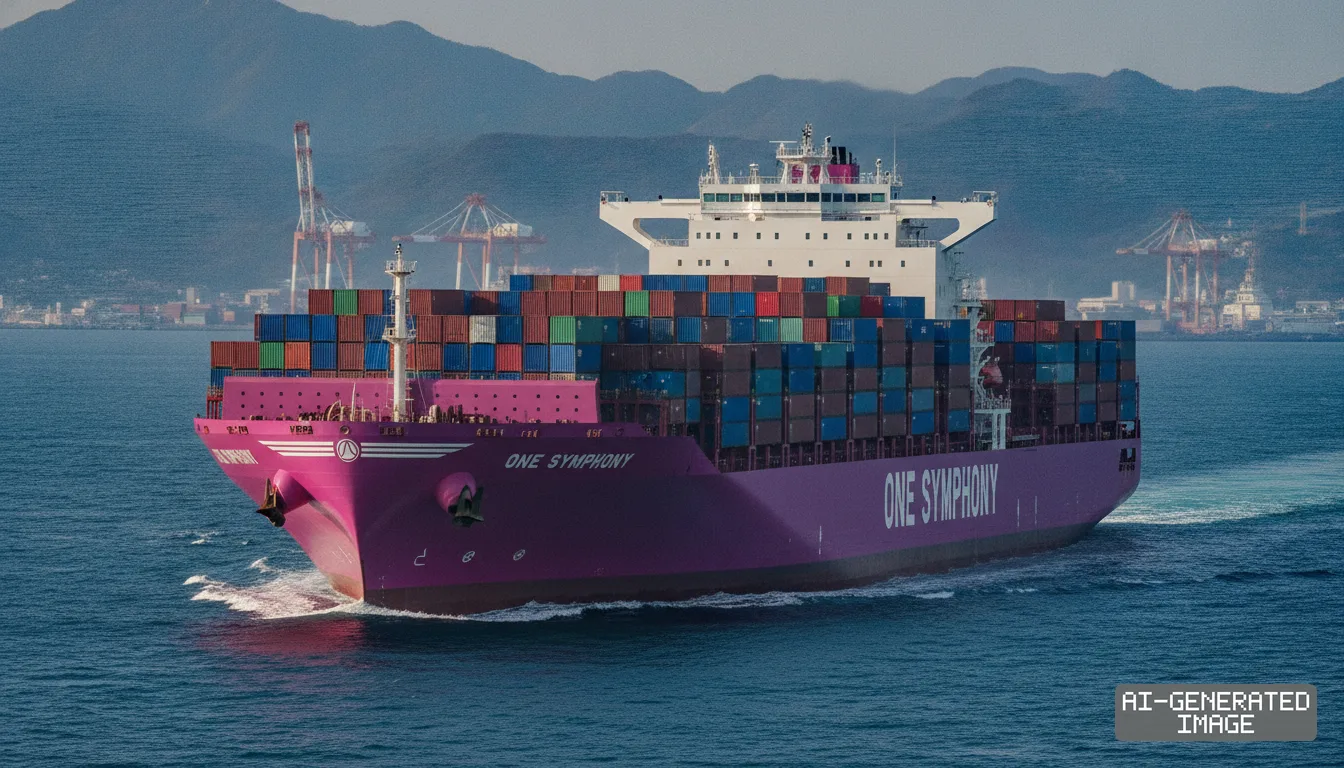
Ocean Network Express took delivery on Oct. 29 of the 13,932-TEU containership ONE Symphony from Imabari Shipbuilding, concluding a multi-vessel order contracted through Nihon Shipyard.
The delivery hands Singapore-based Ocean Network Express the final unit in its 13,900-TEU series. The boxship sailed from western Japan following shipyard completion on Oct. 26.
The vessel measures 335.94 meters in length overall, 51.00 meters in beam and 30.10 meters in molded depth. It registers a gross tonnage of 140,233 tons and a deadweight capacity of roughly 160,200 tonnes.
The container capacity of 13,932 twenty-foot equivalent units places the vessel in the neo-Panamax class. That size allows transit through the expanded locks of the Panama Canal.
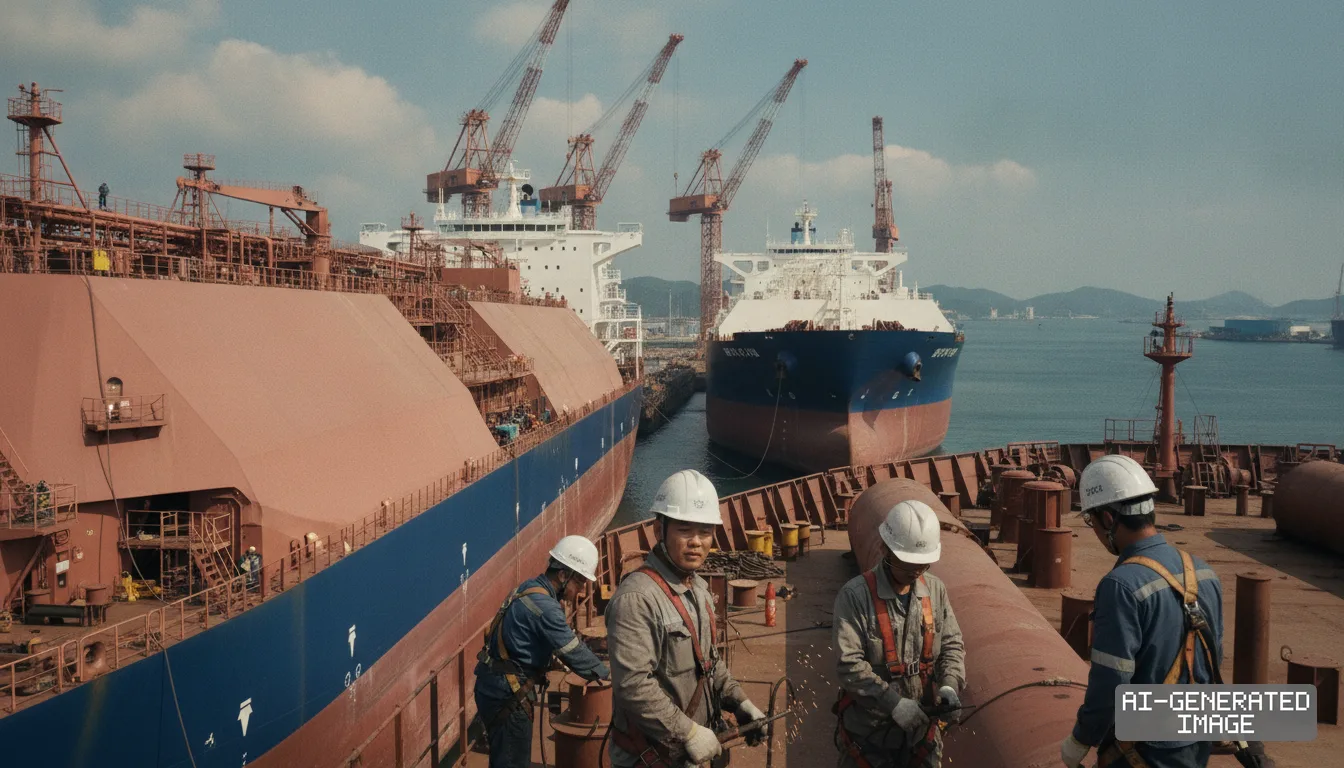
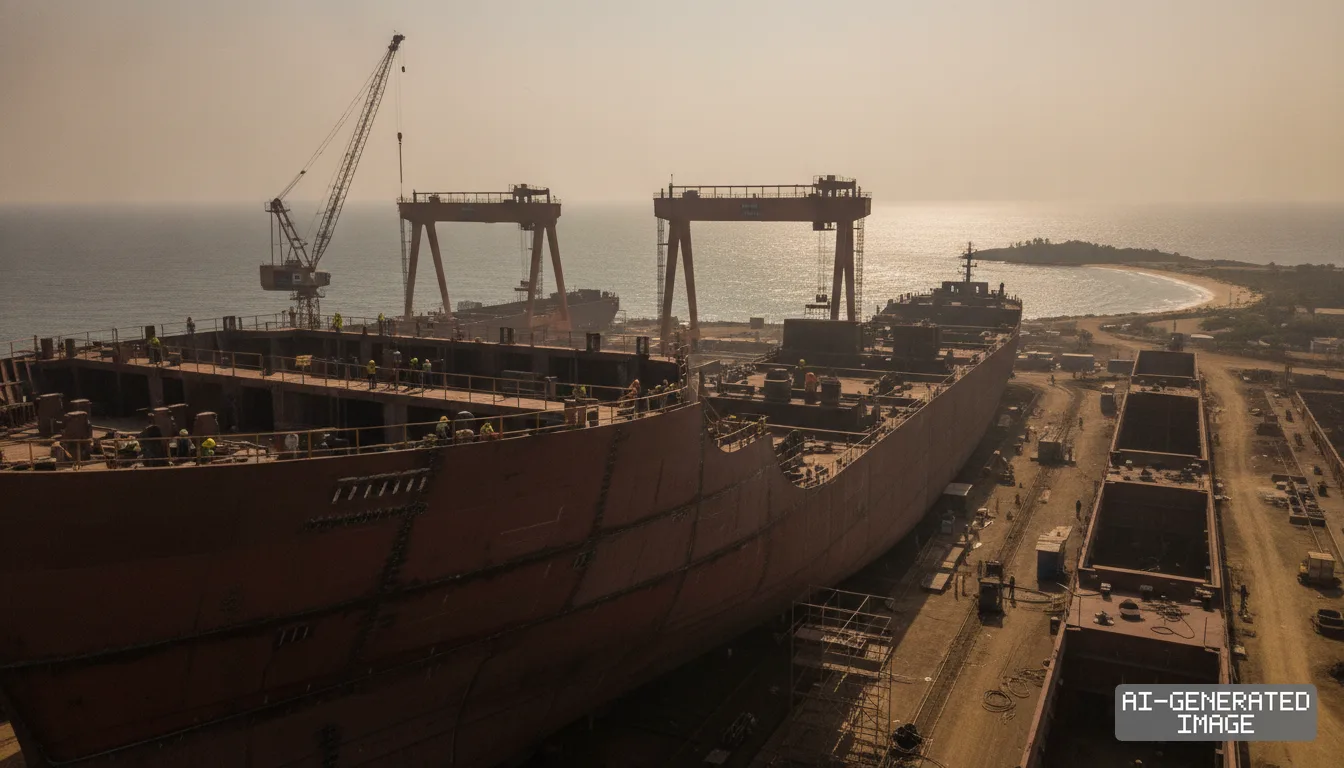
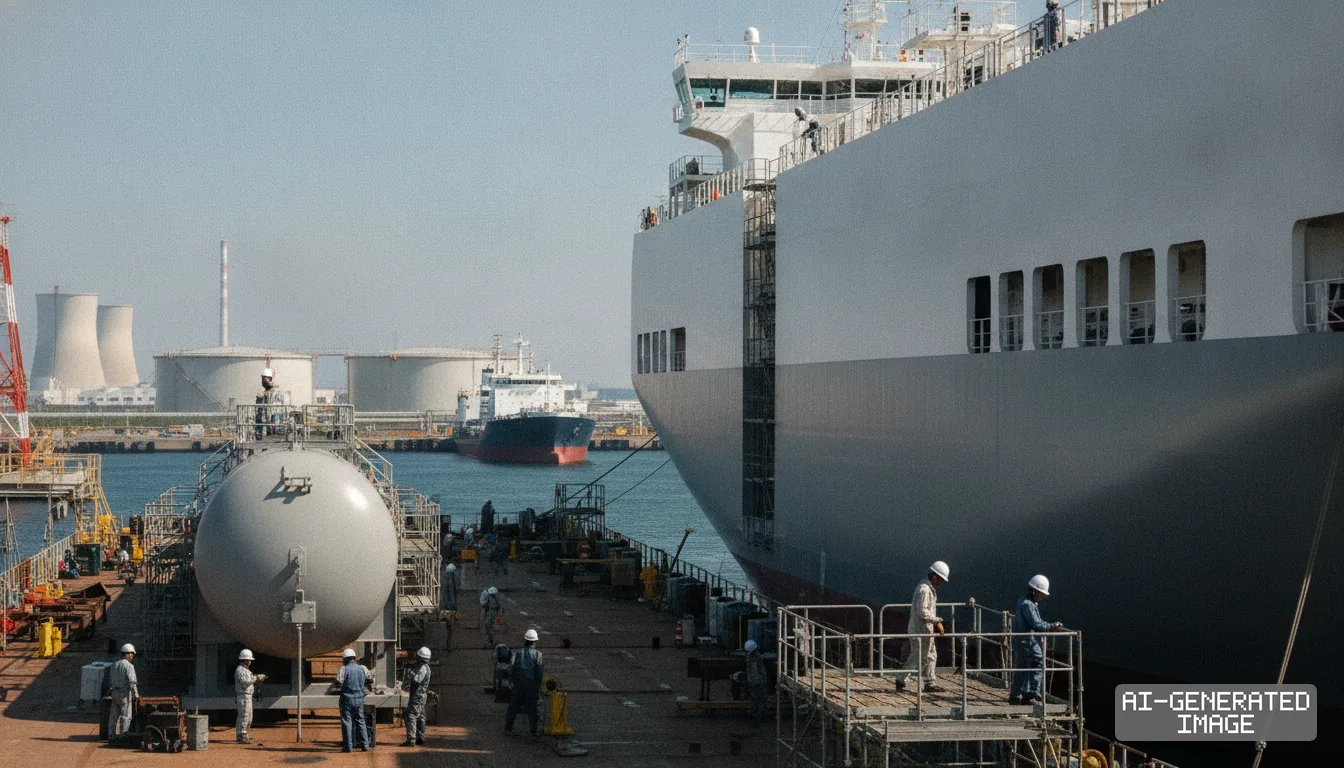
Imabari Shipbuilding built the vessel at its Marugame Headquarters dock in Kagawa Prefecture. Commercial sales consortium Nihon Shipyard booked the contract on behalf of the builder.
The hull form was shaped to minimize hydrodynamic drag at typical service draughts. The builder fitted a bow wind cover to lower aerodynamic resistance on open-ocean routes.
A twist rudder and secondary hull appendages direct water flow into the propeller. The shipyard coated the submerged steel plates with low-friction antifouling paints.
Those hydrodynamic measures reduced the Energy Efficiency Design Index by approximately 60% relative to baseline rules. The index measures carbon dioxide generated per tonne-mile of cargo transport.
A two-stroke MAN B&W 7G95ME-C10.6 main engine drives the vessel. The propulsion system generates 48,090 kilowatts, providing a service speed of roughly 22 knots.
An exhaust gas recirculation unit strips nitrogen oxides to meet Tier III emissions rules. A hybrid exhaust gas cleaning system neutralizes sulphur oxides from residual heavy bunker fuel.
The vessel also carries an onboard ballast water treatment unit. That hardware treats biological organisms in ballast tanks before sea discharge in coastal waters.
Lloyd's Register surveyed construction and entered the Singapore-flagged vessel into class. The classification society approved concept designs for alternative-fuel conversions.
Those approvals in principle cover future retrofits for methanol propulsion, ammonia fuel systems and onboard carbon capture. The vessel retains physical deck reserve spaces for that processing equipment.
The cargo layout features four-tier lashing bridges across weather-deck positions. Those elevated structural bridges support container stacks against lateral motion in heavy seas.
The electrical network supplies power to 2,550 refrigerated container sockets distributed across holds and hatch covers. That reefer capacity supports high-value perishable transport on transpacific and South American trade lanes.
The holds and open weather decks are certified for hazardous cargo containers. That certification complies with the International Maritime Dangerous Goods standard.
The handover concludes a multi-year construction schedule for the neo-Panamax series. Imabari delivered sister vessel ONE Strength in September 2025 and ONE Serenity in December 2025.
The program supported employment across Imabari Shipbuilding docks in Marugame, Hiroshima and Saijo. Standardized blocks allowed the company to preserve drydock cadence against competing Asian shipyards.
South Korean and Chinese builders currently control more than 85% of active neo-Panamax orderbooks. Japanese shipbuilders rely on standardized series work to maintain yard utilization.
Nihon Shipyard channels commercial marketing for Imabari Shipbuilding and Japan Marine United. The joint sales entity structures series production to defend dock access against Chinese state-owned yards.
The delivery brings Ocean Network Express closer to its fleet carbon intensity target. The shipping company aims to reduce greenhouse gas emissions per container-mile by 70% by 2030.
Liner operators face stricter International Maritime Organization carbon intensity indicators on Jan. 1. Vessels that exceed efficiency baselines avoid mandatory speed reductions on primary trade loops.
Ship tracking data shows ONE Symphony departed Japanese waters on Oct. 23 bound for Qingdao, China. The vessel will load outbound cargo before entering regular linehaul service.
Ocean Network Express has not published a corporate notice confirming the initial port rotation as of Oct. 30. Commercial schedule details for the maiden voyage remain unannounced.
Impact map
How this development propagates across the region and out to global buyers.
| Event | Korea | China | Japan | Global impact |
|---|---|---|---|---|
| neo-Panamax containership delivery | HD Hyundai and Hanwha Ocean maintain premium slot pricing for dual-fuel boxships | Jiangnan and Hudong-Zhonghua hold over 60% of regional neo-Panamax backlogs | Imabari and Nihon Shipyard preserve domestic berth capacity for standard eco-designs | Liner operating costs drop as 14,000-TEU eco-hulls trim fuel burn on transpacific loops |
In this story
- Companies
- Ocean Network ExpressImabari ShipbuildingNihon Shipyard
- Exposed
- Lloyd's Register
- Policy
- Standards
- Impact
- Order BookCost StructureSupply Chain
Track every Standards development →
Related briefings
- Seven Japanese firms order ammonia car carriers for 2030 fleet Also on Nihon Shipyard, Imabari Shipbuilding, Standards
- Imabari and JMU consolidate dry bulk engineering to standardize ammonia dual-fuel vessels Also on Nihon Shipyard, Imabari Shipbuilding, Cost Structure
- Imabari Shipbuilding wins two Aframax tankers from Carlova by 2030 Also on Nihon Shipyard, Imabari Shipbuilding, Order Book
- HD Hyundai develops 150,000 cbm ultra-large ethane carrier Also on Lloyd's Register, Cost Structure, Order Book
Sources
Reporting
Confidence: medium — how we grade this
The documents behind this briefing are linked above. East Asia Brief produces its English text with AI assistance under human editorial review, and does not translate or republish other outlets' articles. See our methodology and AI policy. Spotted an error? Tell us.
The Morning Brief
What changed in Korean, Chinese and Japanese industry overnight — and what it means for your supply chain. One email, weekday mornings, US time. Free.
The Morning Brief is in preparation. Leave your address and we will write to you once — when the first issue is ready. Nothing before that.