Samsung Heavy posts 42% operating profit rise on gas vessels
Preliminary third-quarter revenue reached 3.15 trillion won as offshore plant construction and high-margin carrier deliveries lifted operating margin to 10.7%.
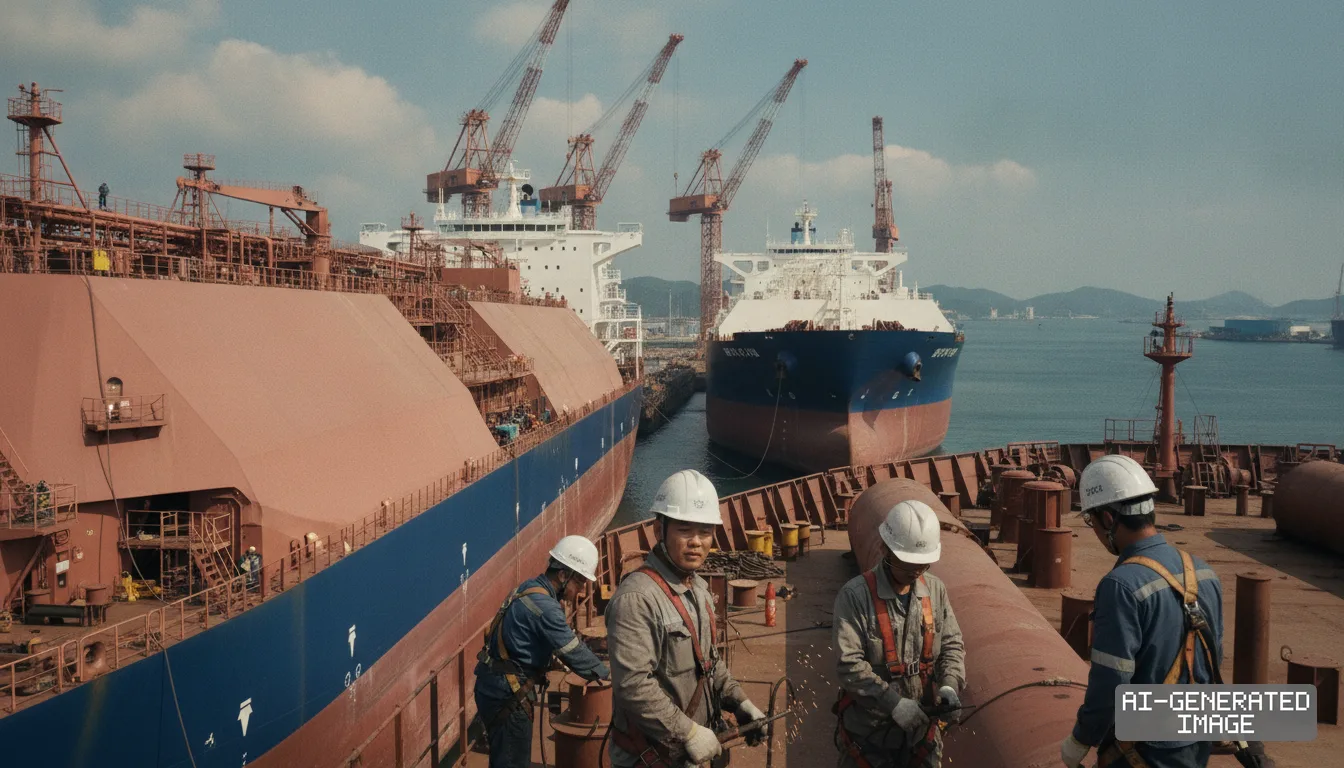
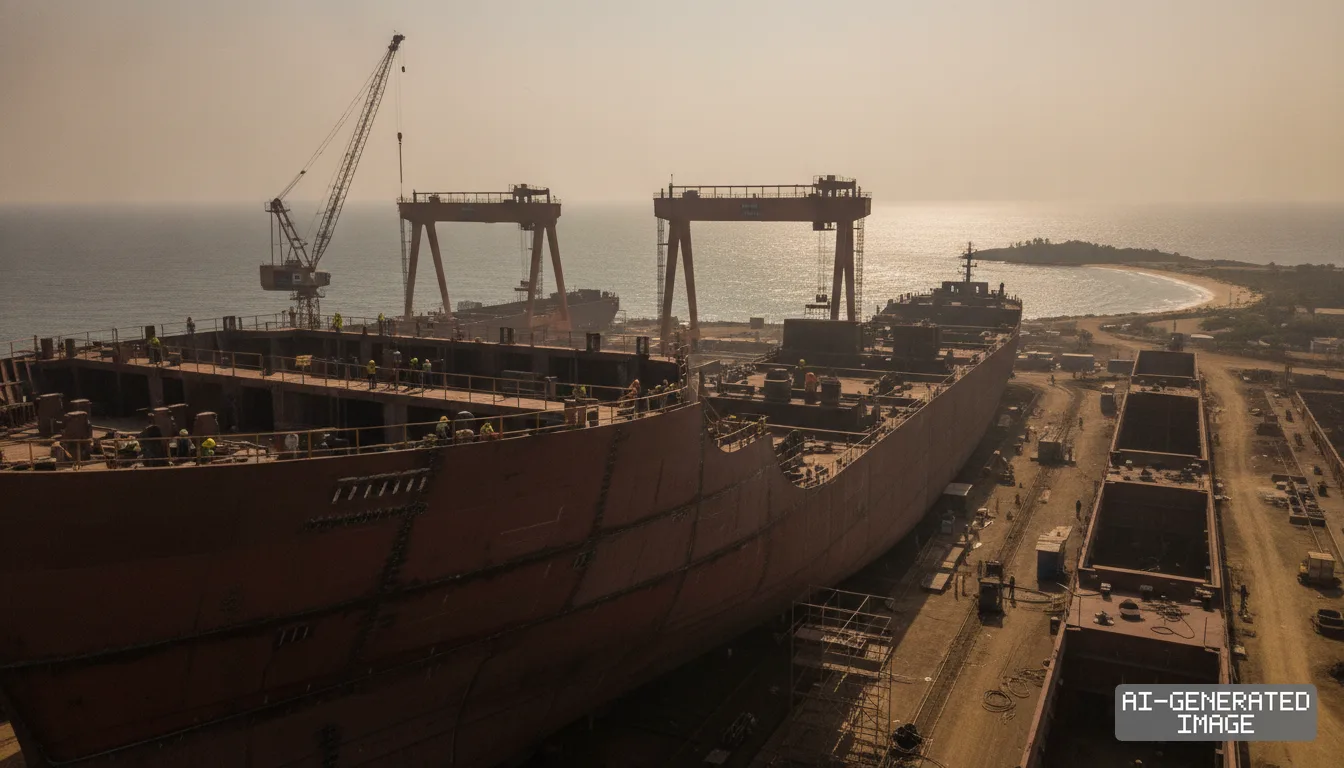
Samsung Heavy Industries said Oct. 29 that its third-quarter operating profit rose 42% from a year earlier, driven by deliveries of high-value gas vessels and offshore production units.
Operating profit reached 338.4 billion won ($253 million) for the quarter, the South Korean shipbuilder said. The figure represents an operating margin of 10.7%, holding above double digits for a second consecutive quarter.
Consolidated revenue rose 20% to 3.1504 trillion won ($2.36 billion), the company said. That top line accounts for roughly 25% of the shipbuilder's full-year revenue guidance of 12.8 trillion won.
Pretax profit surged 333% from a year earlier to 610.7 billion won, according to the regulatory filing. Non-operating gains of 272.3 billion won, including settlements on forward foreign exchange contracts, supported the pre-tax total.
Net profit for the third quarter rose 236% to 470.8 billion won, the company said. The increase reflects both operational efficiency on ship berths and currency hedge executions.
Cumulative revenue for the first nine months reached 9.2834 trillion won, the shipbuilder said. Cumulative operating profit climbed to 936.5 billion won, exceeding the 862.2 billion won booked in all of 2025.
Meeting the annual revenue target of 12.8 trillion won remains well within reach, the company said. Fourth-quarter revenue recognition typically accelerates as finished hulls enter final sea trials.
The earnings gain occurred despite seasonal headwinds that reduce dock utilization, the company said. Summer worker vacations and the Chuseok holiday cut available production hours across South Korean yards during the third quarter.
Order intake reached $12.4 billion through October, the company said. The total represents 89% of the shipyard's full-year procurement target of $13.9 billion.
The yard has booked 48 hulls this year, the company said. That cohort comprises 20 liquefied natural gas (LNG) carriers and two floating liquefied natural gas (FLNG) production units.
Samsung Heavy Industries had set an annual target of $8.2 billion for offshore facilities, the company said. The commercial merchant vessel division had set a target of $5.7 billion.
Offshore awards include the $2.88 billion contract for Delfin FLNG 1, signed in June with US project developer Delfin Midstream, according to company records. The facility will moor off Louisiana to export 4.4 million tonnes of liquefied gas per year.
The builder is also assembling the Coral Norte FLNG hull, commissioned by Italian energy group Eni for deployment in Mozambique, the company said. Samsung Heavy Industries previously built the Coral Sul FLNG unit for the same operator.
South Korean yards are using complex gas infrastructure to counter Chinese competition, industry data show. Chinese shipyards have expanded their market share in standard dry bulk carriers and container vessels by offering lower build costs.
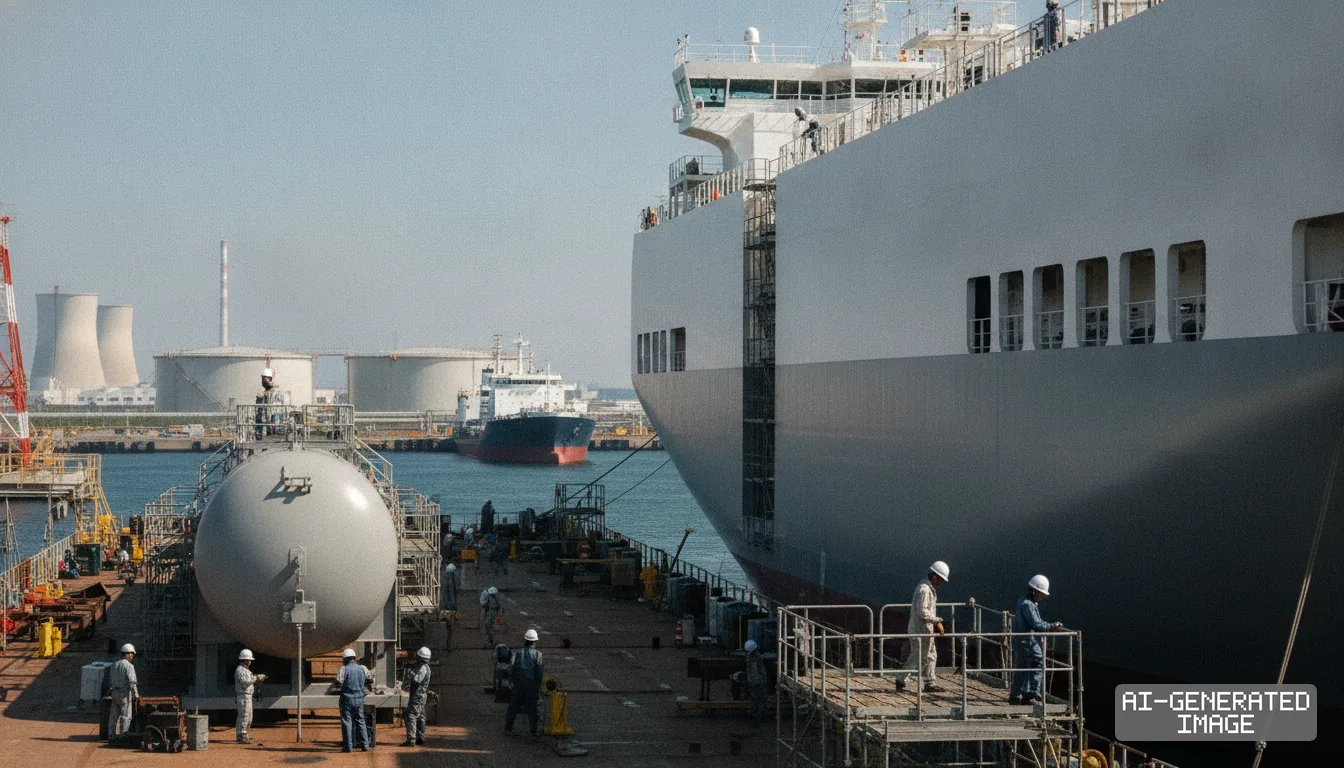
Building an FLNG — a floating facility that extracts, liquefies and stores natural gas at sea — requires advanced cryogenic containment and heavy topside integration. Chinese shipyards face higher engineering hurdles when competing for those offshore platforms.
French naval engineering firm GTT supplies the cryogenic tank membrane designs for the South Korean yard's LNG orders, including the 180,000-cubic-meter storage system on Delfin FLNG 1. That design contract covers eight containment tanks arranged in two parallel rows.
Delfin Midstream holds options for three additional offshore liquefaction hulls at the Geoje facility, company project filings show. Each unit provides roughly 4 million tonnes of annual liquefaction capacity.
The shipbuilder expects contract awards for the second Delfin FLNG hull before Dec. 31, 2026, the company said. Management is also negotiating construction terms for the Western FLNG facility planned for offshore British Columbia in Canada.
Commercial negotiations for the Canadian export project are scheduled to conclude before year-end, according to project developer filings. Final investment decisions across North American gas export terminals dictate the shipyard's 2027 dock allocation.
The regulatory filing does not state the exact operating profit breakdown between commercial LNG carriers and offshore FLNG facilities. Samsung Heavy Industries reports preliminary quarterly earnings on a consolidated basis without detailing unit-level production margins.
The Geoje yard holds delivery slots for LNG carriers and offshore facilities through the end of 2028, the company said. Berth capacity remains fully assigned to fixed-price gas vessel contracts.
Impact map
How this development propagates across the region and out to global buyers.
| Event | Korea | China | Japan | Global impact |
|---|---|---|---|---|
| High-margin gas vessel delivery cycle | Samsung Heavy posts 10.7% operating margin, bookings hit $12.4 billion | Chinese yards capture bulker and boxship volume but trail in offshore liquefaction topsides | Imabari and JMU remain focused on domestic carrier backlogs without active FLNG berths | Offshore LNG developers pay premium rates for verified cryogenic yard slots through 2028 |
| High-margin gas vessel delivery cycle | Samsung Heavy posts 10.7% operating margin, bookings hit $12.4 billion | Chinese yards capture bulker and boxship volume but trail in offshore liquefaction topsides | Imabari and JMU remain focused on domestic carrier backlogs without active FLNG berths | Offshore LNG developers pay premium rates for verified cryogenic yard slots through 2028 |
| High-margin gas vessel delivery cycle | Samsung Heavy posts 10.7% operating margin, bookings hit | — | — | — |
| High-margin gas vessel delivery cycle | Samsung Heavy posts 10.7% operating margin, bookings hit $12.4 billion | Chinese yards capture bulker and boxship volume but trail in offshore liquefaction topsides | Imabari and JMU remain focused on domestic carrier backlogs without active FLNG berths | Offshore LNG developers pay premium rates for verified cryogenic yard slots through 2028 |
In this story
- Companies
- Samsung Heavy Industries
- Tickers
- 010140.KS
- Exposed
- Delfin MidstreamEni
- Impact
- Order BookPricingCost Structure
Related briefings
- Samsung Heavy expands Busan R&D center into offshore engineering hub Also on Delfin Midstream, Samsung Heavy Industries, Order Book
- Hanwha Ocean and Samsung Heavy diverge on currency hedging Also on Samsung Heavy Industries, Pricing, Cost Structure
- Won rebound splits Korean shipbuilders on currency hedging Also on Samsung Heavy Industries, Pricing, Cost Structure
- Asian Shipyard Heavy Plate Costs Diverge as Mills and Builders Clash Over Contract Pricing Also on Samsung Heavy Industries, Pricing, Cost Structure
Sources
Primary documents
Reporting
Confidence: high — how we grade this
The documents behind this briefing are linked above. East Asia Brief produces its English text with AI assistance under human editorial review, and does not translate or republish other outlets' articles. See our methodology and AI policy. Spotted an error? Tell us.
The Morning Brief
What changed in Korean, Chinese and Japanese industry overnight — and what it means for your supply chain. One email, weekday mornings, US time. Free.
The Morning Brief is in preparation. Leave your address and we will write to you once — when the first issue is ready. Nothing before that.