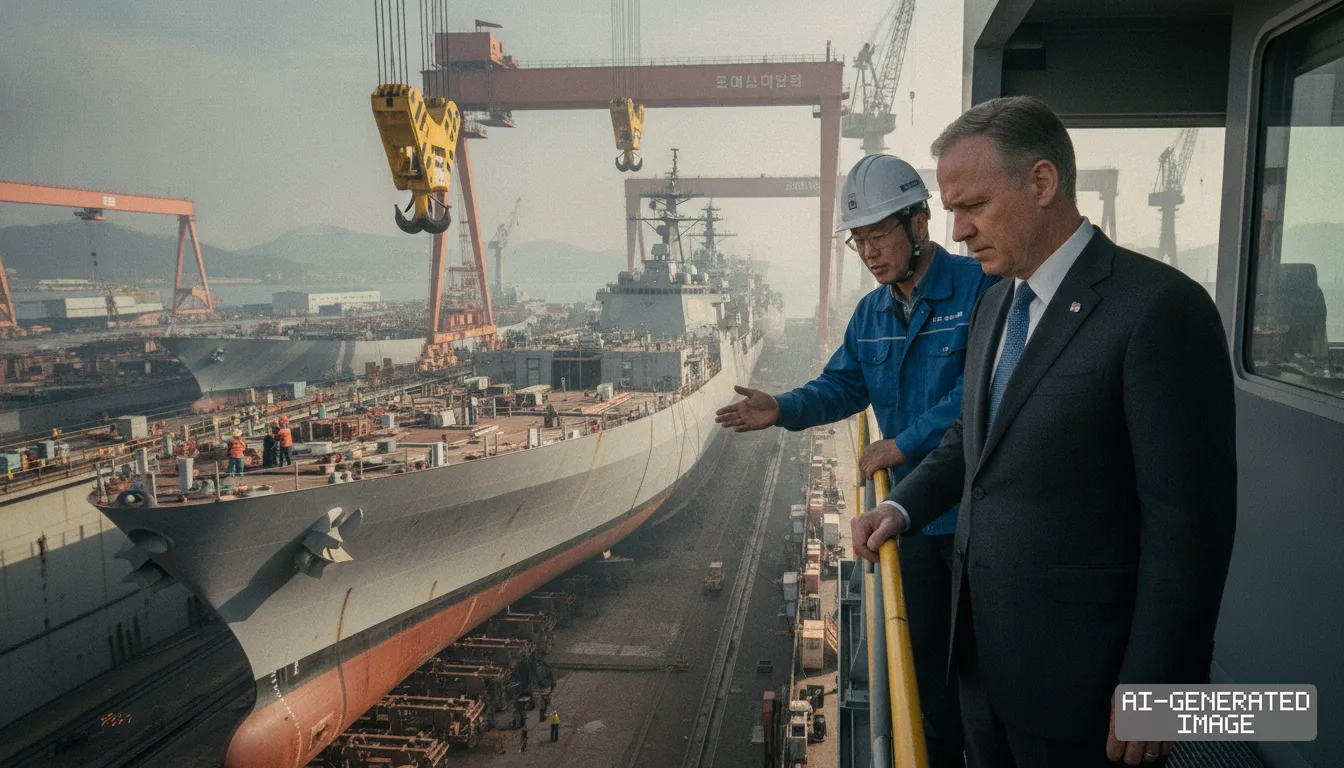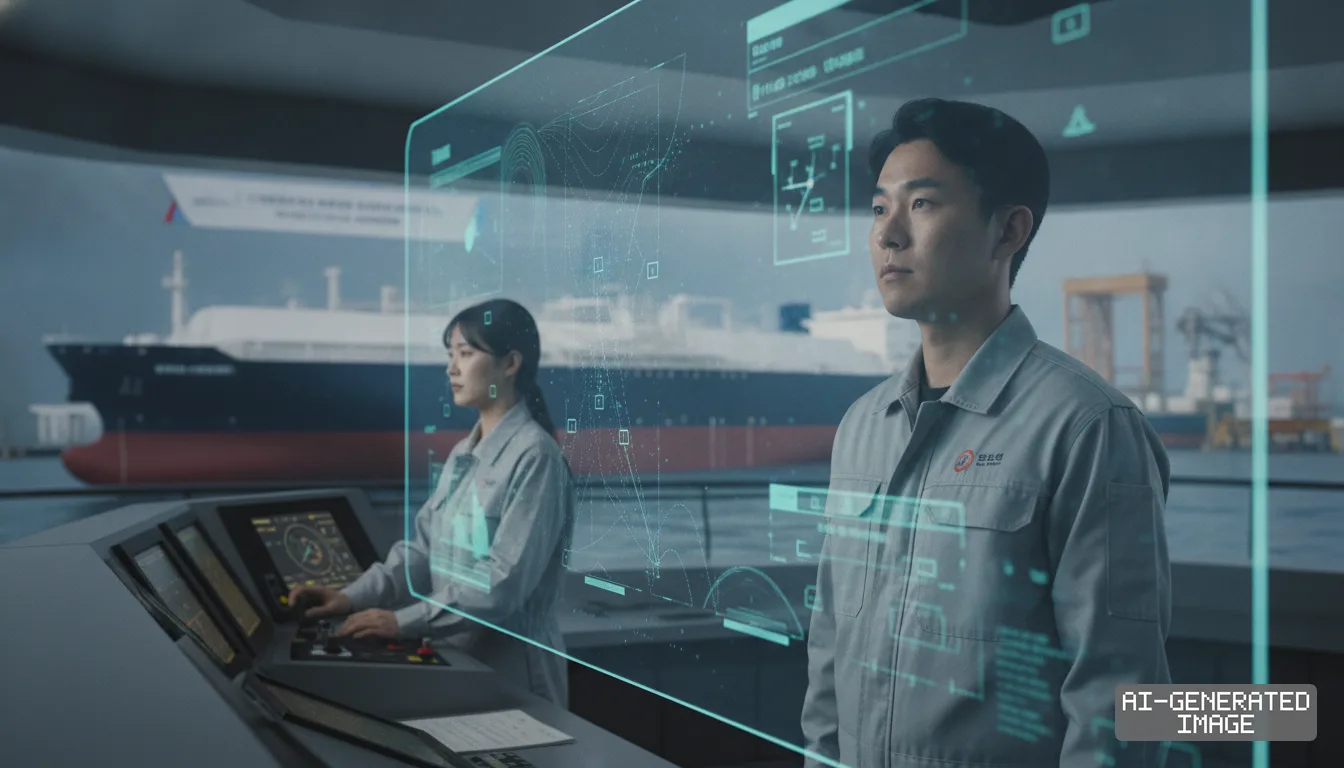
Hanwha Ocean wins ABS approval for ammonia-ready LNG tanks
The design eliminates costly drydock structural retrofits for 174,000-cubic-meter gas carriers, allowing operators to switch to zero-carbon marine fuel as global emission mandates tighten.
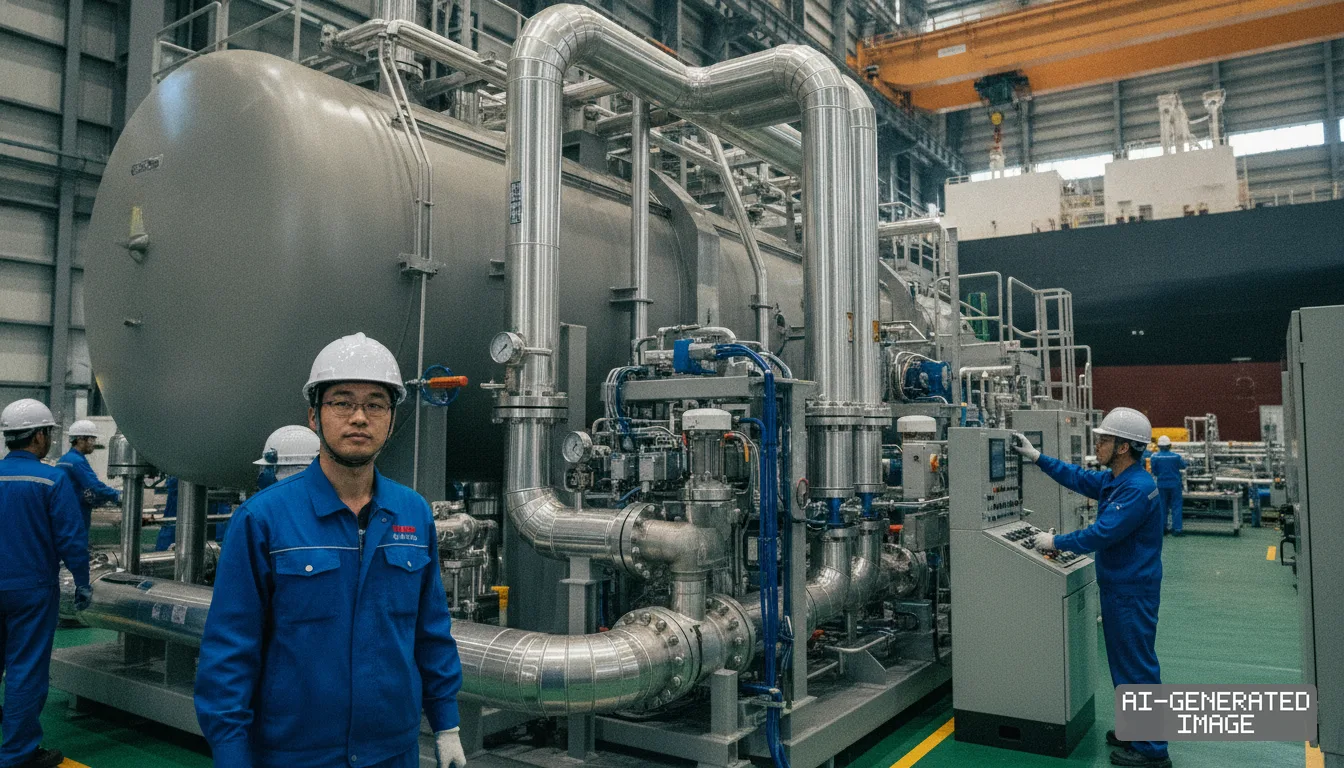
Hanwha Ocean received Approval in Principle on Sept. 18, 2026, from the American Bureau of Shipping for a dual-fuel system allowing liquefied natural gas carriers to switch to ammonia without replacing storage tanks.
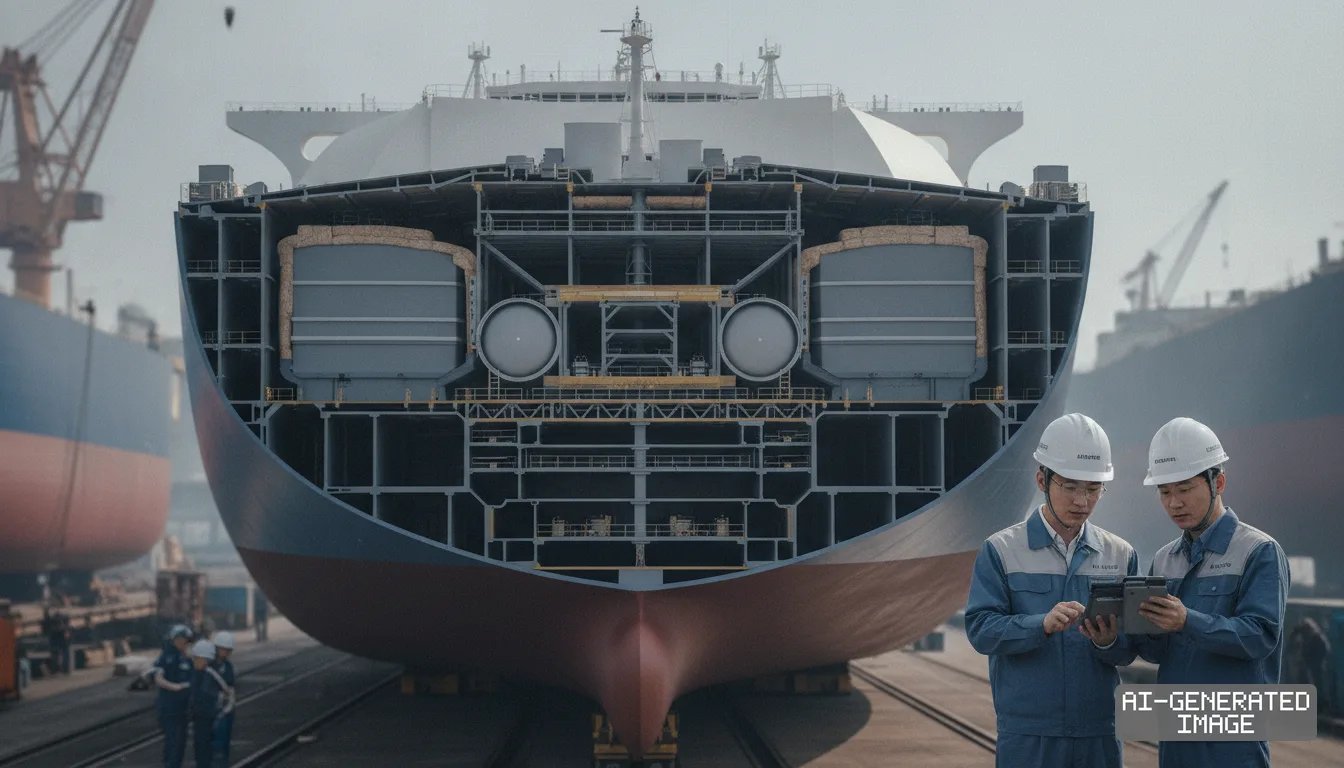
The design targets the standard 174,000-cubic-meter vessel class, which accounts for more than 70% of active global orders for large gas carriers. It pairs a multi-purpose fuel tank with an integrated fuel gas supply system.
The system supplies either fuel to an electric propulsion arrangement driven by a gas turbine. The layout allows shipowners to avoid expensive shipyard reconstructions when environmental rules compel a shift to carbon-free fuels.
ABS announced the approval at the Gastech 2026 energy conference in Bangkok, Thailand. The certification validates the basic structural feasibility and safety criteria of the dual-purpose fuel apparatus against international maritime standards.
Conventionally, converting an operational gas carrier from fossil fuel to toxic alternative propellants demands substantial structural alterations. Replacing cryogenic storage tanks and specialized piping systems typically requires several months of drydock downtime.
The new engineering solution bypasses those physical interventions. Hanwha Ocean designed the tank metallurgy, insulation boundaries and distribution valves to handle both cryogenic methane at minus 162 degrees Celsius and liquid ammonia.
Fuel flexibility has become an urgent operational demand for fleet managers as international regulators accelerate decarbonization benchmarks. Owners ordering vessels today face 25-year asset lifespans alongside tightening emissions penalties.
The engineering challenge of achieving fuel conversion without tank replacement is significant, ABS Senior Vice President of Global Engineering Gareth Burton said. The verified design addresses that specific technical hurdle directly, Burton said.
The technology gives commercial vessel operators an adaptable decarbonization pathway, Hanwha Ocean Product Strategy and Technology Institute Head Son Young-chang said. It protects capital investment while keeping open the option for zero-carbon operations, Son said.
Matthew Tremblay, senior vice president of global offshore markets at ABS, attended the presentation ceremony in Bangkok alongside Rostom Merzouki, vice president of global sustainability. The classification society reviewed the drawings against its dual-fuel chemical and gas safety rules.
Hanwha Ocean was represented by Dong Kwon Lee, senior vice president of the basic performance research center, and John Ki Lim, team leader of commercial vessel development. Both led the internal engineering groups that finalized the tank arrangements.
The certification marks the culmination of a multi-year development roadmap pursued by the South Korean shipbuilder. Hanwha Ocean began engineering gas-turbine propulsion layouts for the 174,000-cubic-meter vessel category in 2023.
ABS awarded an initial design approval for an ammonia gas turbine propulsion platform in September 2023. That milestone verified the theoretical output and efficiency gains of substituting reciprocating internal combustion engines with aeroderivative turbines.
In 2024, the two organizations concluded an advanced safety evaluation covering toxic gas dispersion dynamics. Computational fluid mechanics simulations mapped potential leak plumes across open decks and machinery spaces to ensure crew survival margins.
The latest approval integrates those aerodynamic and safety findings into a fully unified fuel containment and delivery platform. It eliminates separate feed lines, reducing weight and simplifying topside piping networks.
South Korean shipbuilders face heightened competitive pressure from Chinese state shipyards in standard gas carrier construction. Licensing proprietary, retrofit-free fuel infrastructure allows Korean yards to defend premium contract pricing against lower-cost regional builders.
Domestic competitors HD Korea Shipbuilding & Offshore Engineering and Samsung Heavy Industries are also developing ammonia propulsion concepts. However, most alternative designs still require separate auxiliary tanks or significant piping overhauls during field retrofits.
Commercial fleet operators are planning capital expenditures against strict global regulatory milestones. The International Maritime Organization has mandated net-zero greenhouse gas emissions from international shipping by or around 2050, with intermediate reduction checkpoints taking effect from Jan. 1, 2027.
The classification documents do not disclose commercial installation orders, firm shipyard delivery slots or the incremental capital cost of the convertible fuel package.
Impact map
How this development propagates across the region and out to global buyers.
| Event | Korea | China | Japan | Global impact |
|---|---|---|---|---|
| Ammonia convertible tank approval | Hanwha Ocean secures proprietary retrofit-free design to defend gas carrier pricing against domestic and Chinese rivals | Chinese yards face wider technological gap in high-end zero-carbon carrier conversion architectures | Japanese gas carriers gain alternative conversion route without costly shipyard steel replacement | Fleet operators lower mid-life decarbonization capex on 174,000-cubic-meter carrier orderbooks |
In this story
- Companies
- Hanwha Ocean
- Tickers
- 042660.KS
- Exposed
- HD Korea Shipbuilding & Offshore EngineeringSamsung Heavy Industries
- Policy
- Economic Security
- Impact
- Order BookCapexSupply Chain
Track every Economic Security development →
Related briefings
- Japan Clears $635 Million in Subsidies to Modernize Shipyards by 2035 Also on Samsung Heavy Industries, HD Korea Shipbuilding & Offshore Engineering, Hanwha Ocean
- HD Hyundai and Hanwha Ocean Lock In LNG Carrier Berth Slots Through 2029 Also on Samsung Heavy Industries, HD Korea Shipbuilding & Offshore Engineering, Hanwha Ocean
- KOGAS Plans LNG Carrier Tender to Test Domestic Tank Design Also on Samsung Heavy Industries, HD Korea Shipbuilding & Offshore Engineering, Hanwha Ocean
- Shipyard labor policies diverge as Korea, Japan, and China tackle yard manning gaps Also on Samsung Heavy Industries, HD Korea Shipbuilding & Offshore Engineering, Hanwha Ocean
Sources
Reporting
Confidence: medium — how we grade this
The documents behind this briefing are linked above. East Asia Brief produces its English text with AI assistance under human editorial review, and does not translate or republish other outlets' articles. See our methodology and AI policy. Spotted an error? Tell us.
The Morning Brief
What changed in Korean, Chinese and Japanese industry overnight — and what it means for your supply chain. One email, weekday mornings, US time. Free.
The first issue goes out shortly. Sign up now and you will not miss it.