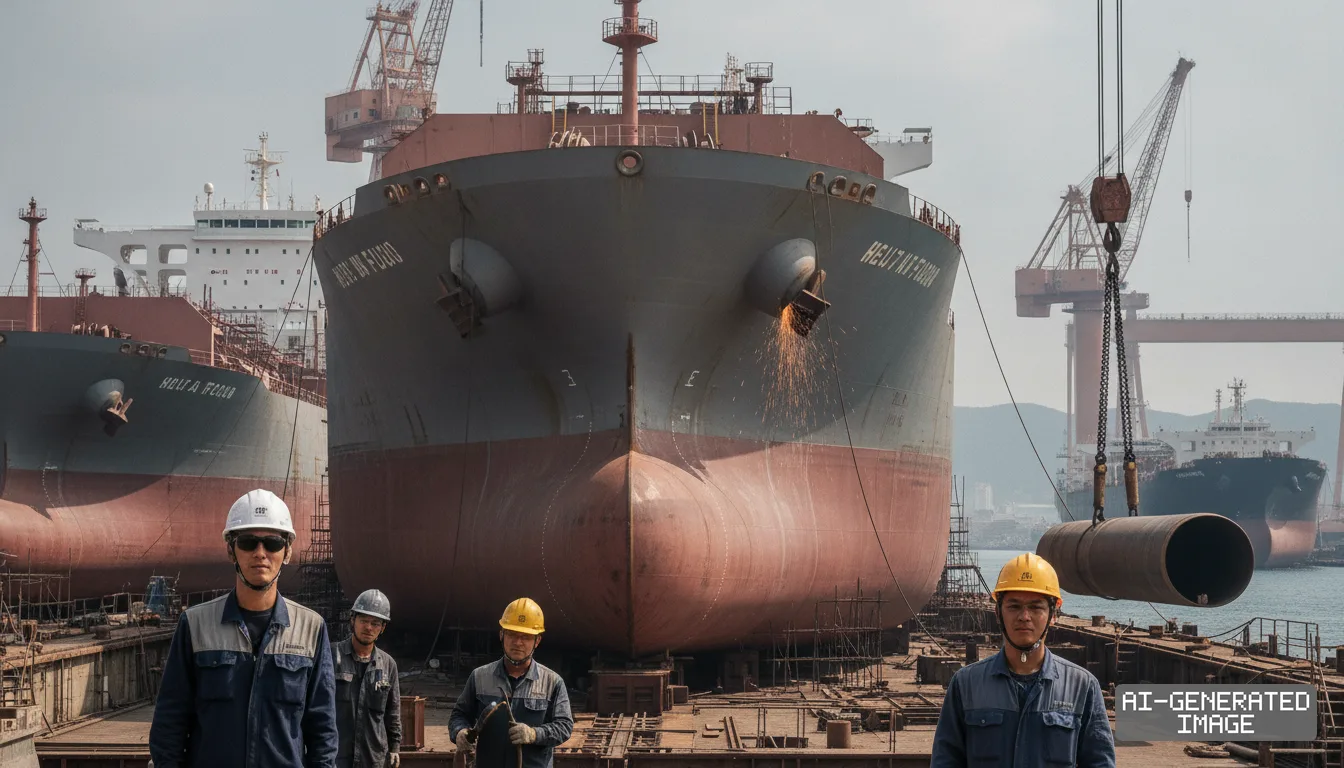
Hanwha Ocean unveils 60MW floating data center for AI demand
The South Korean shipbuilder secured technical approval from ABS for its modular offshore platform, using seawater cooling and on-site generation to bypass terrestrial utility queues.
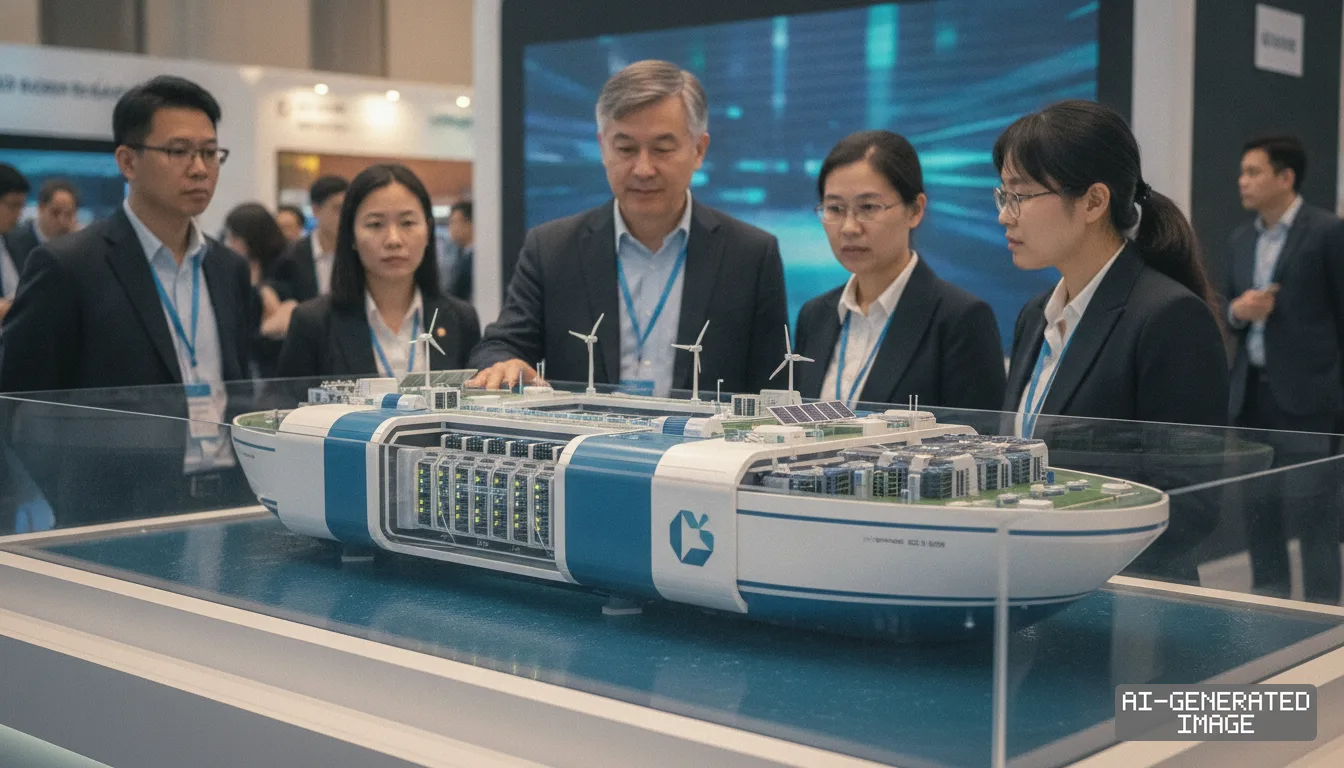
Hanwha Ocean unveiled a physical scale model of its self-developed 60-megawatt floating data center on Sept. 13, 2026, targeting power-constrained artificial intelligence operators looking for offshore capacity.
The South Korean shipbuilder presented the design at the Gastech 2026 energy exhibition in Bangkok, Thailand. The presentation marks the company's first public demonstration of an offshore computing platform in physical model form.
The 60-megawatt facility integrates dedicated electricity generation and server racks onto a single marine structure. Terrestrial data facilities of equivalent scale routinely face multi-year delays securing high-voltage utility hookups and municipal land permits.
Land-based data centers face mounting opposition from municipalities over localized grid congestion and heavy water withdrawal. Offshore siting removes computing clusters from strained municipal utility networks while placing facilities near coastal population centers.
Hanwha Ocean engineered the hull to produce its own electricity on board while circulating seawater for direct thermal cooling. Direct seawater intake replaces evaporative cooling towers, eliminating freshwater consumption during server operation, the company said.
Pumping cold ocean water across heat exchangers reduces auxiliary power consumption compared with terrestrial air-chiller equipment. That reduction lowers the overall energy required to sustain high-density graphics processing unit clusters.
The vessel applies a modular architecture that lets buyers adjust generating hardware and server capacity block by block. Configuration choices depend on water depth at the installation site, power requirements and customer server specifications, the company said.
Buyers can select gas turbine configurations, fuel storage systems or external grid interconnections based on coastal operating rules. The modular hull layout accommodates varying server densities without requiring a redesign of the underlying marine platform.
The project draws on manufacturing and engineering capabilities distributed across Hanwha Group subsidiaries, the shipbuilder said. Hanwha Ocean manages naval architecture, structural hull engineering and shipyard fabrication at its Geoje shipyard complex.
Affiliate units provide supporting industrial systems for the marine hull. Sister companies supply internal electrical turbines, data center management systems, operational maintenance protocols and vessel-wide network security architecture, according to the announcement.
The American Bureau of Shipping (ABS) issued an Approval in Principle (AiP) — a classification milestone confirming that a concept satisfies baseline maritime safety regulations — for the 60-megawatt design, Hanwha Ocean said.
Executive Vice President Son Young-chang, head of Hanwha Ocean's product strategy and technology institute, accepted the certificate during a ceremony with Joshua Divin, ABS vice president of global offshore market development.
Gastech 2026 serves as an initial platform to present floating computing infrastructure to international energy and technology buyers, Son said. Hanwha Ocean plans to combine naval engineering with group energy assets to capture emerging demand, he said.
South Korean shipbuilders are pursuing floating offshore infrastructure to diversify revenue away from cyclical merchant ship orders. Increasing competition from Chinese shipyards in standard commercial vessel categories has encouraged domestic builders to develop specialized platforms.
At the same Bangkok exhibition, domestic competitor HD Hyundai showcased eco-friendly vessel systems through a joint booth operated by five group affiliates. The rival displays highlight competition among South Korean yards for next-generation maritime engineering contracts.
Hanwha Ocean also exhibited a scale model of a 174,000-cubic-meter liquefied natural gas carrier at its Gastech booth. The commercial carrier features an electric propulsion system driven by an ammonia gas turbine, the company said.
The ammonia turbine burns fuel without using pilot oil — diesel injected to initiate combustion — during startup, the company said. Eliminating auxiliary hydrocarbon fuel allows the vessel to operate without producing carbon emissions during transit.
The dual product showcase aligns with Hanwha Ocean's strategy of pairing zero-emission marine propulsion with alternative industrial offshore structures. Both designs target energy developers assessing capital expenditure under tightened international decarbonization standards.
The Gastech 2026 conference opens Sept. 14 and runs through Sept. 17 in Bangkok. Hanwha Ocean scheduled technical presentations throughout the four-day event with prospective data center operators, utility executives and commercial shipowners.
The company announcement does not state projected construction timelines, expected fabrication yard allocations or estimated capital expenditure per unit. Hanwha Ocean has not published commercial purchase agreements or confirmed orders for the floating computing facility.
The 60-megawatt scale model remains on display at the Bangkok international trade center through the formal conclusion of the conference on Sept. 17, 2026.
Impact map
How this development propagates across the region and out to global buyers.
| Event | Korea | China | Japan | Global impact |
|---|---|---|---|---|
| 60MW floating data center debut | Hanwha Ocean opens offshore computing niche to offset merchant shipbuilding cycles | Chinese shipyards face Korean lead in bespoke offshore data hull engineering | Japanese yards remain focused on conventional bulkers, shielded by domestic order backlogs | Hyperscalers gain 60MW modular offshore alternative to bypass onshore grid interconnect queues |
In this story
- Companies
- Hanwha Ocean
- Tickers
- 042660.KS
- Exposed
- HD HyundaiAmerican Bureau of Shipping
- Policy
- Economic Security
- Impact
- Order BookCapexSupply Chain
Track every Economic Security development →
Related briefings
- HD Hyundai Heavy commits 1.07 trillion won to power engines Also on HD Hyundai, Order Book
- HD Hyundai widens Philippine naval pact at Subic shipyard Also on HD Hyundai, Order Book
- HD Hyundai inspects Thoothukudi site for greenfield shipyard in India Also on HD Hyundai, Order Book
- HD Hyundai names two ammonia carriers in clean shipping push Also on HD Hyundai, Order Book
Sources
Reporting
Confidence: medium — how we grade this
The documents behind this briefing are linked above. East Asia Brief produces its English text with AI assistance under human editorial review, and does not translate or republish other outlets' articles. See our methodology and AI policy. Spotted an error? Tell us.
The Morning Brief
What changed in Korean, Chinese and Japanese industry overnight — and what it means for your supply chain. One email, weekday mornings, US time. Free.
The first issue goes out shortly. Sign up now and you will not miss it.