HD Hyundai wins ABS approval for 100MW floating power barge
The gas engine-powered marine platform bypasses land-based grid bottlenecks to deliver direct electricity to coastal artificial intelligence computing facilities.
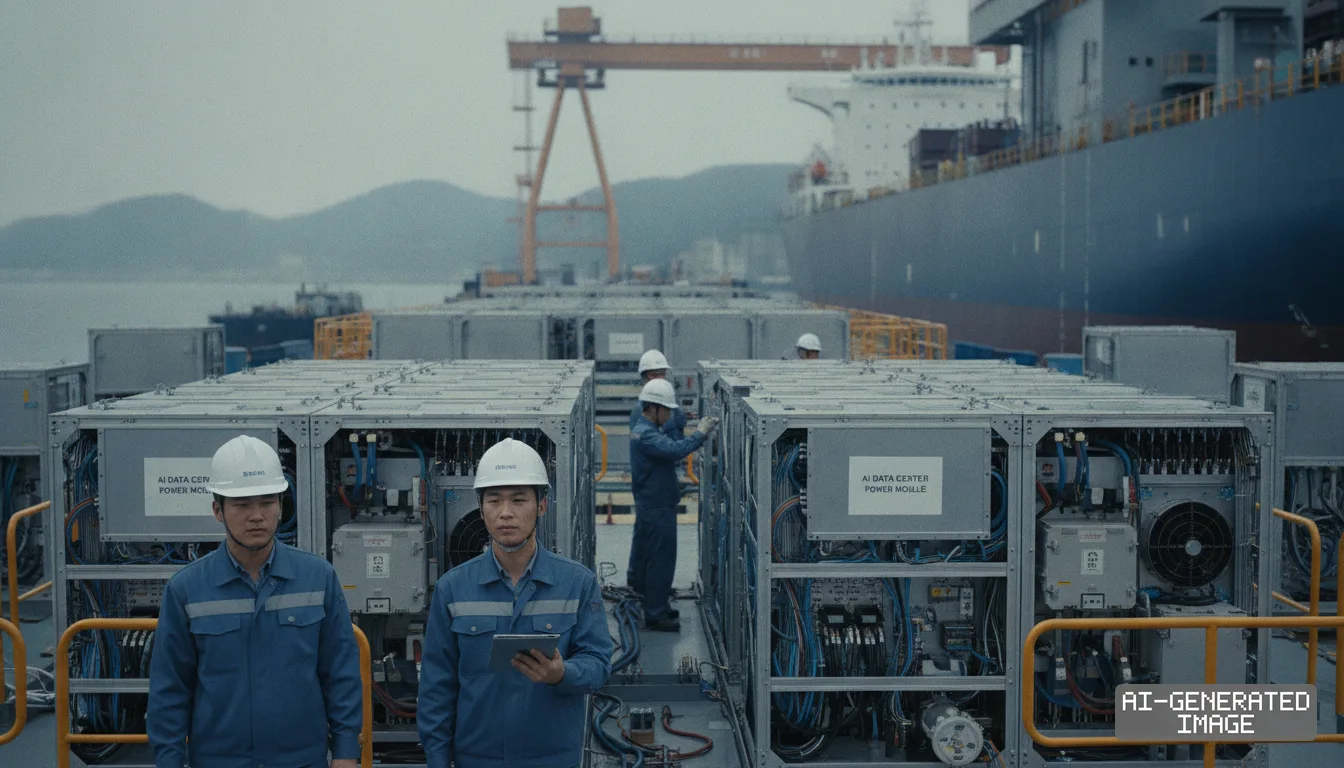
HD Korea Shipbuilding & Offshore Engineering said Sept. 15 it received approval in principle from the American Bureau of Shipping for a 100-megawatt floating barge power plant designed for artificial intelligence data centers.
The company serves as the intermediate shipbuilding holding group of HD Hyundai. The maritime classification society granted the approval after evaluating technical safety, hull stability and electrical distribution designs for the offshore platform.
The 100-megawatt generation capacity provides sufficient baseload electricity to operate an artificial intelligence computing facility. Terrestrial transmission interconnection queues in key industrial markets often delay grid hookups for similar computational complexes by four to seven years.
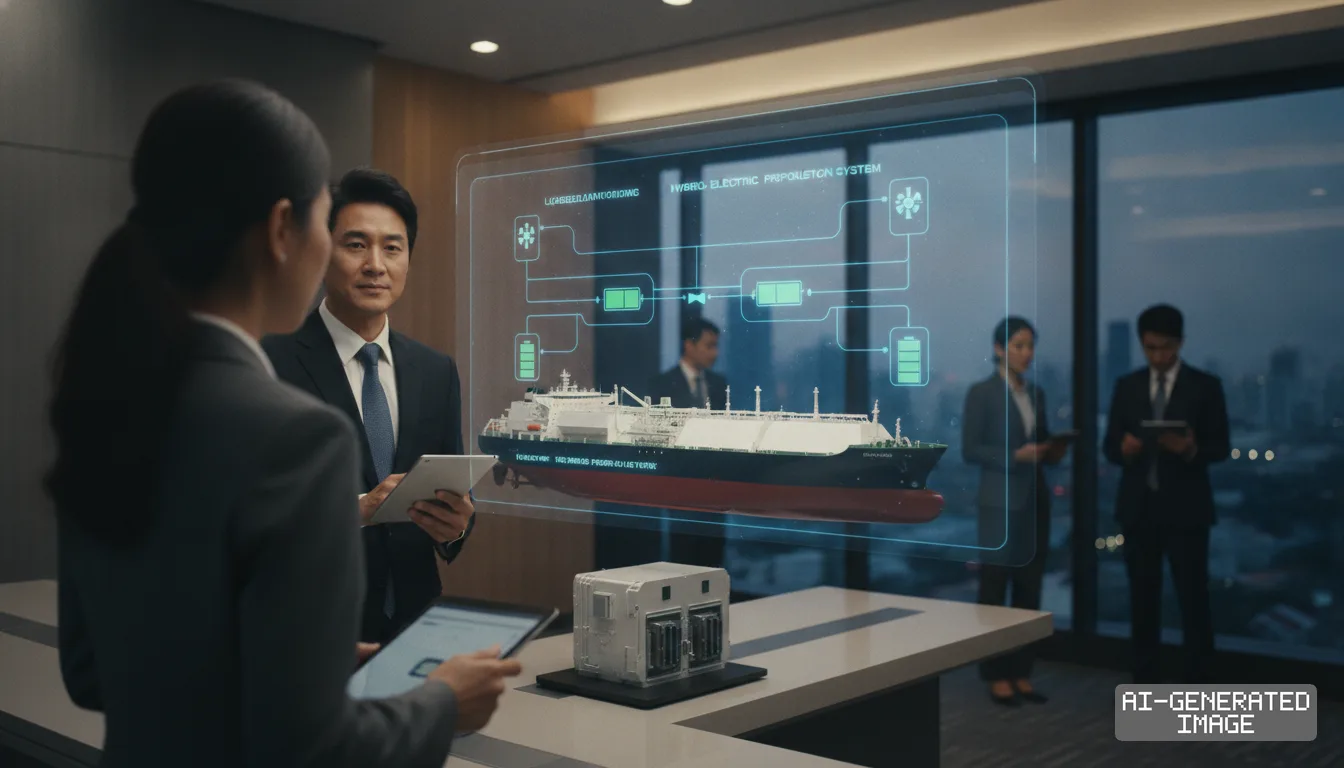
The regulatory certificate covers the vessel's basic conceptual architecture and electrical single-line diagram — a schematic mapping generation output and circuit protection. The classification society also validated hull stability under variable marine operating conditions.
Lee Dong-jin, head of basic design at HD Korea Shipbuilding, accepted the certification document in Seoul. Francis Genco, vice president for strategic accounts at the American Bureau of Shipping, attended the presentation ceremony.
HD Hyundai configured the floating generation plant around its proprietary HiMSEN engines. The medium-speed internal combustion engines burn natural gas or marine fuels to drive onboard heavy-duty electrical generators.
HD Hyundai Heavy Industries manufactures the engine units at its Ulsan manufacturing complex. The industrial machinery division has built medium-speed reciprocating engines for commercial cargo vessels and stationary power utilities since 2000.
Land-based utility developers face expanding property shortages and protracted environmental permitting processes. Building overhead high-voltage transmission corridors through metropolitan districts regularly triggers resident opposition and regulatory disputes, the shipbuilder said.
A barge-mounted power plant anchors in protected waters and transmits generated current directly ashore through subsea export cables. The marine system removes the need to secure large parcels of coastal industrial land for generator turbine structures.
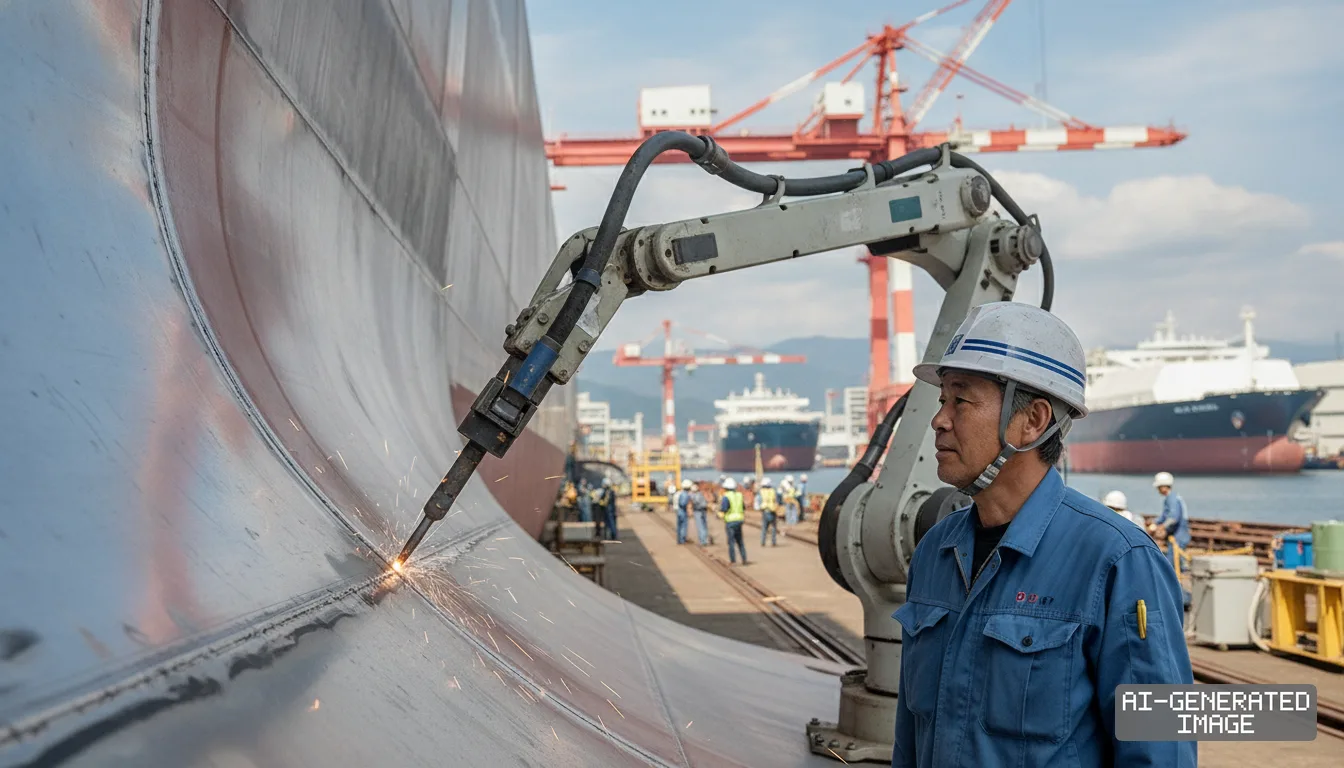
Shipyard dry docks allow workers to assemble the steel hull, generation machinery and switchboards in controlled indoor manufacturing berths. That modular production method curtails overall engineering lead times compared with on-site civil utility construction, engineers said.
Electricity availability has become the primary bottleneck constraining generative computing expansion globally. Advanced server clusters demand constant baseload electricity that weather-dependent solar and wind installations cannot deliver without expensive battery installations.
Regional transmission authorities in North America and East Asia report record queues for high-voltage interconnect studies. Major seaside data hubs have instituted administrative pauses on large-scale electrical connection requests from regional utility networks.
The floating barge design targets artificial intelligence server campuses, offshore processing plants and island microgrids. Dedicated offshore generation enables corporate computing operators to contract power capacity without competing for municipal utility reserves.
HD Hyundai previously developed concept blueprints for floating barges carrying small modular nuclear reactors. The reciprocating gas engine configuration provides a commercial platform that sidesteps complex nuclear regulatory reviews and lengthy civil licensing schedules.
The internal combustion design allows operators to configure dual-fuel engine injection systems as low-carbon supplies mature. Generating units can operate on conventional liquefied natural gas before blending synthetic fuels or hydrogen, the company said.
Floating utility barges require specialized ballast tanks and heavy mooring arrays to manage ocean swell motion. Regulating deck motion protects engine lubrication systems and shields sensitive high-voltage transformers from severe mechanical vibration.
The vessel connects to seaside electrical substations through insulated marine cables tied into local high-voltage breakers. Floating generation units can dock at industrial quays, harbor piers or dedicated sheltered mooring dolphins near shorelines.
Direct water intake systems provide engine cooling without drawing on treated municipal water reserves. That marine cooling arrangement reduces freshwater consumption pressures common to high-density computational campuses operating in arid coastal regions.
South Korean shipyards are developing specialized offshore energy products to cushion against future merchant vessel order cycles. Marine power barges utilize standard dock fabrication space while securing engineering revenue from non-traditional maritime utility clients.
HD Korea Shipbuilding plans to complete detailed engineering documentation and secondary class certifications before launching commercial sales campaigns. Engineering teams will prepare complete manufacturing drawings for structural validation.
The company did not publish estimated capital expenditure figures or targeted commercial delivery dates. The corporate announcement also did not state whether potential computational clients have signed preliminary construction contracts.
The American Bureau of Shipping will inspect mechanical stress models during the upcoming detailed design phase. Structural construction will take place at HD Hyundai shipyard facilities located in Ulsan.
Impact map
How this development propagates across the region and out to global buyers.
| Event | Korea | China | Japan | Global impact |
|---|---|---|---|---|
| 100MW floating power plant AiP | HD Hyundai diversifies shipyard capacity into modular floating utility platforms | Coastal yards face Korean competition in floating modular utility export tenders | Reciprocating marine engine builders face rivalry in off-grid power packages | Hyperscale data center operators gain a 100MW marine workaround to bypass terrestrial grid queues |
In this story
- Companies
- HD Korea Shipbuilding & Offshore EngineeringHD Hyundai
- Tickers
- 009540.KS267250.KS
- Exposed
- American Bureau of ShippingHD Hyundai Heavy Industries
- Policy
- Economic Security
- Impact
- Order BookCapexSupply Chain
Track every Economic Security development →
Related briefings
- Hanwha Ocean unveils 60MW floating data center for AI demand Also on American Bureau of Shipping, HD Hyundai, Order Book
- HD Hyundai Unveils Three-Tank LNG Carrier Design at Gastech Also on HD Hyundai, HD Korea Shipbuilding & Offshore Engineering, Order Book
- HD Hyundai inspects Thoothukudi site for greenfield shipyard in India Also on HD Hyundai, HD Korea Shipbuilding & Offshore Engineering, Order Book
- HD Hyundai Heavy commits 1.07 trillion won to power engines Also on HD Hyundai, HD Hyundai Heavy Industries, Order Book
Sources
Reporting
Confidence: medium — how we grade this
The documents behind this briefing are linked above. East Asia Brief produces its English text with AI assistance under human editorial review, and does not translate or republish other outlets' articles. See our methodology and AI policy. Spotted an error? Tell us.
The Morning Brief
What changed in Korean, Chinese and Japanese industry overnight — and what it means for your supply chain. One email, weekday mornings, US time. Free.
The first issue goes out shortly. Sign up now and you will not miss it.