HD Hyundai Tests Autonomous Drone Ship With Anduril in U.S.
The 3.5-hour trial of a 368-ton naval craft off Long Beach advances plans for an Ulsan-built prototype scheduled to undergo American sea trials in November 2026.
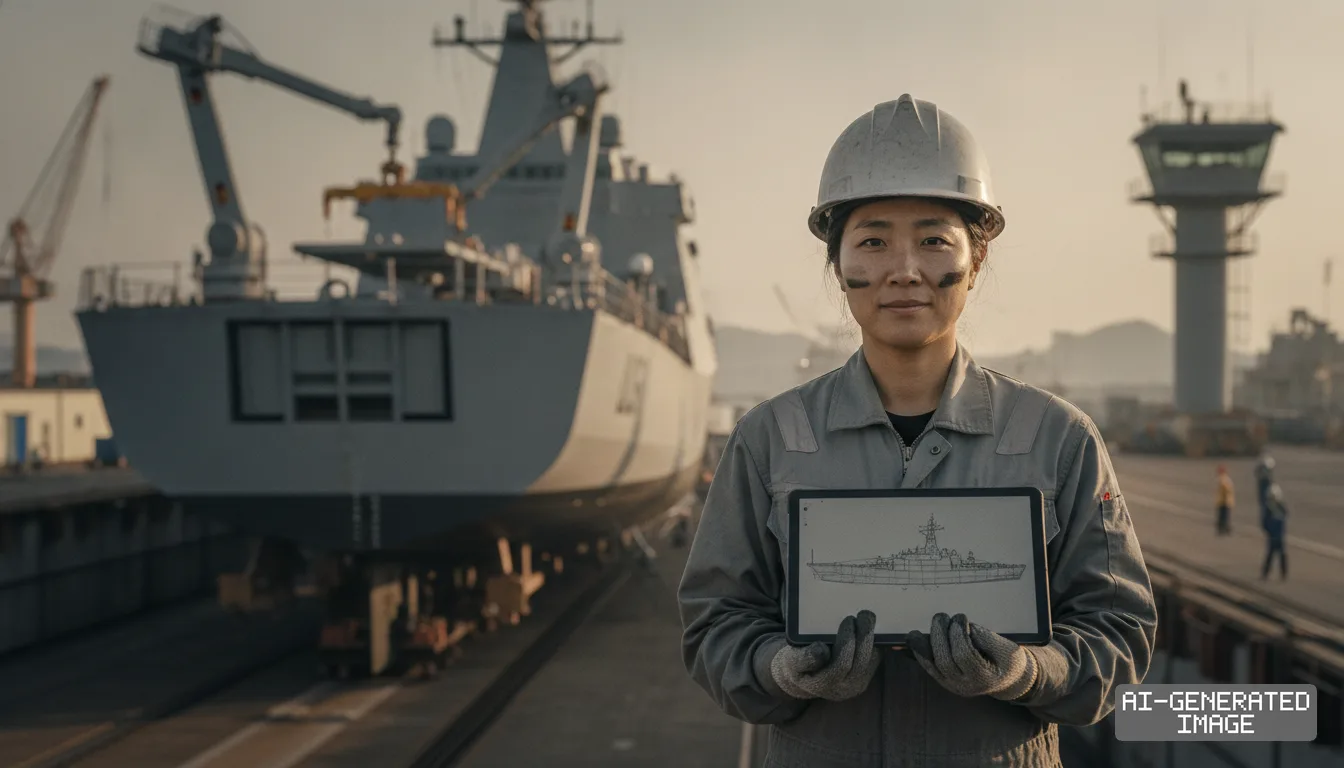
HD Hyundai announced Oct. 19 that it completed a live autonomous navigation trial of an uncrewed naval vessel off California alongside American defense software maker Anduril Industries.
The 3.5-hour demonstration took place Oct. 14 in coastal waters off the Port of Long Beach, using a converted 368-ton surface craft previously operated by the U.S. Navy.
The exercise marks the first autonomous navigation demonstration conducted by a South Korean shipbuilder in American waters, linking Asian automated shipbuilding with Western defense software.
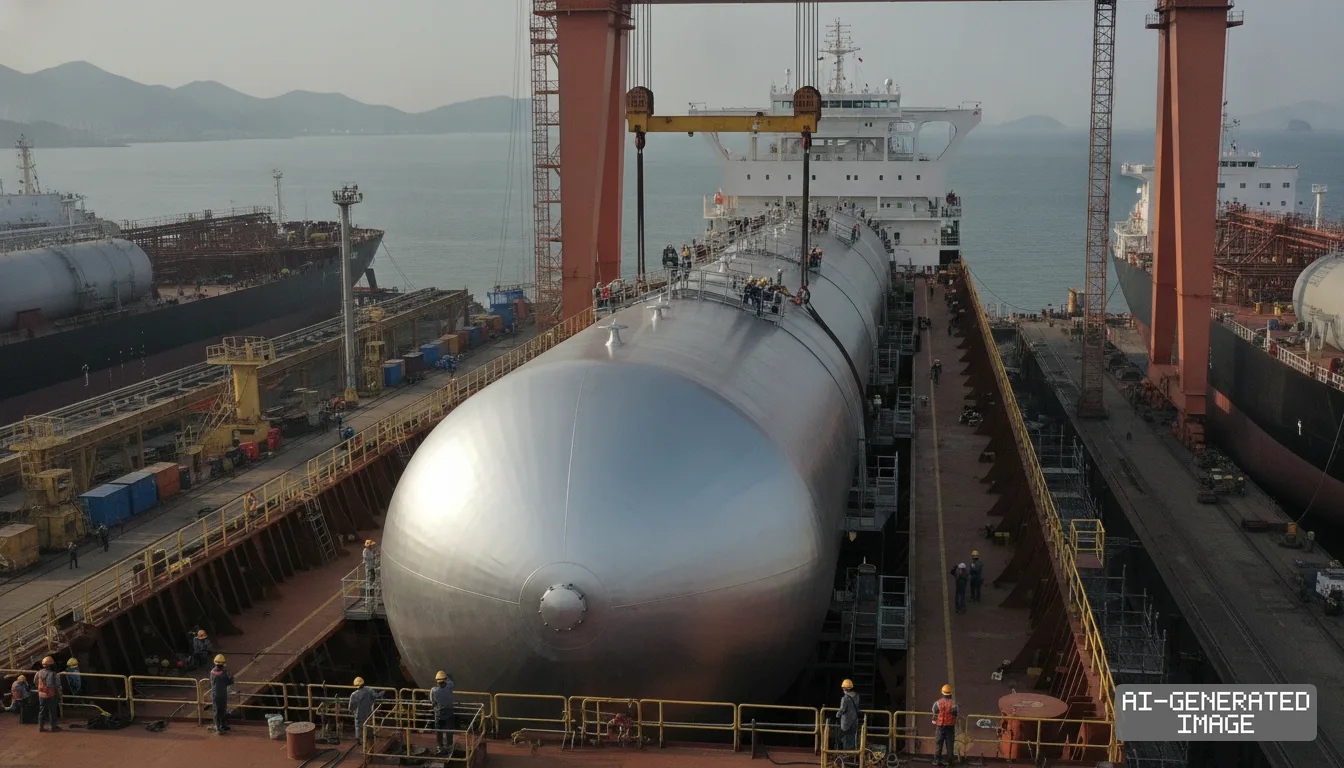
HD Korea Shipbuilding & Offshore Engineering, the intermediate holding company for HD Hyundai's maritime yards, retrofitted the test craft with its proprietary VAone autonomy solution.
VAone integrates core navigation algorithms from HiNAS Prime, a maritime software developed by HD Hyundai autonomous shipping subsidiary Avikus, which has equipped roughly 500 large commercial ships.
The naval software monitors propulsion systems in real time, detecting abnormal mechanical vibrations and automatically adjusting engine parameters to prevent equipment failure at sea, the company said.
VAone also features autonomous damage detection and containment software, allowing an uncrewed hull to isolate compartment breaches and manage onboard flooding without human intervention.
Anduril installed its Lattice artificial intelligence platform on the test vessel to govern mission autonomy, coordinating sensor fusion, target identification, distributed communications and simulated weapon operations.
The Long Beach demonstration tested the integrated systems across four key operational scenarios: automated trackline navigation, dynamic mission reassignment, multi-vessel formation sailing and automated emergency response.
During the simulated engine failure phase, the vessel's autonomy software identified propulsion loss, triggered emergency maneuvers and established a safe floating posture without human commands from ashore.
A shore-based command facility at the Port of Long Beach received continuous high-bandwidth video and sensor telemetry, letting observers track autonomous navigation decisions as the software executed them.
About 40 defense officials observed the demonstration, led by Kwangpil Chang, executive vice president and head of the Future Technology Research Institute at HD KSOE.
The observer delegation included representatives from the U.S. Navy, the U.S. Coast Guard, the American Bureau of Shipping, the Republic of Korea Navy and South Korea's Defense Acquisition Program Administration.
The companies formed their alliance on April 13, 2024, aiming to combine commercial series-shipbuilding capacity with modular, software-defined military robotics.
On Nov. 13, 2025, Anduril and HD Hyundai formalized plans to build modular Autonomous Surface Vessels for commercial operators and allied defense forces.
The joint vessel design directly targets the U.S. Navy's Medium Unmanned Surface Vessel and Modular Attack Surface Craft programs, which call for distributed, attritable combat flotillas.
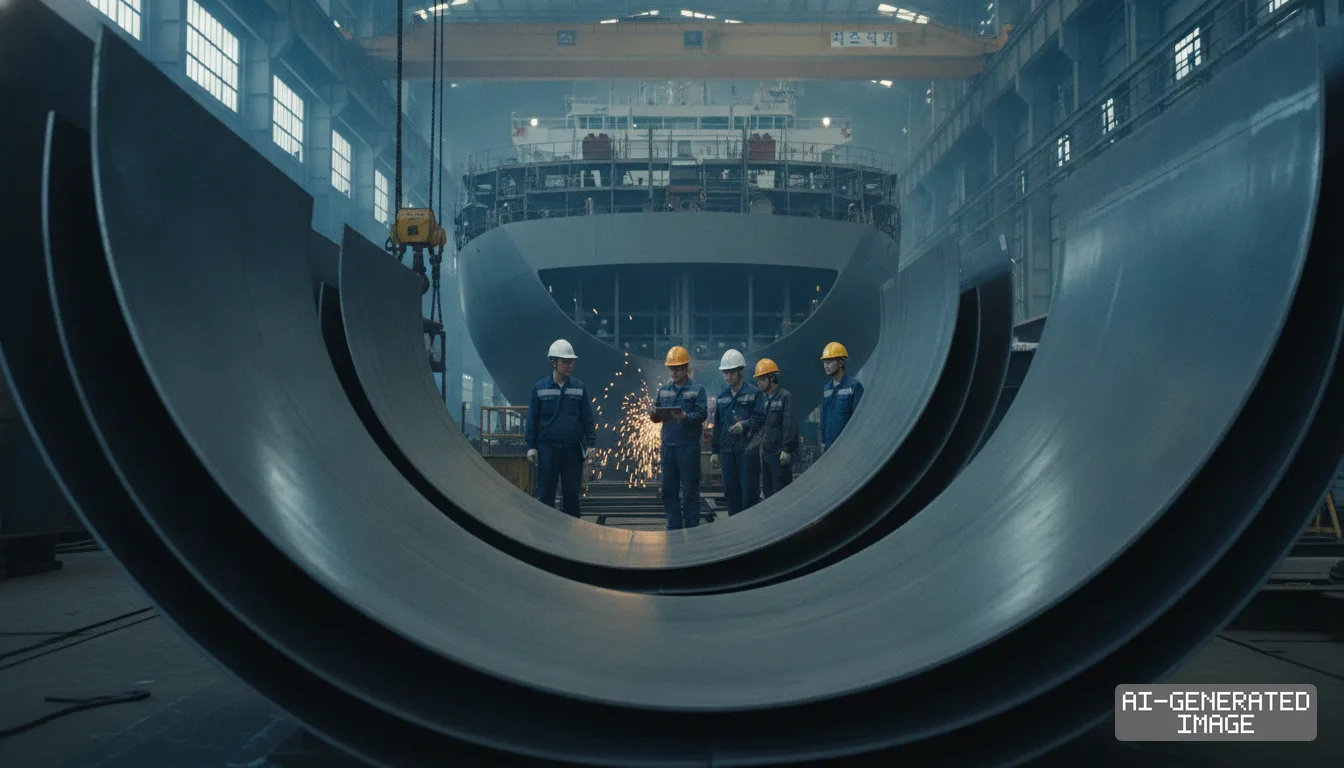
Following completion of a critical design review, hull fabrication on the first clean-sheet prototype began on April 20, 2026, at HD Hyundai Heavy Industries' Ulsan shipyard.
HD Hyundai operates the world's largest commercial and military shipbuilding yard in Ulsan, accounting for roughly half of South Korea's domestic shipbuilding output.
While Ulsan fabricated the prototype hull, Anduril conducted daily open-water trials on surrogate craft off California to accumulate navigation telemetry for the new vessel architecture.
For eventual mass production inside the United States, Anduril partnered with Louisiana shipbuilder Edison Chouest Offshore, which operates over 20 yards and employs 6,000 workers.
Sea trials for the custom-built prototype vessel currently under construction in Ulsan are scheduled to begin off the American coast in November 2026.
The official announcement does not state the former naval hull designation, original vessel name or service registry number of the modified 368-ton test craft.
The U.S. Navy has not announced contract awards or down-selection dates for the next major production phase of its unmanned fleet programs.
Impact map
How this development propagates across the region and out to global buyers.
| Event | Korea | China | Japan | Global impact |
|---|---|---|---|---|
| California autonomous vessel trial | HD Hyundai secures testing validation for VAone ahead of November Ulsan prototype trials | Plan modernization faces integrated allied robotic surface fleet developments | Maritime Self-Defense Force unmanned vessel programs observe Korean shipyard integration | U.S. Navy surface fleet expansion bridges commercial shipyard scale with AI mission autonomy |
In this story
- Companies
- HD HyundaiAnduril Industries
- Tickers
- 267250.KS
- Exposed
- HD Korea Shipbuilding & Offshore EngineeringAvikusEdison Chouest Offshore
- Policy
- Procurement Rules
- Impact
- Supply ChainOrder BookCapex
Related briefings
- HD Hyundai Offers Welding Robots to U.S. Naval Shipbuilders Also on Edison Chouest Offshore, HD Hyundai, Order Book
- HD Hyundai Samho and ClassNK Partner on Autonomous LNG Ships Also on Avikus
- HD Hyundai Draws U.S. Navy Focus on Anduril $6.6B Project Also on Anduril Industries, Order Book
- China curbs drone tech exports to US defense contractors in 2026 Also on Anduril Industries
Sources
Reporting
Confidence: medium — how we grade this
The documents behind this briefing are linked above. East Asia Brief produces its English text with AI assistance under human editorial review, and does not translate or republish other outlets' articles. See our methodology and AI policy. Spotted an error? Tell us.
The Morning Brief
What changed in Korean, Chinese and Japanese industry overnight — and what it means for your supply chain. One email, weekday mornings, US time. Free.
The Morning Brief is in preparation. Leave your address and we will write to you once — when the first issue is ready. Nothing before that.