Hanwha Ocean faces $1.0 billion arbitration over Arctic LNG
Russia's Arctic LNG 2 filed a 1.37 trillion won claim in Singapore alleging breaches of step-in rights after sanctions cancelled three ice-class carriers.
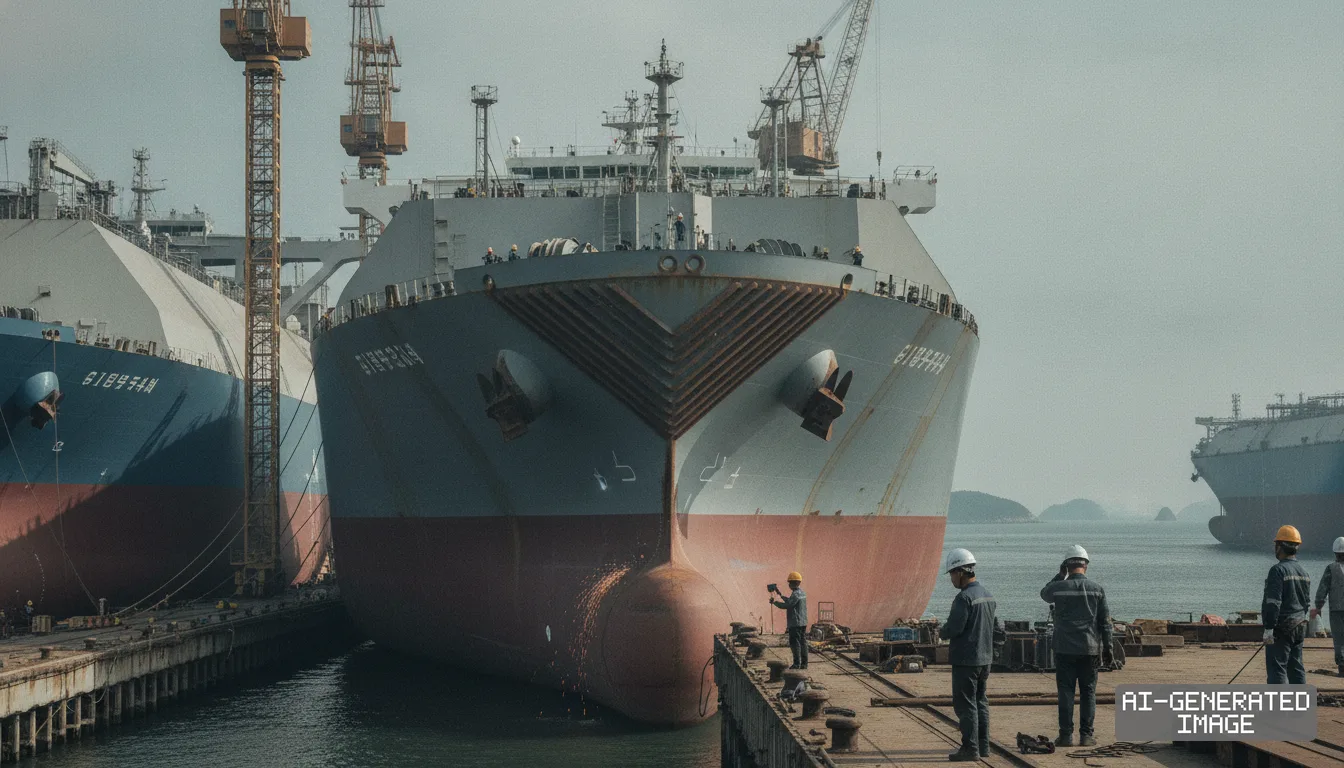
Hanwha Ocean faced a $1.00 billion arbitration claim from Russia's Arctic LNG 2 on Sept. 7, 2026, following the cancellation of three ice-breaking liquefied natural gas carriers.
The claim amounts to 1.37 trillion won under the prevailing exchange rate. That figure represents 22.2% of the company's consolidated equity of 6.18 trillion won ($4.51 billion) recorded at the end of 2025.
LLC Arctic LNG 2 filed the arbitration petition with the Singapore International Arbitration Centre on Sept. 1, 2026. Hanwha Ocean reported the proceeding in a regulatory filing submitted to the Korea Exchange on Sept. 3, 2026.
The Russian project company claims Hanwha Ocean breached step-in agreements linked to the terminated shipbuilding contract. Step-in agreements allow a project developer to assume shipbuilding rights if the primary buyer defaults on construction milestones.
The legal battle stems from orders placed in October 2020. Daewoo Shipbuilding & Marine Engineering, which Hanwha Group acquired and rebranded as Hanwha Ocean in 2023, contracted to construct three Arc7 ice-class LNG tankers for $850 million.
Three Cyprus-registered special purpose companies—Elixon Shipping, Azoria Shipping and Glorina Shipping—served as contract buyers. Russian state shipping enterprise Sovcomflot managed the entities to transport chilled gas from the Gydan Peninsula terminal.
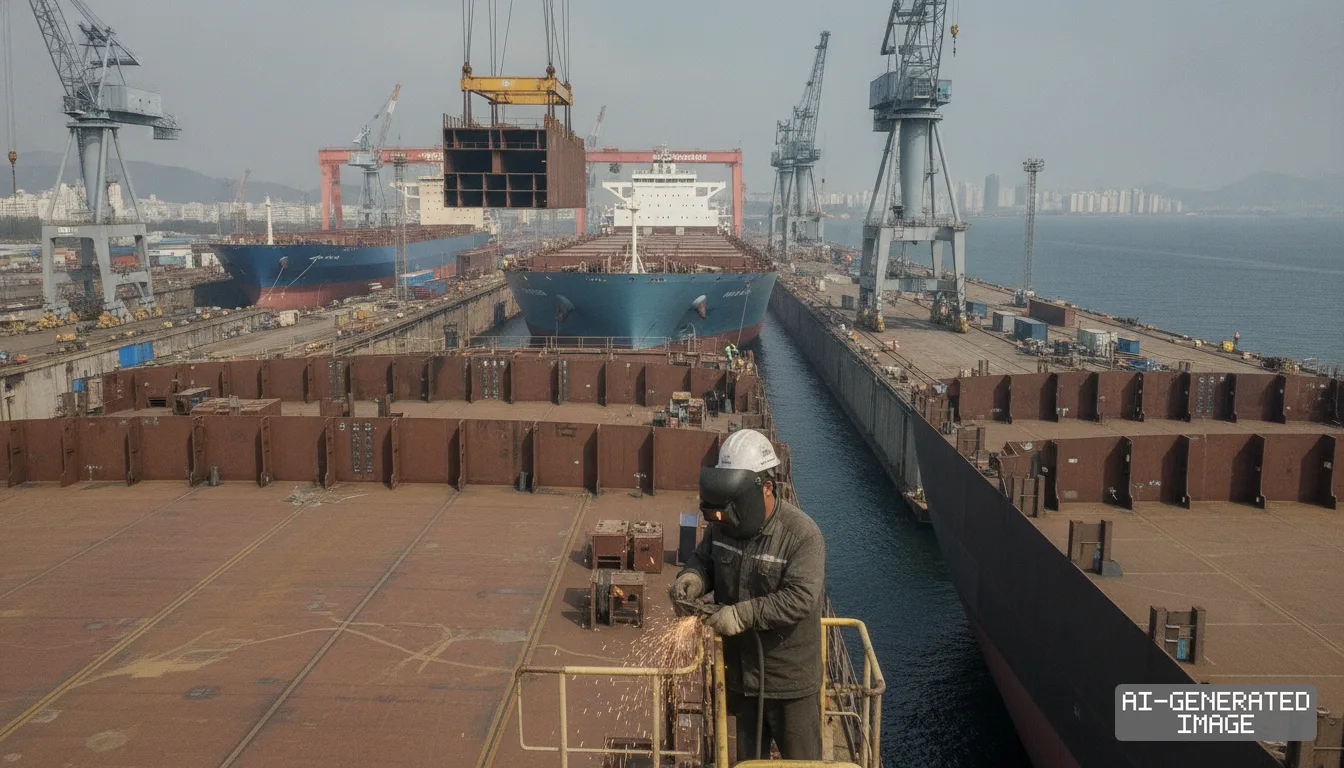
The 172,500-cubic-meter vessels carry reinforced hulls designed to crush sea ice up to 2.1 meters thick. The initial shipbuilding contract set July 31, 2023, as the delivery deadline for all three vessels.
Hanwha Ocean cancelled the contracts in 2022 after Western governments enacted sanctions against Russia. The buyer failed to make required milestone installment payments within contract deadlines, the shipbuilder said.
The contract termination sparked an initial arbitration dispute on May 29, 2023. The three shipowning entities filed claims at the Singapore tribunal demanding contract completion or damages of up to $871.96 million, or 1.16 trillion won.
That first arbitration remains pending before the tribunal in Singapore. The latest petition filed on Sept. 1, 2026, establishes a second separate proceeding regarding the same trio of icebreaking hulls.
This second claim comes directly from the gas project company rather than the shipowning entities. Novatek leads the Arctic LNG 2 development alongside French, Chinese and Japanese partners whose operational involvement curtailed under international sanctions.
The arbitration notice delivered to Hanwha Ocean omitted an itemized breakdown of the $1.00 billion claim. The Russian company claimed the figure as unliquidated damages for lost access to specialized polar transport capacity.
Hanwha Ocean said it will appoint arbitrators, submit formal defense briefs and contest the claim under Singapore rules. The company maintains that compliance with multilateral trade sanctions legally justified terminating the orders.
Combined claims from both arbitration cases now total $1.87 billion, or roughly 2.53 trillion won. That combined contingent liability represents 41% of Hanwha Ocean's equity capital, creating a legal overhang for the business.
The shipbuilder faces narrow technical options for redeploying the three icebreaking hulls. Arc7 tankers require specialized bow steel, heavy hull reinforcement and azipod propulsion pods that make them inefficient on standard open-water trade routes.
Few commercial charterers operate in Arctic waters where such heavy icebreaking capability is necessary. Modifying the hulls for conventional LNG transport would require extensive structural redesign and capital expenditure, shipyard engineers said.
Multilateral trade restrictions also prevent selling high-specification icebreaking tonnage to Russian operators. Hanwha Ocean cannot deliver the hulls to Arctic destinations without violating export controls enforced by South Korea, the United States and the European Union.
The litigation lands as Hanwha Ocean records improving operational performance. The company posted 12.78 trillion won in sales for 2025, an 18.6% increase from 10.78 trillion won reported during the preceding year.
Operating profit reached 1.17 trillion won in 2025, rising from 237.9 billion won in 2024. Operating cash flow improved to an inflow of 13.15 trillion won, lifting liquidity across the enterprise.
Hanwha Ocean has expanded non-Russian commercial orders to buffer its revenue pipeline. On Sept. 3, 2026, the company secured a 1.55 trillion won contract from Taiwan's Yang Ming Marine Transport for six container ships.
Commercial delivery slots at South Korean shipyards remain committed through 2028. Sustained global demand for dual-fuel container vessels and standard LNG carriers provides steady operating cash flow, insulating current yard operations from frozen legacy contracts.
South Korean shipyards have tightened contract terminology across subsequent international export orders. Shipbuilders now insert explicit multi-jurisdictional sanctions exit clauses to block secondary liability claims when international sanctions disrupt foreign buyer compliance.
The Singapore International Arbitration Centre will proceed with tribunal formation for the Arctic LNG 2 petition before establishing a procedural timetable for formal hearings.
Impact map
How this development propagates across the region and out to global buyers.
| Event | Korea | China | Japan | Global impact |
|---|---|---|---|---|
| Arctic LNG 2 arbitration | shipbuilder contingent liabilities | project partner exposure | import diversification | ice-class tanker capacity |
In this story
- Companies
- Hanwha Ocean
- Tickers
- 042660.KS
- Exposed
- NovatekSovcomflotYang Ming Marine Transport
- Policy
- Export ControlsEconomic Security
- Impact
- Order BookComplianceCost Structure
Track every Export Controls development → Track every Economic Security development →
Related briefings
- Hanwha Ocean wins $1.13 billion Yang Ming container order Also on Yang Ming Marine Transport, Hanwha Ocean, Order Book
- Hanwha Ocean wins $500 million LNG carrier deal from Zodiac Also on Yang Ming Marine Transport, Hanwha Ocean, Order Book
- Hanwha Ocean Wins $1.2B Yang Ming Order for Six LNG Container Ships Also on Yang Ming Marine Transport, Hanwha Ocean, Order Book
- Pentagon ends Chinese mineral waivers before 2027 deadline Also on Hanwha Ocean, Export Controls, Compliance
Sources
Reporting
Confidence: medium — how we grade this
The documents behind this briefing are linked above. East Asia Brief produces its English text with AI assistance under human editorial review, and does not translate or republish other outlets' articles. See our methodology and AI policy. Spotted an error? Tell us.
The Morning Brief
What changed in Korean, Chinese and Japanese industry overnight — and what it means for your supply chain. One email, weekday mornings, US time. Free.
The Morning Brief is in preparation. Leave your address and we will write to you once — when the first issue is ready. Nothing before that.