Guangzhou Shipyard lands $1 billion dual-fuel car carrier order from Ray
The 10-vessel program for 8,200 CEU ships diverts a longtime HD Hyundai customer to China and extends CSSC's control over the global vehicle carrier orderbook.
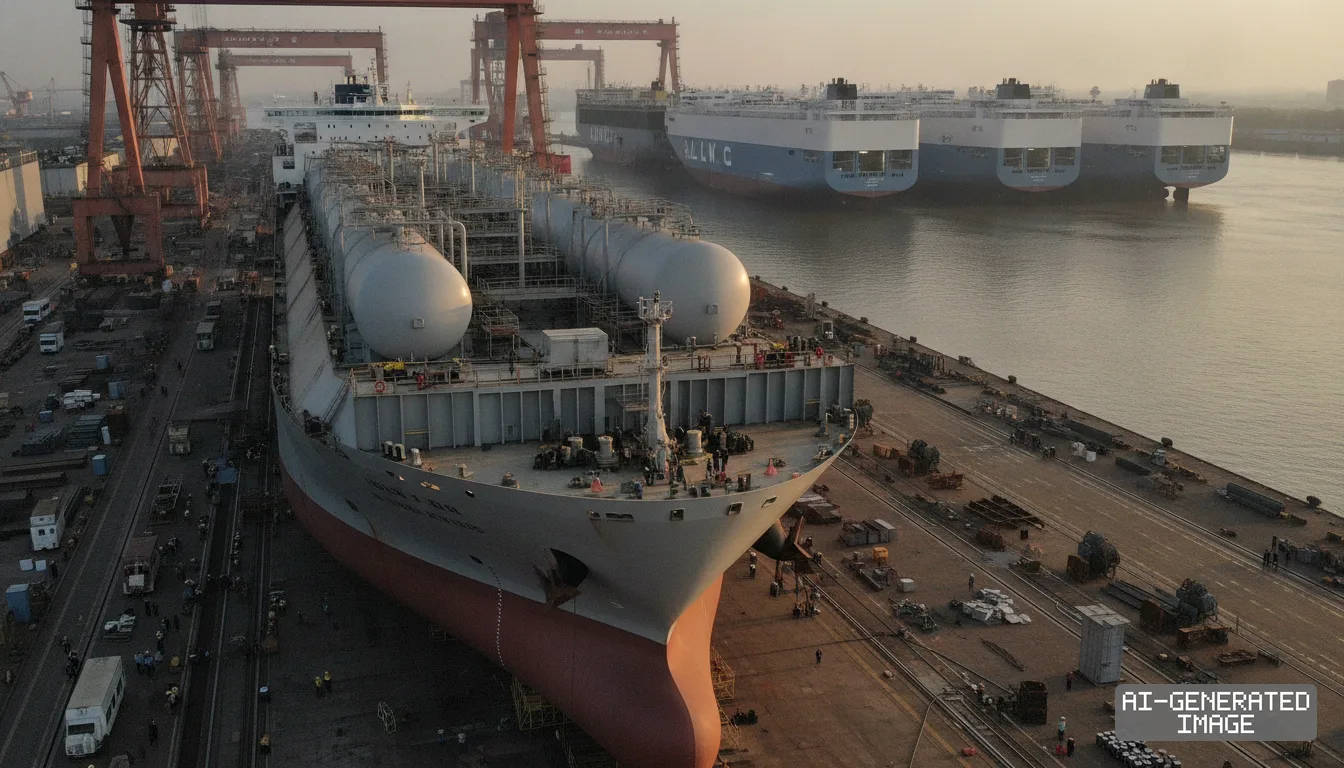
Guangzhou Shipyard International finalized a contract valued at over $1 billion on Sept. 4 to build 10 liquefied natural gas dual-fuel car carriers for tonnage provider Ray Car Carriers.
The vessels will each carry 8,200 car equivalent units — parking slots used to measure vehicle cargo space. Deliveries will run from 2029 through 2031, parent company China CSSC Holdings Limited said.
China CSSC Holdings detailed the transaction in a regulatory disclosure submitted to the Shanghai Stock Exchange. China Shipbuilding Trading Company joined the shipyard as joint seller under the export agreement, the filing said.
All payments are denominated in US dollars, with the base price exceeding $100 million per ship. The contract took immediate effect under English law and designates London as the seat for arbitration, CSSC said.
The shipbuilder withheld the client name in its regulatory notice, citing commercial confidentiality clauses. Industry tracking databases and shipbroking records identified the customer on Sept. 4 as Ray Car Carriers, an Isle of Man operator.
Ray Car Carriers had ordered almost all its pure car and truck carriers from South Korean yards. The company had relied on HD Hyundai Heavy Industries and HD Hyundai Mipo for more than two decades.
Ray Car Carriers placed an order for two 7,300-capacity car carriers with HD Hyundai Heavy Industries in April 2026 for $270 million. The Chinese vessels offer 12% more capacity and four times the total volume.
The agreement includes options for four additional 8,200-capacity vessels under identical technical terms, shipping executives said. Exercising those options would lift the total order to 14 ships valued at more than $1.4 billion.
The order reflects tight capacity across global ocean routes for finished vehicles. Rapid automobile exports from China have lifted charter rates and produced severe shortages of roll-on cargo space, market data showed.
Chinese automakers exported 5.22 million vehicles in 2023 and increased foreign shipments by 21% in the first half of 2026. Automotive manufacturers struggled to secure vessel berths on European and South American maritime routes, customs data showed.
Environmental regulations from the International Maritime Organization have accelerated the retirement of aging oil-burning vessels. Dual-fuel propulsion engines burning liquefied natural gas reduce carbon dioxide emissions by 25% compared with conventional marine fuel oils.
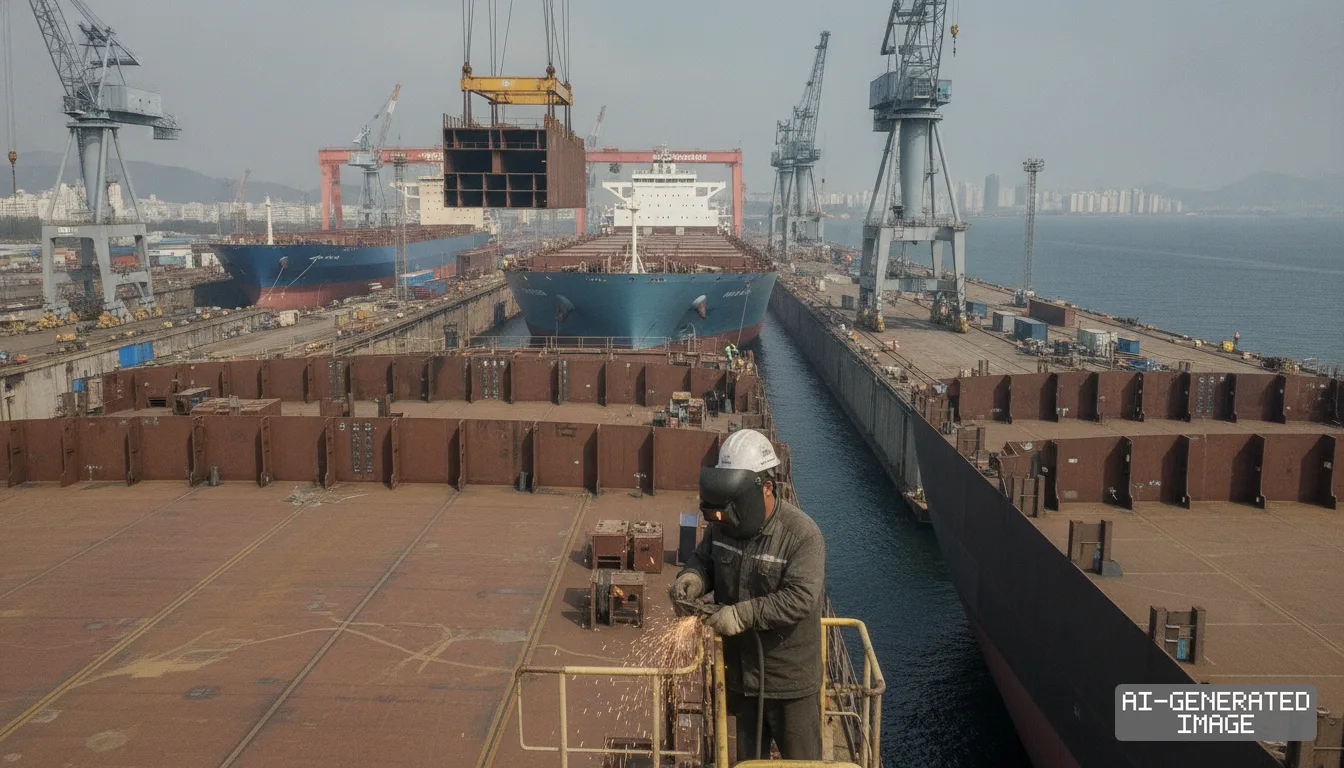
Guangzhou Shipyard International has expanded construction of dual-fuel vehicle carriers at its Nansha yard in Guangdong province. The facility delivered 26 specialized vehicle carriers between January and August, including vessels carrying up to 10,800 cars, CSSC said.
Chinese shipbuilders hold more than 80% of the active global orderbook for pure car and truck carriers. State yards under CSSC and private yards in Jiangsu province now control market share that Japanese and South Korean builders formerly dominated.
South Korean shipbuilders concentrated dock capacity on liquefied natural gas carriers and large container vessels. That commercial choice left few building slots available for roll-on car carriers at HD Hyundai and Hanwha Ocean, shipbrokers said.
Chinese yards offer delivery schedules starting before 2030 and lower construction prices supported by domestic steel and equipment suppliers. South Korean shipbuilders have filled drydock slots through 2028, limiting their availability for large multi-ship car carrier programs.
Shipyard executives finalized commercial negotiations for the 10-ship order during the SMM maritime trade exhibition in Hamburg. The German trade fair hosted talks between international vessel owners and Asian shipbuilders seeking long-term delivery commitments.
Guangzhou Shipyard International also signed a contract during the Hamburg exhibition with Bermuda-based SFL Corporation. That transaction covers two 7,000-capacity dual-fuel car carriers scheduled for delivery in 2029, SFL said.
Ray Car Carriers intends to place the 10 new ships on long-term time charters with global vehicle manufacturers and shipping operators, shipbrokers said. Forward charter commitments allow tonnage providers to fund large capital outlays at stable returns.
The 8,200-capacity design incorporates high-pressure dual-fuel main engines and Type-C cryogenic fuel storage tanks. Guangzhou Shipyard International will manufacture the fuel containment tanks at its Pearl River manufacturing base, shipyard technical documents showed.
The commercial read is that Western vehicle shipping operators now view Chinese yards as primary partners rather than lower-cost substitutes. Western fleet operators are awarding multi-year fleet renewal programs directly to Chinese state-owned shipbuilders.
Steel fabrication for the first vessel in the 10-ship series is scheduled to begin at the Nansha shipyard in mid-2027. Guangzhou Shipyard International will begin drydock assembly in 2028 to meet the 2029 delivery deadline, CSSC said.
Impact map
How this development propagates across the region and out to global buyers.
| Event | Korea | China | Japan | Global impact |
|---|---|---|---|---|
| GSI 10 PCTC contract | loss of car carrier customer | yard slot dominance | marine equipment demand | auto shipping capacity expansion |
In this story
- Companies
- China CSSC HoldingsGuangzhou Shipyard InternationalRay Car Carriers
- Tickers
- 600150.SH
- Exposed
- HD Hyundai Heavy IndustriesHD Hyundai MipoSFL Corporation
- Policy
- Economic SecuritySubsidies
- Impact
- Order BookSupply ChainCapex
Track every Economic Security development → Track every Subsidies development →
Related briefings
- CSSC Reallocates Yard Drydocks to Accelerate Large Containership Output Also on China CSSC Holdings, Guangzhou Shipyard International, HD Hyundai Heavy Industries
- HD Hyundai Heavy union votes down wage deal, reopening talks Also on HD Hyundai Mipo, HD Hyundai Heavy Industries, Order Book
- Samsung Heavy targets US Navy MRO work via Vigor partnership Also on HD Hyundai Heavy Industries, Order Book, Subsidies
- Fanuc previews 11-kg welding cobots for shipyards at Fabtech 2026 Also on HD Hyundai Heavy Industries, Order Book, Subsidies
Sources
Reporting
Confidence: medium — how we grade this
The documents behind this briefing are linked above. East Asia Brief produces its English text with AI assistance under human editorial review, and does not translate or republish other outlets' articles. See our methodology and AI policy. Spotted an error? Tell us.
The Morning Brief
What changed in Korean, Chinese and Japanese industry overnight — and what it means for your supply chain. One email, weekday mornings, US time. Free.
The Morning Brief is in preparation. Leave your address and we will write to you once — when the first issue is ready. Nothing before that.