Korean Shipyards Submit Coordinated CPSP Bid with Industrial Offsets
Hanwha Ocean and HD Hyundai structure offset packages for Canada's $40 billion patrol submarine replacement program.
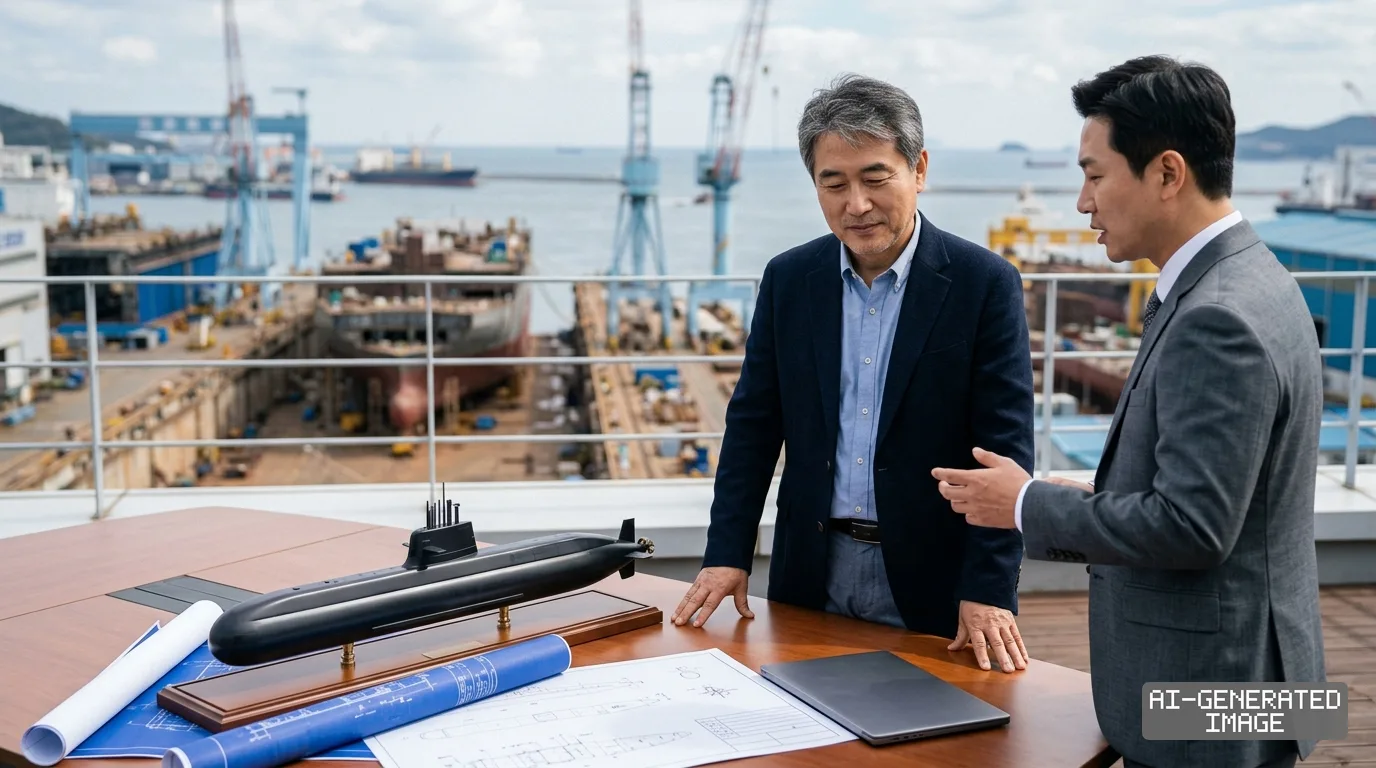
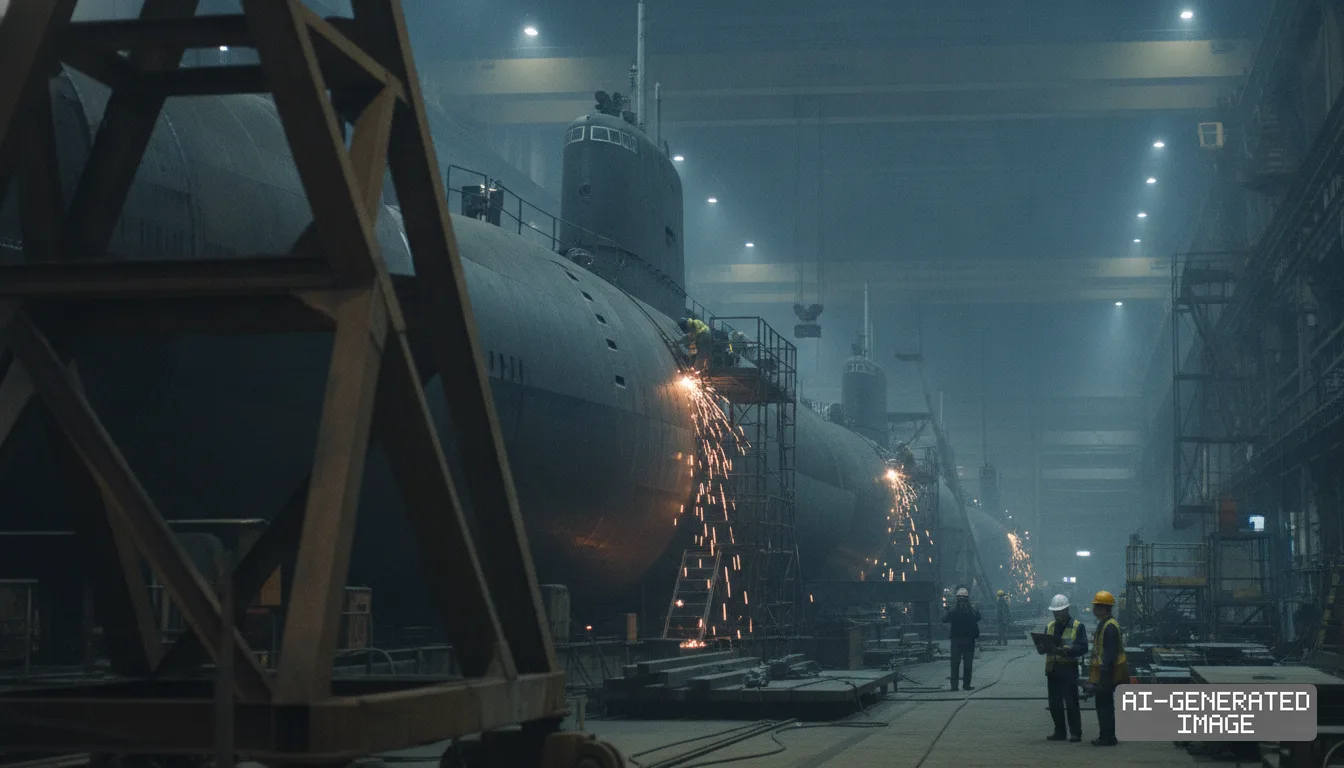
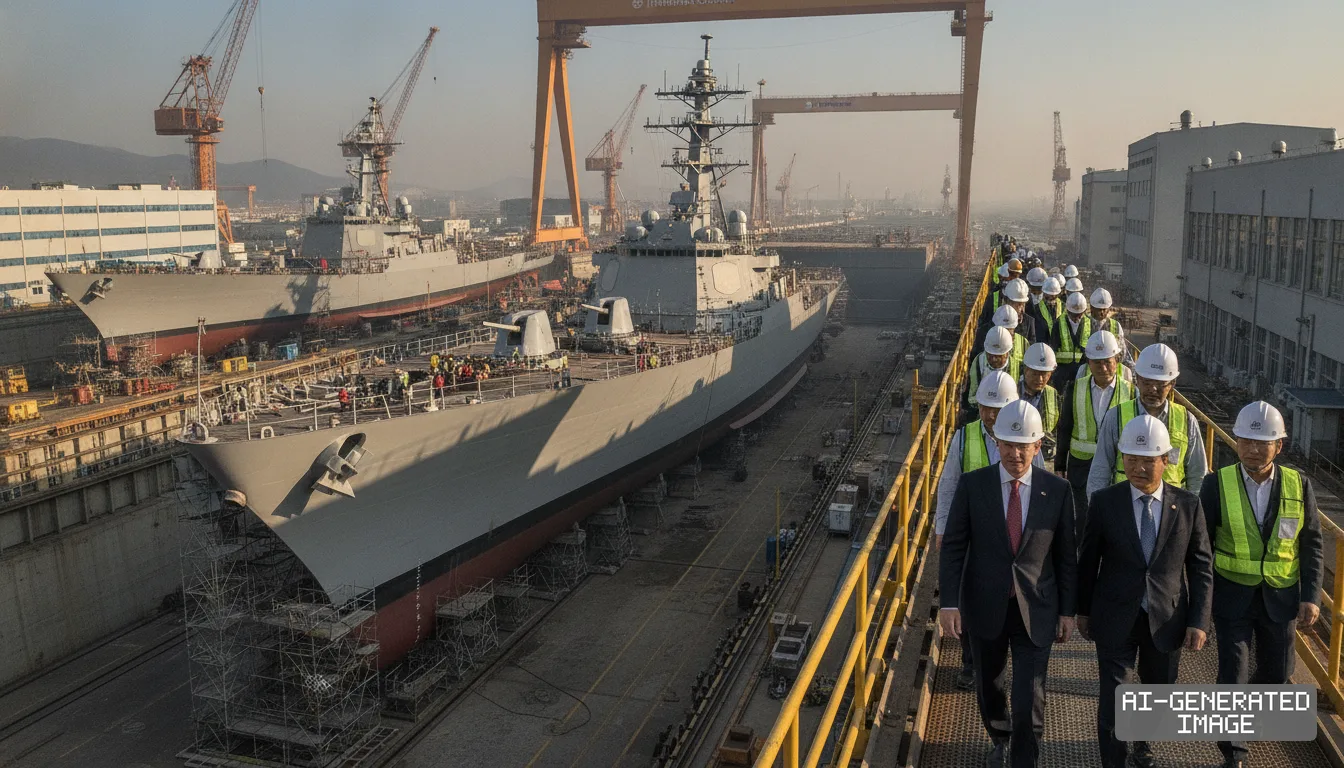
South Korean shipbuilders Hanwha Ocean and HD Hyundai Heavy Industries have submitted a coordinated industrial and operational bid for Canada's Canadian Patrol Submarine Project, deploying an extensive multi-billion-dollar offset package to position the KSS-III Batch-II diesel-electric submarine against European competition. The joint-industry submission aligns South Korea's two premier naval yards into a unified export consortium under government coordination, establishing domestic industrial partnerships and technology transfers designed to fulfill Canadian procurement mandates.
The Canadian Patrol Submarine Project represents a comprehensive procurement program directed by the Department of National Defence and Public Services and Procurement Canada to replace the Royal Canadian Navy's four aging Victoria-class vessels. The program seeks to acquire up to 12 conventional patrol submarines capable of simultaneous operations across the Atlantic, Pacific, and Arctic oceans. Including initial platform construction and a projected 30-year in-service support package, total lifetime project expenditures are valued at up to 60 trillion Korean won ($40 billion, or 60 billion Canadian dollars).
Public Services and Procurement Canada established a two-supplier shortlist in August 2025 following the elimination of proposals from France's Naval Group, Spain's Navantia, and Sweden's Saab. The shortlist advanced South Korea's Hanwha Ocean alongside Germany's ThyssenKrupp Marine Systems, which tendered its Type 212CD platform. Formal bid packages were finalized and delivered to Canadian procurement authorities ahead of the mandatory March 2, 2026 submission deadline.
The South Korean bid centers on an export variant of the KSS-III Batch-II submarine, a 3,600-to-4,000-metric-ton submerged displacement platform developed for the Republic of Korea Navy. The platform integrates indigenously engineered lithium-ion battery banks with fuel-cell Air-Independent Propulsion, extending continuous submerged patrol endurance beyond three consecutive weeks without atmospheric snorkeling. The design incorporates combat management systems and payload space configured for advanced acoustic arrays, long-range heavyweight torpedoes, and vertical launch cells.
To reinforce the operational credibility of the platform, the Republic of Korea Navy deployed its in-service KSS-III lead boat, ROKS Dosan Ahn Changho, on a 14,000-kilometer transpacific voyage to Canadian Forces Base Esquimalt in British Columbia in May 2026. The vessel completed operational integration drills alongside Royal Canadian Navy surface combatants, carrying Canadian naval officers on board during tactical maneuvers to verify open-ocean sea-keeping and acoustic performance. Hanwha Ocean submitted a delivery schedule committing to hand over the first four submarines before 2035, followed by one vessel per year through 2043.
Under the "One Team" industrial alliance, Hanwha Ocean serves as prime contractor and platform integrator, while HD Hyundai Heavy Industries coordinates engineering systems, maintenance architecture, and broader supply-chain offsets. To meet Canada's Industrial and Technological Benefits policy, which requires international defense contractors to invest 100 percent of contract value back into the Canadian economy, the consortium constructed a tiered network of domestic aerospace and defense partnerships.
The consortium entered an exclusive teaming agreement with Babcock Canada, the incumbent prime contractor for Victoria-class in-service support. Under this arrangement, Babcock Canada acts as the domestic sustainment lead, establishing permanent maintenance, repair, and overhaul infrastructure on both Canadian coasts while localizing manufacturing for weapons handling and launch systems. The bid further incorporates formal agreements with Ontario Shipyards for modular block fabrication, Algoma Steel for specialized high-strength naval plate, and Mohawk College for skilled maritime workforce training curricula.
HD Hyundai structured cross-sector economic offset proposals extending beyond defense manufacturing. These initiatives include planned commercial import agreements for Canadian crude oil and liquefied natural gas through HD Hyundai Oilbank, paired with joint academic research initiatives in marine automation, naval artificial intelligence, and deep-level depot maintenance transfer.
Canadian procurement authorities designated Germany's ThyssenKrupp Marine Systems as the preferred supplier on July 6, 2026 to begin formal contract negotiations. The Canadian government scheduled final contract execution for late 2027, with the first European-built submarine delivery targeted for 2034. South Korea's Defense Acquisition Program Administration confirmed that the joint industrial framework and North American supplier network established for the CPSP campaign will serve as the baseline structure for South Korea's upcoming naval export tenders in Poland and the Middle East.
Impact map
How this development propagates across the region and out to global buyers.
| Event | Korea | China | Japan | Global impact |
|---|---|---|---|---|
| CPSP Submarine Procurement | joint yard offset framework | — | — | conventional submarine export competition |
In this story
- Companies
- Hanwha OceanHD Hyundai Heavy Industries
- Tickers
- 042660.KS329180.KS
- Exposed
- ThyssenKruppBabcock International
- Policy
- Economic SecurityExport Controls
- Impact
- Order BookCapexSupply Chain
Track every Economic Security development → Track every Export Controls development →
Related briefings
- HD Hyundai and Hanwha Ocean split naval platforms for export Also on Hanwha Ocean, HD Hyundai Heavy Industries, Export Controls
- Pentagon Inspects Hanwha Ocean Docks for US Frigate Programs Also on Hanwha Ocean, HD Hyundai Heavy Industries, Export Controls
- Mitsubishi Heavy Industries refines Mogami frigate design for Oceanian naval tenders Also on Hanwha Ocean, HD Hyundai Heavy Industries, Export Controls
- Hanwha Ocean Wins $508 Million Thai Stealth Frigate Program Also on Hanwha Ocean, HD Hyundai Heavy Industries, Export Controls
Sources
Reporting
Confidence: medium — how we grade this
The documents behind this briefing are linked above. East Asia Brief produces its English text with AI assistance under human editorial review, and does not translate or republish other outlets' articles. See our methodology and AI policy. Spotted an error? Tell us.
The Morning Brief
What changed in Korean, Chinese and Japanese industry overnight — and what it means for your supply chain. One email, weekday mornings, US time. Free.
The Morning Brief is in preparation. Leave your address and we will write to you once — when the first issue is ready. Nothing before that.