HD Hyundai names two ammonia carriers in clean shipping push
Chairman Chung Ki-sun joined Belgium's Exmar in Ulsan to christen the Adinkerke and Aalter, cementing commercial track records for toxic-fuel propulsion systems.
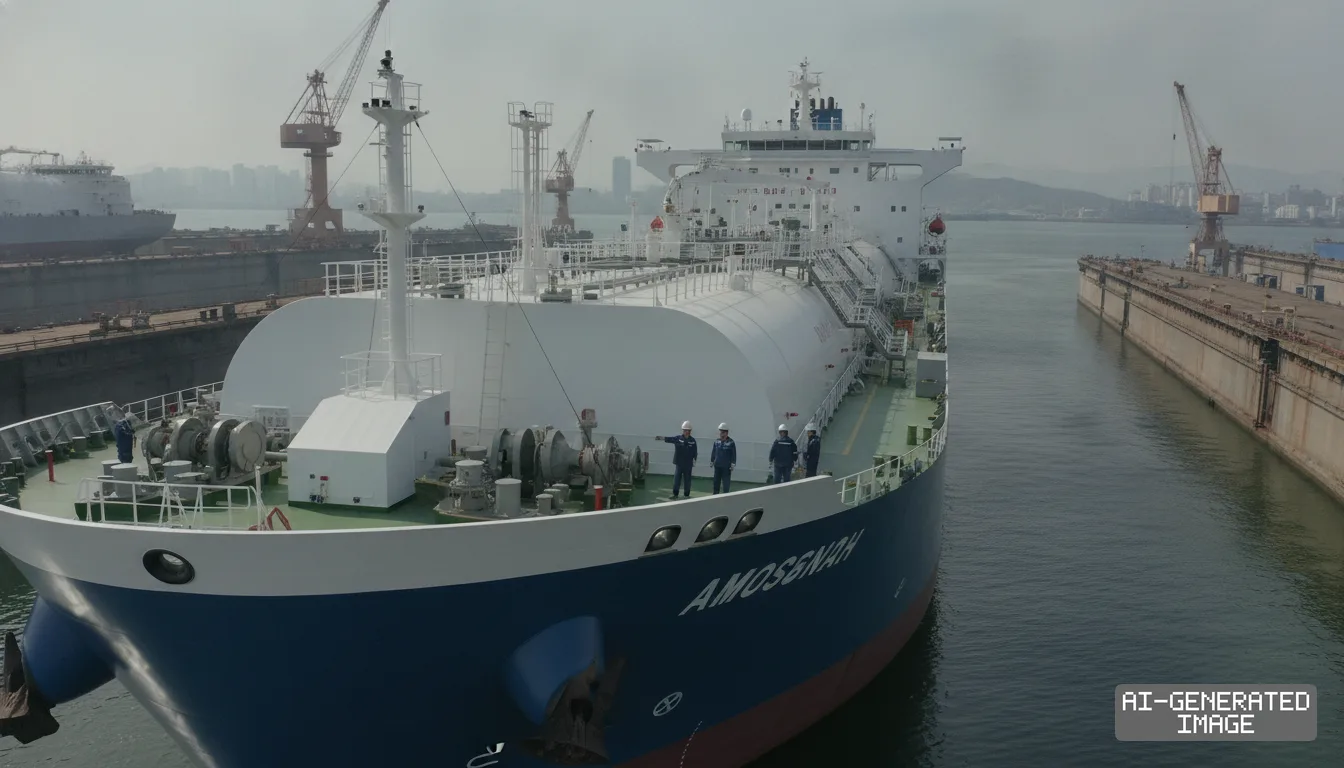
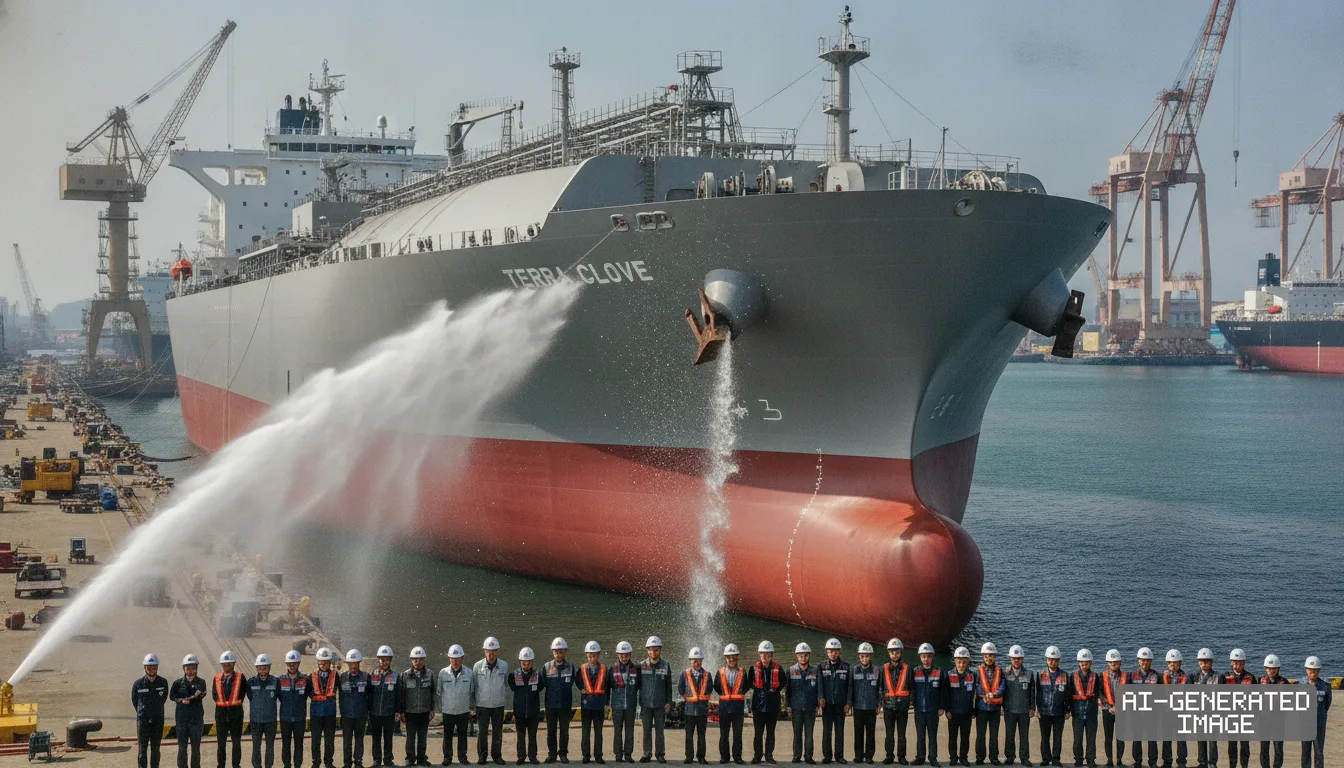
HD Hyundai confirmed Sept. 4 that Chairman Chung Ki-sun attended the naming ceremony for two ammonia-powered gas carriers built for Belgium's Exmar at its Ulsan shipyard.
The closed-door ceremony took place Aug. 25 to christen the Adinkerke and the Aalter. Both vessels are 46,000-cubic-meter midsize gas carriers designed to transport liquefied petroleum gas and burn toxic ammonia as marine fuel.
The two vessels are the final hulls of a four-ship order placed by Exmar. HD Hyundai Heavy Industries delivered the first two ships, the Antwerpen and the Arlon, between June and July following construction in Ulsan.
Chung attended the christening alongside Exmar Chairman Nicolas Saverys. Shipyard officials describe executive attendance at naming ceremonies as an exceptional step reserved for benchmark technological milestones and premier commercial relationships.
Chung previously attended naming ceremonies for the Laura Maersk in Denmark in 2023 and the Anne Maersk in Ulsan in 2024. Both vessels use green methanol fuel, establishing early commercial delivery records for the South Korean shipbuilder.
The vessels measure 190 meters in length, 30.4 meters in beam and 18.8 meters in depth. HD Hyundai lengthened the standard hull by 10 meters and widened the beam to expand cargo hold intake while retaining midsize dimensions.
Propulsion relies on a dual-fuel two-stroke engine developed with Swiss engine designer WinGD and built by the engine division of HD Hyundai Heavy Industries. The engine burns conventional marine gas oil or zero-carbon ammonia.
Burning ammonia reduces vessel greenhouse gas emissions by up to 90% during navigation, according to technical documents published by Exmar. The fuel produces water vapor and nitrogen when consumed, eliminating carbon dioxide from propulsion exhaust.
The sister vessel Antwerpen completed the world's first commercial voyage powered by ammonia fuel in July. The vessel carried 30,214 metric tons of liquid ammonia cargo from Nanjing, China, to India while operating on dual-fuel mode.
Fuel for propulsion is drawn from two 500-cubic-meter deck fuel tanks mounted above the main hull. The dedicated deck tanks give each vessel enough ammonia fuel for 10 to 20 days of continuous deep-sea navigation.
Crews can also transfer cargo directly into fuel handling systems during transit, Exmar said. That fuel transfer capability allows ocean-going carriers to sail virtually limitless distances without relying on dedicated shoreside bunkering stations.
Ammonia offers distinct handling advantages over liquefied hydrogen because it liquefies at minus 33 degrees Celsius under atmospheric pressure. Hydrogen requires cryogenic containment at minus 253 degrees Celsius, demanding significantly heavier insulation and costlier cryogenic tanks.
Liquid ammonia holds roughly 1.7 times more energy by volume than liquid hydrogen, making long-distance cargo transport economically viable. The compound also stores inside pressurized steel tanks at eight bars of pressure without continuous refrigeration.
The fuel presents severe toxicity hazards that require extensive safety systems across the vessel. HD Hyundai equipped the engine room with optical gas detectors, high-capacity extraction fans and specialized double-walled piping to contain leaks.
Shipbuilders also installed an automated purge recovery unit to capture unburned toxic vapor during fuel line purging. Selective catalytic reduction systems treat engine exhaust gases to eliminate harmful nitrogen oxide emissions before atmospheric release.
The vessel design stems from a three-year joint development project that included Nord Gas Solutions and classification society Lloyd's Register. Lloyd's Register granted safety approvals that helped the International Maritime Organization draft interim operating rules.
Sea trials for the series verified shipboard safety systems off the coast of South Korea earlier this year. The Port of Ulsan conducted South Korea's first port-to-ship ammonia bunkering operation using 600 metric tons of fuel.
Green ammonia for the trials originated from Envision's renewable hydrogen and ammonia manufacturing plant in Chifeng, China. Test data collected by shipyard engineers will serve as technical baselines for future Korean Register regulatory frameworks.
The International Energy Agency forecasts ammonia will account for 8% of global marine fuel consumption by 2030. That market share will expand to 46% by 2050 as the maritime industry phases out fossil bunkers.
HD Hyundai has booked orders for eight ammonia-fueled carriers alongside roughly 40 methanol-propelled container vessels. The shipbuilder is also designing liquefied carbon dioxide carriers and modular molten salt nuclear reactors for commercial vessels.
Chinese shipbuilders captured 28.5 million gross tons of alternative-fuel vessel orders last year, doubling their total from 2022. China State Shipbuilding Corporation is preparing to deliver its first ammonia-fueled bulk carrier before the end of the year.
South Korean shipbuilders are using complex dual-fuel deliveries to maintain an operational lead over lower-cost Chinese yards. Delivering four oceangoing ammonia vessels establishes an empirical operating track record that competing shipbuilders cannot easily replicate.
The Adinkerke and the Aalter will enter commercial service under the Belgian flag following final outfitting in Ulsan. Exmar Ship Management will take operational control of both gas carriers upon delivery.
Impact map
How this development propagates across the region and out to global buyers.
| Event | Korea | China | Japan | Global impact |
|---|---|---|---|---|
| Ammonia carrier deliveries | operational safety lead | volume push in green hulls | engine license competition | carbon-free bunker standards |
In this story
- Companies
- HD HyundaiHD Hyundai Heavy Industries
- Tickers
- 267250.KS329180.KS
- Exposed
- ExmarWinGDChina State Shipbuilding Corporation
- Policy
- Economic Security
- Impact
- Order BookSupply ChainPricing
Track every Economic Security development →
Related briefings
- HD Hyundai Heavy names world's largest ammonia carrier Terra Clove Also on Exmar, HD Hyundai Heavy Industries, Order Book
- China State Shipyards Reconfigure Dry Docks for Dual-Fuel Mega-Boxships Also on WinGD, China State Shipbuilding Corporation, Order Book
- South Korea engine builders expand methanol test benches for 2027 ship handoffs Also on WinGD, HD Hyundai Heavy Industries, Order Book
- HD Hyundai Marine Engine wins $16.5M Chinese shipyard order Also on WinGD, Order Book
Sources
Reporting
Confidence: medium — how we grade this
The documents behind this briefing are linked above. East Asia Brief produces its English text with AI assistance under human editorial review, and does not translate or republish other outlets' articles. See our methodology and AI policy. Spotted an error? Tell us.
The Morning Brief
What changed in Korean, Chinese and Japanese industry overnight — and what it means for your supply chain. One email, weekday mornings, US time. Free.
The Morning Brief is in preparation. Leave your address and we will write to you once — when the first issue is ready. Nothing before that.