South Korea engine builders expand methanol test benches for 2027 ship handoffs
Hanwha Engine and HD Hyundai scale dedicated testing cells across Changwon and Ulsan to prevent factory acceptance bottlenecks on dual-fuel commercial vessels.
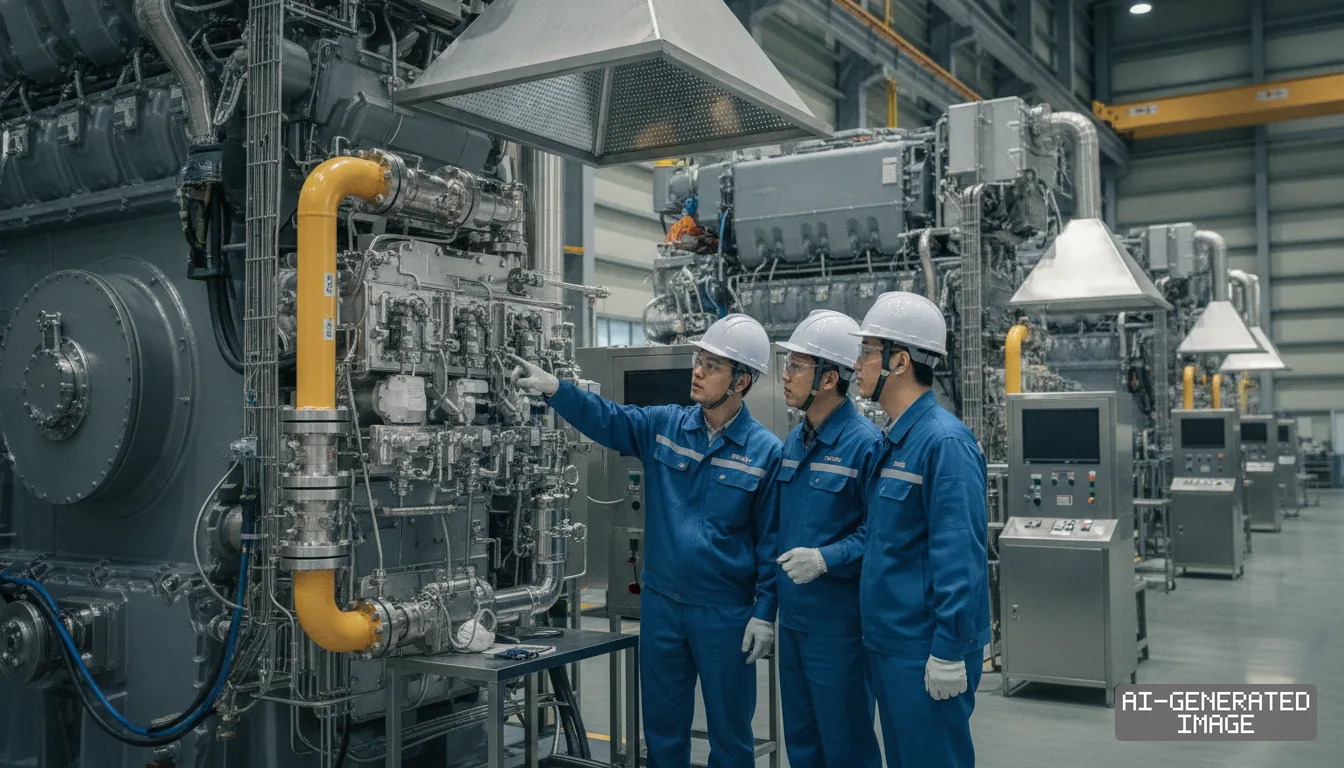
South Korean marine propulsion manufacturers have expanded dedicated test cells and factory acceptance infrastructure for dual-fuel methanol engines at major domestic assembly complexes in Changwon, Ulsan, and Yeongam. The capital allocations aim to protect engine delivery schedules for mid-size container vessels, product tankers, and dry bulk carriers scheduled for shipyard handoff in late 2027 and 2028.
Shipbuilding groups in South Korea hold a major share of international contracts for alternative-fuel commercial tonnage ordered under tightening International Maritime Organization carbon intensity rules and the European Union Emissions Trading System. Unlike standard heavy fuel oil machinery, methanol dual-fuel engines require dedicated test environments equipped with low-flashpoint fuel preparation units, nitrogen purge systems, vapor extraction hoods, and explosion-proof monitoring gear before classification societies issue factory acceptance certificates.
Hanwha Engine completed the installation of a dedicated methanol engine test-run facility in February 2025 at its primary manufacturing plant in Changwon, Gyeongsangnam-do. The machinery builder is currently executing an 80.2 billion won ($59 million) capital expenditure program running through September 2026 across its Plant 1 and Plant 3 sites. The capital expenditure expands dual-fuel assembly lines and eliminates testing backlogs for both methanol-fueled and liquefied natural gas propulsion systems following the integration of the former HSD Engine into Hanwha Group in February 2024.
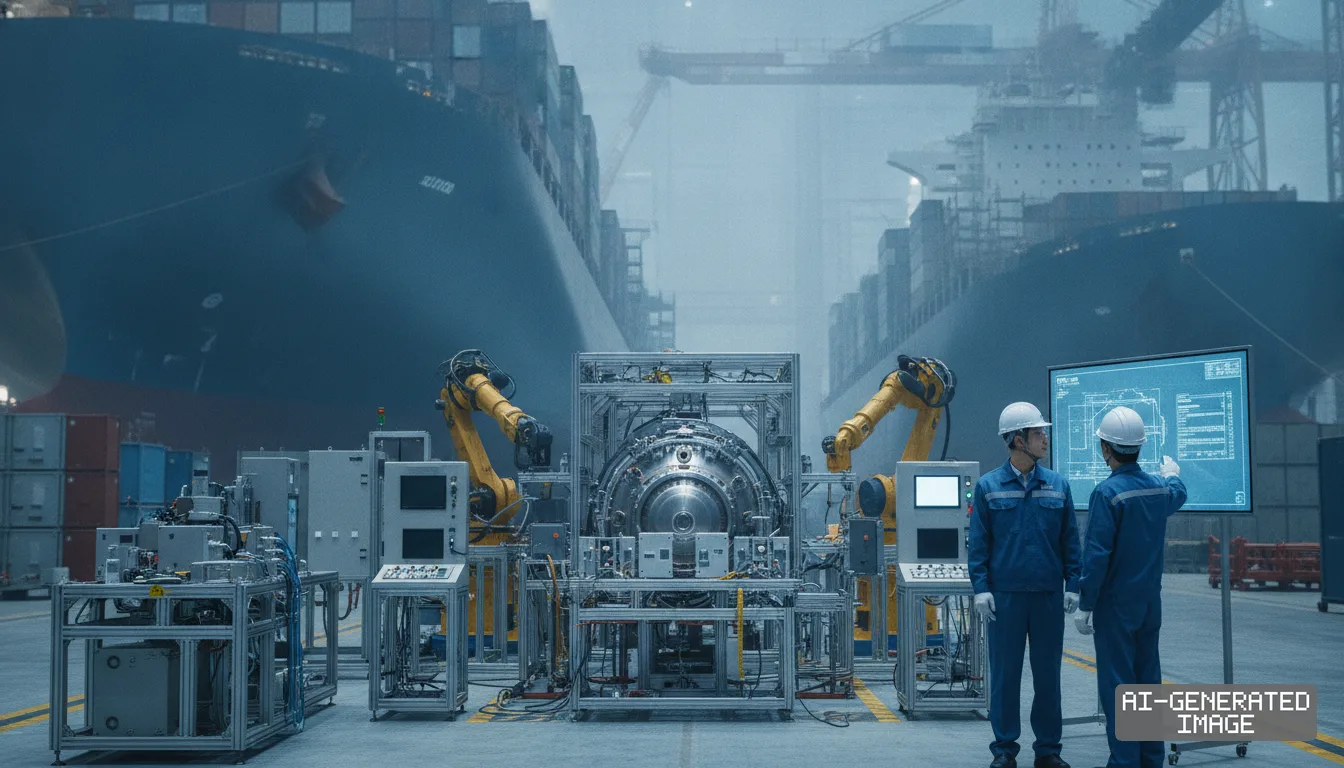
The Changwon expansion provides Hanwha Engine with additional capacity to carry out simultaneous shop trials on large two-stroke, low-speed marine engines built under license from international designers, including WinGD and MAN Energy Solutions. Factory test cells operate under controlled safety envelopes that isolate toxic and flammable alcohol vapors during fuel changeover sequences. Engine builders must verify automated fuel transition from marine gas oil to methanol under varied load profiles, confirming injection timing, cylinder pressure equilibrium, and exhaust emissions limits prior to delivering the engines to shipyards for crane-in installation.
HD Hyundai Heavy Industries has expanded test-bench operations within its Engine and Machinery Division in Ulsan to support both two-stroke main engines and four-stroke auxiliary power units. The company completed factory acceptance tests for its proprietary four-stroke HiMSEN methanol dual-fuel engines, including the H32DF-LM and H22CDF-LM models. These auxiliary gen-set engines provide electrical power on methanol-fueled container vessels and require rigorous electrical load-step testing on test benches to verify transient response during sudden load shedding.
To support output across its maritime shipbuilding network, subsidiary HD Hyundai Engine operates specialized manufacturing lines at the Daebul Industrial Complex in Yeongam, Jeollanam-do. The Yeongam site maintains an annual production and testing capacity of 200 engines, representing approximately 1.2 million horsepower. The facility supplies high-power dual-fuel auxiliary engines and propulsion machinery directly to domestic shipbuilders, including HD Hyundai Samho, and international clients needing verified alternative-fuel machinery.
Engineering teams at HD Hyundai Heavy Industries have also completed full-load combustion and operational characteristic trials applying alternative alcohol fuels to the H32DF-LM platform in Ulsan. The testing verified engine startability, combustion stability across all load points, and exhaust gas properties when burning ethanol while maintaining the existing methanol fuel injection hardware. The operational trial gives shipowners an additional compliance option in regions where green methanol bunkering infrastructure remains limited, demonstrating that alcohol-burning engine blocks can operate on ethanol without requiring structural hardware replacements.
To complement private industrial testing facilities, South Korea's Ministry of Trade, Industry and Energy and the Ministry of Oceans and Fisheries funded the 48.6 billion won ($36 million) Korea Green-ship Test Bed vessel based in Mokpo. The 2.2-megawatt demonstration platform evaluates domestic methanol, ammonia, and hybrid marine equipment under real-world sea-trial conditions. Operational datasets collected from the vessel assist national classification societies and marine equipment makers in standardizing safety margins for fuel supply valves, double-walled piping assemblies, and ventilation interlocks.
The expansion of domestic test benches is altering procurement cycles for marine equipment suppliers across the regional supply chain. Tier-two manufacturers of cryogenic and chemical-resistant valves, high-pressure fuel booster pumps, Coriolis flow meters, and optical flame sensors face compressed manufacturing schedules to supply auxiliary skids ahead of factory acceptance testing milestones. For shipowners and fleet managers, expanded domestic test capacity prevents drydock bottlenecks in Geoje, Ulsan, and Yeongam, ensuring vessels enter sea trials on schedule.
Hanwha Engine and HD Hyundai Heavy Industries will conclude their current rounds of test-cell calibrations during the fourth quarter of 2026 as the first large batches of two-stroke methanol main engines for late-2027 vessel handoffs move to final factory assembly.
Impact map
How this development propagates across the region and out to global buyers.
| Event | Korea | China | Japan | Global impact |
|---|---|---|---|---|
| Methanol test bench expansion | engine builders eliminate FAT backlogs | competing for dual-fuel berths | licensee engine supply coordination | on-time 2027 ship deliveries |
In this story
- Companies
- Hanwha EngineHD Hyundai Heavy Industries
- Tickers
- 082740.KS329180.KS
- Exposed
- WinGDMAN Energy SolutionsHD Hyundai Samho
- Policy
- Economic SecuritySubsidies
- Impact
- CapexSupply ChainOrder Book
Track every Economic Security development → Track every Subsidies development →
Related briefings
- HD Hyundai and Hanwha win China dual-fuel engine contracts Also on Hanwha Engine, HD Hyundai Heavy Industries, Order Book
- China State Shipyards Reconfigure Dry Docks for Dual-Fuel Mega-Boxships Also on WinGD, MAN Energy Solutions, Order Book
- HD Hyundai Marine Engine wins $16.5M Chinese shipyard order Also on WinGD, MAN Energy Solutions, Order Book
- HD Hyundai names two ammonia carriers in clean shipping push Also on WinGD, HD Hyundai Heavy Industries, Order Book
Sources
Primary documents
Reporting
Confidence: high — how we grade this
The documents behind this briefing are linked above. East Asia Brief produces its English text with AI assistance under human editorial review, and does not translate or republish other outlets' articles. See our methodology and AI policy. Spotted an error? Tell us.
The Morning Brief
What changed in Korean, Chinese and Japanese industry overnight — and what it means for your supply chain. One email, weekday mornings, US time. Free.
The Morning Brief is in preparation. Leave your address and we will write to you once — when the first issue is ready. Nothing before that.