TSMC surveys equipment suppliers on rare-earth-free motors
The foundry began feasibility queries after Chinese export licensing rules covered permanent magnets, testing whether automated cleanroom tools can run without Beijing-controlled materials.
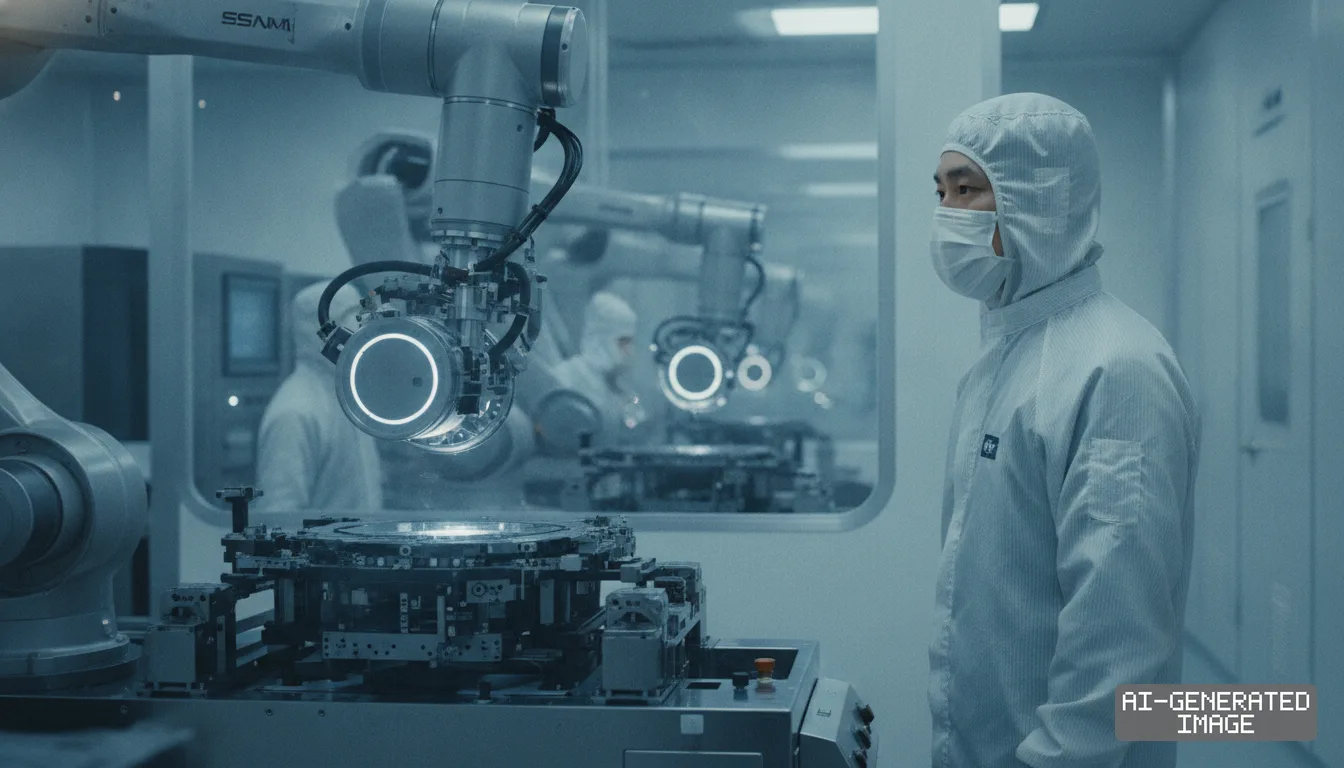
Taiwan Semiconductor Manufacturing Co. surveyed factory automation and equipment suppliers on Oct. 22, 2026, about the feasibility of replacing Chinese rare-earth permanent magnets in cleanroom machinery motors.
The inquiry addresses rising supply chain vulnerability after Beijing tightened export restrictions on critical mineral processing. China controls roughly 90% of global rare-earth refining and 95% of finished permanent magnets, according to International Energy Agency figures.
TSMC operates the world's largest dedicated contract chip foundries, generating $46.7 billion in revenue in the third quarter of 2026. Its manufacturing lines produce more than 90% of the advanced microchips used globally in artificial intelligence accelerators, data centers and smartphones.
The outreach took the form of preliminary technical questionnaires delivered to tool vendors, according to three industry executives briefed on the matter by Reuters. TSMC declined to comment on the inquiries.
The discussions remain in an exploratory phase rather than an active factory overhaul. The foundry has issued no formal replacement directive, and no commercial substitution contracts have been signed with toolmakers.
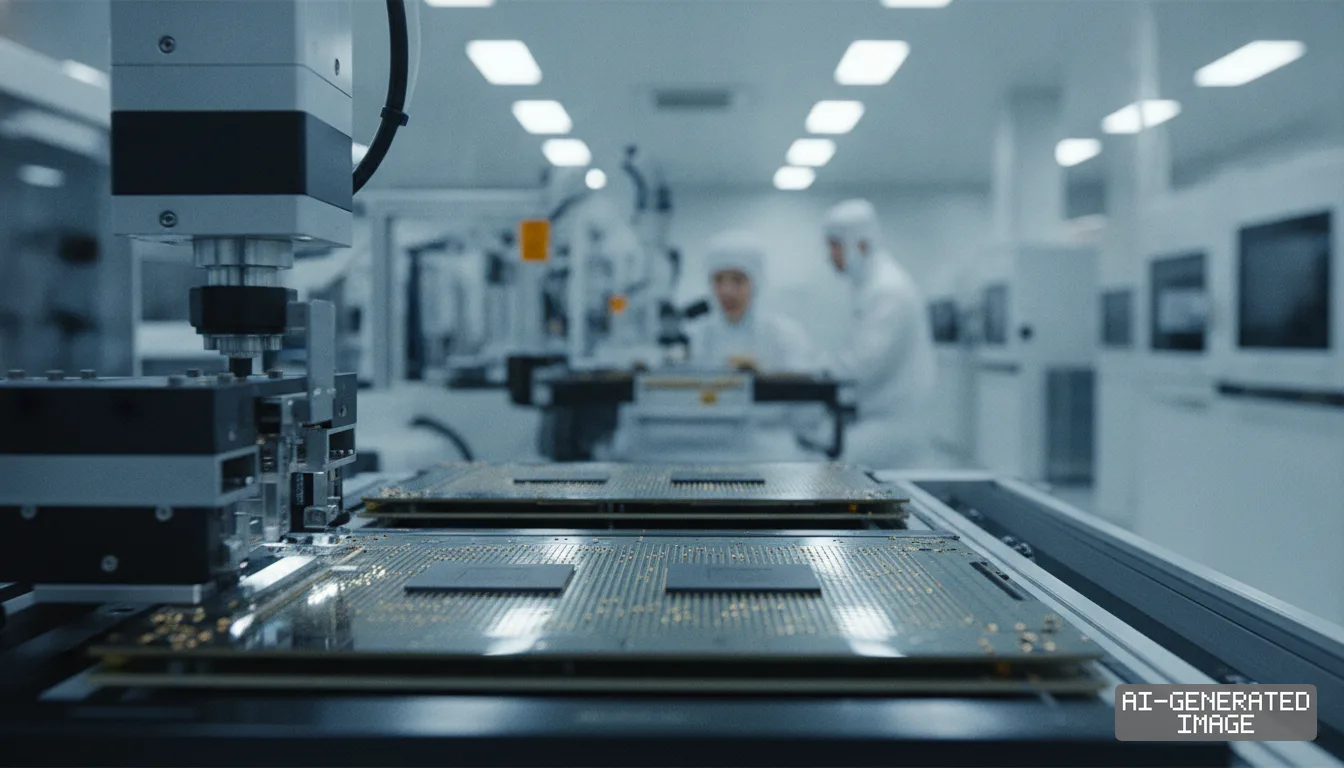
Modern semiconductor fabrication plants rely heavily on permanent-magnet synchronous motors. These compact units generate high torque with minimal heat generation, powering overhead wafer transport vehicles, vacuum transfer arms and precision optical stages.
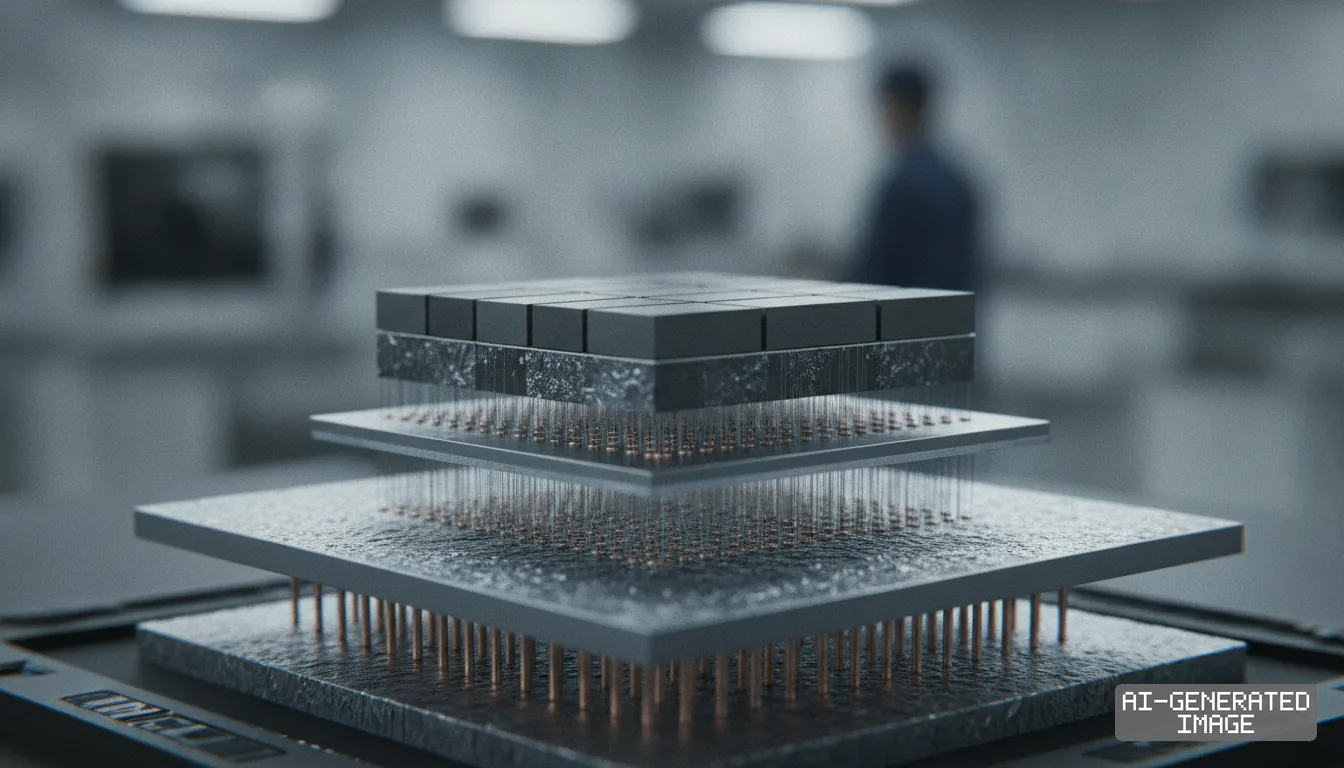
The magnets inside those motors use neodymium, terbium and dysprosium to retain magnetic strength under constant thermal stress. Beijing placed those specific elements and their alloy compounds under export licensing requirements in April 2025.
Notice No. 18 from China's Ministry of Commerce mandated individualized export licenses for samarium, dysprosium and neodymium products. The regulation restricted cross-border shipments of sintered magnets and proprietary processing technologies.
While earlier trade disputes centered on raw rare-earth oxides, recent bottlenecks target downstream subcomponents. Even machinery assembled in North America, Japan or Europe frequently embeds Chinese magnet assemblies within third-party servo motors.
Chipmakers face operational exposure if replacement motor assemblies stall at customs checkpoints. An unfulfilled motor order can idle a multimillion-dollar lithography or plasma etch chamber during routine maintenance or cleanroom expansion.
Alternative motor architectures exist but present severe engineering tradeoffs in sub-nanometer cleanroom environments. Conventional induction motors eliminate permanent magnets entirely, relying instead on induced electromagnetic fields within a copper or aluminum rotor cage.
Induction motors generate significantly higher heat and occupy greater physical volume than neodymium-based equivalents. Cleanrooms require stringent thermal stability to prevent metallic expansion and maintain sub-nanometer optical alignment across wafer stages.
Switched reluctance motors and ferrite-based drives offer another engineering pathway. Ferrite materials carry far lower magnetic energy density, requiring larger physical housings to deliver equivalent rotational force.
Integrating bulkier drive systems would force toolmakers to redesign internal mechanical chassis. Re-engineering established vacuum transfer mechanisms introduces vibration risks that could disrupt wafer handling throughput.
Component requalification poses an equally steep commercial barrier. Semiconductor fabrication tools undergo qualification cycles lasting 12 to 24 months to certify particle generation, reliability and vacuum integrity.
Tool vendors hesitate to alter qualified motion assemblies without direct customer financing. Swapping a certified motor design invalidates existing baseline reliability guarantees across advanced node fabs.
Government authorities in Taipei have attempted to build regional supply buffers against future shortages. Taiwan's Ministry of Economic Affairs is financing the Industrial Technology Research Institute to establish a domestic rare-earth pilot facility.
Former Economy Minister Kung Ming-hsin said in February that the pilot facility aims to cover 50% of Taiwan's domestic industrial rare-earth demand within three years. That domestic capacity remains under development and unproven at commercial scale.
American trade officials have simultaneously pressed Taiwan to diversify procurement channels. Raymond F. Greene, director of the American Institute in Taiwan, confirmed in June that Washington is coordinating with regional partners to build mineral resilience.
Regulatory deadlines continue to compress planning schedules across the semiconductor supply chain. A temporary suspension on China's October expanded rare-earth export controls reaches an enforcement deadline on Nov. 10, 2026.
The survey does not constitute a formal procurement mandate, and TSMC has not published qualification test results, equipment transition timetables, or commercial contracts for alternative motors.
Fab operators and tooling suppliers are conducting inventory audits of motion subcomponents while awaiting clarity on Chinese customs licensing approvals ahead of upcoming quota renewals.
Impact map
How this development propagates across the region and out to global buyers.
| Event | Korea | China | Japan | Global impact |
|---|---|---|---|---|
| TSMC rare-earth motor query | Samsung and SK hynix audit fab robotics to evaluate non-Chinese magnet exposure | MOFCOM maintains export licensing leverage over 95% of global permanent magnet supply | Precision motor and robotics builders face engineering requalification costs | Advanced fab tool delivery timelines face potential friction if motor components require redesign |
In this story
- Companies
- Taiwan Semiconductor Manufacturing Co.
- Tickers
- 2330.TWTSM
- Policy
- Export Controls
- Impact
- Supply ChainCompliance
Track every Export Controls development →
Related briefings
- Japan Tightens Laser Micromachining Screening Under Revised Dual-Use Export Rules Also on Taiwan Semiconductor Manufacturing Co, Export Controls, Compliance
- TSMC captures 72.5% foundry share as gap with Samsung widens Also on Taiwan Semiconductor Manufacturing Co., Export Controls
- TSMC revenue rises 53% on AI demand to record NT$514 billion Also on Taiwan Semiconductor Manufacturing Co., Export Controls
- Samsung deploys TSMC-tested photonics probers for CPO push Also on Taiwan Semiconductor Manufacturing Co., Compliance
Sources
Primary documents
Reporting
Confidence: high — how we grade this
The documents behind this briefing are linked above. East Asia Brief produces its English text with AI assistance under human editorial review, and does not translate or republish other outlets' articles. See our methodology and AI policy. Spotted an error? Tell us.
The Morning Brief
What changed in Korean, Chinese and Japanese industry overnight — and what it means for your supply chain. One email, weekday mornings, US time. Free.
The Morning Brief is in preparation. Leave your address and we will write to you once — when the first issue is ready. Nothing before that.