TSMC September revenue jumps 55% on booming AI chip orders
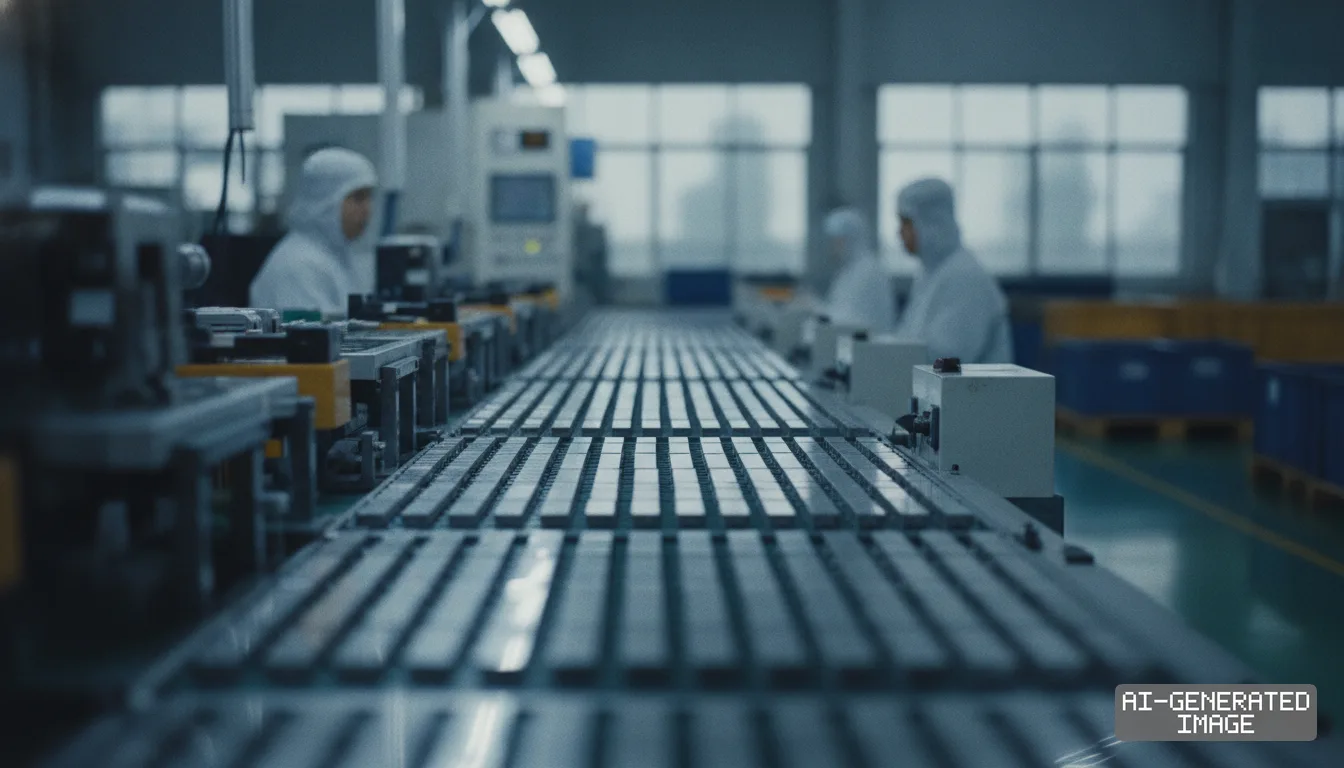
The Taiwanese foundry posted record third-quarter sales of NT$1.49 trillion ($46.7 billion), beating its guidance ceiling as Big Tech AI orders crowded advanced packaging lines.
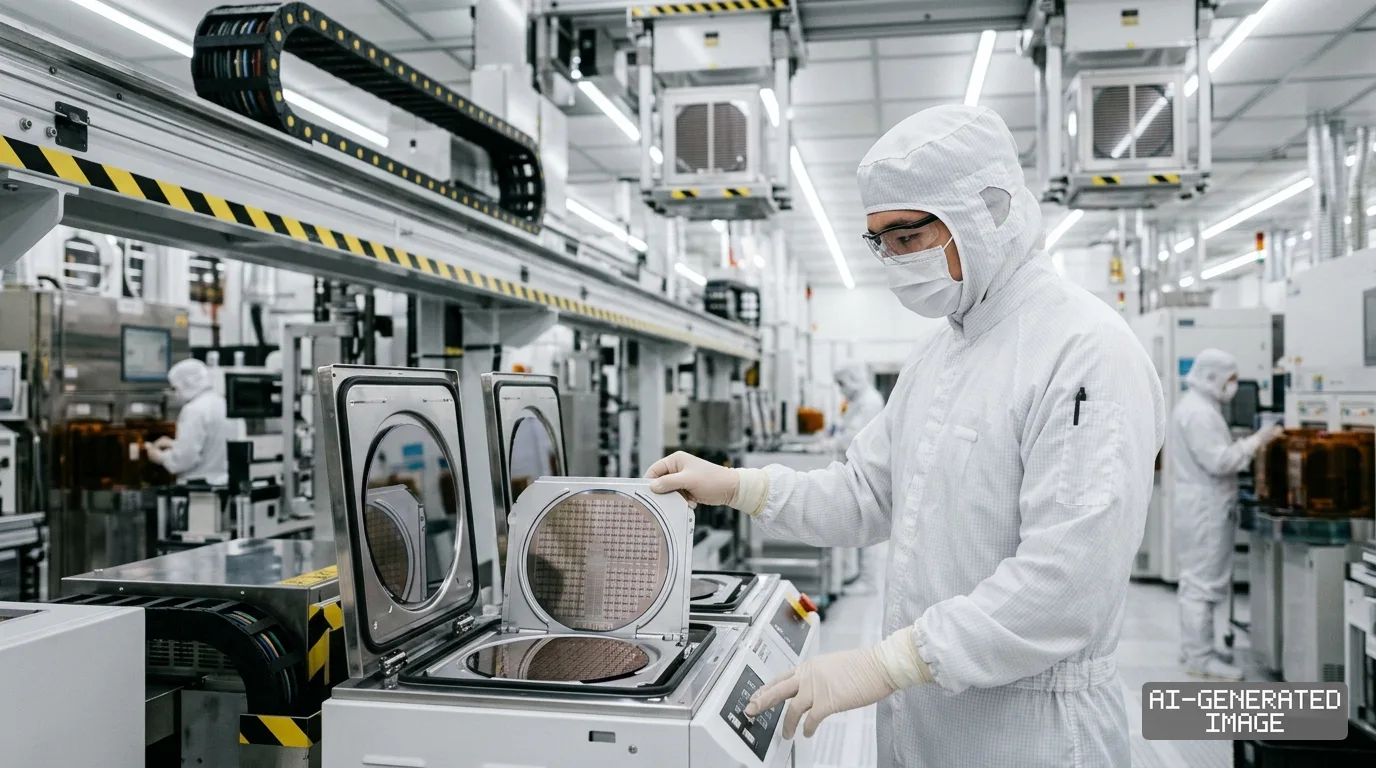
Taiwan Semiconductor Manufacturing Co. reported October 8, 2026, that its September consolidated revenue surged 54.6% year-on-year to NT$511.86 billion ($16.03 billion), lifted by sustained demand for advanced artificial intelligence chips.
The figure marks the highest September sales tally in company history. Consolidated revenue slipped 0.6% compared to the record NT$514.81 billion posted in August, according to the monthly disclosure.
Revenue for the first nine months of 2026 climbed 41.1% from a year earlier to NT$3.899 trillion. TSMC manufactures the vast majority of commercial AI processors and generates more than half of the world's contract-made microchips.
Third-quarter revenue reached approximately NT$1.494 trillion ($46.7 billion), expanding roughly 50% year-on-year. That performance beat the upper boundary of the company's July guidance range of $45.8 billion and topped consensus estimates of NT$1.46 trillion.
Surging server buildouts by cloud providers drove the upside. Global semiconductor customers channeled expanding orders into TSMC's 3-nanometer and upcoming 2-nanometer production lines throughout the summer, market reports indicated.
Nvidia books the predominant share of its high-performance accelerators at TSMC fabs. The US designer builds next-generation architectures, including its Vera Rubin and Blackwell platforms, exclusively across TSMC's cutting-edge lithography steps.
Advanced Micro Devices and Apple also absorbed major wafer allocations during the quarter. Apple accounted for roughly a fifth of TSMC wafer bookings last year as it incorporated dedicated AI accelerators into consumer device lineups.
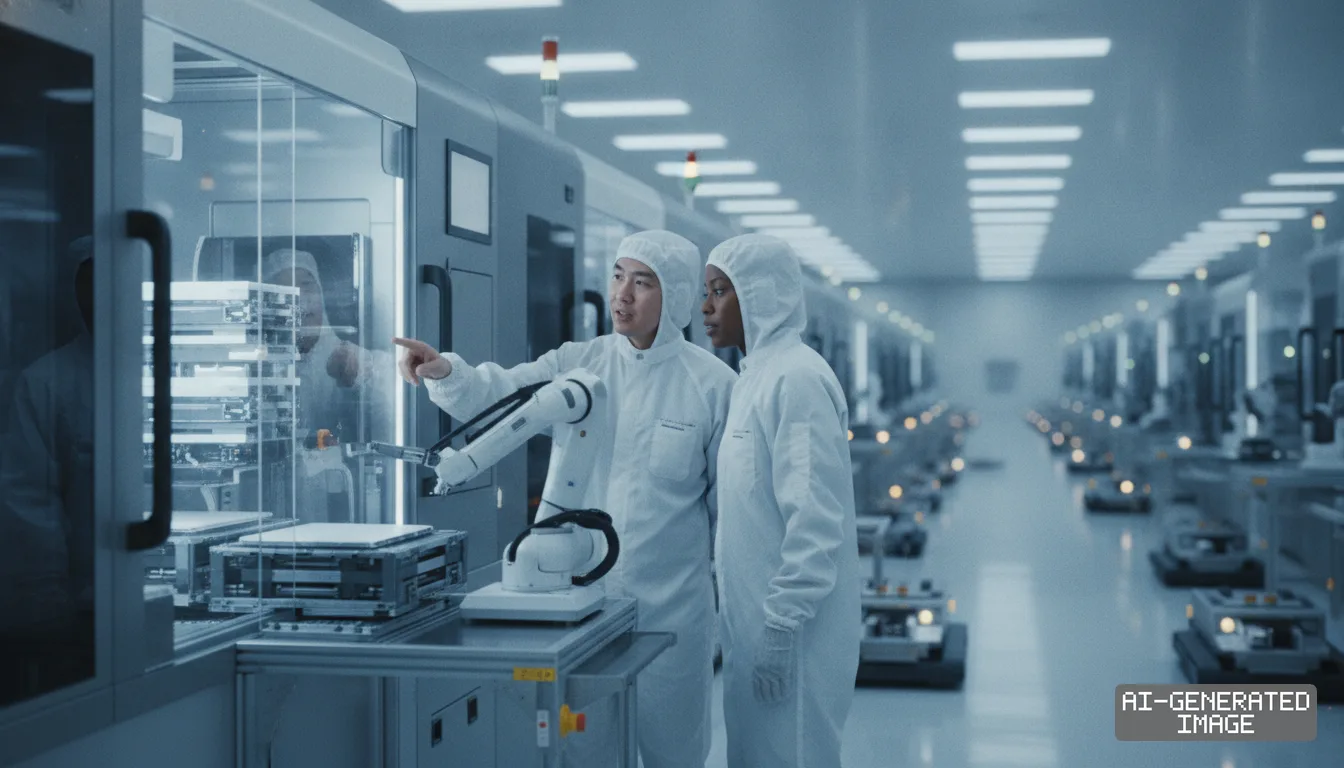
Silicon fabrication alone no longer defines advanced processor delivery. Compute speed now depends directly on Chip-on-Wafer-on-Substrate (CoWoS) — TSMC's proprietary 2.5D packaging method that mounts logic dies and high-bandwidth memory side by side on a silicon base.
Demand for CoWoS packaging continued to outstrip available capacity through the third quarter. Cloud infrastructure developers expanded backorders as delivery lead times for packaged accelerator modules stretched across multiple quarters.
TSMC responded by pouring capital into domestic backend packaging fabs in Taiwan. The foundry is installing specialized assembly equipment across its Advanced Backend Fab 3, Fab 5 and Fab 6 complexes to double CoWoS output.
The rush for TSMC packaging capacity has widened the gap with rival foundries. Samsung Electronics offers turnkey packaging and 3-nanometer gate-all-around fabrication, but the South Korean manufacturer holds less than 10% of advanced AI foundry contracts.
Major American hyperscalers remain hesitant to split critical silicon orders across competing fabricators. Yield certainty and design ecosystem maturity keep major processor designers locked into TSMC production schedules, industry analysts said.
Intel Foundry similarly struggled to capture outsourced graphics and AI accelerator contracts during the quarter. The US chipmaker continues to navigate operational restructuring while outsourcing portions of its own compute tiles to TSMC fabs.
Dominance across advanced logic gives TSMC substantial pricing leverage over high-profile buyers. The Taiwanese foundry plans low single-digit price increases across advanced sub-5-nanometer wafers starting next year, according to supply chain reports.
Higher foundry billing feeds directly into capital expenditure budgets across North America. Cloud hyperscalers including Microsoft, Alphabet and Meta have raised infrastructure capital outlays, absorbing elevated processor costs to secure data center deployment schedules.
Upstream tool suppliers also reflect the pace of TSMC fab buildouts. Equipment manufacturers in Japan and Europe face steady delivery timetables for lithography, deposition and advanced packaging inspection tools headed to Taiwanese cleanrooms.
The concentration of AI silicon production on the island of Taiwan keeps supply chain planners vigilant. More than 90% of global advanced computing processors trace their fabrication and backend stacking to facilities in western Taiwan.
TSMC has initiated overseas volume manufacturing to address geographical concentration concerns. Its first advanced plant in Arizona began volume wafer production, while specialty fabs in Kumamoto, Japan, achieved commercial output earlier this year.
Yet overseas facilities do not yet host advanced CoWoS packaging capacity. Every high-end AI cluster chip must still travel through Taiwanese backend facilities before arriving at server integration hubs in North America and Asia.
High-bandwidth memory producers also tie their shipment velocity to TSMC packaging slots. SK hynix and Samsung Electronics deliver stacked DRAM dies directly to TSMC packaging plants to complete final accelerator modules.
Packaging delays at the foundry therefore delay memory billing cycles across East Asia. Memory suppliers adjust wafer inventory buffers based on the number of finished substrates emerging from TSMC backend lines each month.
The monthly revenue filing does not state chip delivery totals by specific client, and TSMC has not published an official breakdown of its dedicated AI accelerator market share.
TSMC will host its third-quarter earnings conference on October 15, 2026. Executive management is scheduled to detail fourth-quarter financial targets, capital spending revisions and advanced node packaging timelines during the investor call.
The company is currently observing a formal quiet period that began October 5 and runs through October 14, 2026, during which executives refrain from public commentary on business operations.
Impact map
How this development propagates across the region and out to global buyers.
| Event | Korea | China | Japan | Global impact |
|---|---|---|---|---|
| TSMC Q3 2026 revenue surge | Samsung Electronics faces wider advanced logic gap as TSMC sweeps AI accelerator packaging | Domestic chip developers remain constrained by export licensing on sub-3nm nodes | Tool suppliers maintain high delivery volumes for advanced packaging and lithography lines | Hyperscaler server capital expenditures remain tightly tied to TSMC CoWoS capacity allocations |
| TSMC Q3 2026 revenue surge | Samsung Electronics faces wider advanced logic gap as TSMC sweeps AI accelerator packaging | Domestic chip developers remain constrained by export licensing on sub-3nm nodes | Tool suppliers maintain high delivery volumes for advanced packaging and lithography lines | Hyperscaler server capital expenditures remain tightly tied to TSMC CoWoS capacity allocations |
In this story
- Companies
- Taiwan Semiconductor Manufacturing Co.
- Tickers
- 2330.TWTSM
- Exposed
- NvidiaAppleSamsung ElectronicsSK hynix
- Policy
- Economic Security
- Impact
- Supply ChainPricingCapex
Track every Economic Security development →
Related briefings
- TSMC Reaffirms 2028 Target for 1.4nm Chips at Taichung Fab Also on Apple, Taiwan Semiconductor Manufacturing Co, Nvidia
- TSMC captures 72.5% foundry share as gap with Samsung widens Also on Apple, Taiwan Semiconductor Manufacturing Co., Nvidia
- TSMC raises foundry prices for fabless clients by up to 10% in 2027 Also on Apple, Taiwan Semiconductor Manufacturing Co., Nvidia
- TSMC plans to lift wafer foundry prices by 3% to 6% from 2027 Also on Apple, Taiwan Semiconductor Manufacturing Co., Nvidia
Sources
Primary documents
Reporting
Confidence: high — how we grade this
The documents behind this briefing are linked above. East Asia Brief produces its English text with AI assistance under human editorial review, and does not translate or republish other outlets' articles. See our methodology and AI policy. Spotted an error? Tell us.
The Morning Brief
What changed in Korean, Chinese and Japanese industry overnight — and what it means for your supply chain. One email, weekday mornings, US time. Free.
The Morning Brief is in preparation. Leave your address and we will write to you once — when the first issue is ready. Nothing before that.