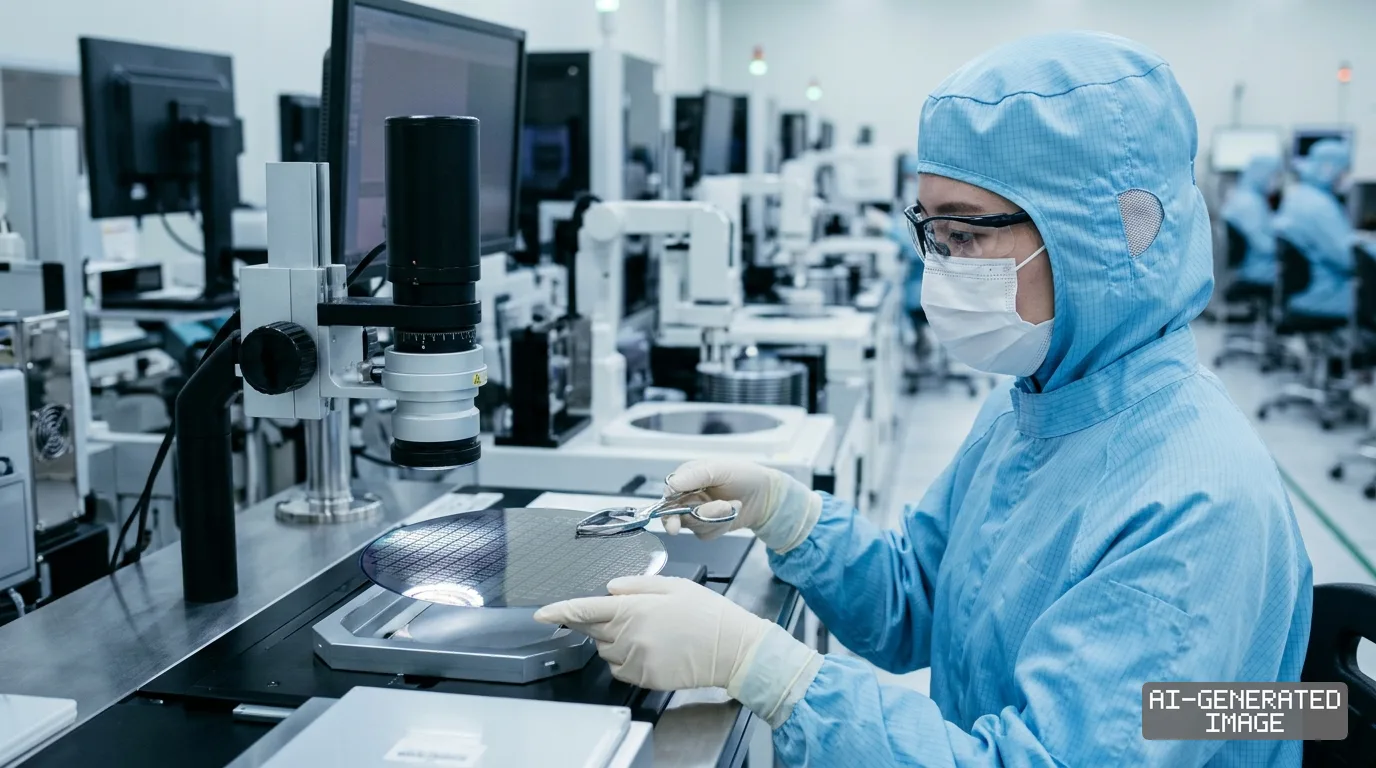
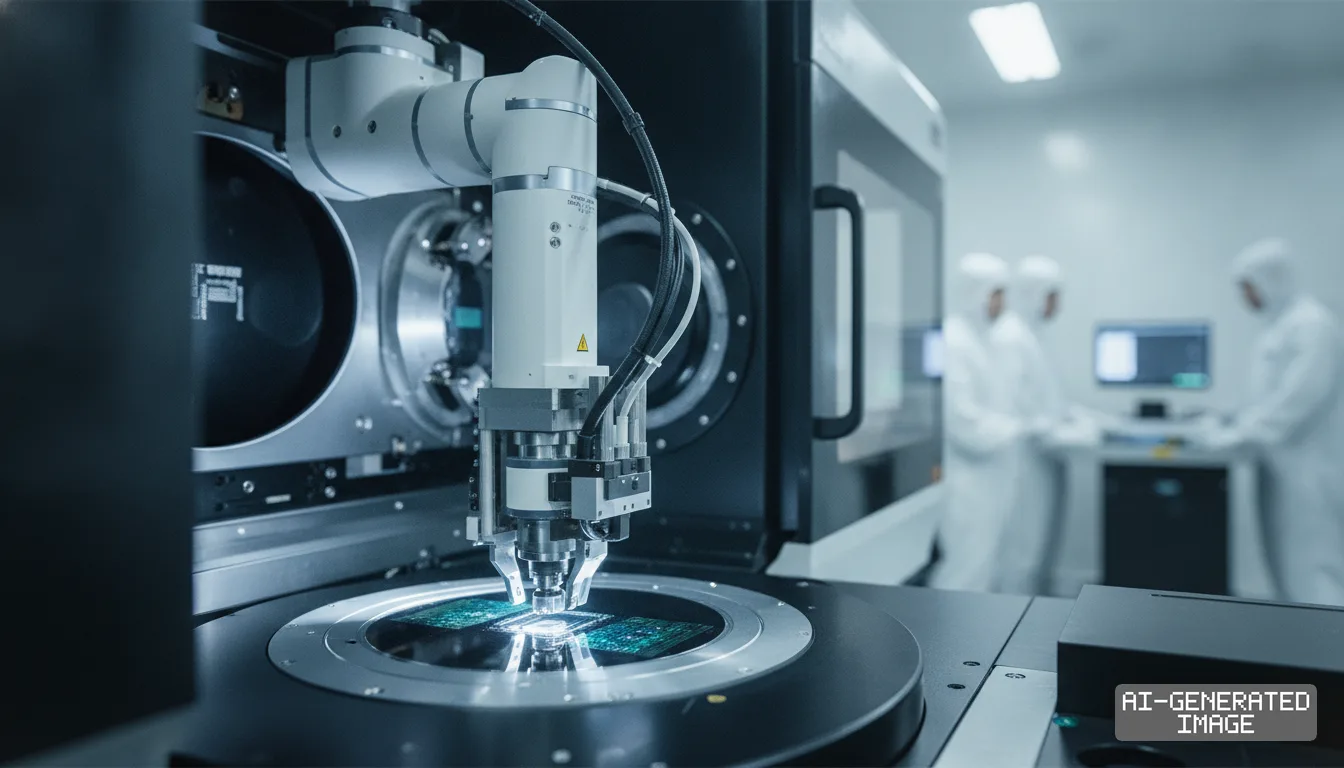
TSMC secures 902-acre Phoenix tract for 12-plant expansion program
The $197.25 million land acquisition south of Loop 303 doubles the Arizona site to 2,000 acres as the chipmaker scales its planned American fabrication hub.
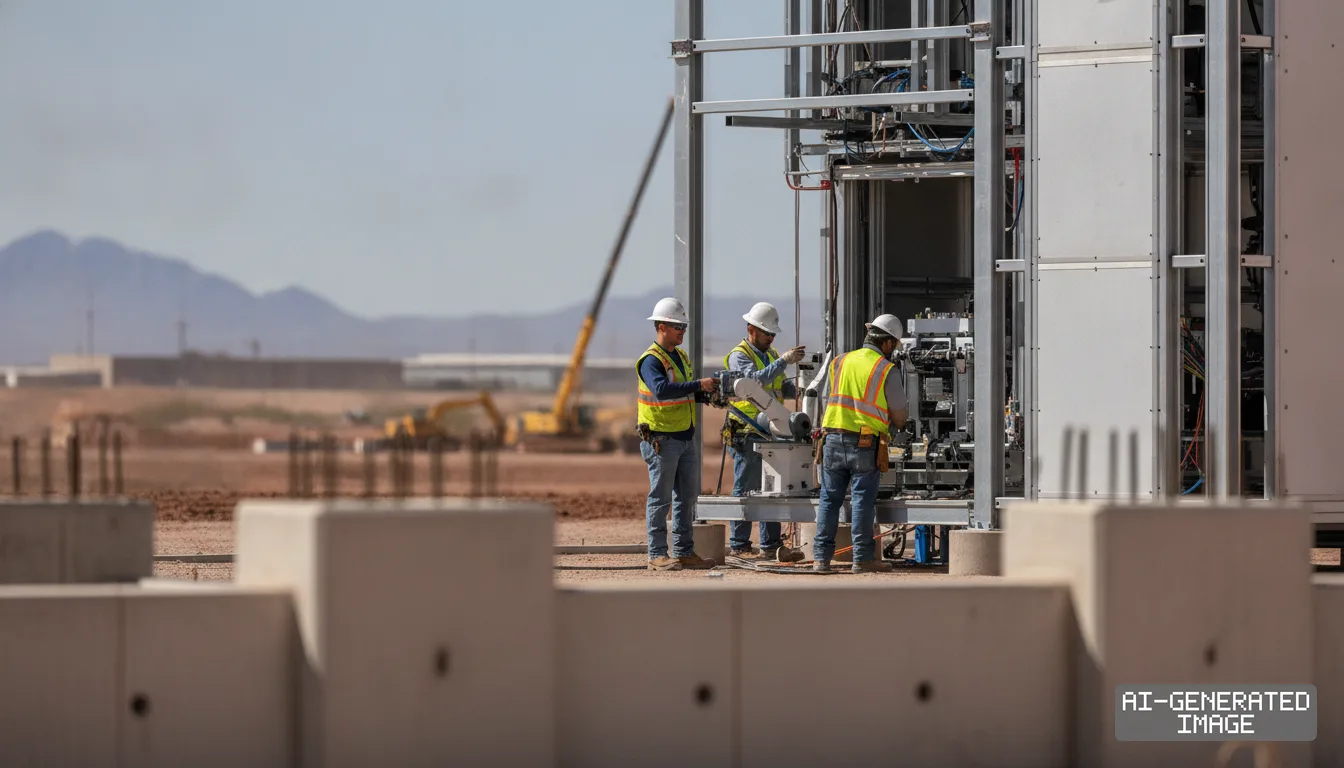
Taiwan Semiconductor Manufacturing Co. formalized operational details on Nov. 29, 2026, for its Phase 5 manufacturing expansion in Phoenix, preparing to break ground on a 902-acre southern parcel.
The expansion expands the Arizona footprint of TSMC to roughly 2,000 acres, providing physical capacity for up to 12 fabrication and packaging facilities. The site represents the core of a $265 billion cumulative investment program across the United States.
TSMC purchased the 902-acre tract south of Loop 303 for $197.25 million during an Arizona State Land Department auction, expanding its industrial land holdings in Phoenix by roughly 82%.
The combined northern and southern campuses are designed to host multiple advanced logic fabrication plants, two dedicated advanced packaging cleanrooms and an industrial research hub.
The aggressive buildout responds to escalating procurement mandates from American fabless customers seeking onshore sourcing for artificial intelligence accelerators and mobile central processors.
Nvidia procures roughly 90% of its data-center graphics processing units from TSMC, with volume packaging for its Blackwell architecture already partially allocated to the Phoenix site.
Advanced Micro Devices sources almost all of its high-performance server processors from TSMC, and plans to draw advanced logic wafers directly from the Arizona manufacturing lines.
Apple accounts for an estimated 25% of TSMC's total foundry revenue, making localized production in Phoenix a strategic hedge against commercial shipping disruptions in East Asia.
Localizing leading-edge wafer output in the United States alters commercial cost structures for American chip designers. Fabrication expenses in Phoenix run 25% to 30% above equivalent operations in Tainan and Hsinchu.
TSMC plans to apply geographical price differentials to Arizona output, passing higher utility rates, construction outlays and domestic labor costs directly to fabless buyers through contractual pricing tiers.
The physical expansion is also driving upstream materials suppliers into the Maricopa County corridor. More than 40 Taiwan-based chemical, gas and tooling vendors have acquired property or established regional depots in Arizona.
Japanese specialty chemical vendors are also expanding their Arizona operations. Resonac, Tokyo Ohka Kogyo and JSR supply photoresists and planarization slurries to the Phoenix fabrication complex.
Fab 1 achieved commercial volume production on its 4-nanometer node in late 2024, reaching production yields that matched output at TSMC's benchmark facilities in southern Taiwan.
Fab 2 has completed exterior concrete shell construction and has begun installing extreme ultraviolet lithography systems ahead of scheduled 3-nanometer volume production in the third quarter of 2027.
The Phase 5 expansion on the South Campus will focus on sub-2-nanometer ribbon field-effect transistor logic production alongside domestic CoWoS advanced packaging lines.
Packaging remains the primary logistical bottleneck for American artificial intelligence hardware. Transporting raw Arizona logic wafers back to Taiwanese packaging lines creates supply chain delays of up to two months.
Domestic packaging lines on the newly added 902-acre parcel will enable complete onshore assembly of advanced artificial intelligence chip modules within the United States.
On-site construction labor across the Phoenix manufacturing cluster currently exceeds 12,000 workers, according to White House employment filings.
The integrated Phoenix complex will support 10,000 direct manufacturing jobs and roughly 11,000 indirect supplier positions upon full buildout, the White House said.
The federal government previously awarded TSMC $6.6 billion in direct funding and up to $5 billion in loans under the CHIPS and Science Act to support early construction phases.
TSMC Chairman and Chief Executive Officer C.C. Wei will host President Donald Trump in Phoenix for the Phase 5 groundbreaking ceremony on Dec. 4, 2026.
The company has not disclosed the node roadmap or capital allocation for Phase 5 facilities, and state filings do not specify when packaging lines on the south parcel will enter construction.
The Arizona State Land Department will finalize zoning conversions and utility right-of-way easements for the southern parcel by Dec. 31, 2026.
Impact map
How this development propagates across the region and out to global buyers.
| Event | Korea | China | Japan | Global impact |
|---|---|---|---|---|
| Phoenix Phase 5 expansion | Samsung Foundry faces wider capacity gap against TSMC in U.S. onshore node contracts | Advanced fab equipment diversion limits domestic foundry tooling procurement runway | Materials suppliers including Resonac and Tokyo Ohka Kogyo secure expanded Arizona supply deals | AI server module supply chain regionalizes as CoWoS packaging expands into North America |
In this story
- Companies
- Taiwan Semiconductor Manufacturing Co.
- Tickers
- 2330.TWTSM
- Exposed
- NvidiaAppleAdvanced Micro DevicesTokyo Electron
- Policy
- Subsidies
- Impact
- CapexSupply ChainPricing
Track every Subsidies development →
Related briefings
- GlobalFoundries signs $2B TSMC packaging deal for AI chips Also on Advanced Micro Devices, Apple, Tokyo Electron
- Trump sets Dec. 4 keynote at TSMC $265B Phoenix fab groundbreak Also on Advanced Micro Devices, Apple, Taiwan Semiconductor Manufacturing Co.
- TSMC secures record $5.1B in overseas fab subsidies during 2026 Also on Advanced Micro Devices, Apple, Taiwan Semiconductor Manufacturing Co.
- TSMC steadies at 21x earnings with 73% share of foundry spending Also on Advanced Micro Devices, Apple, Taiwan Semiconductor Manufacturing Co.
Sources
Reporting
Confidence: high — how we grade this
The documents behind this briefing are linked above. East Asia Brief produces its English text with AI assistance under human editorial review, and does not translate or republish other outlets' articles. See our methodology and AI policy. Spotted an error? Tell us.
The Morning Brief
What changed in Korean, Chinese and Japanese industry overnight — and what it means for your supply chain. One email, weekday mornings, US time. Free.
The Morning Brief is in preparation. Leave your address and we will write to you once — when the first issue is ready. Nothing before that.