SK hynix schedules October 2027 start for 874.6B won Yongin testbed
The chipmaker will fund 443.2 billion won of the 300-millimeter line beneath its first production plant, alongside 373.6 billion won from the trade ministry.
SK hynix and its government partners set the operational schedule for Trinity Fab on Nov. 8, 2026, scheduling an October 2027 launch for the shared semiconductor testbed in Yongin.
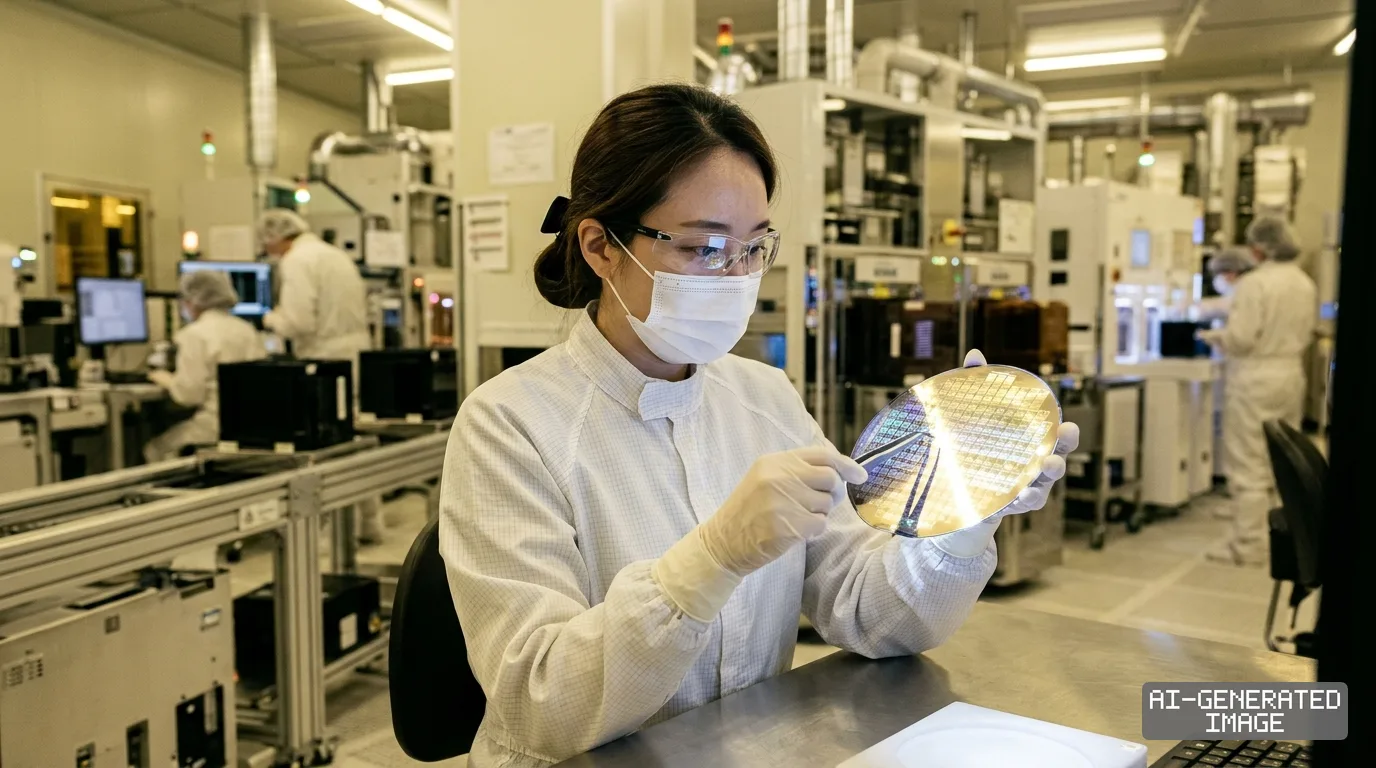
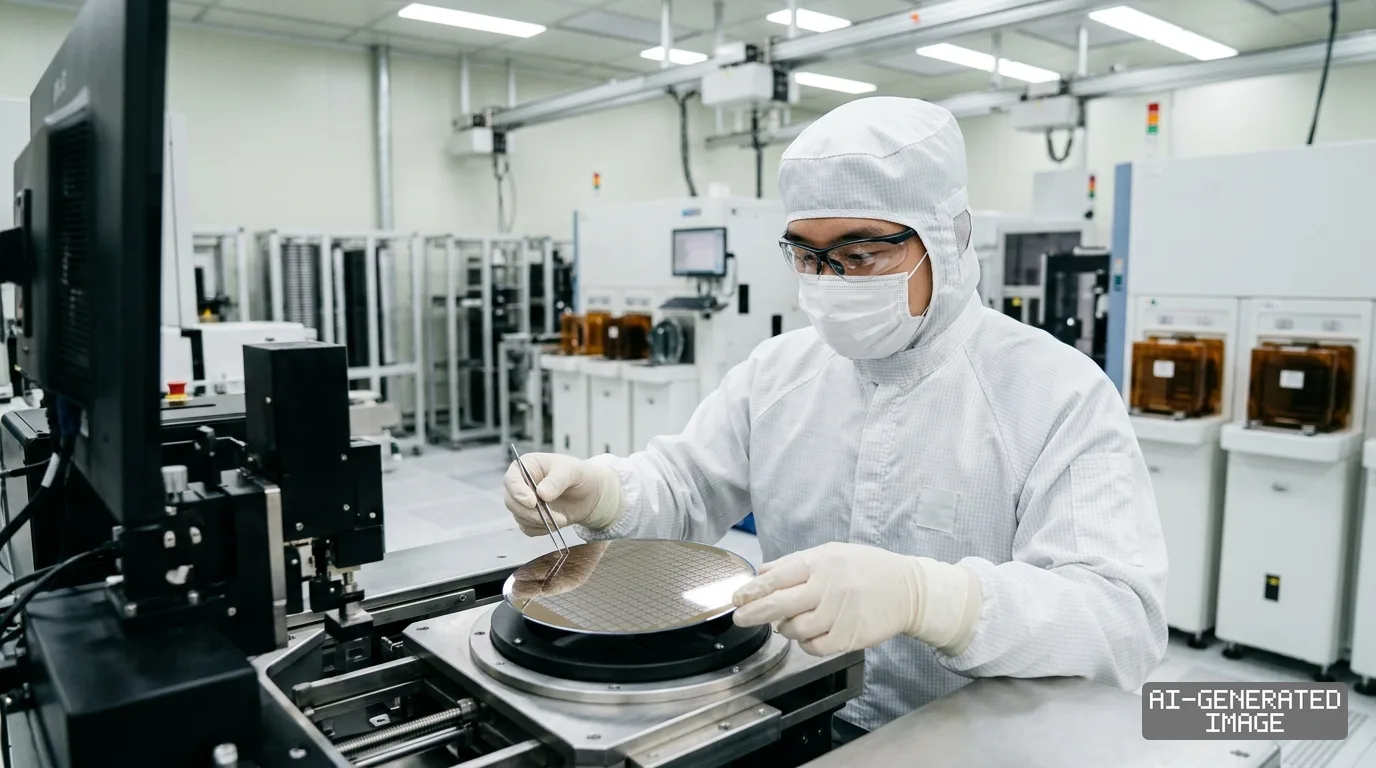
The 874.6 billion won ($635 million) mini-fab occupies the northwest section beneath SK hynix's first Yongin production plant. It provides a 300-millimeter wafer line to test domestic equipment, parts and materials under mass-production conditions.
SK hynix provides 443.2 billion won, representing roughly 51% of total project capital. South Korea's trade ministry covers 373.6 billion won, while local governments in Gyeonggi Province and Yongin City contribute the remaining 57.7 billion won.
The facility operates as an open-access nonprofit entity rather than a dedicated high-bandwidth memory production line. Trade Minister Kim Jung-kwan reviewed site preparations Oct. 19 during an inspection of the broader 21.6 trillion won Yongin complex.
Trinity Fab requires 37 primary manufacturing tools across front-end processing steps. Project managers plan to install 70% of those units before opening verification services to commercial suppliers in late 2027.
Cleanroom turnover begins in May 2027, clearing the floor for initial lithography and etch apparatus. Technicians will deploy the remaining 30% of the equipment fleet in phases through 2031.
The platform replicates SK hynix's front-end DRAM manufacturing recipes on 12-inch wafers. Component makers gain access to live wafer runs without bearing the expense of standalone industrial cleanrooms.
South Korea's trade ministry formally chartered the operating entity as Foundation Trinity Fab on Oct. 28, 2025. The nonprofit foundation maintains administrative offices at the Korea Semiconductor Industry Association headquarters in Pangyo.
Process capabilities include argon fluoride immersion lithography tracks and dielectric plasma etching systems. The testbed also features atomic layer deposition tooling for hafnium oxide and zirconium oxide dielectric films.
Thermal chemical vapor deposition systems handle silicon dioxide, silicon nitride and polycrystalline silicon. Metal deposition equipment applies titanium nitride, tungsten and aluminum layers across patterned wafers.
Chemical-mechanical planarization units polish copper, tungsten and oxide surfaces between layering steps. Metrology bays run critical dimension scanning electron microscopy alongside optical defect inspection systems to check process repeatability.
The installation supports qualification runs for inputs needed in advanced memory fabrication. Memory producers require strict chemical purity and defect tolerance before clearing domestic materials for commercial dynamic random-access memory fabs.
Testing service provider QRT signed a technical cooperation agreement with Trinity Fab on Sept. 3, 2026. QRT allocates analytical laboratories to inspect wafer defects, accelerating supplier evaluations for production lines.
The testbed operates under an open policy for domestic component and chemical suppliers. Suppliers developing products for Samsung Electronics or international foundries may reserve line capacity under standardized parameters.
South Korean lawmakers proposed tax amendments on Nov. 3, 2026, to shield participating private firms from gift tax assessments. The measure classifies equipment loaned for three years or longer as deductible business expenses.
Corporate donations and seconded engineering personnel also receive corporate tax deductions under the pending legislation. Lawmakers scheduled parliamentary review hearings to implement the tax framework ahead of early 2027 tool handovers.
The financing framework connects with a 2 trillion won supplier credit facility established Oct. 19, 2026. SK hynix organized the fund with four domestic banks and state insurance agencies to back upstream equipment developers.
The foundation has not published its user fee schedule for private vendors, and official notices do not disclose the specific equipment vendors chosen for the initial tool delivery slots.
Tool delivery contracts enter final technical review in early 2027. Cleanroom outfitting begins in May 2027, ahead of customer wafer processing scheduled for October 2027.
Impact map
How this development propagates across the region and out to global buyers.
| Event | Korea | China | Japan | Global impact |
|---|---|---|---|---|
| Trinity Fab testbed deployment | SK hynix commits 443.2 billion won to qualify domestic front-end tooling | CXMT faces wider tooling efficiency gap against Korean DRAM suppliers | Japanese chemical vendors face localized competition in Korean cleanrooms | 300mm wafer validation de-risks advanced memory supply chain |
In this story
Track every Subsidies development →
Related briefings
- Kioxia and Sandisk split roadmaps for 3D NAND hybrid bonding in Japan Also on SK hynix, Subsidies
- Korea eases factory closure rules for high-tech reshoring Also on SK hynix, Subsidies
- Korea chip exports reach $56.4B as AI hardware demand surges Also on SK hynix, Subsidies
- Solidigm weighs $45B US NAND plant as AI SSD demand surges Also on SK hynix, Subsidies
Sources
Primary documents
Reporting
Confidence: high — how we grade this
The documents behind this briefing are linked above. East Asia Brief produces its English text with AI assistance under human editorial review, and does not translate or republish other outlets' articles. See our methodology and AI policy. Spotted an error? Tell us.
The Morning Brief
What changed in Korean, Chinese and Japanese industry overnight — and what it means for your supply chain. One email, weekday mornings, US time. Free.
The Morning Brief is in preparation. Leave your address and we will write to you once — when the first issue is ready. Nothing before that.