Malaysia approves raw rare earth shipment under new export rules
A single research export permit marks the first breach in a 2024 moratorium, testing whether Southeast Asian ore can supply Western refiners without China.
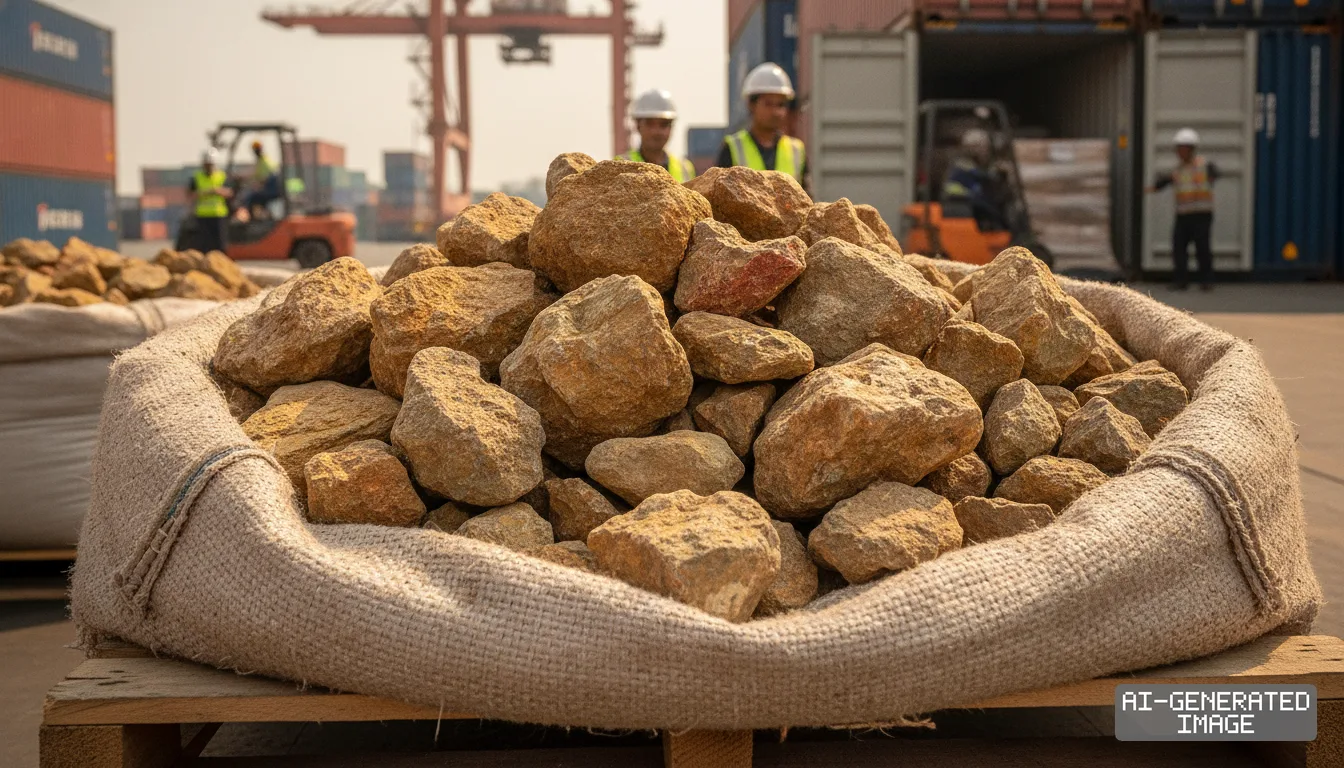
Malaysia's Ministry of Natural Resources and Environmental Sustainability approved a maiden export shipment of unprocessed rare earth minerals on Oct. 22, 2026.
The authorization clears a single consignment for research and development purposes, the ministry said. The move provides the first operational test of a policy shift designed to coax foreign refiners into domestic processing ventures.
The permit unfreezes a fractional slice of Malaysia's estimated 16.1 million metric tons of inferred rare earth resources, an inventory the government values at 970 billion ringgit ($230 billion). Inferred resources represent geological estimates rather than confirmed commercial reserves.
Until this month, the minerals had stayed locked behind a total export moratorium on raw ores that took effect Jan. 1, 2024. Cabinet ministers designed that ban to prevent miners from shipping untreated feedstock directly to Chinese processors.
The Department of Mineral and Geoscience Malaysia approved the permit under revised guidelines issued Oct. 1. Those rules allow conditional raw shipments if applicants commit to local capital expenditure and technical training.
The ministry confirmed the decision in a written reply to inquiries Oct. 22. It followed a formal statement submitted to the Malaysian parliament, the Dewan Rakyat, on Oct. 7 outlining exceptions for processing trials.
"The guidelines are open to eligible applicants, including foreign companies, subject to compliance with the relevant regulatory requirements," the ministry said. It added that official priority remains focused on industrial investment quality rather than high shipment volumes.
The regulatory shift alters procurement options for Western magnet makers seeking feedstock outside China. Chinese state refiners control roughly 87% of global rare earth separation and more than 90% of permanent magnet manufacturing.
Malaysia hosts Australia's Lynas Rare Earths Ltd, which operates a heavy separation refinery in Gebeng, Pahang. Lynas operates the largest commercial rare earth cracking and refining plant outside China, holding an operating licence valid through 2036.
The Lynas facility processes imported concentrate from Western Australia rather than domestic ore. The new export mechanism allows other mining entities to export trial batches of Malaysian ion-adsorption clay for overseas assay.
Ion-adsorption clay deposits are shallow mineral bodies containing heavy rare earths, such as dysprosium and terbium. Those two elements remain essential additives that prevent electric vehicle motor magnets from demagnetizing at high temperatures.
Other international developers are already positioning capital to capture midstream value inside Malaysia. France's Carester SAS signed an agreement to construct a rare earth separation plant in Perak state with domestic partner Malaco Mining Group.
Domestic conglomerate Berjaya Corp Bhd also began evaluating commercial exploration tracts across several peninsular states. The company holds diversified holdings across retail, property and hospitality, and aims to anchor local resource development.
More than a dozen American commercial teams have opened informal evaluations of Malaysian mineral assets, according to trade officials. The United States government has sought non-Chinese processing partners to secure defense and automotive supply lines.
The easing comes after domestic authorities confronted persistent illegal extraction. Federal police arrested 31 suspects in Perak's Bintang Hijau Forest Reserve in December 2023 over clandestine mining that bypassed royalty collections and safety reviews.
The government maintains that raw exports will stay restricted once domestic midstream infrastructure reaches operational scale. Processing plants convert rare earth concentrates into separated oxides, the purified chemical powders needed to produce metallic alloys.
The ministry has not published the approved shipment tonnage, export destination or corporate identity of the recipient. Those details remain confidential under standard commercial application procedures, trade authorities said.
A review of foreign investment pledges submitted under the new framework will take place before cabinet ministers decide on further trial permits, according to parliamentary filings.
Impact map
How this development propagates across the region and out to global buyers.
| Event | Korea | China | Japan | Global impact |
|---|---|---|---|---|
| Malaysia raw rare earth export permit | Domestic battery and motor makers track alternative dysprosium sources outside China | Customs monitoring bypass channels that could divert Southeast Asian ion-clay feedstock | Trading houses inspect non-Chinese separation routes to safeguard NdFeB magnet supplies | First authorized non-moratorium ore shipment opens strategic testing channel for Western refiners |
In this story
- Companies
- Lynas Rare EarthsBerjaya CorpCaresterMalaco Mining Group
- Tickers
- LYC.AX3395.KL
- Policy
- Export Controls
- Impact
- Supply ChainCompliance
Track every Export Controls development →
Related briefings
- USA Rare Earth Funds Brazil Mining and Carolina Magnet Plant Also on Carester
- Malaysia links rare earth export permits to technology deals Also on Lynas Rare Earths, Export Controls, Compliance
- Malaysia curbs raw rare earth exports to force local refining in 2026 Also on Lynas Rare Earths, Export Controls, Compliance
- LS Eco Energy builds Vietnam samarium hub ahead of defense ban Also on Lynas Rare Earths, Export Controls, Compliance
Sources
Reporting
Confidence: medium — how we grade this
The documents behind this briefing are linked above. East Asia Brief produces its English text with AI assistance under human editorial review, and does not translate or republish other outlets' articles. See our methodology and AI policy. Spotted an error? Tell us.
The Morning Brief
What changed in Korean, Chinese and Japanese industry overnight — and what it means for your supply chain. One email, weekday mornings, US time. Free.
The Morning Brief is in preparation. Leave your address and we will write to you once — when the first issue is ready. Nothing before that.