Malaysia links rare earth export permits to technology deals
The natural resources ministry affirmed conditional ore shipments while parliament debated a state vehicle to manage $188 billion in reserves.
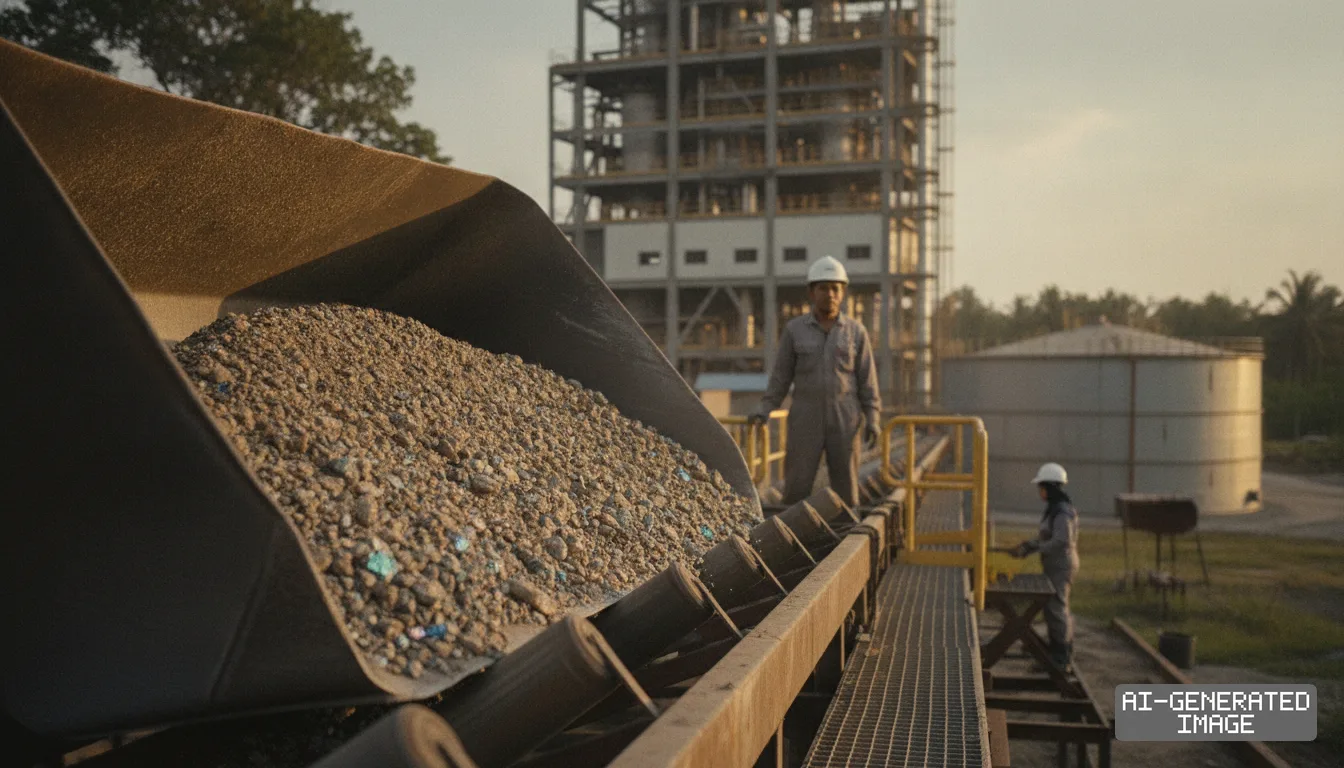
Malaysia's parliamentary opposition proposed a state-owned corporation on Oct. 12, 2026, to oversee RM809.6 billion ($188 billion) in rare earth deposits and extract foreign processing know-how.
The proposal comes as the Southeast Asian nation seeks to leverage 16.1 million metric tons of non-radioactive rare earth deposits. The government aims to climb from unrefined mineral extraction into downstream chemical separation.
The Ministry of Natural Resources and Environmental Sustainability confirmed on Oct. 7 that miners may export raw ore only under binding pacts. Approved applicants must commit to building domestic processing refineries within three years.
Malaysia instituted a nationwide export ban on unprocessed rare earth ores on Jan. 1, 2024. The federal cabinet extended that moratorium through 2027 to block cheap ore outflows and foster domestic refining hubs.
Opposition Leader Hamzah Zainudin told the Dewan Rakyat on Oct. 12 that Malaysia needs a centralized entity modeled after national oil firm Petroliam Nasional Bhd. He proposed calling the new state minerals vehicle Reenas.
Hamzah argued during the Budget 2027 debate that fragmented state mining concessions risk squandering mineral reserves. A unified national agency would prevent raw material leakage and control processing revenues, Hamzah said in parliament.
The legislative push follows months of exploratory government negotiations with Beijing. Malaysian Prime Minister Anwar Ibrahim directed state investment fund Khazanah Nasional to explore refinery joint ventures with Chinese state-owned enterprises late last year.
Securing Chinese technical expertise presents steep diplomatic and legal barriers. China's Ministry of Commerce revised its export control catalogue in December 2023, strictly prohibiting the export of advanced rare earth separation and extraction technology.
Chinese state refiners want access to Malaysian heavy rare earths, including dysprosium and terbium. Beijing has offered to license processing know-how only through tightly controlled partnerships with Malaysian government-linked investment vehicles.
Australia's Lynas Rare Earths holds the most immediate commercial exposure in the country. Lynas operates a 100-hectare separation plant in Gebeng, Pahang, producing roughly 1,500 metric tons of separated heavy rare earth oxides each year.
Lynas is currently developing a 3,000-tonne-per-year permanent magnet facility in Kuantan alongside South Korean partner JS Link. A rival state refinery backed by Chinese capital would compete directly with Lynas for local chemical processing inputs.
Chinese state mining conglomerates already hold operational footholds across peninsular deposits. Southern Alliance Mining holds a 40% stake in MCRE Resources, which supplies heavy rare earth feedstocks to Chinalco Guangxi Nonferrous Rare Earth inside China.
Guidelines circulated by Malaysian regulators in October cap raw carbonate and oxide shipments for overseas testing at 100 metric tons per permit. State authorities must verify the provenance, grade assays and end-user identity before granting approval.
The federal cabinet previously granted Perak state an isolated export exemption for an ionic clay pilot mine in Hulu Perak. That operation has shipped rare earth carbonate batches while evaluating commercial purification systems.
Western governments have attempted to steer Malaysian critical mineral supplies away from Chinese control. Malaysia signed bilateral trade and mineral cooperation frameworks with the United States and the European Union across late 2025 and 2026.
Under those agreements, Malaysian authorities pledged not to restrict commercial shipments to American manufacturing partners. However, Malaysian trade officials insisted that primary refining must occur locally before refined oxides enter international trade channels.
French processor Carester signed a 10-year partnership in July to construct a domestic heavy separation plant in Perak. Japan International Cooperation Agency has simultaneously funded a two-year feasibility study on non-radioactive ore refining.
Mineral licensing rights remain constitutionally vested in Malaysia's individual state governments. State administrations in Kelantan, Kedah and Terengganu have resisted blanket federal export bans, arguing that delayed processing facilities choke off local royalties.
Investment, Trade and Industry Minister Johari Abdul Ghani said foreign mining groups must share intellectual property. He stated in August that overseas partners would be barred from local concessions unless they transfer midstream industrial machinery.
Johari said the government will prepare legal safeguards to protect foreign trade secrets and technical specifications. The ministry wants to assure potential technology providers that their patented extraction methods will not leak to competitors.
The federal moratorium prohibiting uncommitted raw mineral exports remains legally binding through Dec. 31, 2027. Mining operators seeking pilot export quotas face a strict three-year compliance deadline to break ground on domestic refineries.
The natural resources ministry has not published formal criteria for approving conditional export applications. The federal government has not disclosed whether Khazanah finalized any legally binding joint venture agreement with Chinese state processing firms.
Impact map
How this development propagates across the region and out to global buyers.
| Event | Korea | China | Japan | Global impact |
|---|---|---|---|---|
| Conditional rare earth export framework | JS Link partners with Lynas on 3,000-tonne magnet line in Kuantan | Chinalco secures ore via MCRE Resources while Beijing restricts tech exports | JICA funds refining feasibility study as Tokyo tracks non-China supply | Western procurement faces tight heavy rare earth refining bottlenecks through 2027 |
In this story
- Companies
- Lynas Rare EarthsKhazanah Nasional
- Tickers
- LYC.AX
- Exposed
- JS LinkSouthern Alliance Mining
- Policy
- Export ControlsIndustrial Policy
- Impact
- Supply ChainComplianceCapex
Track every Export Controls development → Track every Industrial Policy development →
Related briefings
- Malaysia overtakes China in US drone market as tariffs bite Also on JS Link, Lynas Rare Earths, Export Controls
- Malaysia curbs raw rare earth exports to force local refining in 2026 Also on Lynas Rare Earths, Export Controls, Compliance
- LS Eco Energy builds Vietnam samarium hub ahead of defense ban Also on Lynas Rare Earths, Export Controls, Compliance
- LS Eco Energy builds Vietnam samarium line as US rules loom Also on Lynas Rare Earths, Export Controls, Compliance
Sources
Reporting
Confidence: medium — how we grade this
The documents behind this briefing are linked above. East Asia Brief produces its English text with AI assistance under human editorial review, and does not translate or republish other outlets' articles. See our methodology and AI policy. Spotted an error? Tell us.
The Morning Brief
What changed in Korean, Chinese and Japanese industry overnight — and what it means for your supply chain. One email, weekday mornings, US time. Free.
The Morning Brief is in preparation. Leave your address and we will write to you once — when the first issue is ready. Nothing before that.