Global solar additions drop 14.8% as China curbs export rebates
A GlobalData report shows 2026 installations will contract for the first time since 2018 after Beijing dismantled state export tax incentives.
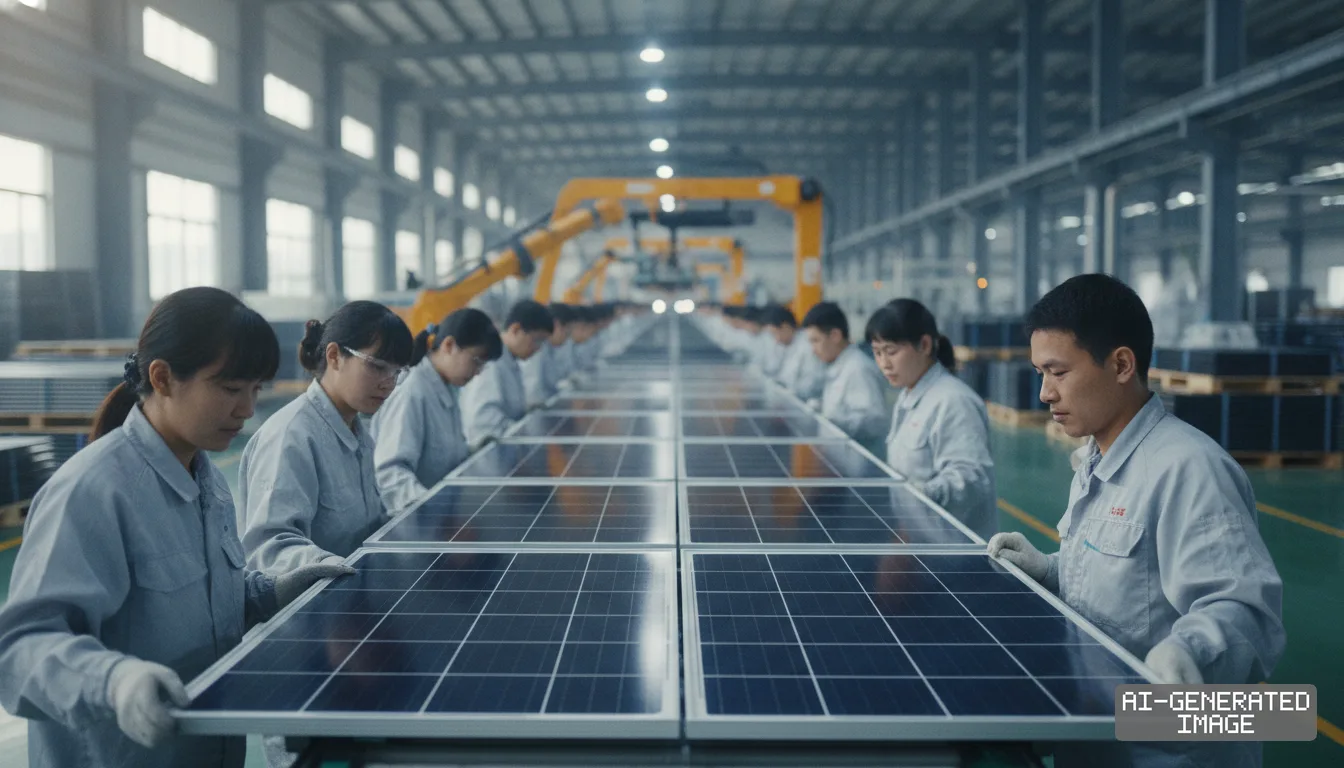
Global solar photovoltaic installations will fall 14.8% in 2026, suffering their first annual drop since 2018 as Chinese fiscal revisions curtail export volumes, research group GlobalData said Nov. 17, 2026.
The projected contraction reverses a 17.5% expansion recorded across global installations in 2025. China accounts for more than 50% of annual worldwide solar additions, making shifts in its trade and power rules decisive for global equipment supply.
Chinese authorities restructured cross-border incentives earlier this year to curb low-price competition abroad. The policy revisions ended years of state-backed tax support that had depressed module prices across international markets.
China's Ministry of Finance and the State Taxation Administration enacted the core change through Joint Announcement No. 2 on Jan. 9, 2026. The decree took effect April 1, 2026.
The measure eliminated the 9% value-added tax export rebate on 249 photovoltaic tariff lines. The zero-rebate list covers silicon wafers, solar cells, packaged modules and balance-of-system components like string inverters.
Ending the rebate adds roughly 0.8 to 1.2 cents per watt to Chinese component export costs. Manufacturers had previously absorbed thin margins by applying the 9% tax refund directly to overseas selling prices.
LONGi Green Energy Technology Co. carries high exposure to the export changes. Overseas shipments generated over 65% of revenue for the company's module division during the first half of 2026.
LONGi posted a net loss of 3.68 billion yuan ($510 million) in the first half of 2026 on 27.05 billion yuan in revenue. The manufacturer absorbed higher export expenses while expanding its overseas production footprint.
JinkoSolar Holding Co. delivered 29.6 gigawatts of modules in the first half of 2026. Approximately 70% of those shipments went to buyers outside China, leaving its operational margins exposed to the full tax adjustment.
JinkoSolar saw its second-quarter gross margin fall to 4.2% from 8.3% in the prior quarter. Lower module prices and new border tax liabilities constrained earnings across its core utility-scale deliveries.
Trina Solar Co. and inverter supplier Sungrow Power Supply Co. also face higher international friction. Sungrow books nearly half its inverter volume overseas, where cancellation of the 9% rebate raised delivery costs.
Contract renegotiations between Chinese exporters and international engineering firms have stalled multiple projects. Overseas buyers in Europe and Latin America have resisted manufacturer attempts to pass through the 9% cost increase into existing purchase agreements.
The fiscal adjustment coincides with domestic power market changes inside China. Regulators have moved solar plants from fixed feed-in tariffs toward market-based wholesale power trading, lowering expected equity returns for Chinese generation assets.
Domestic Chinese developers reduced module procurement schedules during the third quarter as local power prices fluctuated. That domestic pause removed the primary demand buffer that had previously cushioned Chinese component manufacturers during export downturns.
Supply chains have responded by shifting wafer and cell sourcing into third-party assembly hubs. Leading manufacturers have redirected shipments through joint ventures in Indonesia, Saudi Arabia and the United States to capture regional tariff exemptions.
The tax overhaul also sets firm deadlines for energy storage systems. Export rebates on 22 battery tariff lines dropped to 6% on April 1, 2026, and will fall to 0% on Jan. 1, 2027.
The looming battery rebate elimination will raise balance-of-plant costs for paired solar-plus-storage projects next year. System integrators are rushing container shipments before the year-end deadline to avoid the final six-percentage-point tariff jump.
Global installation volumes are projected to resume growth in 2027 as project developers adjust power purchase agreements to higher hardware costs. Cumulative worldwide capacity is forecast to expand at a 12.5% compound annual rate through 2035.
The ministry notice does not state whether custom bonded manufacturing contracts signed prior to April 1 qualify for transitional exemptions, and local customs authorities have not published audit guidelines for in-transit shipments.
The State Taxation Administration scheduled a joint compliance review with the China Photovoltaic Industry Association for Dec. 15, 2026, to assess factory inventory levels before the battery rebate expires.
Impact map
How this development propagates across the region and out to global buyers.
| Event | Korea | China | Japan | Global impact |
|---|---|---|---|---|
| China solar export rebate elimination | Hanwha Qcells sees short-term utility pricing power improve in Europe and US | LONGi and JinkoSolar absorb 0.8-1.2 cents per watt cost hike on overseas shipments | Project developers face renegotiated module EPC terms for utility additions | Worldwide solar additions contract 14.8% in 2026 before resuming growth in 2027 |
In this story
- Companies
- LONGi Green Energy TechnologyJinkoSolarSungrow Power SupplyTrina Solar
- Tickers
- 601012.SS688223.SS300274.SZ688599.SS
- Policy
- Tax CreditsTariffs
- Impact
- PricingCost StructureSupply Chain
Track every Tax Credits development → Track every Tariffs development →
Related briefings
- China restricts 12 solar technologies under new export rules Also on Trina Solar, LONGi Green Energy Technology
- China challenges Western cleantech tariffs at COP31 summit Also on LONGi Green Energy Technology, Tariffs, Pricing
- Sungrow picks Samsung SDI cells to protect US storage sales Also on Sungrow Power Supply, Tariffs, Cost Structure
- Grid Storage Costs Diverge Across East Asia as Safety Rules and Balance of System Shape Pricing Also on Sungrow Power Supply, Pricing, Cost Structure
Sources
Primary documents
Reporting
Confidence: high — how we grade this
The documents behind this briefing are linked above. East Asia Brief produces its English text with AI assistance under human editorial review, and does not translate or republish other outlets' articles. See our methodology and AI policy. Spotted an error? Tell us.
The Morning Brief
What changed in Korean, Chinese and Japanese industry overnight — and what it means for your supply chain. One email, weekday mornings, US time. Free.
The Morning Brief is in preparation. Leave your address and we will write to you once — when the first issue is ready. Nothing before that.