CXMT lifts DRAM market share to 10% in legacy memory offensive
Ten years after founding, Chinese chipmakers CXMT and YMTC pressure Korean memory suppliers by ramping commodity DRAM and flash storage production.
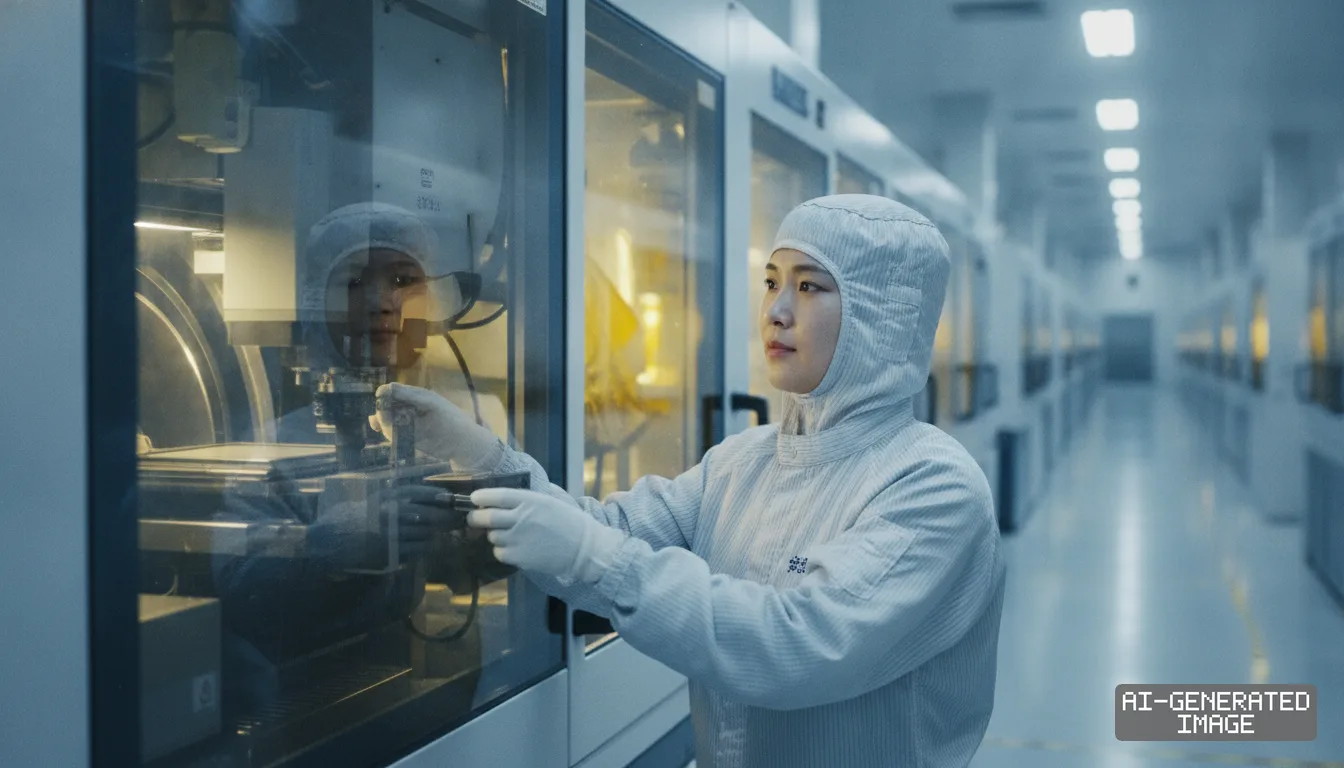
South Korea's top memory chipmakers faced mounting legacy supply pressure on Nov. 17, 2026, as Chinese rivals ChangXin Memory Technologies and Yangtze Memory Technologies expanded their tenth-anniversary commodity production push.
The rapid ramp by both Chinese state-backed chipmakers has reshaped the volume tiers of dynamic random-access memory and flash storage. The shift forces Korean suppliers to accelerate their migration toward premium artificial intelligence hardware.
ChangXin Memory Technologies, known as CXMT, captured 10% of global DRAM revenue in the second quarter of 2026, according to Counterpoint Research. That figure rose from 4% in the same quarter a year earlier.
Yangtze Memory Technologies, known as YMTC, secured 14% of the global NAND flash market in the second quarter of 2026. The gain lifted the Wuhan-based company to third place worldwide in NAND revenue, according to Counterpoint Research.
Founded in 2016, both Chinese memory producers have leaned heavily on state subsidies to build domestic manufacturing scale. That capital cushion shielded them from cyclical downturns that routinely discipline commercial competitors.
The volume surge directly exposes Samsung Electronics and SK hynix in standard memory categories. Samsung held 38% of global DRAM revenue and 28% of NAND revenue in the second quarter. SK hynix controlled 25% of DRAM and 19% of NAND.
CXMT's projected bit growth reached 48% for 2026, according to estimates compiled by Kiwoom Securities. That rate nearly doubled the 24% bit growth forecast for Samsung Electronics and outpaced the 30% projected for SK hynix.
The expansion followed CXMT's listing on the Shanghai Stock Exchange's STAR Market on July 27, 2026, trading under ticker 688825. The offering priced at 8.66 yuan and lifted the firm's equity valuation past 3 trillion yuan ($414 billion).
On Sept. 29, 2026, CXMT allocated 35 billion yuan ($4.8 billion) in capital expenditure to its Hefei production hub, according to a corporate filing to the Shanghai exchange.
The Hefei allocation earmarked 24.1 billion yuan ($3.3 billion) for a 12-inch wafer research base. The company directed another 10.8 billion yuan ($1.5 billion) toward an advanced wafer testing plant.
That spending is widening total output. Industry projections show CXMT's monthly DRAM wafer capacity rising from 300,000 wafers in late 2026 toward 500,000 wafers by late 2028.
YMTC plans a parallel buildout. The company is on track to expand its NAND wafer capacity from 200,000 wafers monthly to 400,000 wafers over the same period.
The aggressive pricing of Chinese standard chips has eroded margins on legacy DDR4 and DDR5 memory. That erosion leaves little room for non-subsidized producers in entry-level segments.
In response, South Korean manufacturers have reallocated capital expenditure toward high-bandwidth memory, known as HBM, and high-density enterprise solid-state drives.
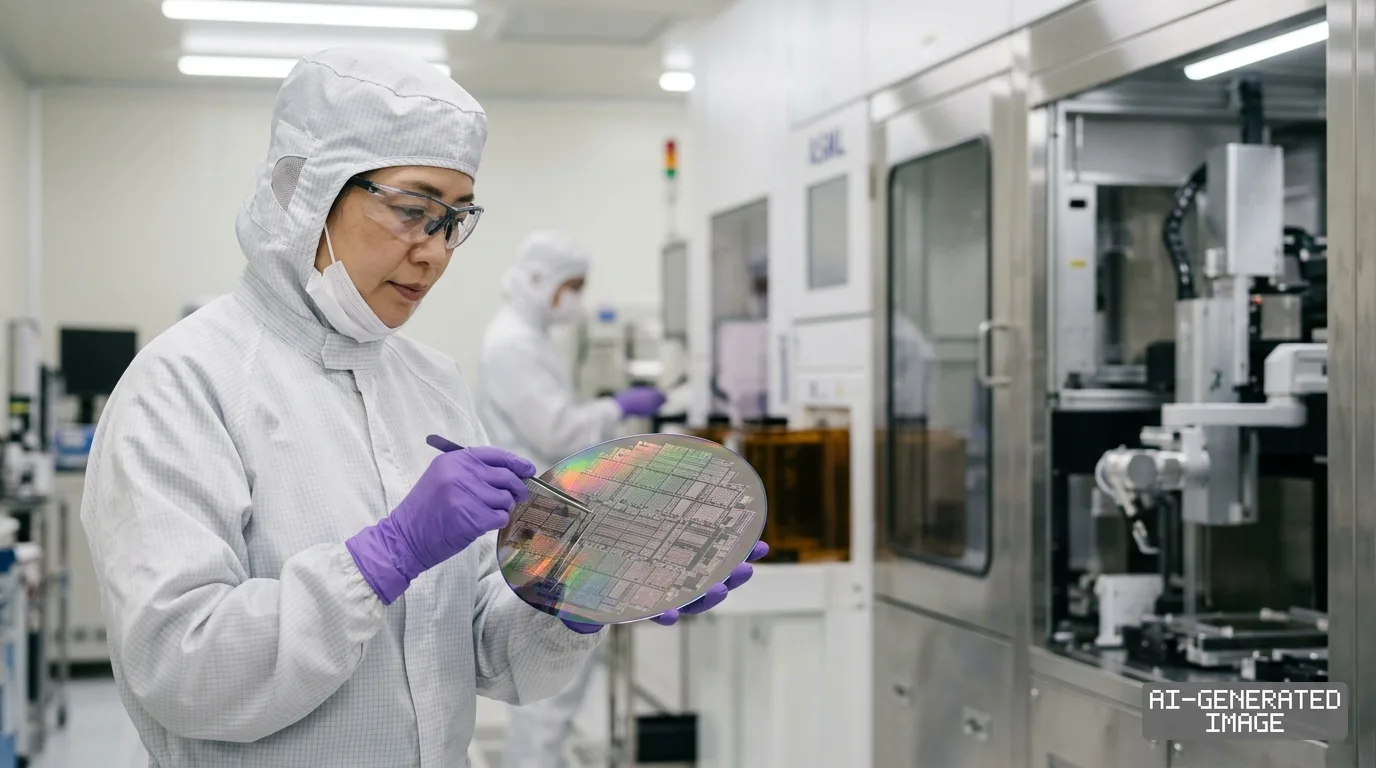
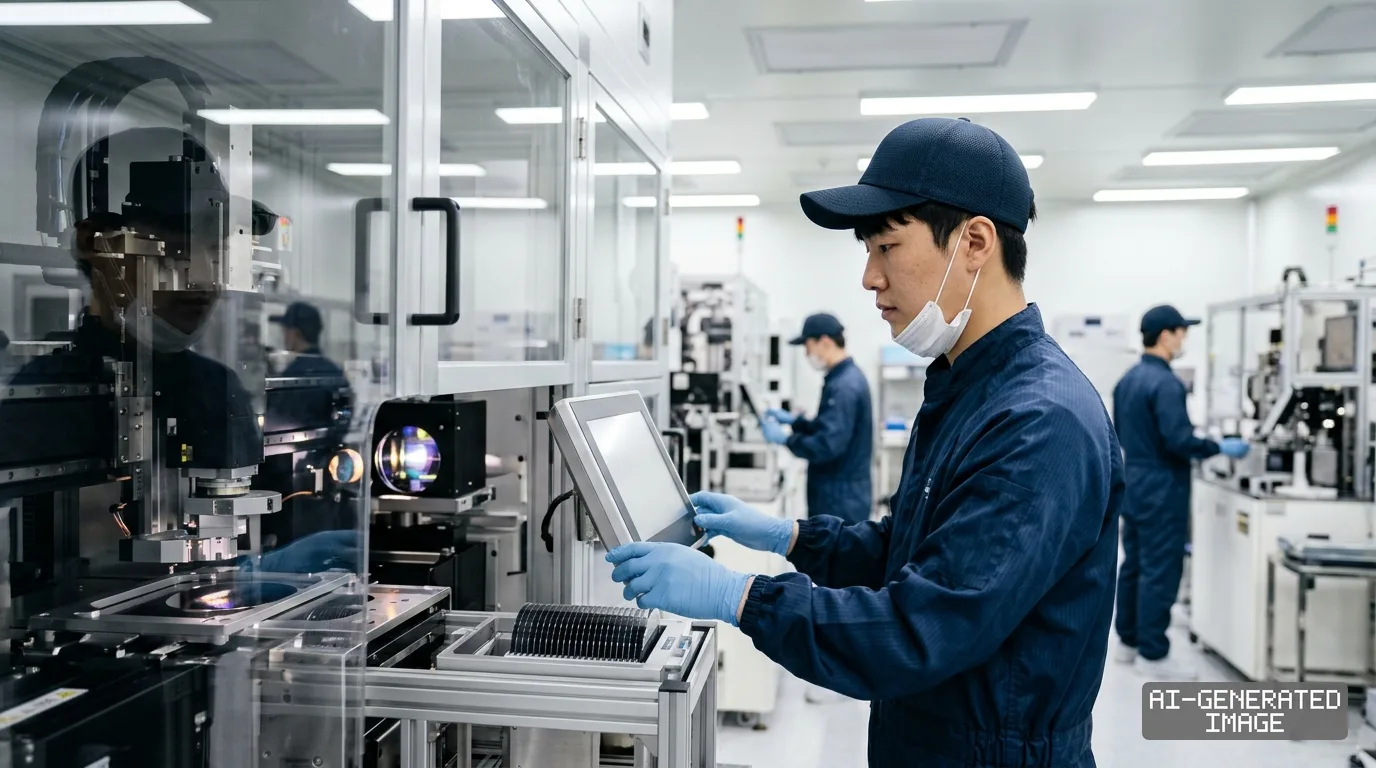
Samsung Electronics and SK hynix now concentrate cleanroom floor space on eighth-generation V-NAND and advanced packaging lines. Those lines build the complex memory stacks required by high-end graphics processing units.
The technological divide between the two camps remains defined by access to advanced tooling. Export controls imposed by the United States restrict shipments of extreme ultraviolet lithography tools to Chinese production sites.
CXMT has attempted to circumvent lithography limits through multi-patterning techniques. On Sept. 20, 2026, the company began mass production of its fifth-generation G5 DRAM platform at the World Manufacturing Convention in Hefei.
The G5 platform shrinks the memory array's active-area half-pitch to 11.95 nanometers using self-aligned quadruple patterning, CXMT said. The company also announced mass production of 24-gigabit LPDDR5X chips built on the architecture.
That announcement followed an earlier rollout on Sept. 7, 2026, when CXMT delivered LPDDR6 mobile DRAM silicon for integration into Xiaomi's flagship foldable handsets.
Yet technical limitations persist beneath the headline node designations. Quadruple patterning requires repeated deposition and etch passes, which increases cycle time and wafer defects compared with direct extreme ultraviolet exposure.
Independent laboratory analysis from TechInsights indicates CXMT's process integration still trails global tier-one roadmaps by roughly two full process generations.
The companies' exchange filings do not disclose the manufacturing yield rates achieved on the 11.95-nanometer DRAM lines. High defect rates can offset nominal wafer cost advantages during high-volume commercial production.
Geopolitical restrictions will also constrain overseas customer adoption. Provisions in the US National Defense Authorization Act prohibit federal agencies from procuring electronic equipment containing CXMT or YMTC chips starting in December 2027.
That federal ban limits Chinese memory penetration largely to domestic electronics makers, developing markets and non-aligned supply chains.
For global server makers and device manufacturers, the diverging strategies split the component pipeline into two distinct tiers.
Chinese fabs provide low-cost bulk storage and basic mobile memory behind heavy domestic procurement subsidies. South Korean fabs retain a near-monopoly on the high-density HBM3E and HBM4 stacks critical to artificial intelligence compute infrastructure.
CXMT is scheduled to report its full-year 2026 financial audited results to the Shanghai Stock Exchange in March 2027.
Impact map
How this development propagates across the region and out to global buyers.
| Event | Korea | China | Japan | Global impact |
|---|---|---|---|---|
| Chinese commodity memory expansion | Samsung and SK hynix cede legacy DDR4 and NAND share while pivoting capex to HBM3E and HBM4 | CXMT and YMTC absorb domestic consumer volume with monthly wafer capacity reaching 500,000 and 400,000 | Kioxia slips to fourth in NAND revenue at under 14% global share behind YMTC | Commodity DRAM and NAND contract prices face margin squeeze while AI server memory pricing remains bifurcated |
In this story
- Companies
- ChangXin Memory TechnologiesYangtze Memory TechnologiesSamsung ElectronicsSK hynix
- Tickers
- 688825.SS005930.KS000660.KS
- Exposed
- Xiaomi
- Policy
- SubsidiesExport Controls
- Impact
- Supply ChainPricingCapex
Track every Subsidies development → Track every Export Controls development →
Related briefings
- Naura and SMEE Accelerate Domestic Tool Shipments to Chinese Fabs Also on Yangtze Memory Technologies, ChangXin Memory Technologies, Export Controls
- ASML and tool makers see China sales share plunge in third quarter Also on Yangtze Memory Technologies, SK hynix, Samsung Electronics
- CXMT beats SK hynix and Micron in DRAM margin at 87.59% gross rate Also on Xiaomi, ChangXin Memory Technologies, SK hynix
- Li Auto and EV rivals drop CATL to build in-house batteries Also on Xiaomi, Pricing
Sources
Primary documents
Reporting
Confidence: high — how we grade this
The documents behind this briefing are linked above. East Asia Brief produces its English text with AI assistance under human editorial review, and does not translate or republish other outlets' articles. See our methodology and AI policy. Spotted an error? Tell us.
The Morning Brief
What changed in Korean, Chinese and Japanese industry overnight — and what it means for your supply chain. One email, weekday mornings, US time. Free.
The Morning Brief is in preparation. Leave your address and we will write to you once — when the first issue is ready. Nothing before that.