HD Hyundai Targets $2.2 Billion in AI Power Engines by 2029
The South Korean group is redirecting medium-speed marine engine capacity to terrestrial data centers facing grid interconnect delays across North America.
HD Hyundai outlined plans on Nov. 2, 2026, to reach 3 trillion won ($2.2 billion) in annual onshore generator engine revenue by 2029 to power artificial intelligence data centers.
The target represents three gigawatts of annual deliveries, priced at prevailing industry rates of roughly 1 trillion won per gigawatt. That compares with third-quarter onshore sales of 11.4 billion won ($8.3 million).
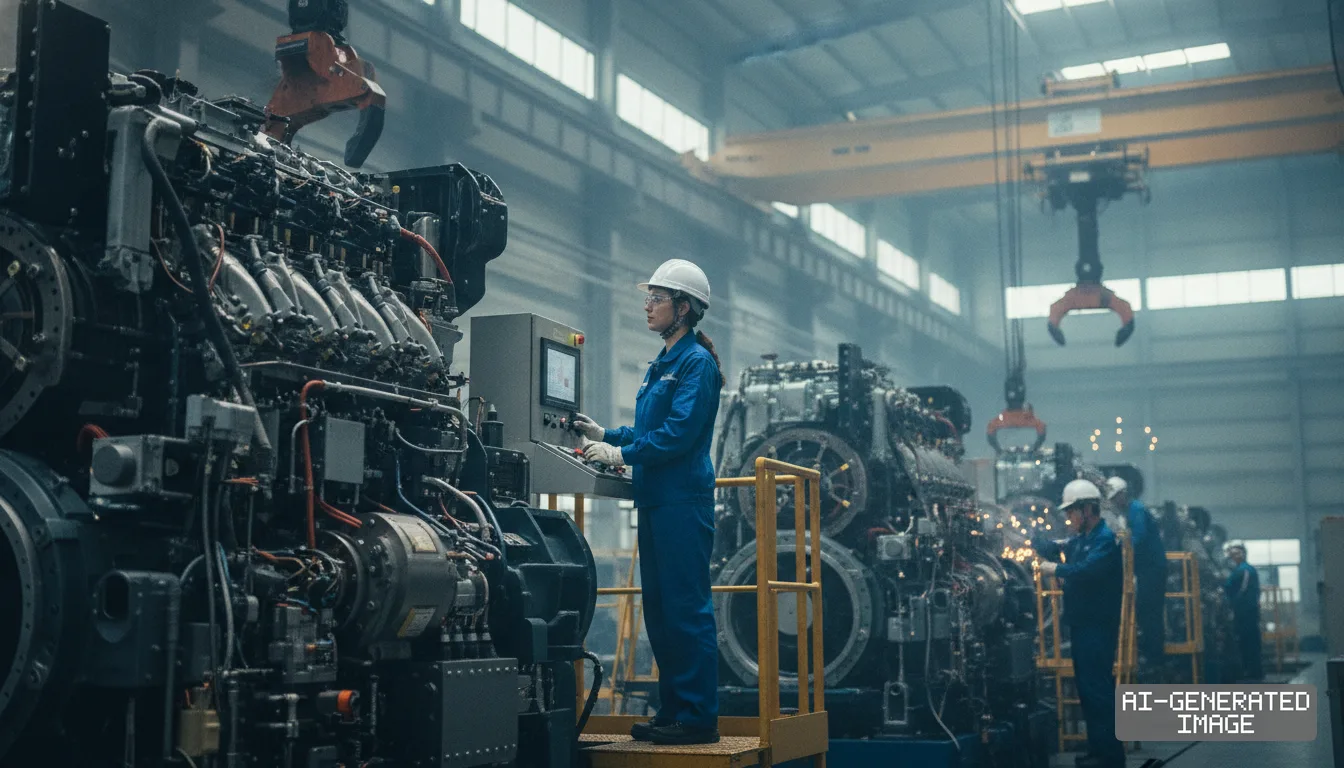
South Korean shipbuilders are adapting medium-speed marine diesel and dual-fuel engines for stationary land power. The pivot addresses acute electricity shortages in North America, where data center grid interconnection queues regularly exceed four years.
Hyperscale operators are installing stationary engines to provide immediate island power. The units run continuously or serve as emergency backups until local utilities can deliver permanent high-voltage grid connections.
The generator units run on diesel, natural gas or dual-fuel configurations that can transition to hydrogen mixtures. That flexibility allows data center operators to meet municipal emissions standards while maintaining uninterruptible power during regional grid curtailments.
HD Korea Shipbuilding & Offshore Engineering revealed during its third-quarter earnings call that order slots are effectively committed through 2029. Scheduled deliveries stand at 1.5 gigawatts for 2028 and three gigawatts for 2029.
Son Won-sik, an executive vice president at HD Hyundai Heavy Industries, said the group holds 1.4 gigawatts in undisclosed commitments. That undisclosed pipeline supplements previously published commercial contracts, Son said.
Global cloud infrastructure operators have begun bypassing regional power project developers to secure engine manufacturing slots directly, Son said. Data center operators want guaranteed delivery timelines to prevent multi-year project commissioning delays.
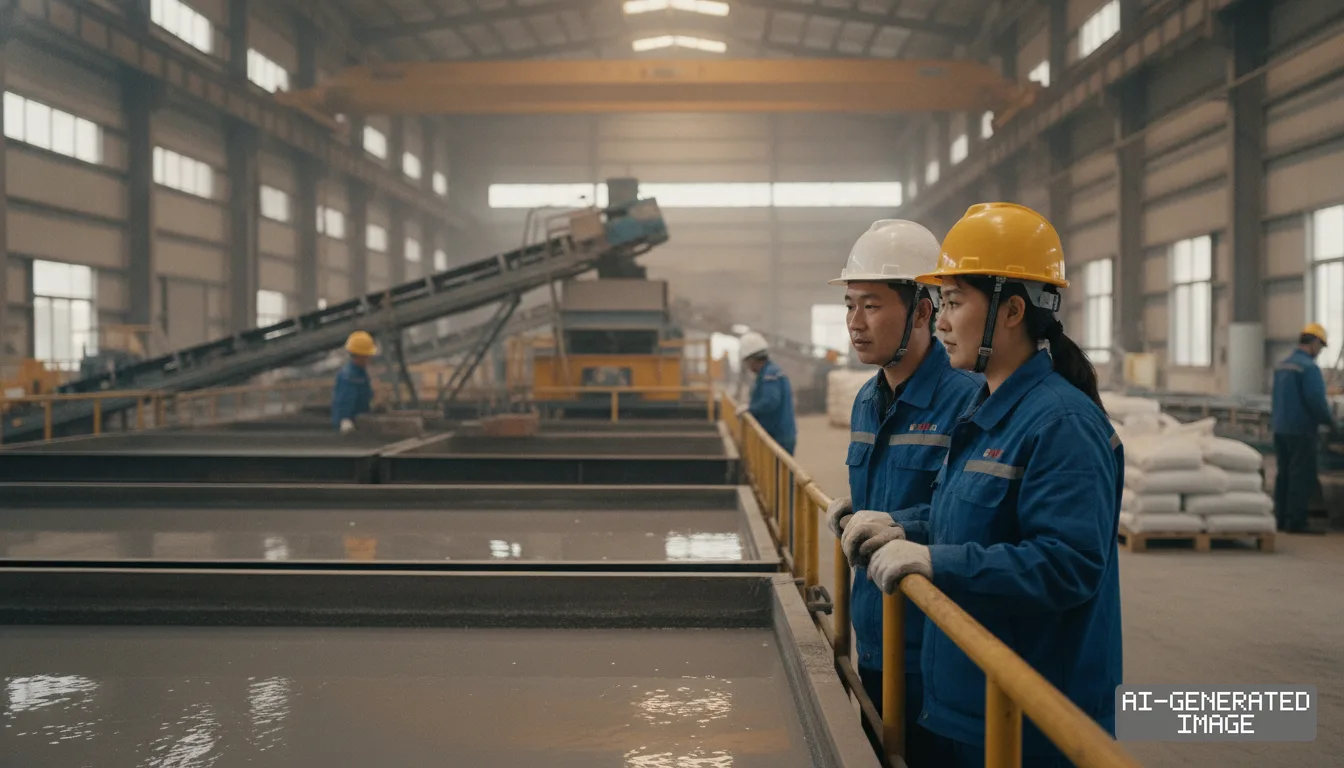
To handle that demand, HD Hyundai Heavy Industries approved an 833.6 billion won ($605 million) investment on Sept. 10. The funds will construct a dedicated three-gigawatt assembly facility in Onsan, Ulsan.
The factory will quadruple the company's onshore power generation capacity from 0.7 gigawatts to four gigawatts. Total production of its proprietary HiMSEN engine design will reach 7.2 gigawatts by 2030 across all applications.
HD Hyundai also allocated 238.6 billion won ($173 million) on the same day for a small modular reactor equipment factory. That facility will occupy adjacent land in the Onsan industrial district, the company said.
The capacity expansion follows large commercial awards secured in the United States this year. HD Hyundai Heavy signed a 627.1 billion won agreement on April 22 with American energy infrastructure company AEG.
That deal provided 684 megawatts of generation capacity. HD Hyundai Heavy followed that contract on Aug. 10 with a 956 billion won ($694 million) sale to Corban Energy Group.
The Corban Energy order covers one gigawatt of equipment using 9.6-megawatt HiMSEN generator sets. The equipment will supply baseload and backup power to enterprise computing clusters across North America, the manufacturer said.
Deploying stationary units buffers heavy industrial manufacturers against cyclical downturns in merchant shipbuilding. Land-based generator sets also yield high-margin aftermarket maintenance contracts and steady spare-parts turnover over 20-year operating lifecycles.
The land-based expansion comes as commercial shipyard delivery slots remain booked through 2028 for container vessels and liquefied natural gas carriers. Diverting engine production lines to utility applications broadens revenue beyond shipowner capital spending cycles.
A separate equipment division opened another stationary manufacturing facility in Gunsan on Oct. 28. HD Construction Equipment invested 116.8 billion won ($85 million) to build the engine and battery pack plant.
The Gunsan campus can produce 1,250 heavy-duty generator engines each year in the 1-to-3-megawatt electrical range. It also fabricates 120 combat vehicle engines and 1,460 megawatt-hours of industrial battery packs.
The Gunsan site will service a 390 billion won contract signed with US energy developer ERock in October. The contract covers 22-liter engine long-blocks — the core assembled engine cylinder structure without ignition systems — across 2027 and 2028.
ERock will package those engine blocks into finished generation equipment for US tech facilities. Commercial production of HD Construction Equipment's 37-liter DX37 engine, rated at 1.3 megawatts, begins in the first half of 2027.
The company plans to introduce a 77-liter model in 2028 and a 50-liter version in 2029. Those additions will complete a generator catalog spanning 1 to 3 megawatts for distributed power installations, the firm said.
HD Hyundai affiliates are coordinating bids to supply integrated data center power packages. HD Hyundai Electric provides power transformers, while HD Hyundai Marine Solution offers post-installation maintenance and overhaul contracts.
Groundbreaking for the Onsan HiMSEN engine factory is scheduled for the first quarter of 2027. Construction will conclude in May 2028, according to regulatory filings submitted to the Korea Exchange.
The company has not disclosed the operating profit margin for its stationary engine sales, nor has it published the identity of the specific cloud service providers taking power through developer partners.
Equipment competitors across Japan, China and Europe are also adapting marine diesel and dual-fuel systems for server farms. Caterpillar, Rolls-Royce Power Systems and Mitsubishi Heavy Industries have reported similar backlog growth in North America.
Impact map
How this development propagates across the region and out to global buyers.
| Event | Korea | China | Japan | Global impact |
|---|---|---|---|---|
| AI power engine pivot | HD Hyundai expands onshore engine capacity to 4 GW by 2028 | Shipbuilders face competition in high-output dual-fuel engine export sales | Mitsubishi Heavy Industries competes for distributed data center power bids | Hyperscalers bypass utility queues with 1-10 MW on-site generator units |
In this story
- Companies
- HD HyundaiHD Hyundai Heavy Industries
- Tickers
- 267250.KS329180.KS
- Exposed
- Corban Energy GroupERockAEG
- Impact
- Order BookCapexSupply Chain
Related briefings
- HD Hyundai Marine Solution buys Goltens for $247.5 million Also on Corban Energy Group, HD Hyundai Heavy Industries, Order Book
- HD Hyundai wins $1.42 billion HMM order for eight LNG ships Also on HD Hyundai, HD Hyundai Heavy Industries, Order Book
- HD Hyundai names Lee Sang-kyun head of group shipbuilding units Also on HD Hyundai, HD Hyundai Heavy Industries, Order Book
- HD Hyundai Heavy launches 8,200-ton Aegis destroyer in Ulsan Also on HD Hyundai, HD Hyundai Heavy Industries, Order Book
Sources
Reporting
Confidence: medium — how we grade this
The documents behind this briefing are linked above. East Asia Brief produces its English text with AI assistance under human editorial review, and does not translate or republish other outlets' articles. See our methodology and AI policy. Spotted an error? Tell us.
The Morning Brief
What changed in Korean, Chinese and Japanese industry overnight — and what it means for your supply chain. One email, weekday mornings, US time. Free.
The Morning Brief is in preparation. Leave your address and we will write to you once — when the first issue is ready. Nothing before that.