China Minmetals ties CZBANK credit to mineral supply chain
The state mining giant is deploying commercial bank liquidity across exploration, smelting and inventories to deepen central oversight of critical minerals and lower working-capital costs.
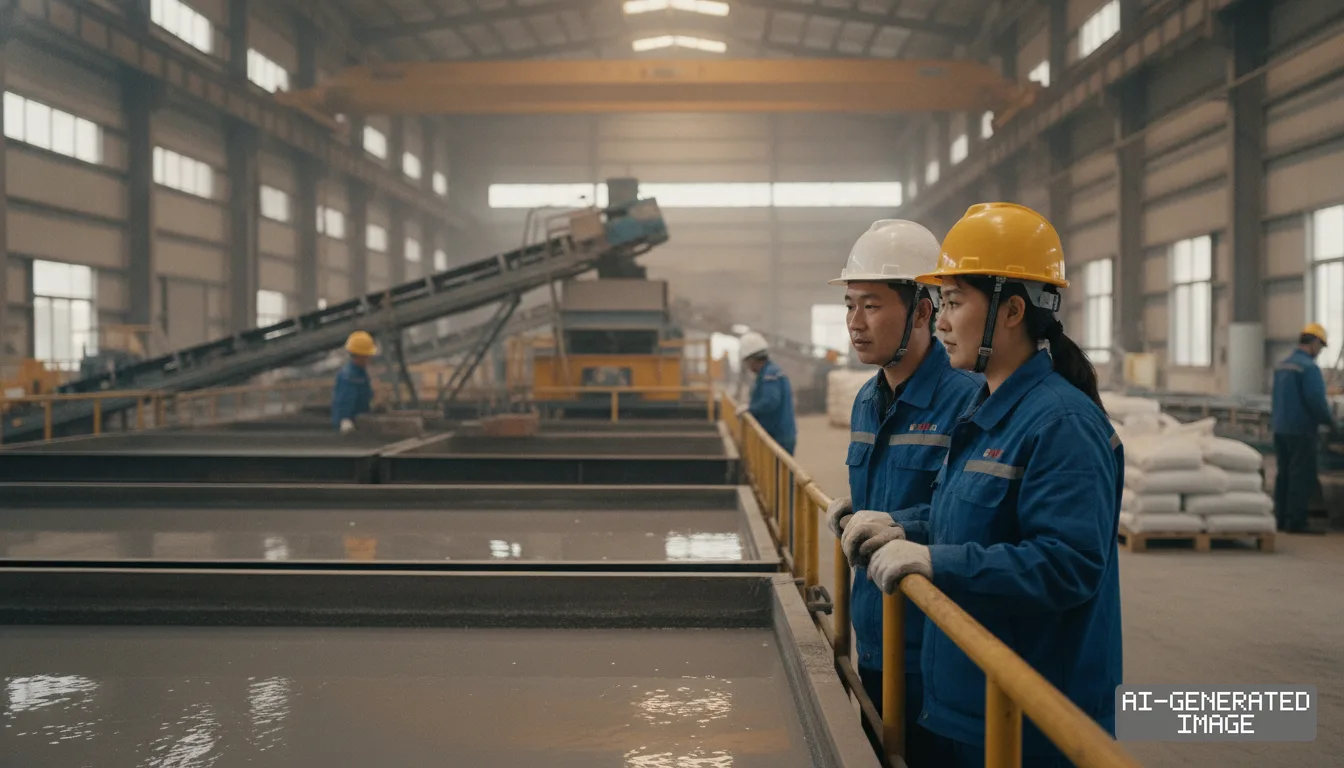
China Minmetals moved to link commercial lending from China Zheshang Bank into its critical mineral supply chain on Nov. 1, expanding state coordination across exploration, smelting and processing networks.
The state-owned mining conglomerate controls 41 mines globally, including 15 overseas sites. China Zheshang Bank held 3.70 trillion yuan ($520 billion) in assets across 377 branches as of June 2026.
The collaboration channels joint-stock bank liquidity into China Minmetals' core operational loop. That cycle spans five stages: exploration, production, supply, stockpiling and sales, according to the group's Beijing executive briefing.
Minmetals Chairman Chen Dexin hosted CZBANK Chairman Chen Haiqiang in Beijing to establish a regular bilateral coordination mechanism. Minmetals Chief Accountant Duan Wenwu and CZBANK Vice President Pan Huafeng joined the talks.
The mechanism aligns credit facilities, bond underwriting and cross-border transactions directly with physical material flows. CZBANK provides specialised trade finance to lower carrying costs for intermediate processors, the bank said.
Supply chain finance allows mining conglomerates to extend credit against receivables and stockpiled inventory. That tool provides liquidity to smaller smelters that refine rare earths, tungsten and antimony under state quotas.
China Minmetals operates as an integrated conglomerate spanning mining, refining, domestic trading and logistics. Its listed commercial trading arm, Minmetals Development Co., handles bulk distribution and intermediate inventory across domestic industrial hubs.
Minmetals Development distributes millions of tonnes of industrial metals annually. Linking commercial bank credit to its distribution network allows the parent group to absorb downstream receivables during cyclical price downturns.
The financial structure gives state managers tighter visibility over secondary material flows. By financing accounts receivable, state firms track where processed minerals go before final fabrication occurs.
Western miners must raise equity or secure project debt at market rates, often paying commercial borrowing spreads. Chinese state-backed operators instead access low-cost revolving bank facilities tied to sovereign mineral priorities.
Commercial bank liquidity insulates Chinese processors from sharp price drops. Refiners can carry inventory longer rather than dumping metal on spot markets when end-user demand temporarily softens.
That liquidity advantage dampens cash conversion pressure across the domestic supply chain. Chinese refiners maintain steady throughput while standalone Western competitors face inventory impairment risks and cash drains.
The model also reinforces Beijing's regulatory grip on critical raw materials. Commercial lenders coordinate loan disbursements with production quotas, preventing unauthorized processing outside state monitoring channels.
China Zheshang Bank has built dedicated products for industrial supply chains. The lender operates across major manufacturing regions, giving it access to midstream parts suppliers and specialized metal refiners.
Cross-border financial cooperation forms another pillar of the arrangement. Minmetals operates major overseas assets, including the Las Bambas copper mine in Peru, requiring foreign exchange liquidity and trade credit.
CZBANK runs branch operations in Hong Kong to support international settlement. That offshore conduit enables Minmetals to settle mineral imports and overseas shipping bills through bilateral credit arrangements, the bank said.
State coordination over transition minerals has expanded steadily over the past two decades. Chinese institutions have committed $56.8 billion to overseas mineral extraction, according to AidData research from William & Mary.
That public financing figure exceeds Western transition mineral financing commitments of $7.2 billion by nearly eight times. Direct banking partnerships inside China reinforce that overseas procurement advantage at home.
Foreign buyers face increasingly concentrated procurement channels inside China. When state trading giants finance domestic processors, independent merchant suppliers either integrate into state programs or lose bank credit.
Automakers and defense contractors in North America and East Asia depend on Chinese rare earth compounds. Concentrated financing structures make alternative sourcing outside state-directed channels increasingly difficult to negotiate.
Japanese and South Korean magnet manufacturers remain exposed to Chinese upstream pricing decisions. Tight domestic integration allows Chinese state champions to withstand extended downturns that stress foreign rivals.
The corporate notices do not disclose specific lending volumes, interest margins or contract terms for individual rare earth projects. Neither party published a formal platform launch filing or transactional credit limit.
Minmetals and CZBANK plan to hold formal quarterly coordination sessions starting in December 2026 to review credit allocations across strategic mineral supply programs.
Impact map
How this development propagates across the region and out to global buyers.
| Event | Korea | China | Japan | Global impact |
|---|---|---|---|---|
| Bank-backed critical mineral supply chain finance | Magnet makers face tighter Chinese state pricing discipline across upstream feedstocks | China Minmetals lowers carrying costs for refiners across 41 domestic and overseas mines | Component fabricators remain exposed to consolidated state supply and trading channels | Western junior miners face severe cost-of-capital disadvantages against state-backed Chinese refiners |
In this story
- Companies
- China MinmetalsChina Zheshang Bank
- Tickers
- 601916.SS2016.HK600058.SS
- Exposed
- Minmetals Development
- Impact
- Supply ChainCost StructurePricing
Related briefings
- TSMC Weighs 20% CoWoS Price Hikes as AI Bottlenecks Widen Also on Pricing, Cost Structure
- China critical mineral export controls expose $6.5 trillion in factory output Also on Pricing, Cost Structure
- China Ministry of Commerce nears critical mineral export ban deadline Also on Pricing, Cost Structure
- Japan sets 42.1% duty on Chinese cold-rolled stainless steel Also on Pricing, Cost Structure
Sources
Primary documents
Reporting
Confidence: high — how we grade this
The documents behind this briefing are linked above. East Asia Brief produces its English text with AI assistance under human editorial review, and does not translate or republish other outlets' articles. See our methodology and AI policy. Spotted an error? Tell us.
The Morning Brief
What changed in Korean, Chinese and Japanese industry overnight — and what it means for your supply chain. One email, weekday mornings, US time. Free.
The Morning Brief is in preparation. Leave your address and we will write to you once — when the first issue is ready. Nothing before that.