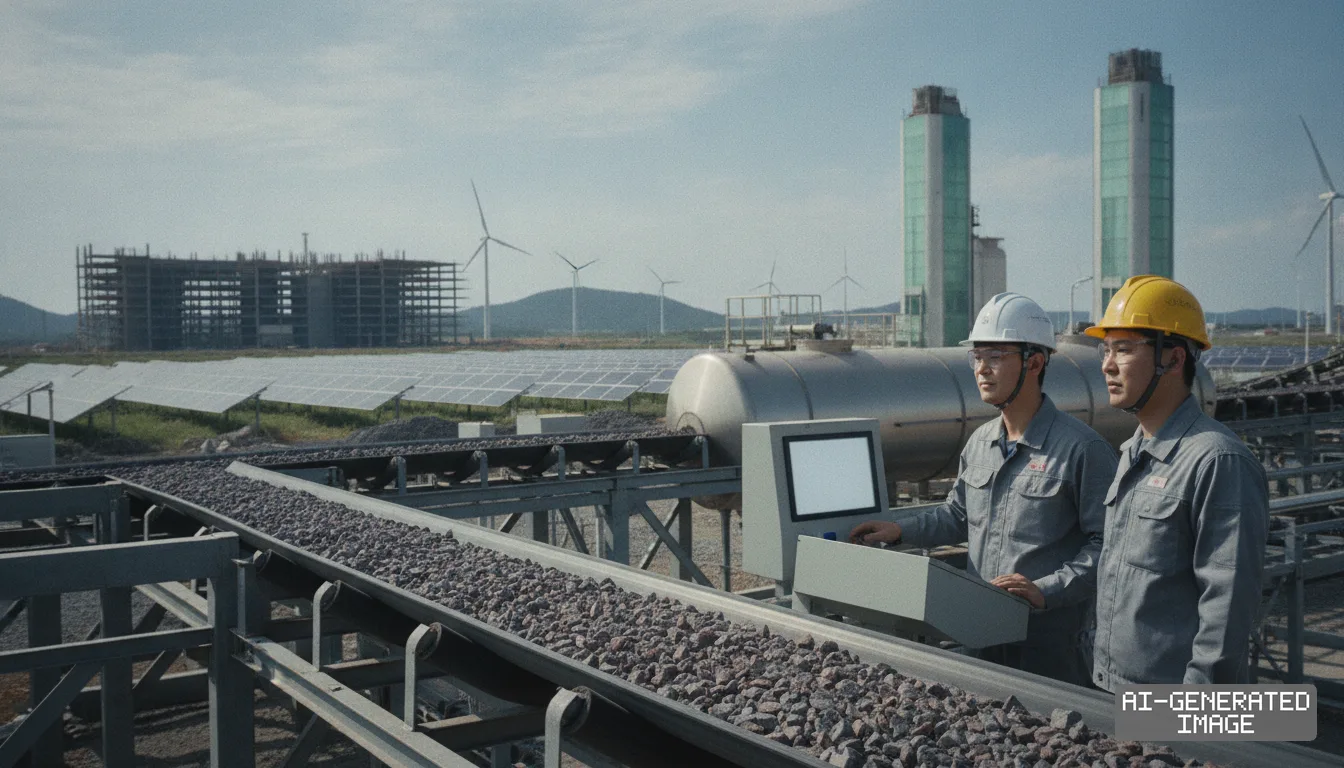
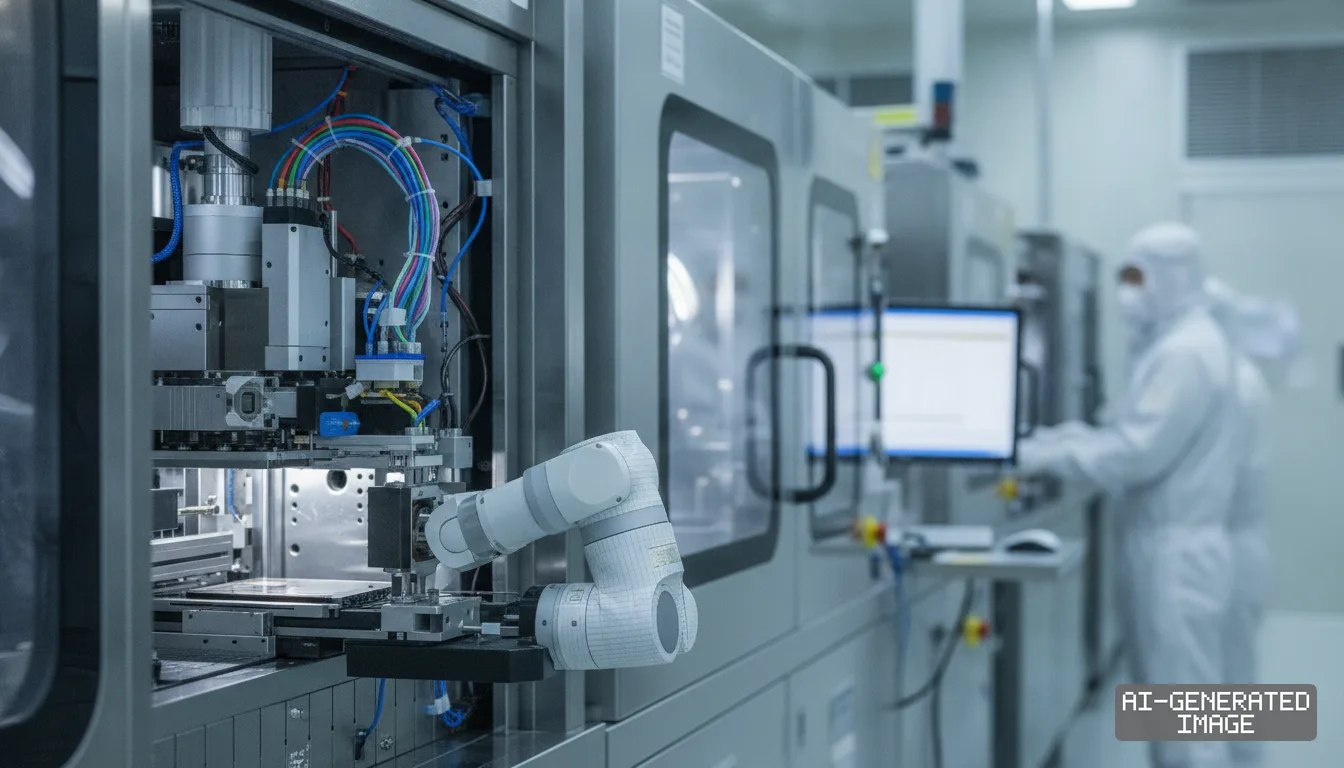
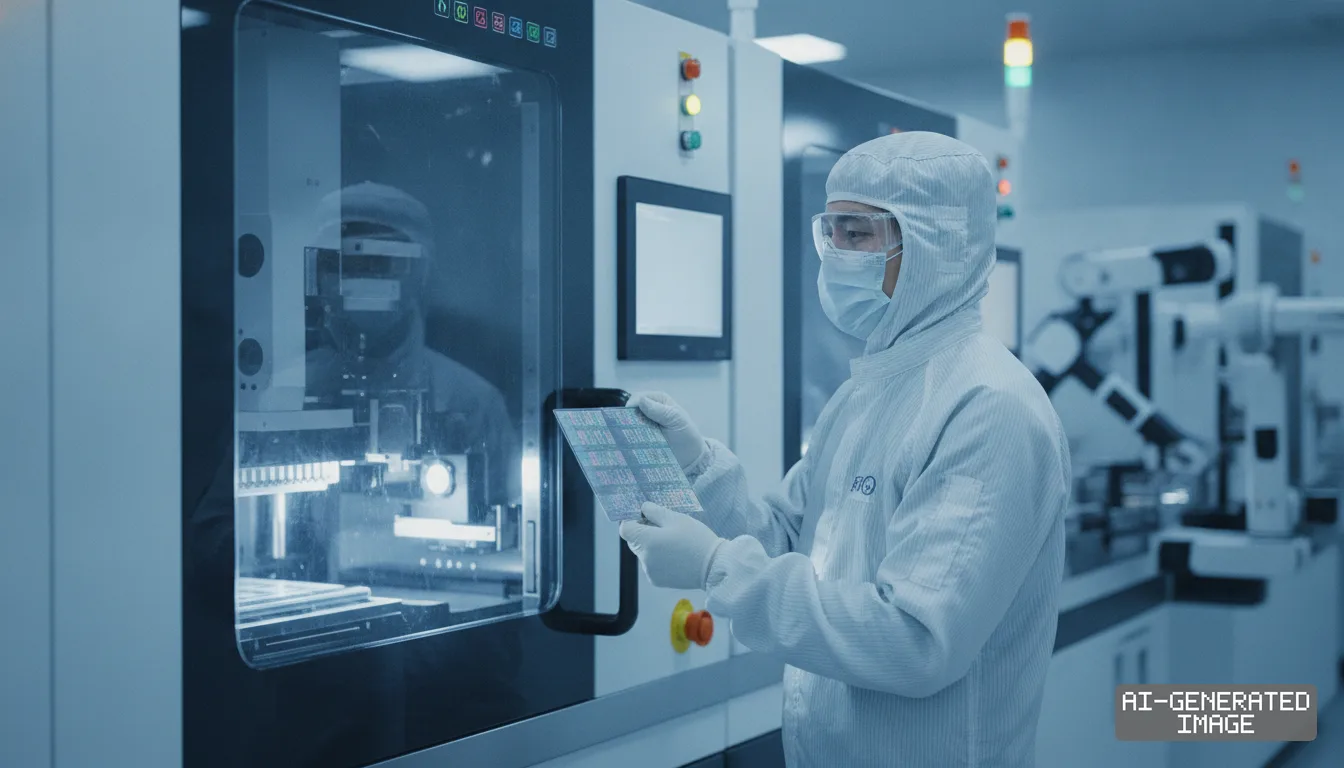
GlobalFoundries Signs $21B Japan Pact for New York Chip Fabs
The allied financing structure covers two mature-node facilities producing 1.8 million wafers annually while sheltering the contract chipmaker from direct capital expenditure.
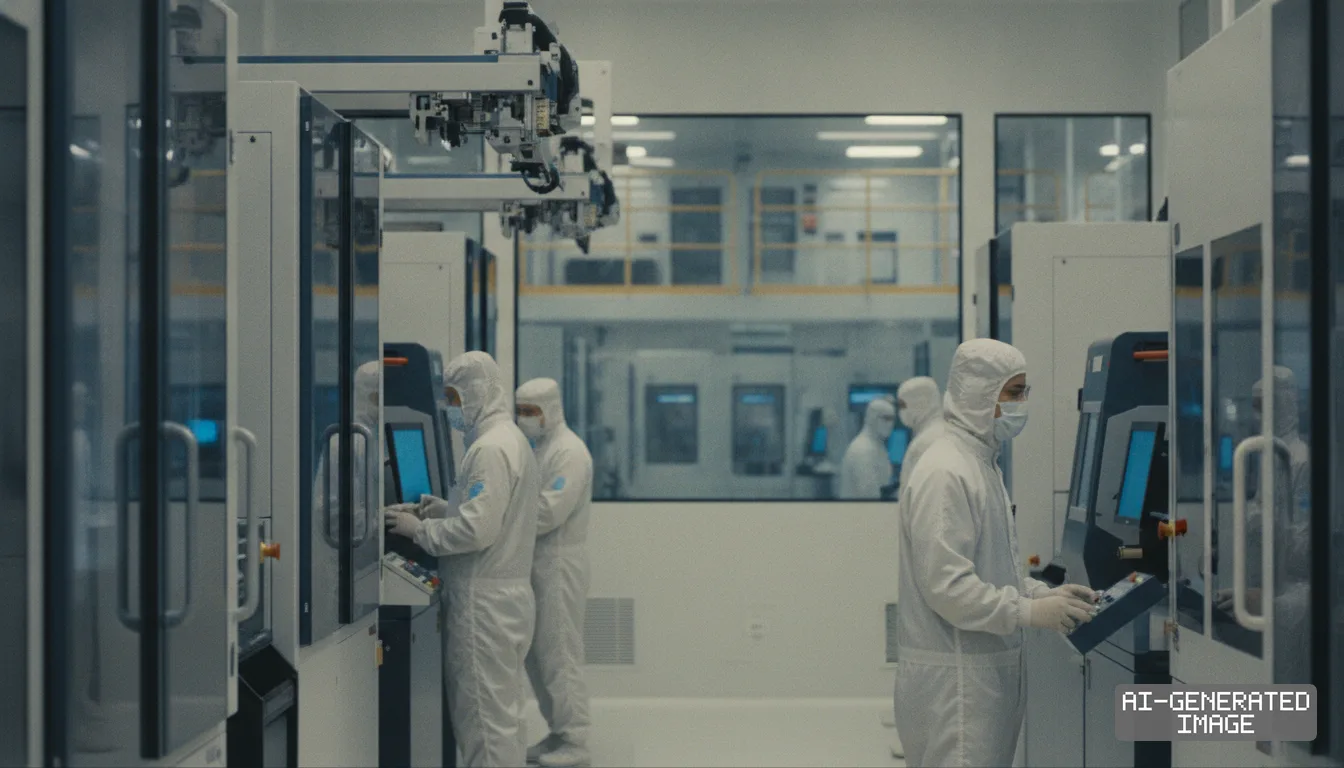
Japan's Ministry of Economy, Trade and Industry confirmed Oct. 15 that state financing will back a $21 billion semiconductor expansion at GlobalFoundries in Malta, New York.
The government-backed accord provides funding for two new semiconductor manufacturing facilities. GlobalFoundries will operate the fabs without carrying capital expenditure liabilities on its balance sheet, acting as technology provider and site operator.
An initial $10 billion phase will fund construction of a 300-millimeter wafer fab scheduled to open in 2029. A potential second $10 billion phase would match that scale, creating total capacity of 1.8 million wafers annually.
The initial plant will add approximately 900,000 300-millimeter wafers in annual domestic production capacity. The facility will manufacture foundational semiconductors, including automotive microcontrollers, power management integrated circuits and wireless communications silicon.
United States semiconductor policy previously prioritized leading-edge logic below three nanometers and high-bandwidth memory packaging. The Malta expansion directs public funding toward mature nodes that caused widespread automobile assembly line shutdowns during post-pandemic component shortages.
Under the ownership agreement, the United States government and Japanese investment entities will hold title to the physical plants and manufacturing equipment. GlobalFoundries will collect ongoing operational fees, construction management revenue and technology licensing royalties.
Federal authorities also restructured existing industrial subsidies alongside the bilateral announcement. The Commerce Department agreed to reallocate $955 million in CHIPS and Science Act awards toward specialty semiconductor capabilities at GlobalFoundries facilities in Malta and Burlington, Vermont.
Those repurposed federal funds will accelerate investments in silicon photonics — the integration of optical emitters and optical waveguides onto silicon chips — alongside silicon-germanium fabrication and silicon interposers for advanced packaging applications.
The Commerce Department will also receive a roughly 4% equity position in GlobalFoundries. The transaction will expand federal equity ownership in the Nasdaq-listed contract chipmaker to approximately 7%, according to company regulatory filings.
Japanese automotive chipmaker Renesas Electronics, which derives more than 45% of its corporate revenue from automotive computing products, will participate as a lead customer. Renesas plans to use the Malta fabs as an external production footprint.
Commercial vehicle makers also secured capacity reservations to insulate vehicle assembly lines. General Motors, which previously negotiated an exclusive long-term manufacturing agreement with GlobalFoundries, will source dedicated microcontroller and power management silicon from the New York campus.
Consumer electronics maker Apple joined the partner roster to secure domestic production of mixed-signal components. Apple maintains a $600 billion commitment to American industrial procurement, seeking localized components to diversify beyond Asian manufacturing corridors.
The project provides long-term machinery purchase commitments for Japanese semiconductor toolmakers. Tokyo Electron will supply specialized coating, developing and plasma etching systems, securing procurement orders across the planned 1.8-million-wafer production buildout.
Specialty materials suppliers will establish co-located distribution infrastructure in Saratoga County. Tokyo Ohka Kogyo will provide high-purity photoresists and chemical reagents, anchoring an integrated materials pipeline between Japan and New York.
The state financing mechanism inverts traditional foundry economics by shifting asset depreciation risks to government balance sheets. Capital costs for building greenfield wafer fabs often exceed corporate cash flow capabilities during broader semiconductor industry downturns.
Net returns generated by the two manufacturing plants will be divided equally between Washington and Tokyo until defined repayment benchmarks are met. Once those financial milestones are satisfied, the United States share rises to 90%.
The capacity expansion addresses aggressive capacity additions by Chinese state-backed foundries in foundational process nodes. Chinese chipmakers have invested heavily in 28-nanometer and 40-nanometer capacity, triggering price competition in global microcontroller markets.
Both planned Malta facilities will process 300-millimeter silicon wafers rather than older 200-millimeter substrates. The larger wafer diameter yields more individual dies per manufacturing run, reducing per-unit production costs for high-volume automotive chips.
The expansion requires utility additions across upstate New York. The manufacturing complex will draw high-voltage electric loads, continuous ultra-pure water supplies and dedicated industrial nitrogen pipelines to support continuous cleanroom operations.
The construction phase is projected to create 27,000 regional infrastructure and trade jobs, alongside 1,000 permanent manufacturing roles. GlobalFoundries plans to source engineering staff and cleanroom operators through regional university and vocational partnerships.
Silicon-germanium upgrades in Burlington and Malta will directly benefit aerospace and defense contractors. The specialty material handles high frequencies and extreme temperatures, making it essential for radar systems, satellite transceivers and secure military communication modules.
GlobalFoundries plans to break ground on the first 300-millimeter facility in late 2026, with initial commercial production scheduled to come online in 2029.
The Japanese ministry has not published the financing breakdown between direct equity investments from the Japan Bank for International Cooperation and commercial loan guarantees.
Impact map
How this development propagates across the region and out to global buyers.
| Event | Korea | China | Japan | Global impact |
|---|---|---|---|---|
| Allied mature fab funding | Shielded as domestic memory leaders avoid foundry asset risk | Mature-node export price power faces direct tariff-backed capacity offset | Renesas locks in North American automotive chip volumes without capex | Automotive supply chains secure 1.8M annual 300mm wafers outside East Asia |
| Allied mature fab funding | Shielded as domestic memory leaders avoid foundry asset risk | Mature-node export price power faces direct tariff-backed capacity offset | Renesas locks in North American automotive chip volumes without capex | Automotive supply chains secure 1.8M annual 300mm wafers outside East Asia |
In this story
- Companies
- GlobalFoundries
- Tickers
- GFS
- Exposed
- Renesas ElectronicsTokyo ElectronAppleGeneral Motors
- Policy
- Subsidies
- Impact
- Supply ChainCapexOrder Book
Track every Subsidies development →
Related briefings
- Japan funds $21 billion GlobalFoundries build in New York Also on Renesas Electronics, GlobalFoundries, Apple
- GlobalFoundries signs $2B TSMC packaging deal for AI chips Also on GlobalFoundries, Apple, Tokyo Electron
- US and Japan weigh $19 billion GlobalFoundries fab under tariff pact Also on GlobalFoundries, General Motors, Tokyo Electron
- TSMC captures 72.5% foundry share as gap with Samsung widens Also on GlobalFoundries, Apple, Subsidies
Sources
Primary documents
Reporting
Confidence: high — how we grade this
The documents behind this briefing are linked above. East Asia Brief produces its English text with AI assistance under human editorial review, and does not translate or republish other outlets' articles. See our methodology and AI policy. Spotted an error? Tell us.
The Morning Brief
What changed in Korean, Chinese and Japanese industry overnight — and what it means for your supply chain. One email, weekday mornings, US time. Free.
The Morning Brief is in preparation. Leave your address and we will write to you once — when the first issue is ready. Nothing before that.