US and Japan weigh $19 billion GlobalFoundries fab under tariff pact
Washington and Tokyo review funding for a US logic chip factory operated by GlobalFoundries as part of Japan's $550 billion investment commitment.
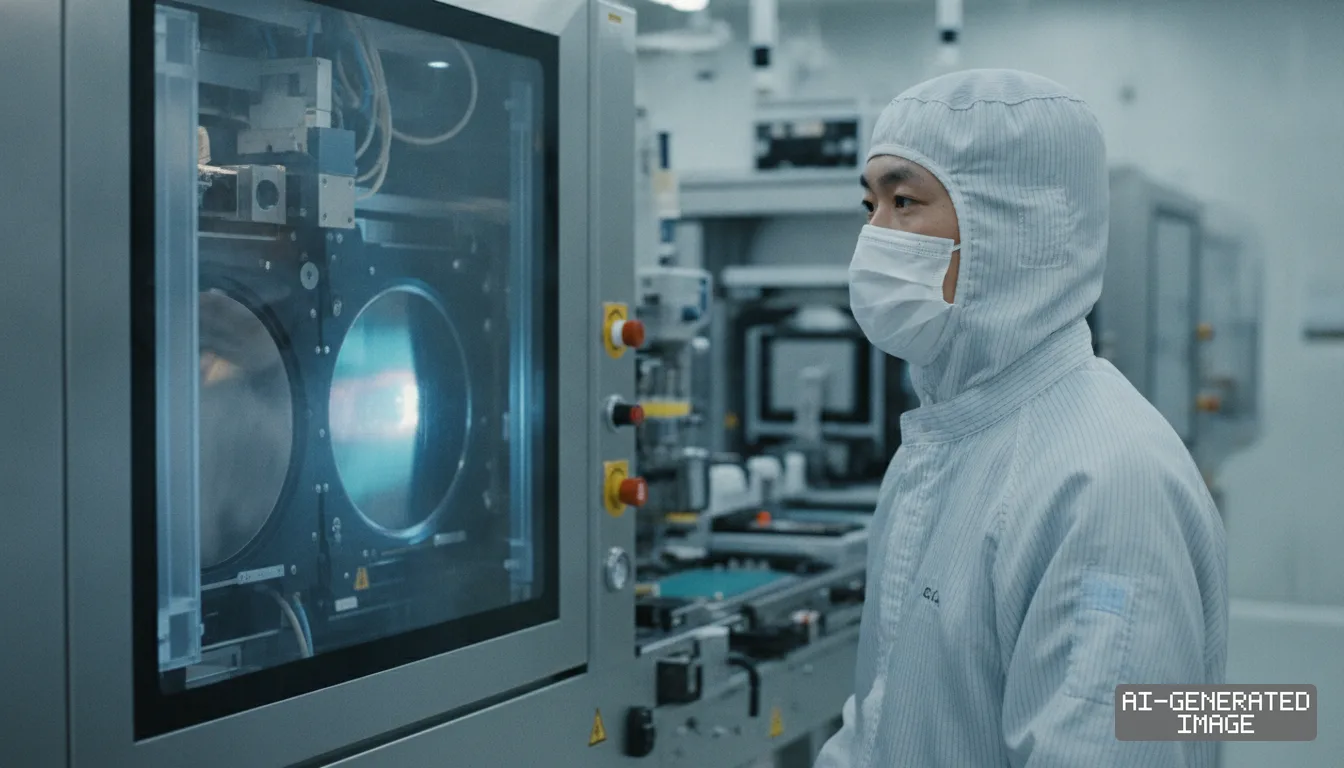
The United States and Japan opened negotiations on Sept. 17, 2026, to fund a logic semiconductor factory operated by GlobalFoundries under a bilateral trade pact.
The proposed project requires an estimated 2 trillion yen to 3 trillion yen ($12.85 billion to $19.27 billion) in capital spending. It represents an initial industrial deployment under Japan's broader $550 billion American investment pledge.
Tokyo committed that $550 billion capital package during bilateral tariff negotiations to secure tariff exemptions on Japanese industrial exports. Officials discussed the chip initiative during working-level sessions held in Washington on Sept. 14 and 15.
GlobalFoundries would operate the planned facility rather than acquire existing assets, according to people familiar with the intergovernmental discussions. The contract chipmaker booked $1.83 billion in net revenue during the fourth quarter of 2025.
A new domestic facility would expand the manufacturer's logic manufacturing footprint beyond its current flagship site in Malta, New York. GlobalFoundries produces mature and specialty process nodes used across automotive systems, communications infrastructure and defense hardware.
The funding structure under review draws on capital instruments established to settle bilateral tariff disputes between Washington and Tokyo. Both administrations are evaluating how each government would recoup invested capital through operational returns over time.
Previous allocations under Japan's $550 billion investment commitment centered heavily on utility-scale electric power and grid installations. Shifting capital toward foundry capacity marks an expansion of that tariff agreement into direct high-technology manufacturing.
Neither administration has finalized the legal vehicle governing the fab, the specific wafer start capacity, or the construction timeline. The U.S. Department of Commerce and Japan's Ministry of Economy, Trade and Industry have published no joint communique.
GlobalFoundries has not submitted a Form 6-K or Form 8-K disclosure to the U.S. Securities and Exchange Commission regarding the project. The company has not confirmed any operating lease or construction agreement with federal authorities.
The proposal targets legacy and specialty logic fabrication where automotive and industrial equipment builders experienced severe supply constraints during past shortages. Policymakers in both capitals view mature logic supply as an urgent economic security priority.
The initiative directly touches Japanese semiconductor manufacturing equipment vendors and silicon wafer producers. Tokyo Electron, Canon, Nikon and Shin-Etsu Chemical supply vital tooling and inputs to GlobalFoundries fabs in the United States and Singapore.
Japanese equipment groups generate substantial revenue from 300-millimeter legacy fab installations across North America. A new multi-billion-dollar logic fab in the United States would generate immediate procurement orders for Tokyo-based dry etchers, coaters and inspection tools.
For Japanese toolmakers, direct U.S. fab construction offers a stable commercial destination shielded from broadening American export restrictions on shipments to mainland China. Japanese suppliers have faced tightening compliance rules when selling advanced tools to Chinese foundries.
The intergovernmental discussions examine whether Japanese state-backed financing institutions can take equity stakes or extend subsidized debt to the project. Japan's state export credit institutions routinely finance cross-border infrastructure to support domestic equipment exporters.
The project does not involve a foreign takeover or equity buyout of GlobalFoundries, contrary to early industry speculation regarding an acquisition. Instead, ownership of the physical asset is expected to reside in a special-purpose project entity.
Under the framework outlined in the bilateral tariff agreement, a special-purpose company typically manages project assets until capital recovery benchmarks are achieved. The operating partner then runs cleanroom operations under a multi-year foundry services contract.
Automotive manufacturers in Detroit and Tokyo remain deeply exposed to foundry capacity concentration in Taiwan and mainland China. Expanding U.S. logic fabrication provides a redundant source of microcontrollers, power management chips and sensor interfaces.
Car companies such as General Motors, Ford Motor, Toyota Motor and Honda Motor consume millions of legacy microcontrollers each quarter. These components rely heavily on 28-nanometer, 40-nanometer and planar silicon processes that cutting-edge fabs in Taiwan no longer prioritize.
Securing secondary manufacturing capacity inside North America reduces geopolitical transit risk across Pacific shipping lanes for both American and Japanese automakers. The arrangement aligns trade concessions with tangible hardware resilience for critical allied supply chains.
The notice does not state the targeted manufacturing node, the daily wafer volume, or the exact state chosen to host the cleanroom. Washington officials have not specified how federal subsidies under the CHIPS program interact with the Japanese funds.
U.S. and Japanese trade delegations plan further technical reviews before the bilateral investment oversight committee convenes its formal quarterly session in November. The prospective fab operator continues routine operations across its existing New York and Vermont sites.
Impact map
How this development propagates across the region and out to global buyers.
| Event | Korea | China | Japan | Global impact |
|---|---|---|---|---|
| US-Japan $19B fab plan | Samsung and DB HiTek face expanded US foundry capacity in specialty 28nm-plus logic nodes | SMIC loses potential mature-node export share to US-based domestic legacy capacity | Tokyo Electron and Shin-Etsu capture direct tool and wafer supply contracts for new US fab lines | Automotive OEMs gain secondary non-Taiwanese supply of microcontrollers and power ICs |
| US-Japan $19B fab plan | Samsung and DB HiTek face expanded US foundry capacity in specialty 28nm-plus logic nodes | SMIC loses potential mature-node export share to US-based domestic legacy capacity | Tokyo Electron and Shin-Etsu capture direct tool and wafer supply contracts for new US fab lines | Automotive OEMs gain secondary non-Taiwanese supply of microcontrollers and power ICs |
| US-Japan | — | — | — | — |
| US-Japan $19B fab plan | Samsung and DB HiTek face expanded US foundry capacity in specialty 28nm-plus logic nodes | SMIC loses potential mature-node export share to US-based domestic legacy capacity | Tokyo Electron and Shin-Etsu capture direct tool and wafer supply contracts for new US fab lines | Automotive OEMs gain secondary non-Taiwanese supply of microcontrollers and power ICs |
In this story
- Companies
- GlobalFoundries
- Tickers
- GFS
- Exposed
- Tokyo ElectronShin-Etsu ChemicalToyota MotorGeneral Motors
- Policy
- TariffsSubsidiesEconomic Security
- Impact
- CapexSupply ChainOrder Book
Track every Tariffs development → Track every Subsidies development → Track every Economic Security development →
Related briefings
- SMIC narrows foundry gap with Samsung as Q2 sales surge 20% Also on GlobalFoundries, Order Book
- Japan tenders economic security subsidies for synthetic graphite anode substitutes Also on Toyota Motor, Shin-Etsu Chemical
- Battery makers widen aerogel sheet adoption as EV thermal propagation rules tighten Also on Toyota Motor, General Motors
- Tokyo Electron Deploys Cryogenic Etch Systems to Challenge US Grip on 3D NAND Also on Shin-Etsu Chemical, Tokyo Electron
Sources
Primary documents
Reporting
Confidence: high — how we grade this
The documents behind this briefing are linked above. East Asia Brief produces its English text with AI assistance under human editorial review, and does not translate or republish other outlets' articles. See our methodology and AI policy. Spotted an error? Tell us.
The Morning Brief
What changed in Korean, Chinese and Japanese industry overnight — and what it means for your supply chain. One email, weekday mornings, US time. Free.
The first issue goes out shortly. Sign up now and you will not miss it.